The Book Review

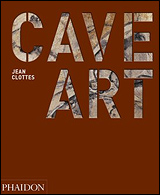
Cave Art


Cave Art
by Dr Jean Clottes

• Paperback: 336 pages
• Publisher: Phaidon Press (March 31, 2010)
• ISBN-10: 0714857238
• ISBN-13: 978-0714857237

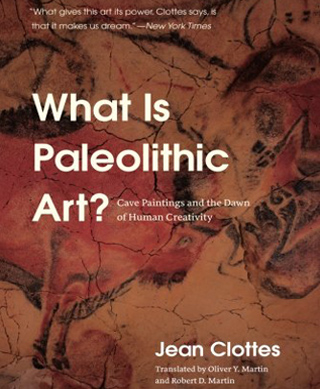
Jean Clottes renowned expert on prehistoric rock art, explores the origins of rock art and creativity, taking the reader on a guided tour of 85 rock art caves and rock painting shelters, evealing the extraordinary beauty of the cave paintings and Palaeolithic Cave Art.
Cave Art by Jean Clottes

Book Overview


The discovery of prehistoric decorated caves in western Europe transformed the way we think about the development of art. The earliest known evidence of human artistic endeavour, the awe-inspiring paintings, dramatic engravings and small, delicate sculptures of animals and humans found in these caves still hold a unique power and fascination, more than a century after they were first discovered.

In this book, internationally renowned expert on prehistoric art Jean Clottes explores the origins of art and creativity. He takes the reader on a guided tour of 85 caves and rock shelters, many of which are not open to the public, revealing the extraordinary beauty of the works of art within them. Cave Art features more than 300 works from the Palaeolithic period, made between 35,000 and 11,000 years ago, presented in geographical and chronological order.

This comprehensive, accessible introduction to prehistoric art includes such spectacular works as the famous horses of Lascaux and Chauvet, the bison in the Altamira cave in Spain and the ivory carving of a woman's face found at Brassempouy in the south of France, as well as examples from less well-known sites. While most of the caves described in the book are European, Cave Art also includes examples of open-air rock art made after the last ice age at sites around the world.

Each work in Cave Art is illustrated by a colour photograph, and accompanied by a clear, vivid explanatory text. The book also includes a chronology, maps of the main caves and sites, a glossary and a list of sites that can be visited. With an unparalleled selection of images, Cave Art offers a unique guided tour of the earliest expressions of human creativity.

Bradshaw Foundation Book Review


How far have we come in the world of art? How did we reach a display of animals suspended in formaldehyde? What are the roots of our fascination with the representation of the real world through symbols? It is surely this explosion of symbolic thought and the beginning of modern man's creativity that we must investigate, and who better to do so than one of France’s most eminent prehistorians Dr. Jean Clottes. Cave Art, recently published by Phaidon, is an accessible yet definitive introduction to prehistoric art, using European Palaeolithic art during the Ice Age as its platform from which to explore the global phenomenon of rock art.

With clinical precision, CAVE ART lays out the salient items for consideration. "I wanted to write a book on cave art with as much information as possible, but in the simplest possible form," states Jean Clottes. "It is directed towards people who know nothing about this, as well as to specialists". And there in lies its beauty. The artworks, presented with unparalleled quality, range from spectacular cave paintings to small, delicate sculptures, representing works from key sites such as Chauvet, Lascaux and Niaux in France, as well as less-known locations.

Cave Art provides an explanation of who the artists were - 'our direct ancestors'. 'Cro-Magnons....were people like us,with the same brain, physical appearance, nervous system and cognitive abilities'. It considers what art is, using the Blombos haematite stone as the earliest possible art object attributable to modern humans. It presents the temporal context with a clear chronology, explaining the differences between the Aurignacian, Gravettian, Solutrean and Magdalenian cultures, and how these cultures created the art in an uneven geographical distribution.

Cave Art then explores the techniques, the themes, the possible meanings and the numerous interpretations, establishing that 'even if none of [the] hypotheses can be accepted in their entirety, each still played a part in bringing about a better understanding of Palaeolithic art'.
 
After a long and full career of academic and objective examination, in Cave Art Jean Clottes creates a compelling and highly-plausible picture  of an overall belief system which persisted with little change for over twenty millennia, ending only when the Ice Age finally drew to a close.

Peter Robinson
Editor


bradshaw foundation donate help


bradshaw foundation book publication review
bradshaw foundation awards scientific american

bradshaw foundation twitter BradshawFND


Homepage About the Foundation Contact Us News Articles Archive Index Africa Paintings Gallery Giraffe Carvings Niger South Africa Tanzania Western Central Africa Namibia The Tuareg People Tuareg Salt Caravans Archive Index Arizona Baja California Coso Range Australia Archive Index Introduction Bradshaw Paintings Kimberley Region The Unambal Hugh Brown Leif Thiele Gallery Dan Clark Grahame Walsh Ian Wilson Archive Index Yinchuan Museum Rock Art Festival Field Trip Gallery Tiger Motif Archive Index Chauvet Cave Lascaux Cave Niaux Cave Cosquer Cave Research Paper Tuc d'Audoubert Bison Dr. Jean Clottes Bolivian Rock Art Campeche Rock Art Petroglyphs Hand Rock Art Paintings Indian Rock Art Tibetan Rock Art Yinchuan Rock Art Museum Introduction Ice Age Art Gallery Nature of Figurines Chronology Purpose Cycladic Introduction Cycladic Gallery Introduction Geometric Signs Chart Research Methodology Geometric Signs in France Sign Types/Countries/Regions Bibliography Newsletter Archive Introduction Genetic Map Professor Stephen Oppenheimer Further Reading Origins of the British BBC Documentary Stanley Ambrose Homo Floresiensis Herto Skulls Homo Dmanisi Liujiang Skull Introduction Sentinels in Stone Easter Island Rock Art Birdman Cult / Motif Sea & Marine Creatures Design & Motifs Dr Georgia Lee Easter Island Map Contemporary Art Glossary Conclusion Thor Heyerdahl Meaning of a Pyramid Pyramid Studies Pyramid Superstructure Pyramid Substructure Pyramid Preparations Pyramid Building Saqqara Nabil Swelim Temples of Malta and Gozo Site Map Search the Website Glossary of Terms & Definition Film Downloads DVD's Sculpture Posters & Prints Clothing About iLecture Films Shipping & Handling Podcast on iTunes Vincent Macaul Art of Uzbekistan Read the reviews Friends of the Foundation Other Websites Mailing List Sign-Up Contact the Foundation


Bookmark and Share