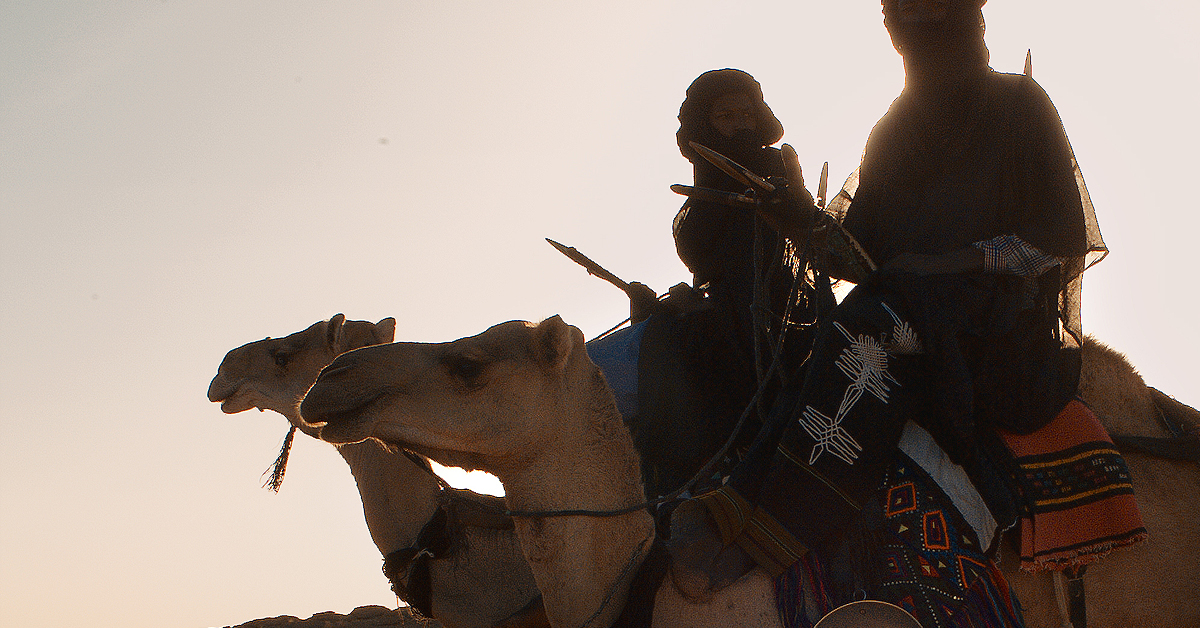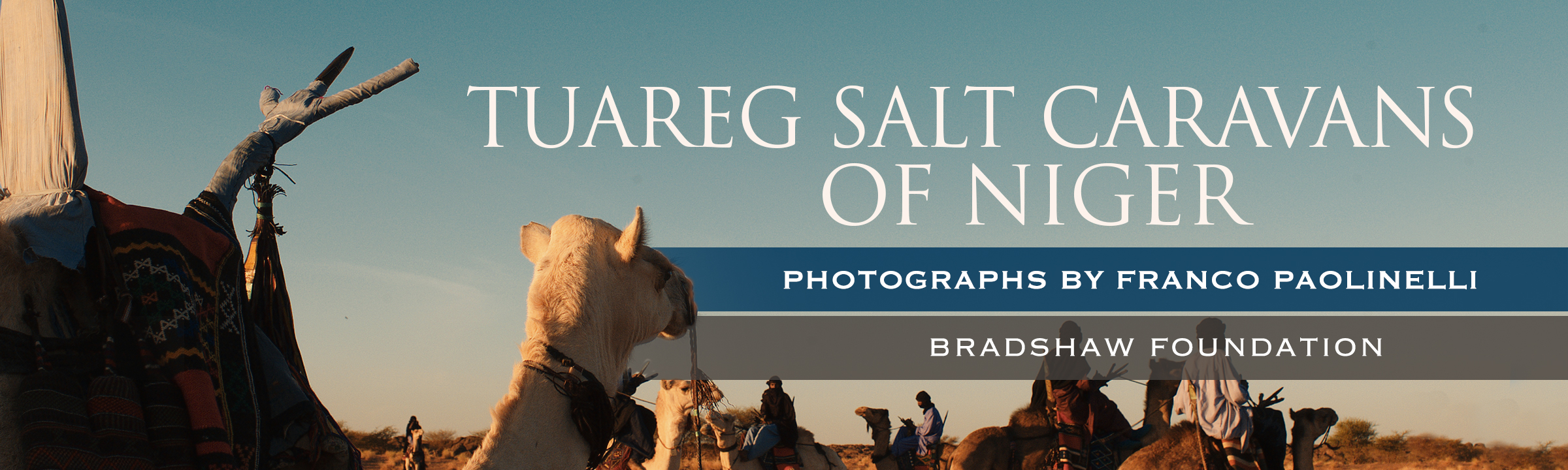
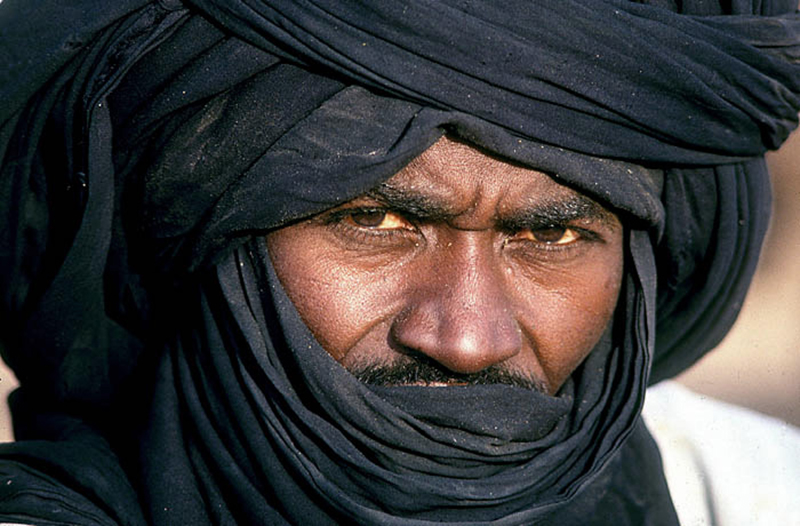
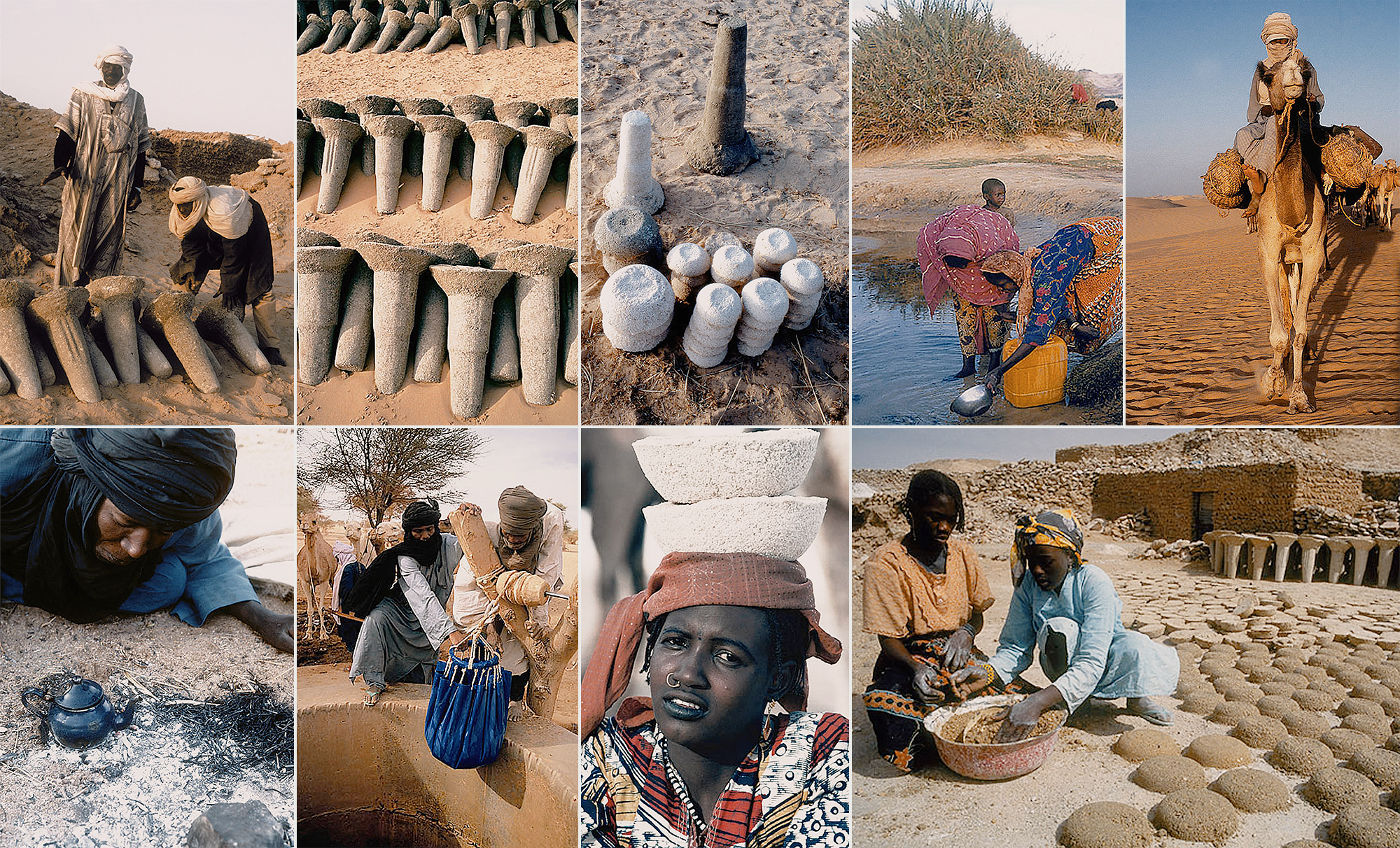
Salt may well have been humankind's earliest addiction. Salt drove economies, opened trade routes and settlements, even sparked bitter wars. Today we take it for granted - something to flavour our fries. But in Africa's sahel, salt remains a valuable commodity - indispensable for animals and men. In Niger, Tuareg caravans continue across the Tenere Desert to fetch salt from the Bilma oasis and barter millet for dates. Five milleniums since the story of Lot's wife was first told, salt is still made in pillars and transported by camels to distant markets. This site celebrates the survival of one of the world's most ancient and fascinating cultures - The Caravans of Salt.
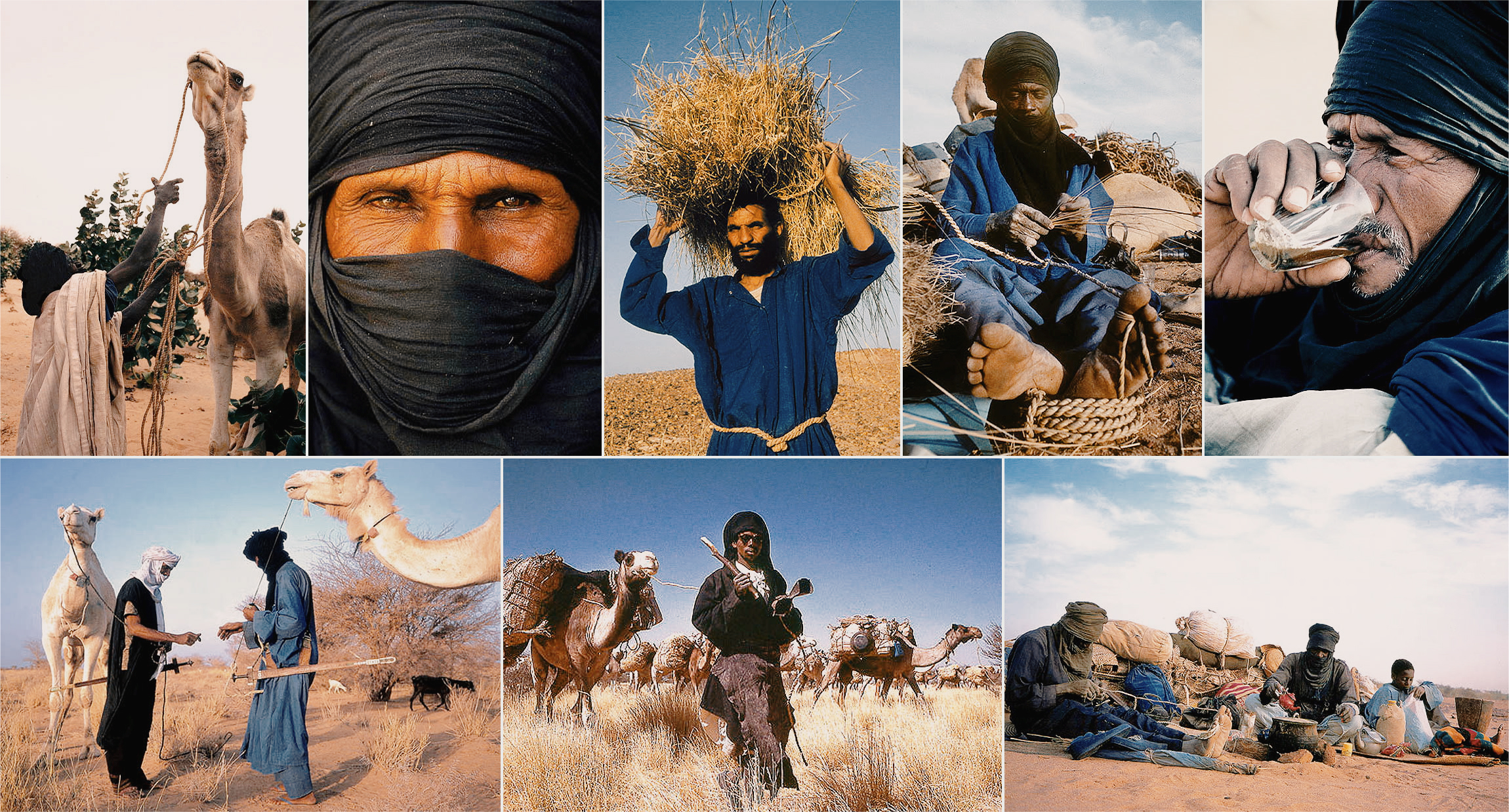
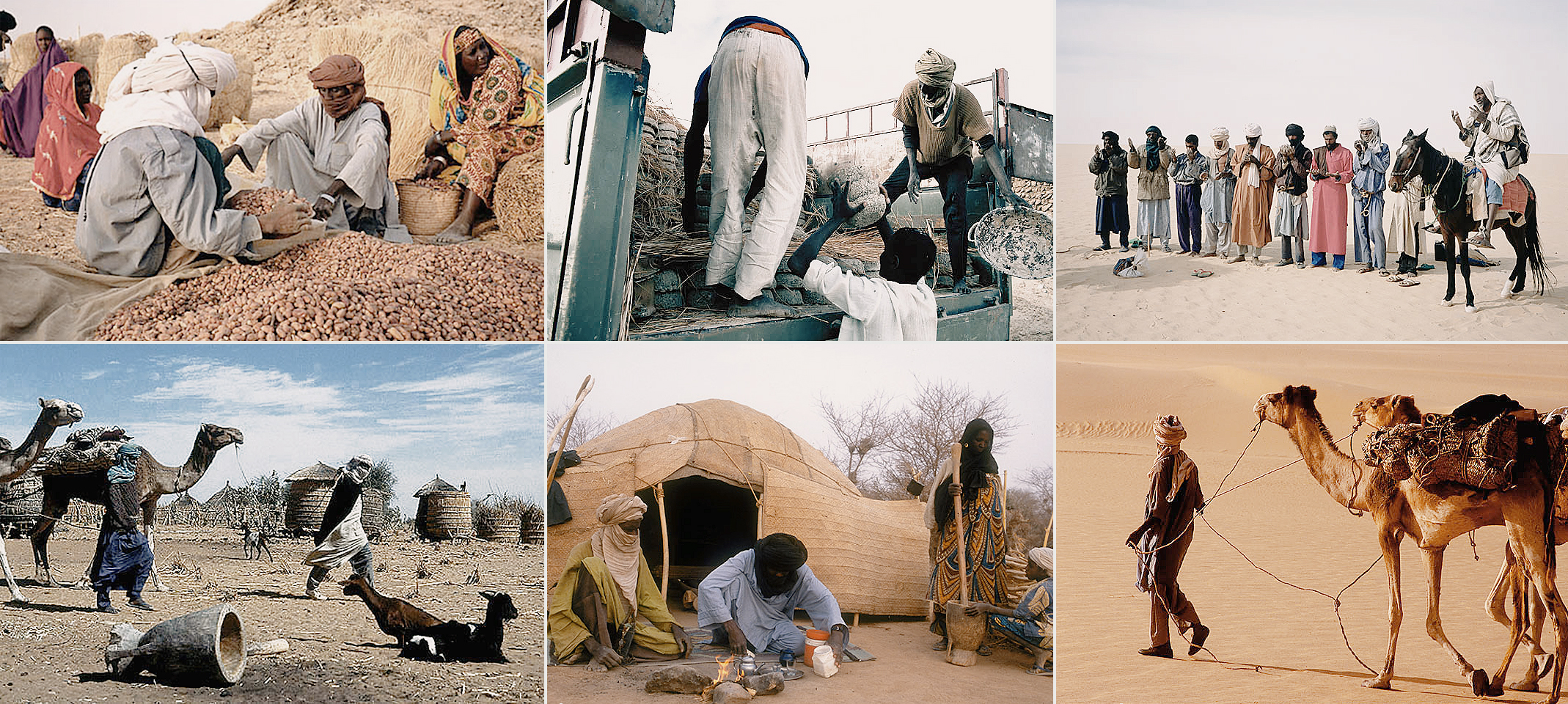
Each winter Tuareg caravans cross Niger's Tenere desert to fetch salt from the Bilma oasis and barter millet for dates. Salt is indispensable for Sahelian livestock and scarce local deposits combined with heavy consumption ensure profitable markets. In the past, for protection, caravans assembled and travelled en masse. They were accompanied by a representative of the Agadez Sultanate, who negotiated safe passage and determined salt prices. Frequently over 20,000 camels took part. This system has long disentegrated and nowadays, participants consist of families and friends who club together under the guidance of a 'madagu' - chief or headman.
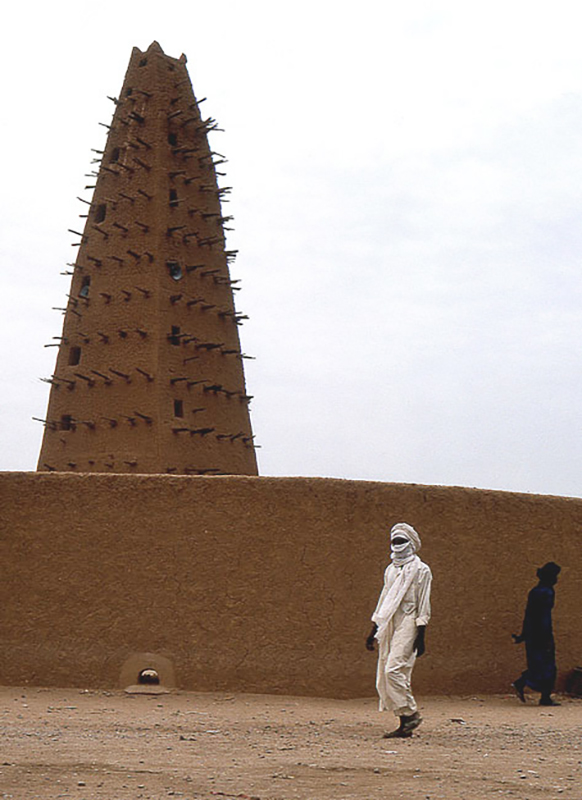
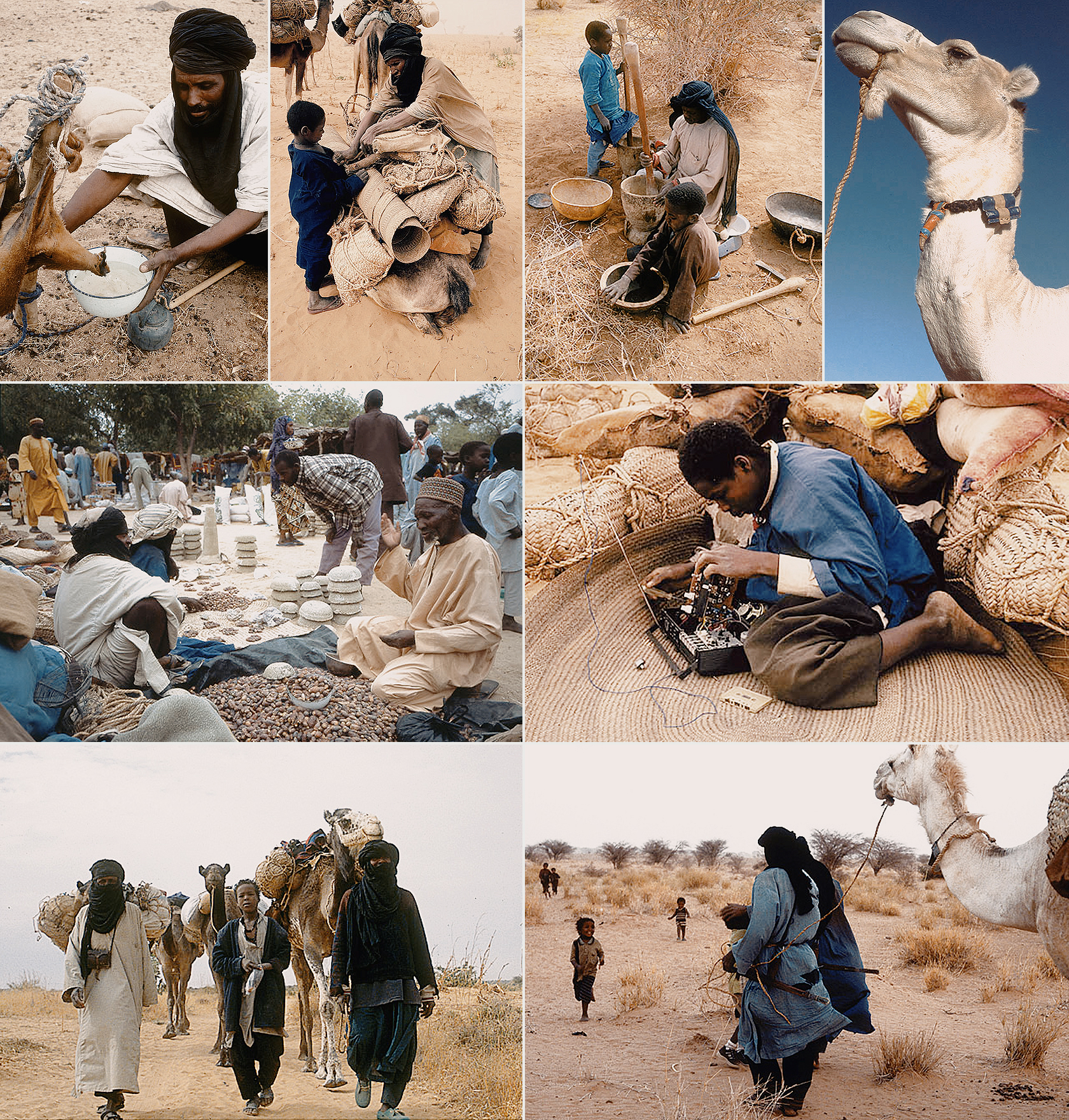
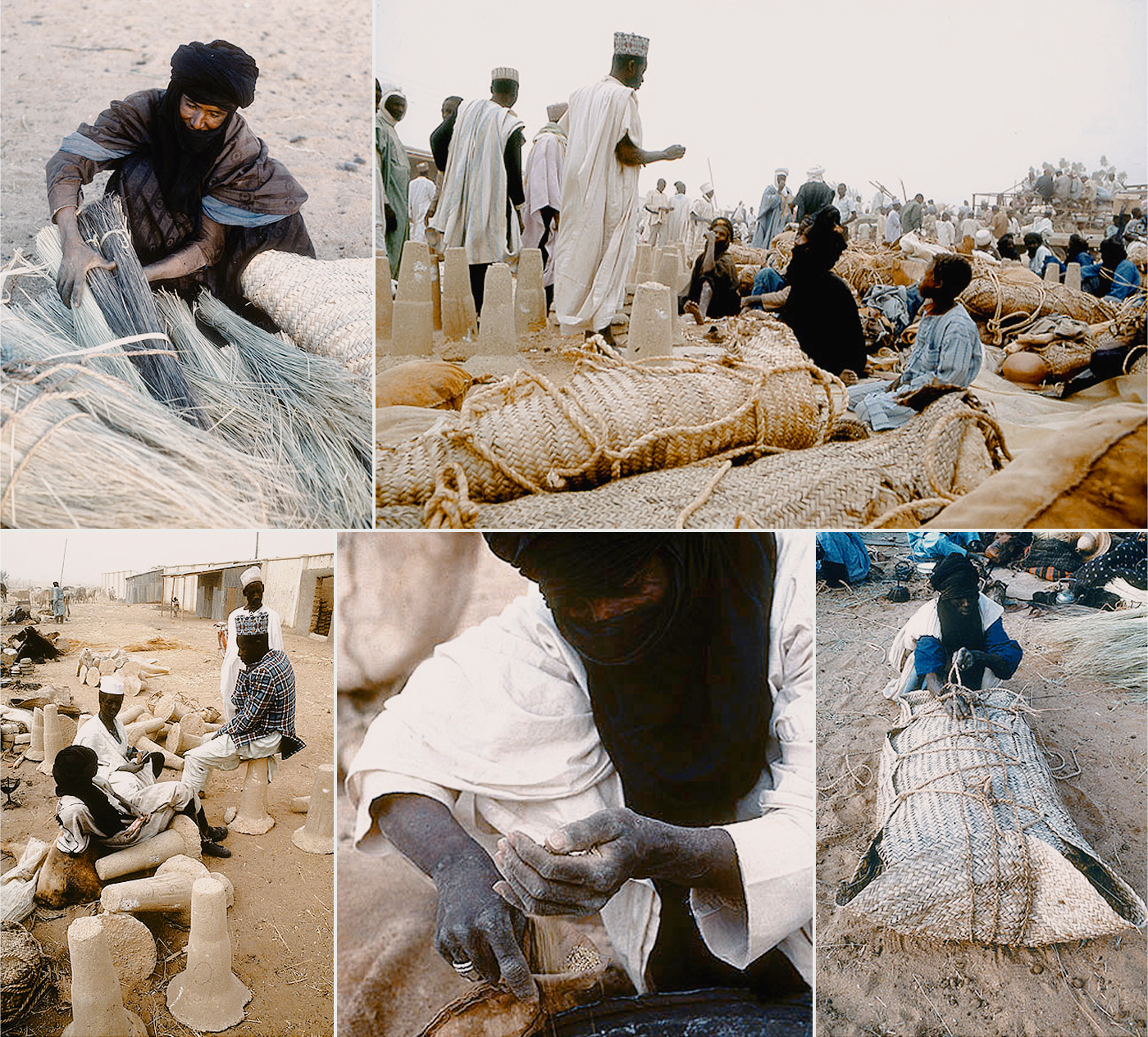
Caravans are on their way by autumn. Since the Tenere is completely barren, camel fodder is cut beforehand and compressed into compact bales. Only certain varieties of grass are suitable, principally 'grifis' and in the Air massif 'amassa'. Following droughts, the absence of this grass will prevent caravans from departing.
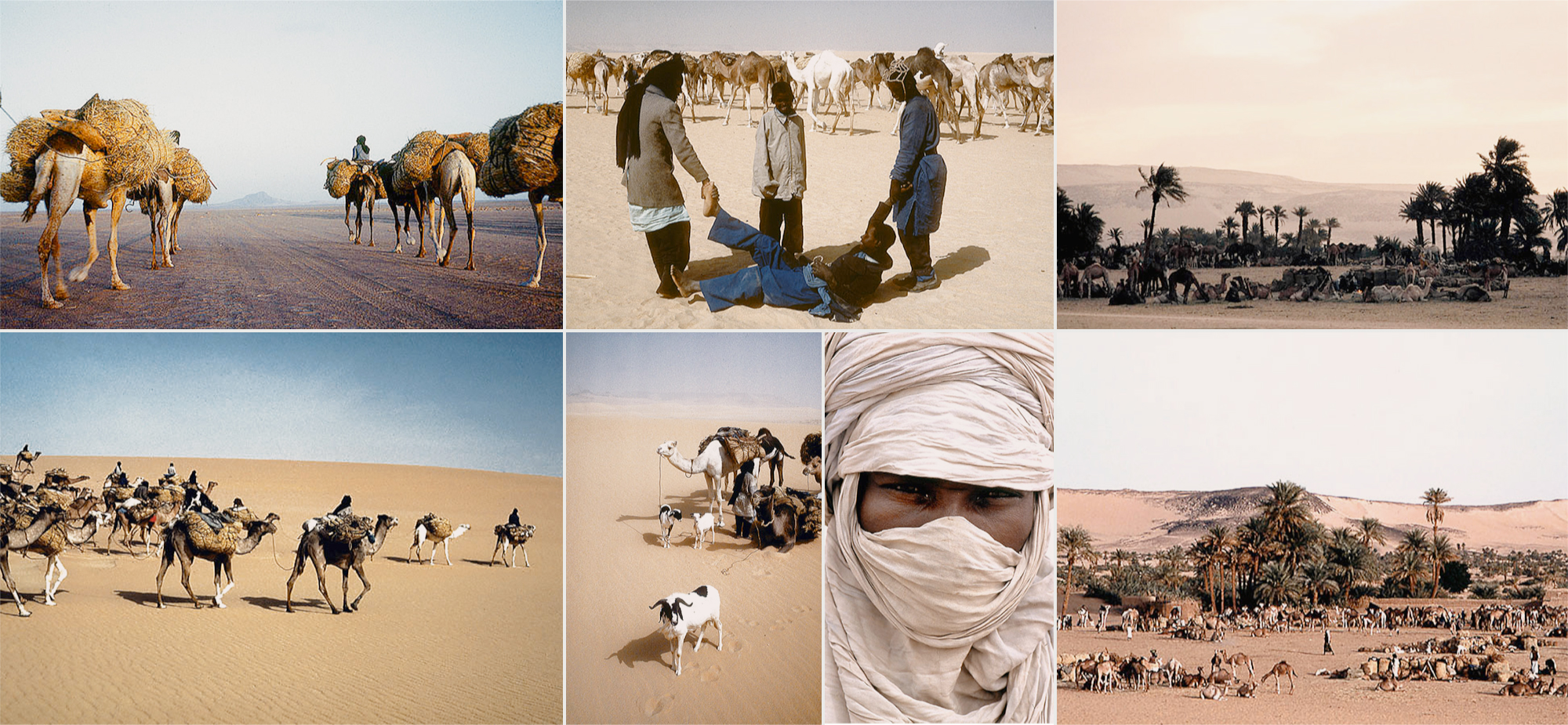
Each camel bears two fodder bales and two goatskins of produce for bartering in Bilma - millet, beans, maize, cheese and dried vegetables. To take advantage of grazing, the inintial pace is leisurely. On reaching the Tenere's dunes, however, caravans march from morning till night. These dunes are longitudinal in type, running in great parallel ridges from north-east to south-west. The grain of the land roughly corresponds to the caravans bearing. This partly explains the salt trade's success over centuries, and greatly facilitates navigation, particularily since the Bilma and Fachi escarpments cut across the trail. Here in this awesome wilderness the madagu's experience proves invaluable. Locating appropriate dune troughs through which to travel is important, for some are dead ends, others contain soft and loose sand. Nightly halts are a tremendous relief after covering some fifty kilometres per day. Camels are hastily unloaded and fodder bales arranged into windbreaks. Tea is immediately brewed followed by a hot supper of boiled millet flavoured with a herbal sauce.
The isolated Fachi oasis provides a welcome respite. Nestling beneath an escarpment and encircled by palm groves, the approach to Fachi is extraordinarily beautiful. The more northerly Tuareg - Kel Air - by pass Fachi, taking a direct route via Achegour well. Every few weeks a lorry ploughs beween Bilma and Fachi, transport from Agadez is rare. The oasis is therefore more dependant on caravans than Bilma, but Fachi's salt is deemed second grade and most caravans press on to Bilma - another four days.
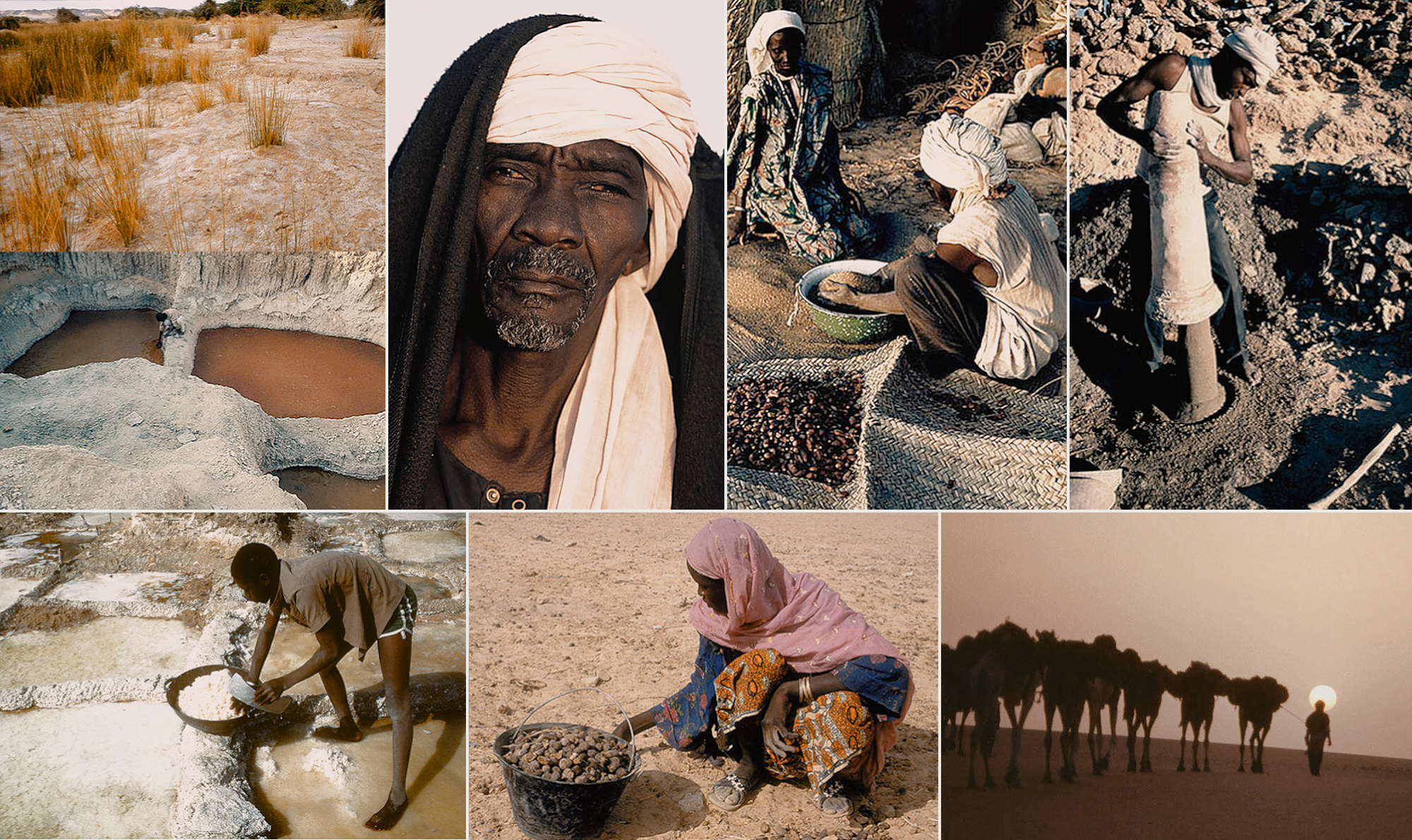
Situated on the Kaouar's escarpments southernmost edge, Bilma is the regional administrative centre. The inhabitants, like Fachi, are Kanouri. The salt pits of Kalala - the salt producing district - date back at least a millenium, and are still vitally imortant. In fact, Bilma's salt output has actually increased, though the bulk is now transported by trucks. A heavy brine is found here by digging pits six to eight metres deep. These oblong pits are arranged in groups with a low stone wall marking each holding's boundary. The rains of summer 2006 inundated and temporarily destroyed many pits.
Salt extraction is basically a simple though tedious procedure. High summer temperatures and evaporation cause a salty crust to crystalize over the brine surface. The crust is continuously broken down,causing fragments to sink and compose a sediment. The sediment's upper layer yields the purest salt, known respectively as 'egil' or 'beza' by the Tuareg and Hausa, and destined for human consumption. The pillars are called 'takiss' or kantou' and weigh 21 kilos. Small cake shaped moulds - 'fochi' weigh 2 kilos, and are of the same mix as pillars. Both these forms are from impure salt and for livestock. Kanouri women visit the caravan camps to barter and gossip. Bartering ratios remain fairly constant at three volumes of dates for two of millet. Only drought and conflict drastically alters this balance. Trucks also enter Kalala to load the smaller and less fragile 'fochi' mould. There has been a tendency by journalists, and some ethnologists, to romantacize and portray caravans as " doomed by the combustion engine". This is misleading. True, the Tuareg no longer hold a monopoly on salt distribution and transport, and caravan numbers are falling, but their economy has survived remarkably well, and profit margins on salt sales compared to millet prices broadly in line with thirty years ago - even taking into account the CFA devaluation in 1994.
Trucks obtain salt by off loading supplies of various goods - macaroni, oil, flour, through a complex system involving the village headmen or 'chef du quartiers', who in turn pass the goods to the salt workers on a pro rata basis - hard cash is seldom used. The Kanouri much prefer dealing with caravaneers, and two forms of 'fochi' are now made - a slightly larger version and of superior quality is reserved for the Tuareg.
Buyers in the salt markets of southern Niger and Nigeria are well aware of this. Whenever I ask a Tuareg what he thinks about trucks, the answer invariably is "Bilma has a lot of salt." Bonds of mutual help and benefit between Tuareg and Kanouri go back a long way. Often I have seen Kanouri women passing up a chance to trade, waiting patiently instead for their usual caravneer to arrive.
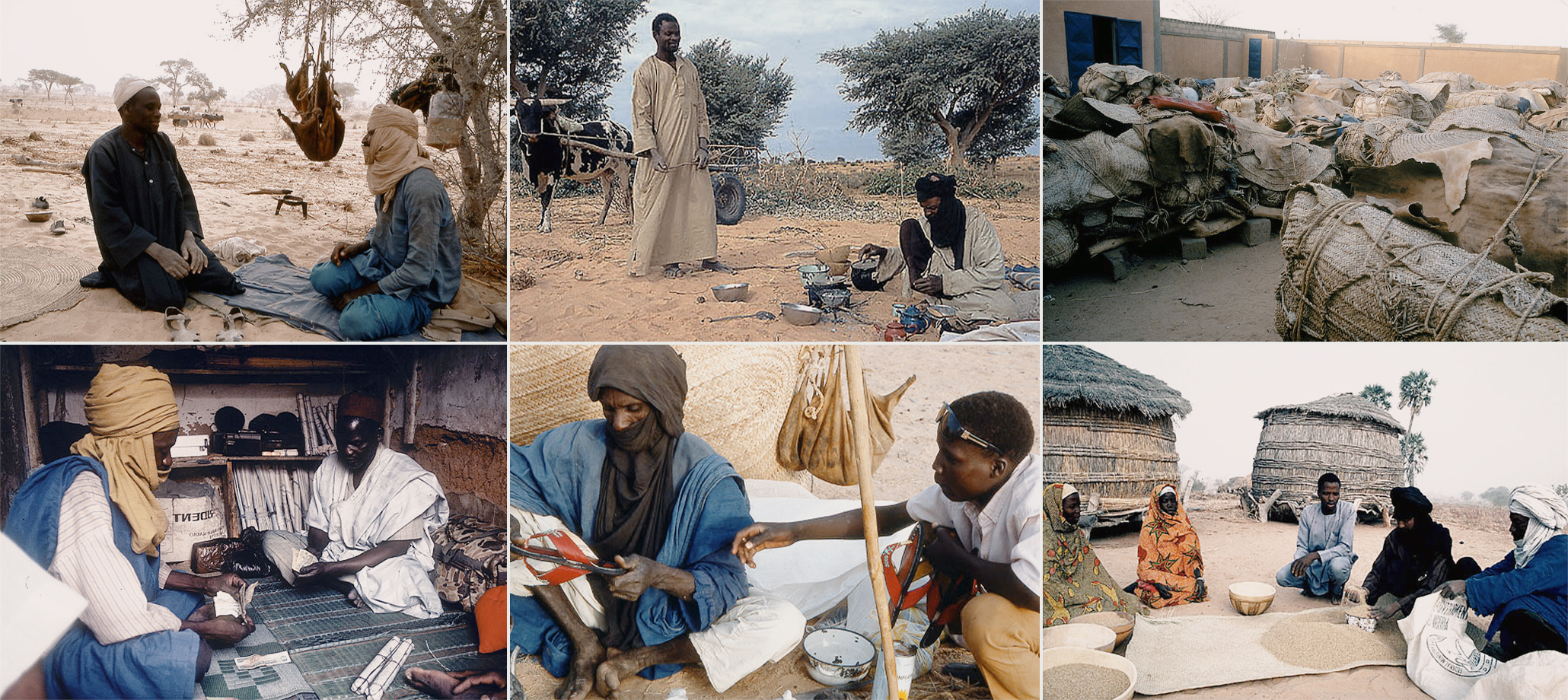
In the photographs above a caravan crossing the Tenere's dunes towards the oases of Fachi & Bilma. Each camel bears two fodder bales and two goatskins of millet for bartering against dates. A goat - for bartering against salt - is perched on a camel. The 'madagu's experience here is invaluable - he will guide the caravan safetly through the dunes. Sheep and goats are often carried across the Tenere atop camels. Both Fachi & Bilma lack fresh meat. If a cash sale is not possible, they are bartered for salt & goods.
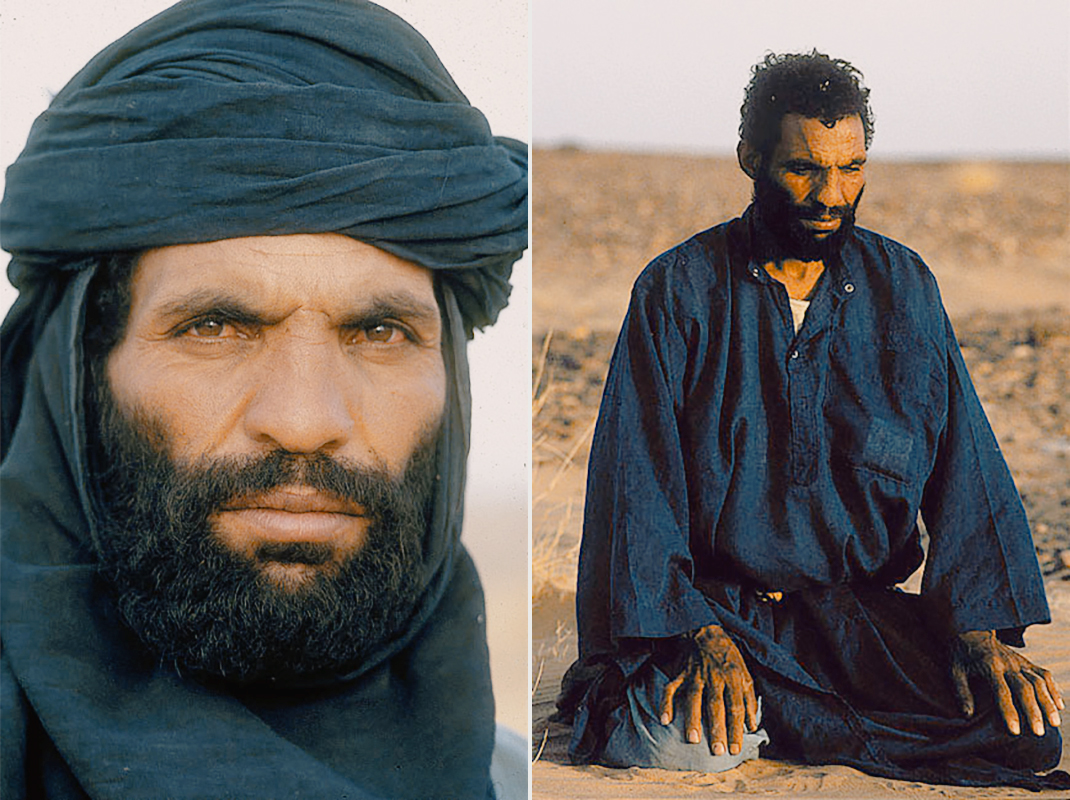
Fachi provides a welcome respite, and most caravans spend a day here before pressing on to Bilma - another four days. Fachi's salt is deemed inferior to that of Bilma. Bilma. Salt deposits crystalize on the surface - the water table is only a few feet deep. A 'marabout' or holyman of Fachi. Fachi has many marabouts, who make a living by offering prayers for the safety of caravans. The Tuareg, as tradition demands, must obtain their blessing before departure, for which they pay a token amount - either cash or goods. Kanouri woman of Fachi barters dates for millet. Strong bonds of mutual help and benefit have long existed between both parties. Bartering ratios are affected by famine or conflict, but generally, two volumes of millet are exchanged for three of dates.
With camel fodder at a premium, business is concluded with a week. Most camels manage six pillars, six salt cakes, plus two goatskins - now filled with dates instead of millet. Recrossing the Tenere, weakened animals suffer terribly. The bleached skeletons of those that perish litter the trail.
After resting briefly at home, the Tuareg continue south into southern Niger and Nigeria. The tempo now eases and the caravan south is more relaxed. Frequently older men or children - who may not have been strong enough for the Tenere - take part. Salt and dates are now sold in favour of millet. Millet provides the caravaneer's family with a staple diet, and surplus stock is bartered in Bilma the following season.
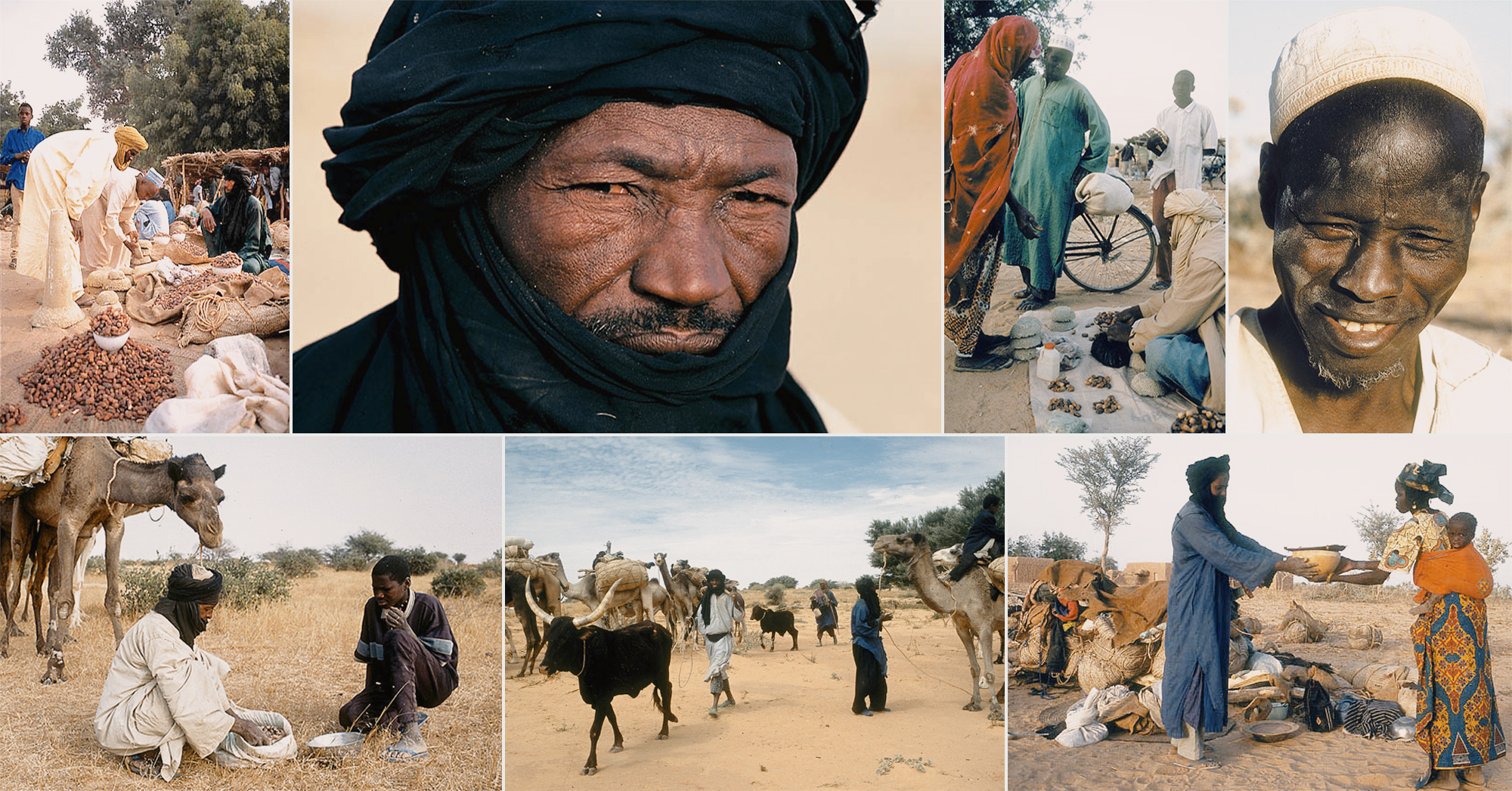
Most villages in the Damergou region of southern Niger come to life once a week with a market. Here, the Tuareg display their salt and dates. Herders - Hausa and Fulani - haggle humorously over prices. The Hausa ,in particular have a sweet tooth for dates. The Tuareg are obviously reluctant to sell below a certain price, but remain keenly aware that salt must be turned into hard cash to buy millet - and millet prices rise sharply following the harvest.
In February 2006 pillars fetched 3500 CFA in Damergou markets. Prices were broadly similar in 2007 - 2008 though many Tuareg reported that they could obtain 3500 CFA only within the Maradi region with Damergou falling to 3000 CFA. Salt prices rise towards summer - when livestock need it most, but most Tuareg - except the Kel Gress - cannot afford to wait. As with the Kanouri of Bilma, caravaneers usually deal with the same farmer each year. He will look after their interests, take care of any problems and hold their millet until they return home. While caravaneers go about their business, exhausted camels finally rest and graze.
With the naira's devaluation and increasing bureaucracy, the salt caravans of the Tuareg tend not to enter Nigeria so much. Once salt is sold and millet purchased, the Tuareg may seek out transport or haulage jobs - conveying goods from village to village.
In the past, the transport of ground nuts was a routine occupation for the Tuareg, but today, it is no longer profitable. Now is the time to buy presents for wives and families, as well as footwear and clothes. Then, towards the late spring, just before summer the rains fall, the caravan returns home.
The Bradshaw Foundation would like to thank Franco Paolinelli for his text and photographs used to publish this section of the Bradshaw Foundation website.
- The Rock Art of Africa
- Tassili n'Ajjer
- The Dabous Giraffe Petroglyph, Niger
- The Rock Art of Niger
- The Rock Art of Namibia
- The Rock Art of South Africa
- Hunter-gatherer rock art sites in Africa
- Gilf Kebir - Cave of Swimmers
- Animals in Rock Art
- Rock Art of Western Central Africa
- Where is the Oldest Rock Art?
- Africa's World Heritage Sites (Film)