

An article by Anna Lewis and Neil Prior on the BBC (June 2026) - 'Cave markings dismissed for years confirmed as Britain's oldest prehistoric art' - reports on the painted rock art discovered in a Welsh cave which has recently been confirmed to be the oldest in Britain. This research project was part-funded by the Bradshaw Foundation.
An article by Anna Lewis and Neil Prior on the BBC (June 2026) - 'Cave markings dismissed for years confirmed as Britain's oldest prehistoric art' - reports on the painted rock art discovered in a Welsh cave which has recently been confirmed to be the oldest in Britain. This research project was part-funded by the Bradshaw Foundation.

'The series of 10 red horizontal stripes was first found on the wall of a side chamber of Bacon Hole cave in Gower, Swansea, in 1912, before being dismissed years later as a natural phenomenon. But archaeologists have now used scientific advances to date the rock art to at least 17,100 years ago - also making it the oldest in north-western Europe.
Archaeologist and prehistoric art specialist George Nash said the art could have been used as a "communication system" but that its meaning was something "way beyond our comprehension". According to Nash, at the time of the cave art, what is now the Bristol Channel was a "rich fertile plateau" between Gower and the north Devon coast. This would have served as an important feeding ground in the summer for animals such as mammoth, bison, horse, elk, and reindeer, and would have in turn drawn hunter gatherers toward the area.

It's thought they would have used some of the 95 caves along the Gower Peninsula facing the Bristol Channel, where stone tools have been found during excavations. At the time, the average summer temperatures would have been about -10C (14F) across the "treeless landscape" complete with melting water as glaciers began to retreat to central Wales. While the research has been hailed as a significant "rediscovery", mystery remains around the meaning behind the art.
Nash, associate professor of the University of Coimbra, Portugal, and a research fellow at Liverpool University, said: "We, in our 21st Century mindset, call it art, but at 17,100 years ago BP (before present), it probably was a communication system, for example." Speaking on Radio Wales Drive, Nash added the horizontal bands could be "tally marks", perhaps from people telling others they had been at that cave for a number of years.
It is thought there could be also further prehistoric art hidden underneath the graffiti on the other side of the cave, painted by a local fisherman in the late 1800s. In 1928, the initial discovery of the rock art was dismissed as "red oxide mineral seeping through the rock and not prehistoric art", the Guardian reported at the time. It was rediscovered in 2022 after decades of being overlooked by archaeologists, partially due to the calcite flow on top of it making the rock art difficult to see.

Uranium-thorium dating has now been used to examine the pigments, leading the international team conducting the research under Nash to conclude the lines were created by "human agency" rather than natural processes. While the bands have been dated to 17,100 years old, the age of the mineral layer over the painting, Nash said the finger painting could in fact be much older. Nash said: "I was taken aback that we were able to date it and analyse the pigments. This is an exciting rediscovery, significant in understanding what was going on in Wales in the deep past."
Bacon Hole is found within the limestone cliffs of south Gower, overlooking the Bristol Channel, and is under the custodianship of National Trust Cymru. Although it is in an area of outstanding natural beauty it is not protected as a scheduled monument, but archaeologists argue that it should now become one. Nash said a steel grill had been put into the side chamber in the cave to stop any vandalism to the art, so the painting's only visitors are the bats who live there. The Bacon Hole discovery came a decade after Nash found a reindeer engraved on the wall of a cave nearby, which was confirmed in 2012 as the then-oldest known rock art in Britain in 2012.

entrance to Bacon Hole

over the Bristol Channel

cliffs of south Gower

Bacon Hole in Gower

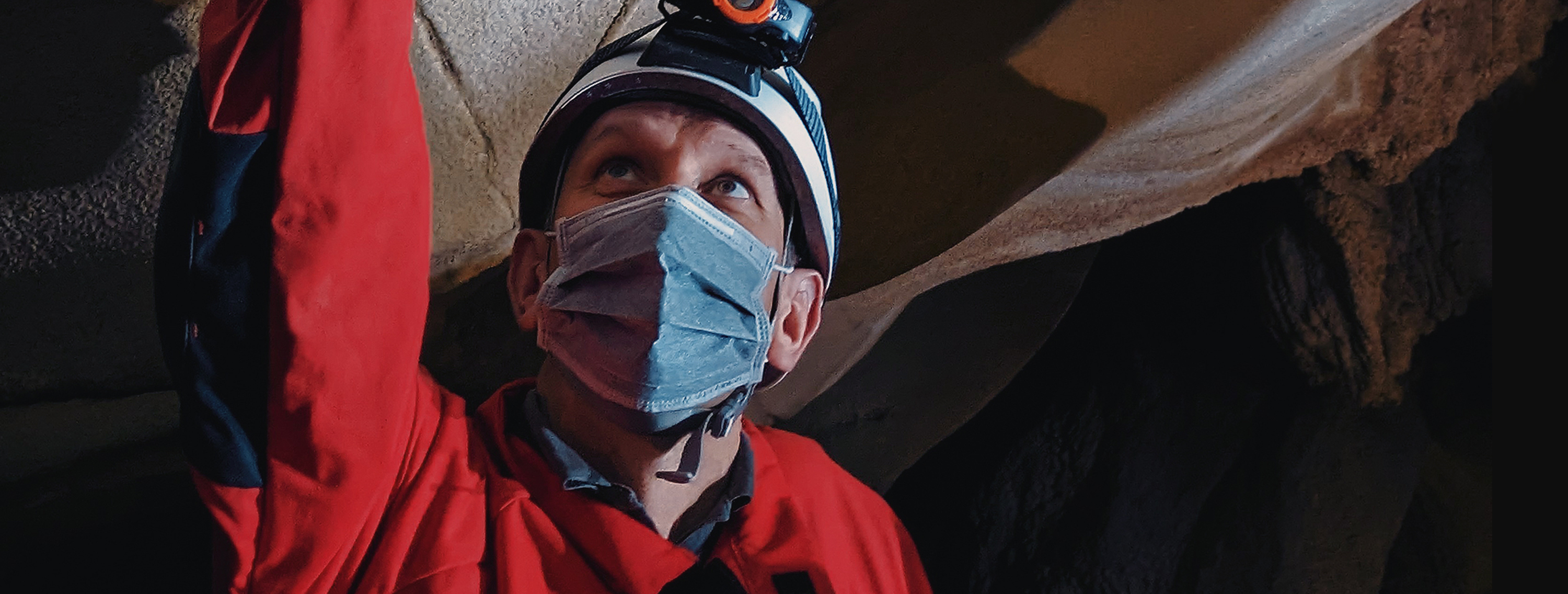
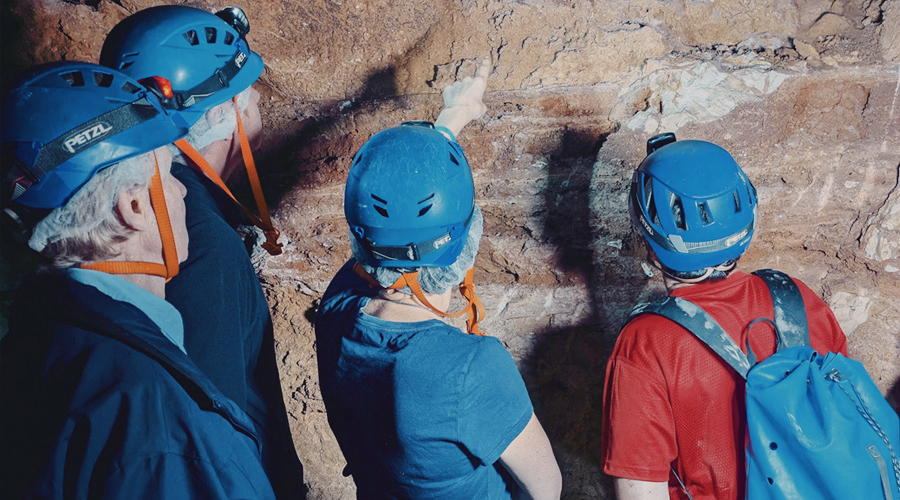
investigations in Bacon Hole

investigations in Bacon Hole
The research was conducted by First Art, a group of scientists, as well as academics from the universities of Southampton and Swansea, among others, with support from the National Trust and the Bradshaw Foundation. David Thomas, National Trust Cymru's archaeologist, said: "We always knew Bacon Hole was an extraordinary Palaeolithic site - but to discover that the oldest cave art in Britain lies here in Wales is very exciting. "To imagine people standing on this very coastline over 17,000 years ago, carving their marks into the rock and transforming the places they lived through art, is profoundly moving. "We're hugely grateful to Dr Nash and the First Art team for revealing this hidden chapter of our past and deepening our understanding of the remarkable places we care for on Gower."
Archaeologists have confirmed that a set of ten red horizontal painted lines in Bacon Hole cave on the Gower Peninsula, Wales, are Britain’s oldest known prehistoric art, dated to at least 17,100 years ago. First recorded in 1912 but dismissed in 1928 as natural mineral staining, the markings were rediscovered in 2022 and re‑examined using modern uranium–thorium dating, which showed the pigment was applied by humans rather than produced by geological processes.
Prehistoric art specialist George Nash suggests the markings may have functioned as a communication system, possibly 'tally marks' though their exact meaning remains unknown. At the time the art was created, the Bristol Channel area was a treeless, glacial landscape with summer temperatures around –10°C, and the now‑submerged plateau between Gower and Devon served as a rich feeding ground for mammoth, bison, horse, elk, and reindeer—drawing hunter‑gatherers to the region and its many caves.
The Gower Peninsula has 95 known caves, many with stone tools or faunal remains. Bacon Hole was one node in a much larger seasonal circuit. Who were the people? The makers of the Bacon Hole art belonged to Upper Palaeolithic hunter‑gatherer cultures — likely connected to the broader Magdalenian world of western Europe, though Britain’s archaeological record is fragmentary. They were highly mobile, moving tens or hundreds of kilometres annually, and small in number, perhaps 20–40 individuals in a band. Technically skilled, producing blade tools, bone points, and portable art, they were socially complex, with symbolic behaviour deeply embedded in daily life. They were cognitively modern humans with rich symbolic traditions, oral histories, and social structures. The Bacon Hole markings — ten horizontal red stripes — are simple, but simplicity does not mean triviality. In Ice Age Europe, even minimal marks often carried layered meaning.
The art survived beneath a calcite layer, which helped conceal it for decades. Nash’s team believes more prehistoric art may lie hidden under later graffiti. The discovery strengthens the case for Bacon Hole—currently not a scheduled monument—to receive formal protection. The National Trust Cymru, which oversees the site, called the find a profoundly important “rediscovery” that deepens understanding of Wales’s Palaeolithic past.
The project was carried out by First Art, with researchers from Southampton, Swansea, Coimbra, and Liverpool universities, and part‑funded by the Bradshaw Foundation. It follows Nash’s earlier discovery of a reindeer engraving nearby, previously Britain’s oldest rock art (confirmed in 2012).









Bradshaw Foundation
7 July 2026