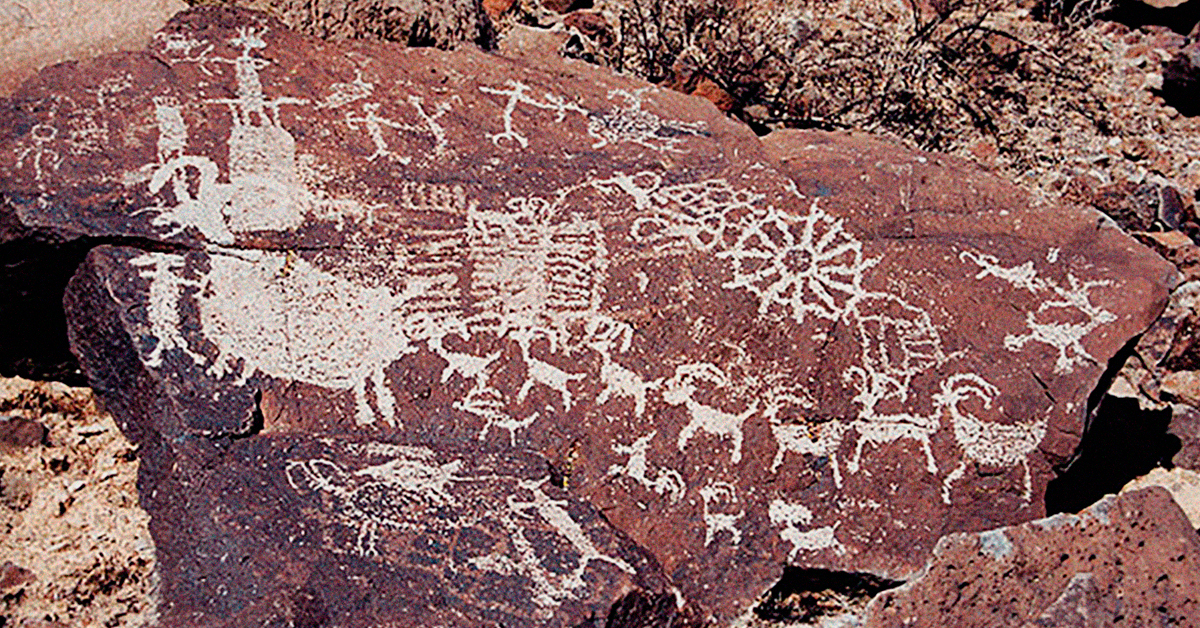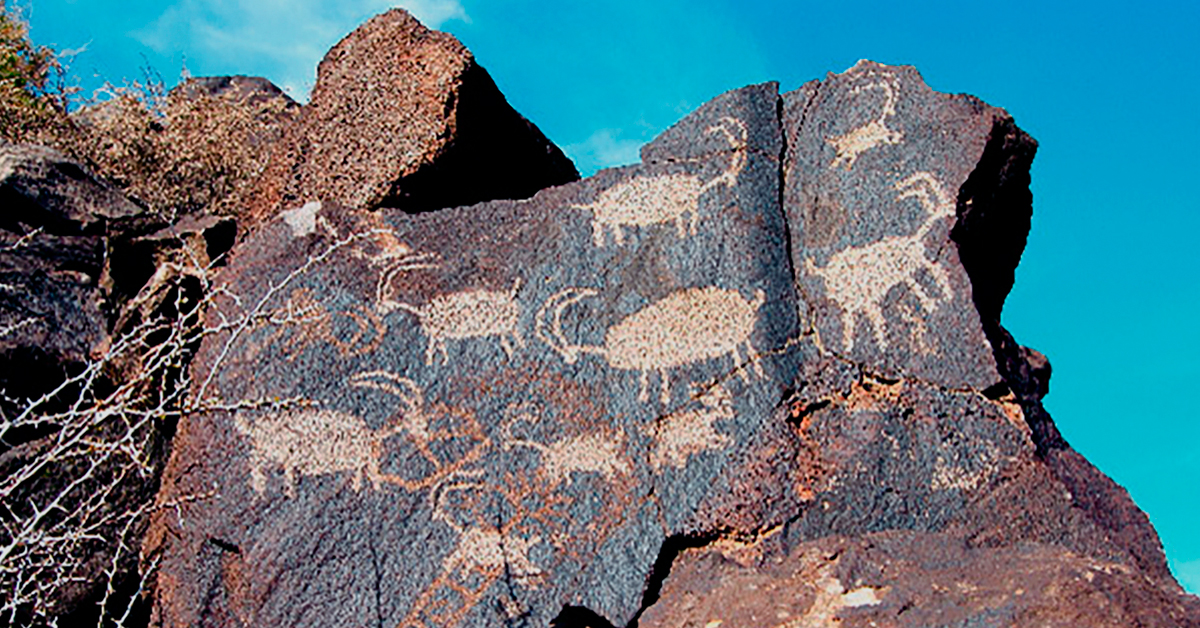

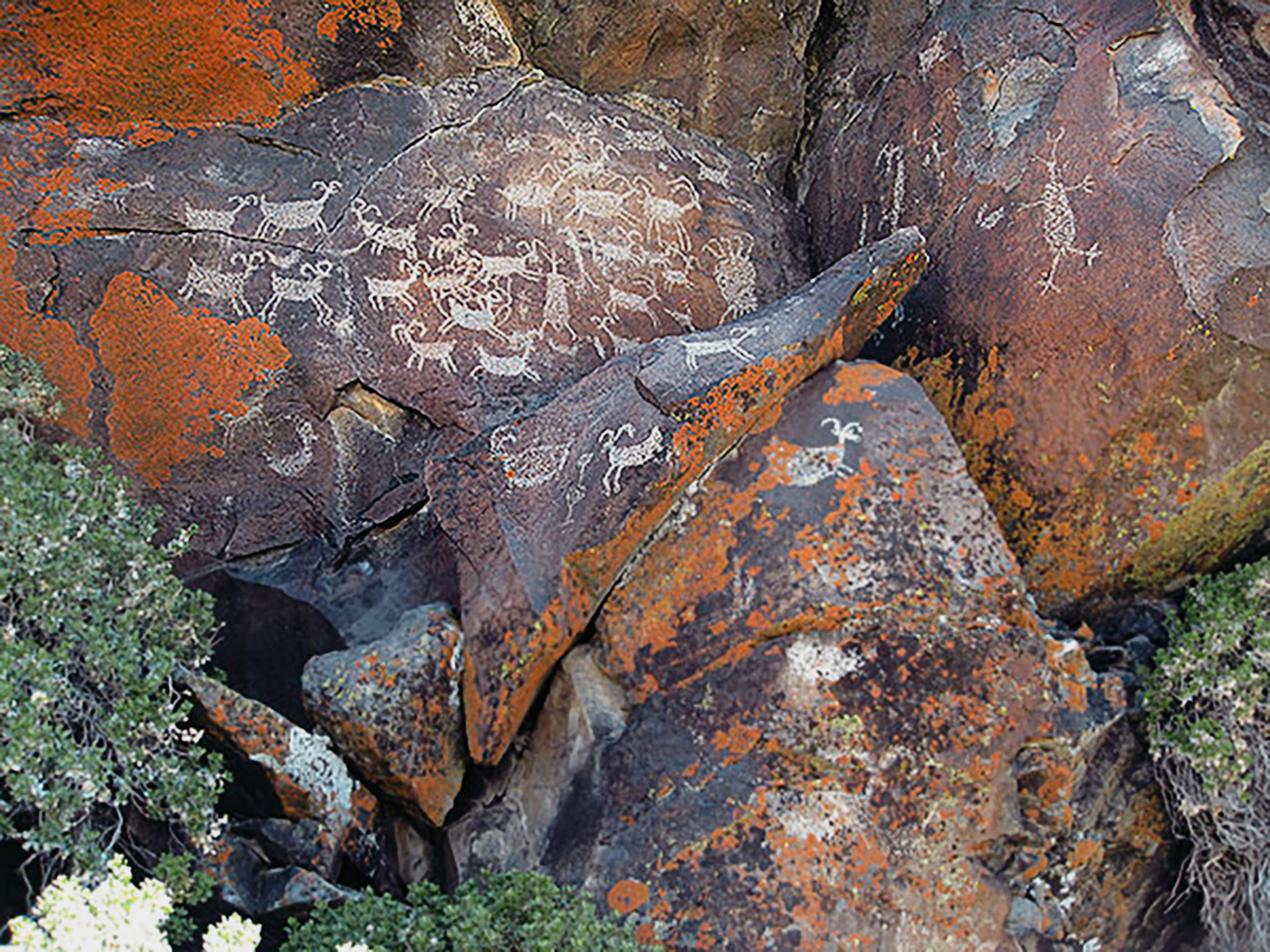
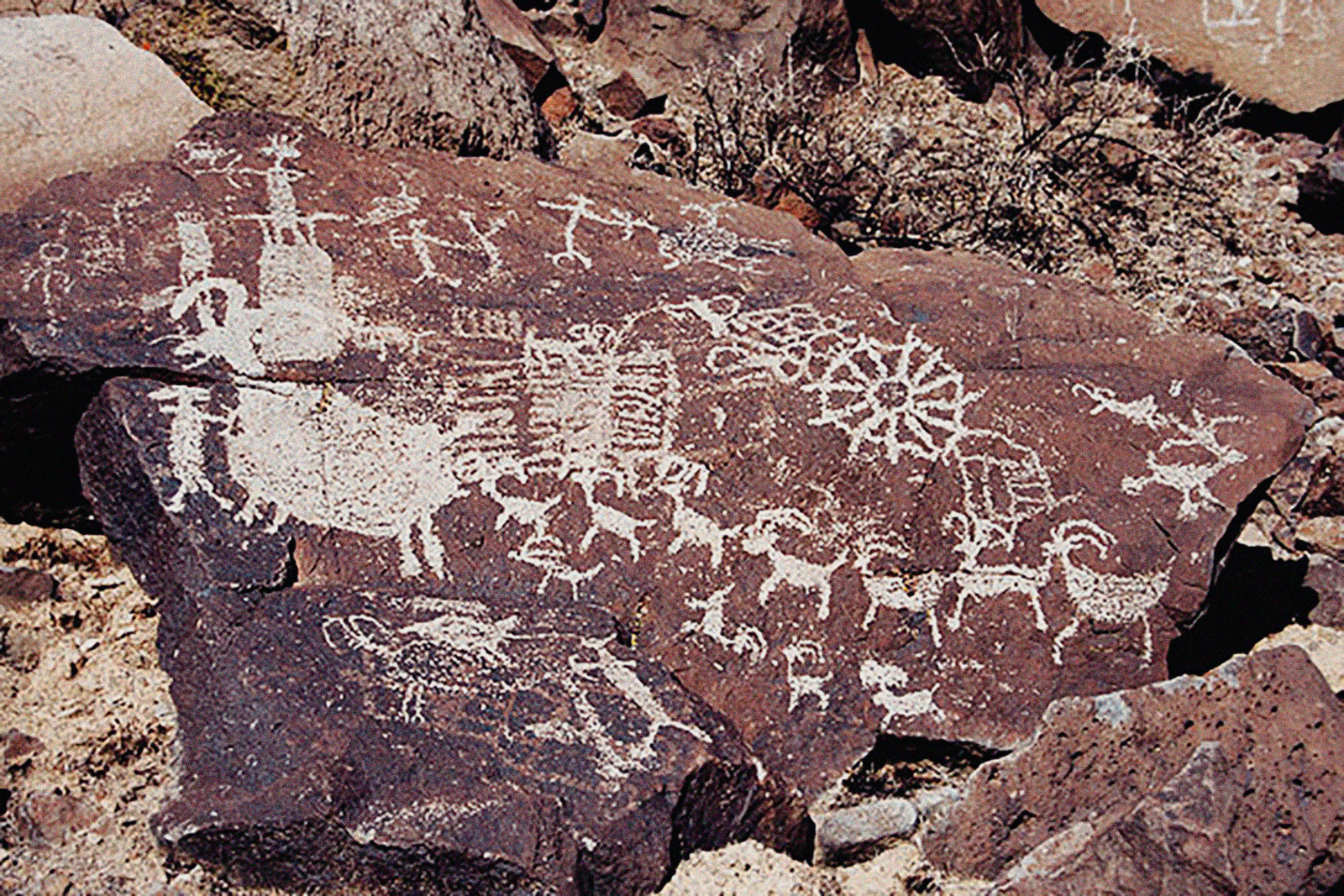
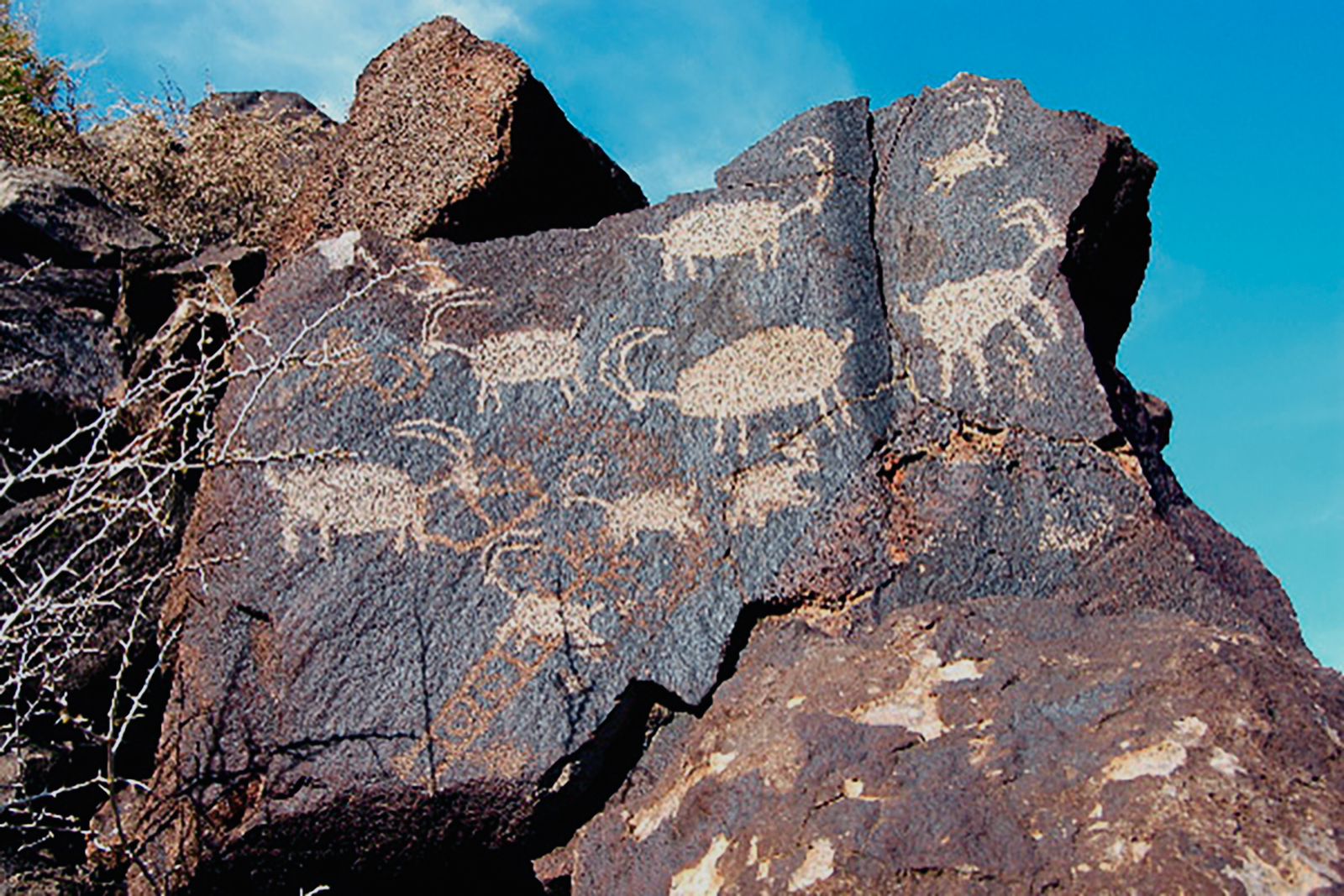
The Coso petroglyphs consist of rock carvings depicting animals, abstract symbols and anthropomorphic figures. The art is located both throughout the higher elevation uplands and the broad volcanic lowland drainages to the south, and is typically found on large outcrops of basalt that form extensive escarpments. These outcrops have developed a dark brown patina - or desert 'varnish' - that when pecked or scratched reveals the lighter heart rock beneath.
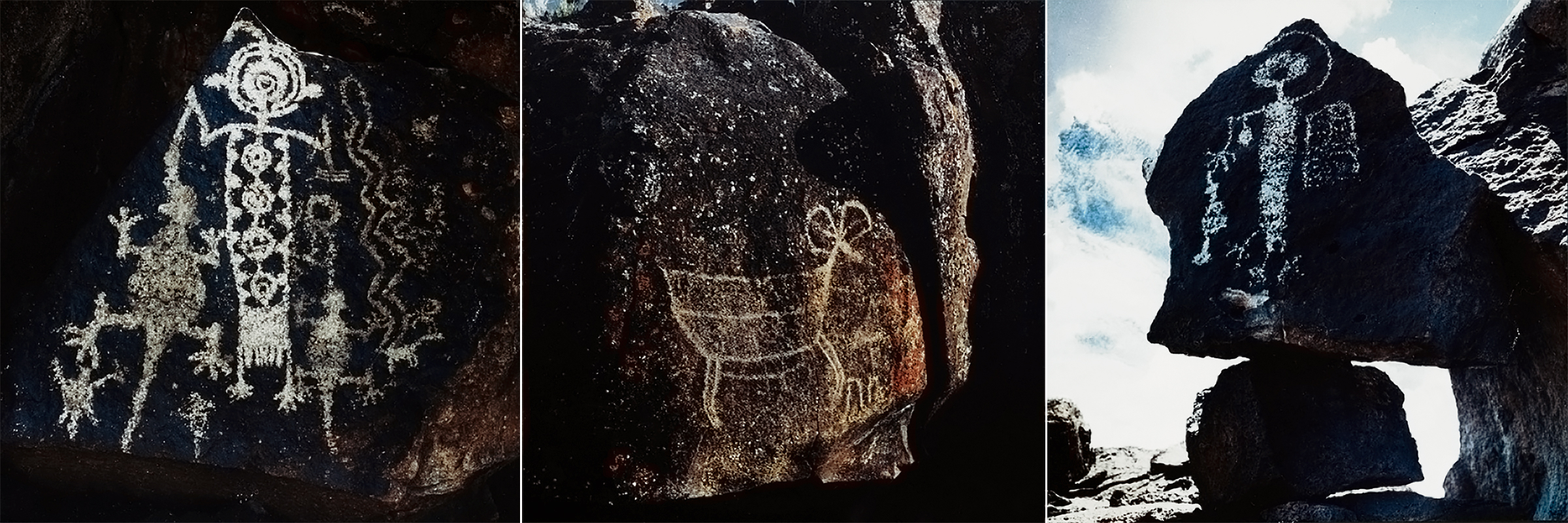
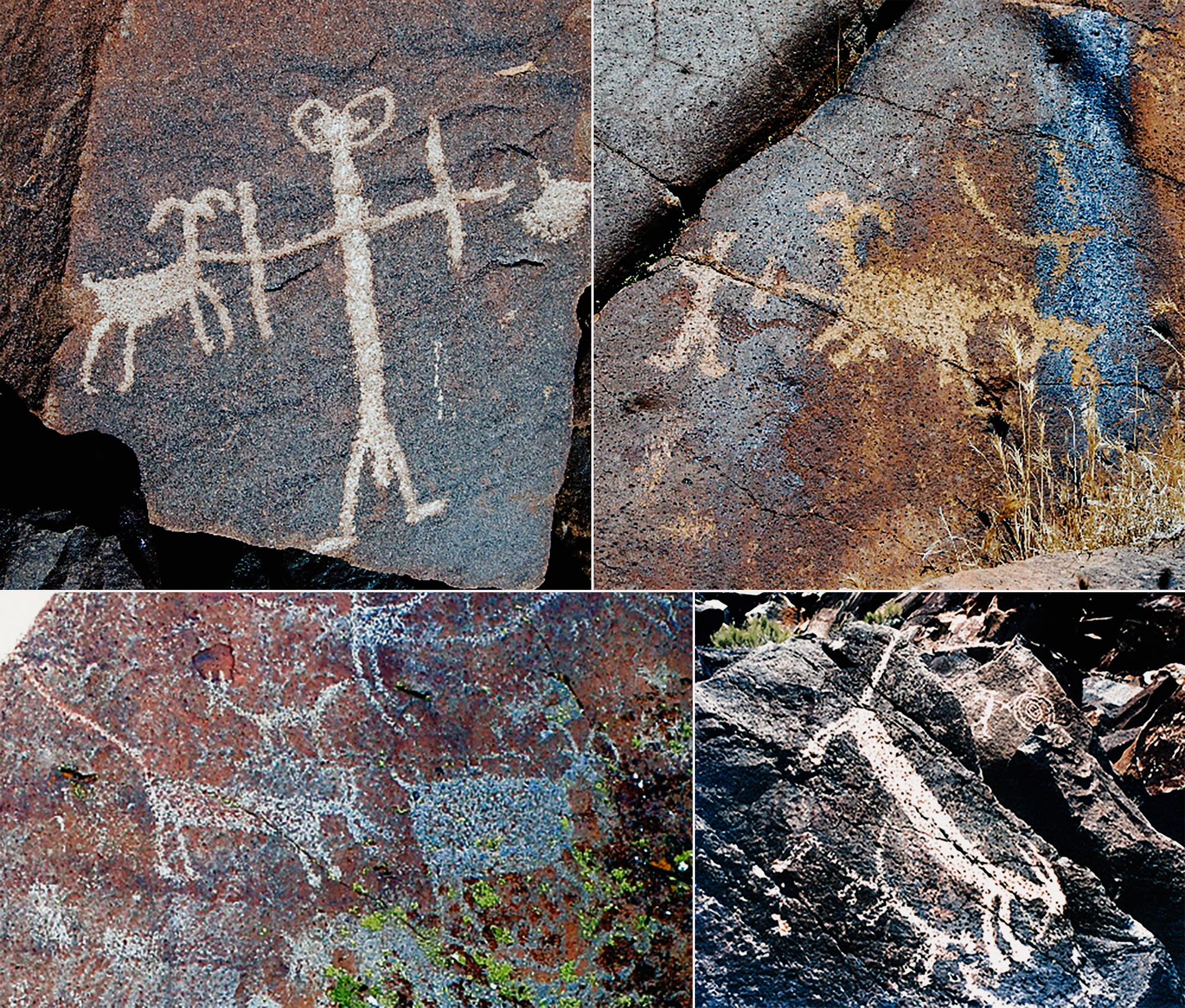
(Left to right) Renegade Canyon, Big Sheep Canyon and Coso Petroglyphs

As with rock art found around the world, the art provides a window into the rituals and beliefs of our ancient ancestors. However, because there are no living practitioners with direct explanations, interpreting the art remains speculative. However, in the following paper by Dr. Alan P. Garfinkel, he argues that there certainly is evidence to give us an understanding of what the engravings represented and why they were carved.
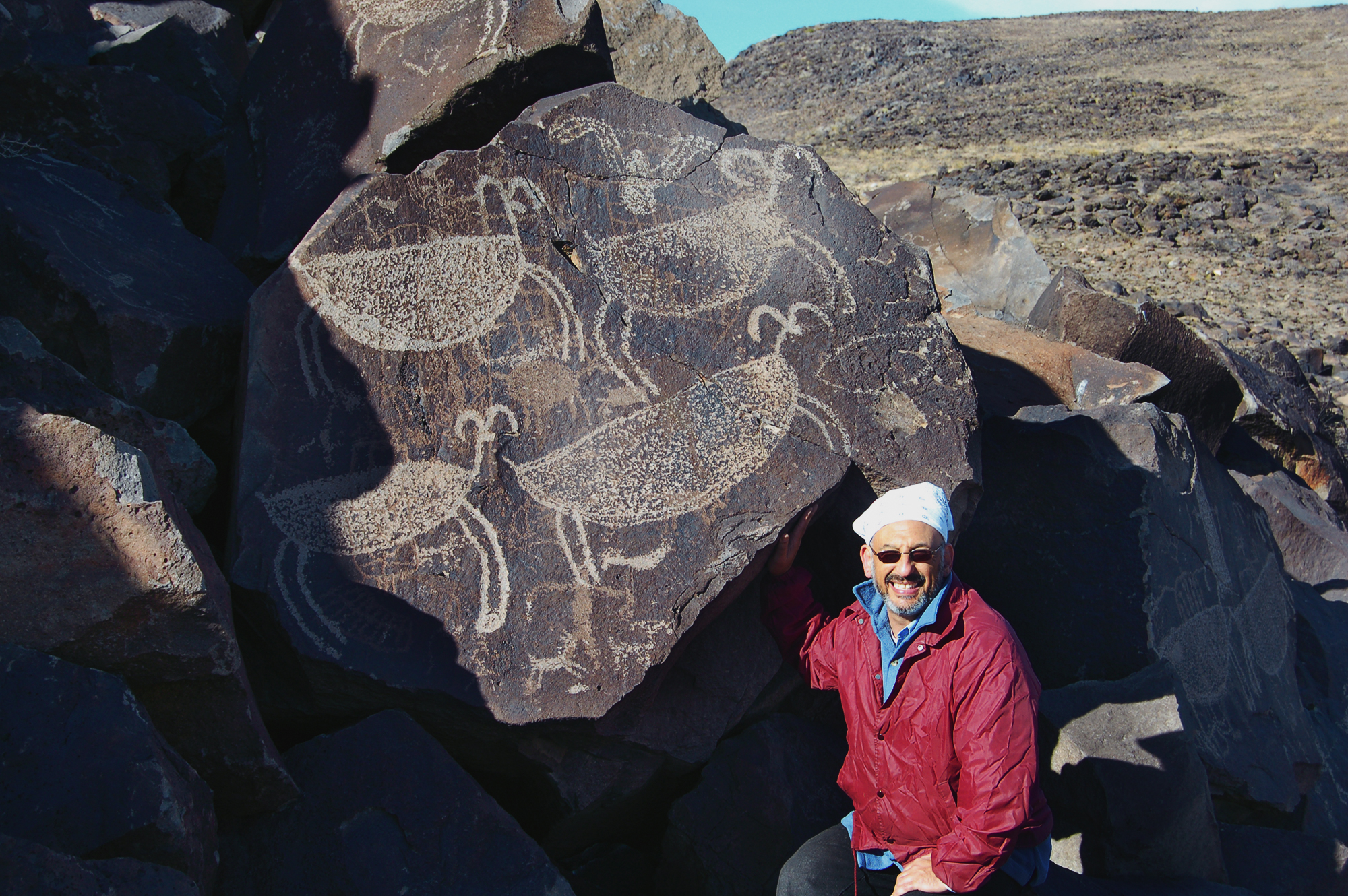
These and other studies within the region became the basis for his landmark Ph.D. dissertation on Prehistoric Forager Ecology completed at the University of California, Davis. That research was published in monograph form through the Maturango Museum in Ridgecrest, California (Archaeology and Rock Art of the Eastern Sierra and Great Basin Frontier, 2007).
Dr. Garfinkel has focused his research interests geographically and topically. His studies have been aimed at understanding the rich and complex archaeological record of the far Southern Sierra Nevada, Tehachapi Mountains, western Mojave Desert, and southwestern Great Basin. This region was the home to several ethnolinguistic groups including; the Tubatulabal, Kawaiisu, Panamint Shoshone, Owens Valley Paiute, Yokuts, and Kitanemuk. Alan has attempted to bring the rich rock art record of the Coso Range into discussions of the prehistoric archaeological record of the area with an attempt to integrate these data sets into a fuller picture of prehistoric lifeways and culture change. His studies focus on linguistic prehistory, prehistoric population movements, forager religion, animal ceremonialism, and Numic Ghost Dance paintings. Most recently his work has been framed in close collaboration with the Native peoples of the area and has applied their cultural constructs and unique perceptions into interpretive schemata for the local rock art.
This article was written after I completed and published my Ph.D. dissertation research and wanted to make a statement. There had been so much written regarding shamanism and rock art that it seemed to be a monolithic explanation and cover all for rock art in almost every instance and diverse form. However, since Coso Range rock art was one of the original data sets used as a benchmark for the shamanic and trance models of rock art interpretation, it would be a good to revisit this data set. This was especially the case as so much work had been done in general on eastern California prehistory. That research needed to be integrated into a broader discussion of rock art as it complements dirt archaeology studies.
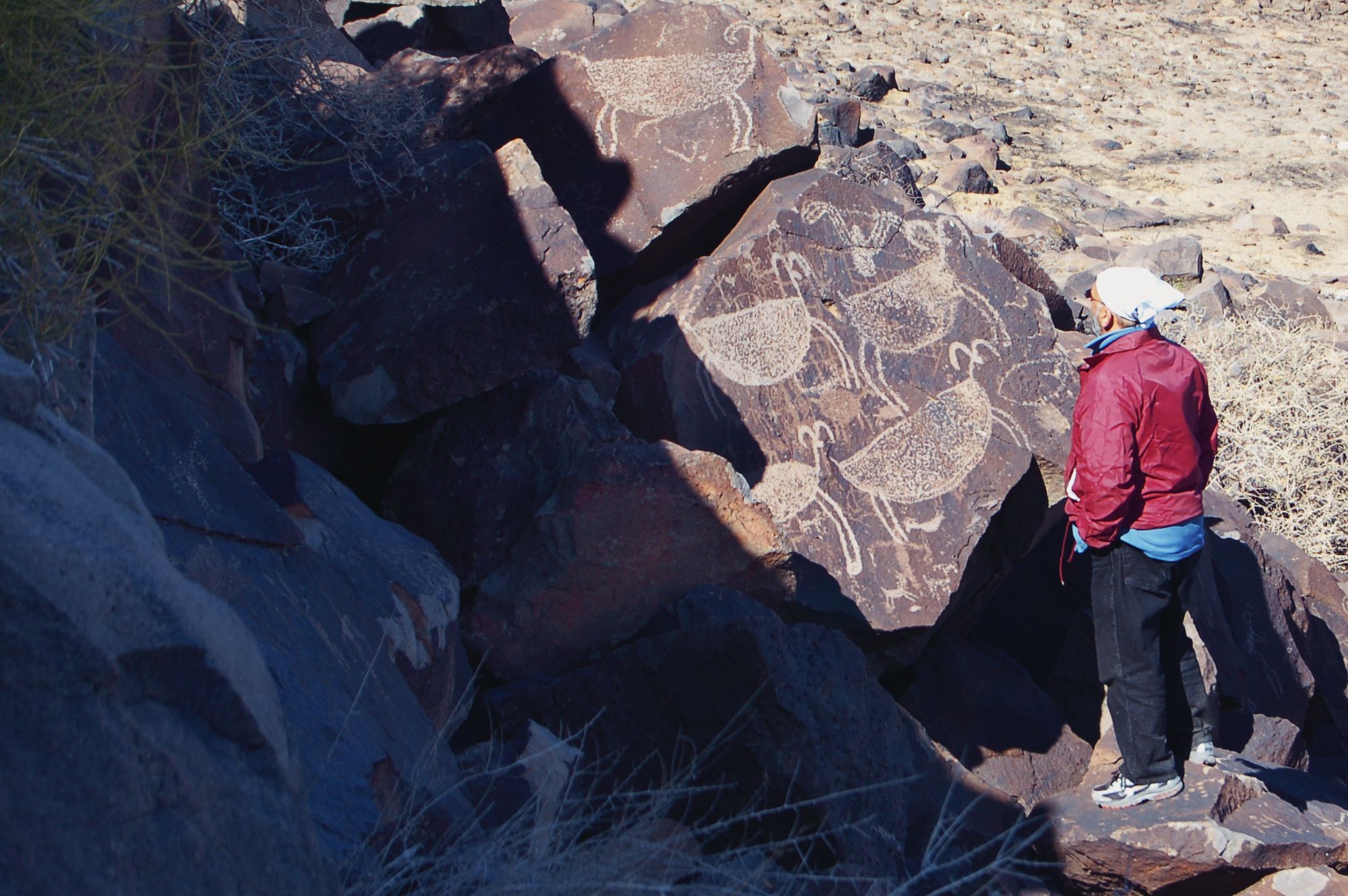
Also there is more than meets the eye when we think about shamanism, there is also oral tradition and mythology and central supernaturals that play into this discussion and they just might have figured into this dynamic explosion of artistic expression.
I began to entertain the notion that the PBAs (animal-human conflations or Patterned Body Anthropomorphs [PBAs]) in the Coso Range might have something to do with the role of the Animal Master in revivifying the animal dead. However this was only in an early stage of my thinking and was not fully developed until later.
In another vein I wanted to refresh and perhaps reflesh the old “hunting magic” ideas originally developed by Heizer and Baumhoff and supported by Grant et al. I placed that idea in a contextual understanding of world forager religion and animal ceremonialism. Upon reflection it appeared to me that what we were dealing with was akin to increase rites and world renewal ceremonies. As well fecundity and fertility appeared to me to have a lot to do with those lively and vital images of what I thought to be living sheep running and jumping to escape the hunting efforts of the Coso atlatl and bow men. It also seemed probable that propitiation and rites of passage must have also come to play with the extent of such a cult focusing on a remarkably strong and aggressive animal. My article also served as a testimonial of the importance of integrating the regional archaeofaunal record into rock art interpretation and served to demonstrate that the animals depicted, in the Coso example, were certainly at times an important part of the subsistence base.
ALAN P. GARFINKEL, PH.D.
California Department of Transportation
One of the more spectacular expressions of prehistoric rock art in all of North America is the petroglyph concentration in the Coso Range of eastern California. These glyphs have played a prominent role in attempts to understand forager religious iconography. Four decades ago, Heizer and Baumhoff (1962) concluded that Great Basin petroglyphs were associated with hunting large game and were intended to supernaturally increase success in the hunt. Similarly, in their seminal work Grant et al. (1968) concluded that the mountain sheep drawings of the Coso region bolstered the “hunting magic” hypothesis. However, this hypothesis has become increasingly marginalized by a prevailing view that considers most rock art as an expression of individual shamanistic endeavor (cf. Lewis-Williams and Dowson, 1988; Whitley, 1994; Whitley and Loendorf, 1994). This article explores comparative ethnologic and archaeological evidence supporting the hunting magic hypothesis. I place this explanatory framework in a larger context based on a contemporary understanding of comparative religion and the complexity of forager symbolism. The article argues that the preponderance of Coso images are conventionalized iconography associated with a sheep cult ceremonial complex. This is inconsistent with models interpreting the Coso drawings as metaphoric images correlated with individual shamanic vision quests.
Four decades ago, Heizer and Baumhoff (1962:238) concluded that Great Basin petroglyphs were associated with the hunting of large game. This “hunting magic” hypothesis was based on the distribution of rock art sites found along game migration trails. The researchers posited that the primary animal being hunted was the bighorn sheep. In their work on the Coso Range drawings, Grant et al. (1968:291) concluded that the realistic sheep drawings bolstered that hypothesis (Figure 1).
Yet over the years the hunting magic model has not fared well. At best this interpretation has lost “traction” and is currently classified as an “out-of-favor” theory (cf. Quinlan, 2000a, 2000b). The hypothesis has become increasingly marginalized by researchers worldwide (cf. Francis and Loendorf, 2002:23; Ucko and Rosenfeld, 1967) and has been replaced by a prevailing view that most rock art is an expression of shamanism (cf. Clottes and Lewis-Williams, 1998; Keyser and Klassen, 2001; Lewis-Williams and Dowson, 1988; Pearson, 2002; Turpin, 1994; Whitley, 1992, 1994a, 1994b, 1998a, 1998b, 2005; Younkin, 1998).
Any concept that purports to account for all, or even most rock art of a given style or motif I would argue is inherently suspect. One would expect to find that different sets of environmental, cosmological, religious, artistic, and social factors influenced the creation of rock art at various times and places. Nevertheless, the manner in which hunting magic has been specifically framed does not provide a clear and full picture of the context and implications of that particularly important model. Such treatment minimizes the role that ritual and symbolism plays in animistic hunter-gatherer societies (Durkheim, 1915; Eliade, 1964; Frazer, 1933; Tylor, 1913). It also implies a rather monolithic notion of the eclectic manifestations of ritual behavior identifying them under a singular and somewhat ambiguous term of “shamanism” (cf. Kehoe 2002:384).
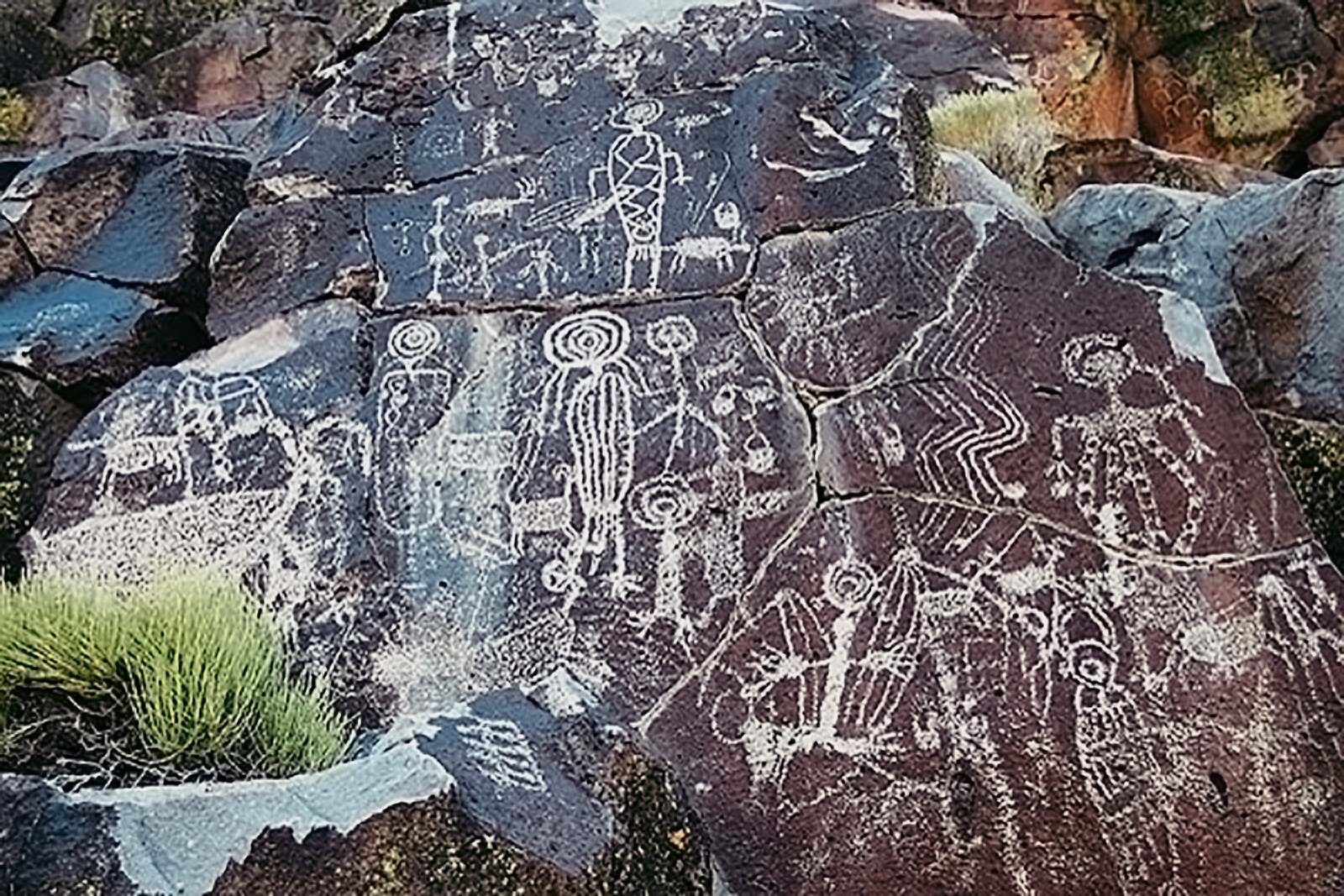
In this article I compile and evaluate data relevant to interpreting Coso petroglyphs. I argue that Coso drawings are not best understood as the exclusive product of “shamanism” (contra Keyser and Whitley, 2006; Whitley, 1998a, 2005; Younkin, 1998). The predominant raison d'etré for the Coso images was an expression of communal religious rituals associated with increase ceremonies of fall communal hunting of bighorn and a spring revival gathering. These rituals functioned to ensure ample game, bountiful plant resources, and perpetuation of the cosmic order of the universe. Fall sheep-kill rituals and spring renewal ceremonies are symbolically expressed in Native iconography.
I first briefly introduce the Coso drawings. Next, I present the two competing hypotheses and identify the nature of the critiques of the hunting magic model. I then turn to material relevant for an understanding of comparative religion and the characteristics of hunter-gatherer ritual, ceremonialism, and cosmology.
Following that, I review pertinent archaeological data from the Coso region. Finally I evaluate the merits of the competing perspectives.
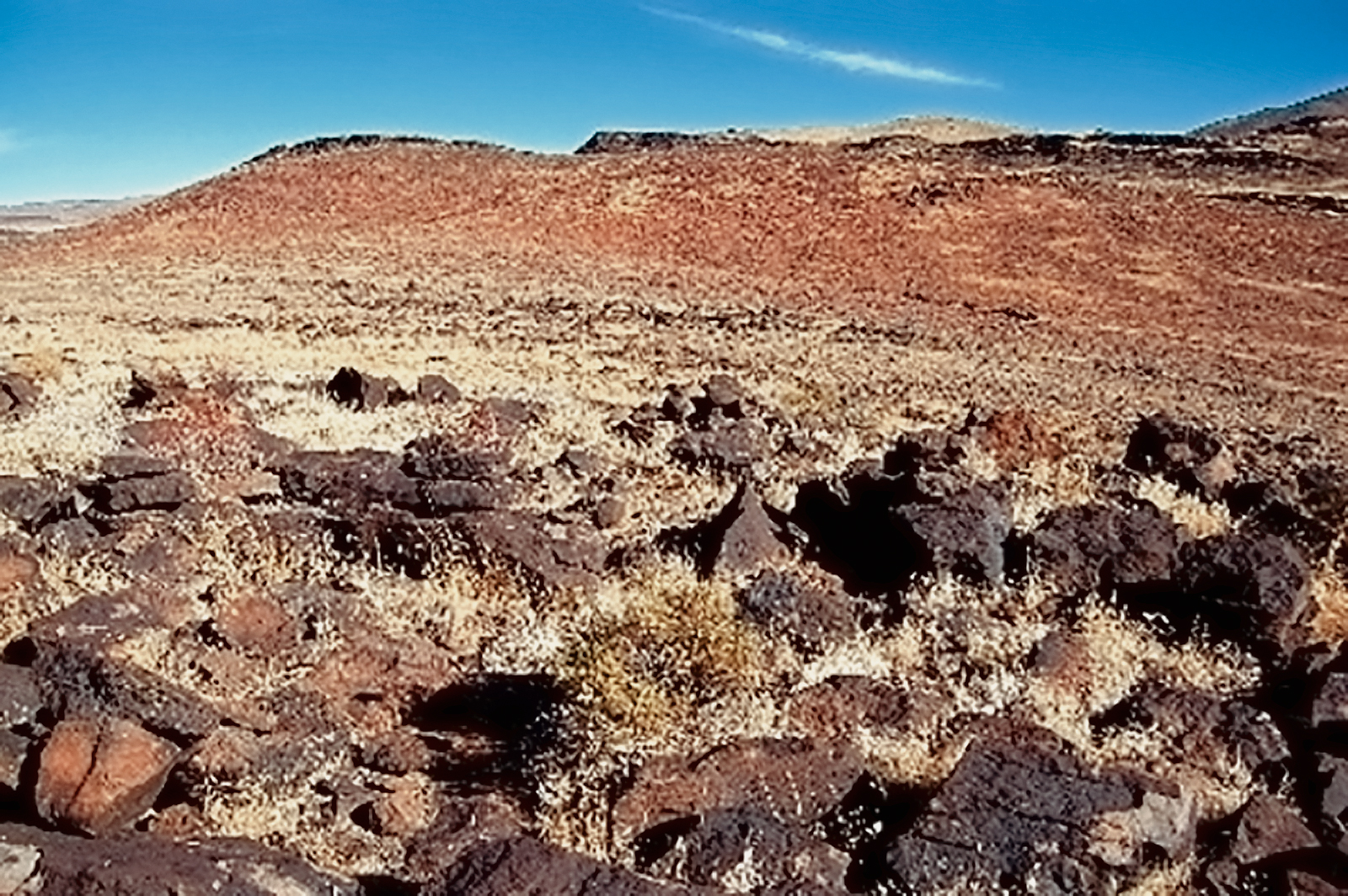
The north-south trending Coso Range consists mainly of rhyolitic domes & outcrops of volcanic rock cut by washes & canyons of various sizes
Occupation of the Coso Range began ca. 13,500 calendar years B.P. (Gilreath and Hildebrandt, 1997). Researchers agree that Coso rock art is of long standing. The area was used for thousands of years and into the historic era when Euroamericans disrupted the Native cultures. Yet, large numbers of highly stylized, realistic Coso images were made for only a short time. Prehistorians disagree on whether that peak production period came just prior to 1000 B.P. or within the past 1000 years (cf. Gold, 2005; Garfinkel, 2006; Gilreath, 2000; Hildebrandt and McGuire, 2002 for the former perspective, and Keyser and Whitley, 2006; and Whitley, 1994a, 1994b for the latter).
There are two prominent explanations of Coso rock art. Both agree that the drawings functioned in a magico-religious context. Grant et al. (1968) argue that the depictions were associated with hunting magic and a sheep cult, while Whitley (1994a, 1994b) suggests they were made by individual shamans when engaged in vision quests. By way of definition, Grant’s use of the term cult was intended, in an anthropological context, to imply a particular system of religious worship, especially in reference to its external rites and ceremonies, one exhibiting an excessive devotion or dedication to a specific idea (cf. Bean and Vane, 1978).
Correlation of rock art sites with game trails, ambush locations, dummy hunters, hunting blinds, and the overwhelming depiction of sheep and hunting scenes led Grant et al. (1968) to pose sympathetic magic as the purpose of the drawings. The hunting magic model implies that the production of rock art helped to ensure a successful hunt of big game. Bighorn were depicted because they were some of the most difficult animals to hunt. Hunters who were successful gained great prestige (Grant et al., 1968; Hildebrandt and McGuire, 2002; McGuire and Hildebrandt, 2005).
This “hunting magic” model is not as facile as one might think. A common misunderstanding is that the model only implies the use of magic and rituals intended to facilitate the procurement of game and multiply the animal population. That is only partially correct. Significantly, in aboriginal societies, bighorn and other culturally important animals were believed to have supernatural powers and were immortals (Grant et al., 1968:34). Slain animals could rise again, reincarnated and reborn, reentering the human world in regenerated bodies. Bighorn came to be regarded as guardian spirits protecting the Coso folk both individually and as a group. Depiction of sheep demonstrated reverence and magically ensured an uninterrupted bounty in a broader sense than simply ensuring the adequate provisioning of meat (Grant et al., 1968:40-41). A complex of communal rituals placated the animal’s spirit, increased game and provisions in general, and facilitated continued success of the Coso way of life (Grant et al., 1968:34; cf. Miller, 1983:77-78). Rock art was a means of communicating with the resident Spirits and were concrete expressions on the landscape linking the areas with their intended activities for all eternity (cf. Miller, 1983:78). Enactment of associated rituals embodied transcendent realities and made them manifest in the everyday world (sensu Harrod, 2000).
Throughout the world various, culturally central, revered animal ancestors (e.g., bear, bison, caribou, deer, salmon, etc.) were the focus of ritual activity (Grant et al., 1968:34). Shamans and cult priests acted as intermediaries between the world of the supernatural and the human world. Such hunting cults were analogous to the sacred societies that venerated different immortal animal people such as the buffalo on the Plains, the salmon in the Northwest Coast, the deer in northwest California, and large sea mammals (whale, seal, or walrus) from the Arctic and Alaska to northwestern California (Marriott and Rachlin, 1968).
The associated religious activities were part of a ritual complex common to Native Americans, including those inhabiting the Great Basin, and shares elements of animal ceremonialism and the journey of ascent and descent typical of forager cosmology worldwide (Hultkrantz, 1987a, 1987b; Lee and Daly, 1999; McNeil, 2001, 2005; Rockwell, 1991; Sharp, 1988). The first half of that cycle emphasized death and post-mortem rites (see discussion below). It began with a fall festival, communal feast, pantomime dance and sing, ancestor worship, and animal funeral.
A second half of the ritual cycle was the spring revival rites or world renewal ceremonies. An annual ceremony of rejuvenation was timed to the new season of vegetation, normally in the spring, intended to bring humans back into harmony with the universe. As Hultkrantz identifies these ceremonies, “it is a reiteration of the cosmic drama through which the world was formed” (1987b:137). This was the occasion to affirm the common origin of the tribe and emphasized rebirth, magnification of game animals, and a reassurance of success in the coming years. Those rites would complete the journey of ascent with the re-emergence of animals into the human world (Sharp, 1988). The cosmic journey would finish as the game animals were led back into the world through emergence sites typically associated with underworld portals (springs, seeps, fumaroles, cracks in rocks, lakes, rivers, etc.).
Whitley contends that most Coso drawings were produced after A.D. 1000 when a shift from mobile foraging to more sedentary seed gathering occurred. That change threatened social relationships when female gathering became more central than male hunting. A response was the growth of male weather-control shamanism. Accordingly, when a shaman depicted the killing of a desert bighorn he believed rain fell. Hence it was a Numic belief that killing a bighorn was a source of power and weather control.
Coso shamans acquired weather-control powers, particularly power over rain. The bighorn was the central motif identified as a rain shaman’s spirit helper. Whitley argues that glyph production in the Coso Range began as much as 19,000 years ago (Whitley, 2005). However, he posits that most Coso rock art was made less then 1000 years ago and was the work of the historic Numic (Great Basin Shoshone) and their ancestors.
The ethnographic record failed to support analogs for “hunting magic” among foraging cultures worldwide. The subject matter portrayed few animals as “wounded”. Animals were shown escaping hunters. Dance scenes, rituals, ceremonial artifacts, and patterned-bodied “shamans” had little to do with hunting success per se. Most locations did not provide evidence for communal kills of game. Rock art sites lacked associated hunting blinds, butchery sites, and other hunting features. The animals depicted played only a small part in the diet of the artisans.
- The ethnographic record failed to support analogs for “hunting magic” among foraging cultures worldwide.
- The subject matter portrayed few animals as “wounded”. Animals were shown escaping hunters. Dance scenes, rituals, ceremonial artifacts, and patterned-bodied “shamans” had little to do with hunting success per se.
- Most locations did not provide evidence for communal kills of game. Rock art sites lacked associated hunting blinds, butchery sites, and other hunting features.
- The animals depicted played only a small part in the diet of the artisans.
Ethnographic Record, Hunting Magic Analogs, and the Subject of the Coso Rock Art
Communal cults differ from individualistic ones since they are associated with more complex social organization. Such group religious observances are known from North America, Melanesia, Siberia, and Australia. The ethnographic record documents travels to ritual centers where group ceremonies are performed to preserve and enhance the fecundity of culturally important animals or plants. Such ceremonies are known for foraging cultures worldwide including the Arunta, Katish, and Unmatjera tribes of Australia (Elkin, 1964; Layton, 1992), and many California and Northwest Coast tribes in North American (Bean and Vane, 1978; Gifford, 1926; Kroeber and Gifford, 1949), to identify just a few examples. At the sacred community grounds, increase rituals include calling out the game animal name, chanting melodies related to the animal and dramatic presentations of the mythic history of the site and the animal’s association with the area. Acts of magic are included and aimed at enhancing the prevalence of game animals in general. These visits sometimes facilitate group ceremonies including male initiation or coming-of-age rites.
Initiation rites, immediately preceding puberty age for men, were often required as expressions of North American religion. A young boy was required to seek the assistance of a guardian spirit to withstand the trials of existence and have luck in hunting and in life (cf. Guenther, 1988:195). Those involved in these ceremonies were not necessarily ritual adepts (“shamans”) but often commoners. As such, the depiction of visions garnered from dreams is sometimes a culturally prescribed method for coming of age (cf. Hultkrantz, 1987a:32).
Hunting Culture Cosmology, Animal Ceremonialism, and the Numic
Information on the animal master is represented among the Numic in Ute and Southern Paiute beliefs. Both groups believed that a being, living high in the mountains, was able to transform into a bird (Raven) and controlled all animals (including bears, mountain sheep, elk, and deer). This “high” god was also associated with lower divinities that provided men with game (Harris, 1940:56; Hultkrantz, 1986; Steward, 1941:230).
Numic mythology makes reference to a number of instances where game animals were reborn after their bones were properly treated and their supernatural power harnessed for increase of animals. Older Numic animal ceremonialism had been largely lost and replaced or reinterpreted to suit the dominant religious pattern of the shamanistic vision complex (Hultkrantz, 1987a:63, 1987b). The Plains ritual of the Sun Dance is not of Shoshone origin but became the central ritual for some Numic groups. That ritual features a bison head on a pole representing game animals and all types of food and nourishment. The Sun Dance ceremony originally was a ritual that safeguarded the progress of the coming year by recapitulating and dramatically presenting the creation story.
A recurrent Numic myth mentions the release of game animals by Coyote. Coyote opens the pen or cave where Wolf has kept the wild animals and they run away to his dismay. In some variations it was a deity with both bird and human qualities, Crow and his people, who had the animals secluded, and it was Weasel that let them go. The deed, in some variants, is specifically of benefit to the Numic. In other variants it is Coyote that reshapes the animals and adds mouths, ears, and eyes (Lowie, 1924:62-64; Steward, 1936:372-373; Thompson, 1929:292-293). Coso drawings often (n = 700+ elements) depict pattern-bodied animal-people.
These images are sometimes interpreted as shamans in costume. Yet it is also plausible that these highly decorated images represent central supernatural figures from Coso religious lore (cf. Francis and Loendorf, 2002:120-122; contra Keyser and Whitley, 2006). Francis and Loendorf have argued that somewhat similar interior-lined body form glyphs in the Dinwoody area of the Sheep-eaters of Wyoming and Montana are equivalent to key mythological figures in Numic cosmology. Specifically their interior design is thought to have referents to the skeletal system and the concepts of death and ancestor worship. As such a “Lord of the Dead” immortal could have been the being represented in the Dinwoody area and perhaps in some cases in the Cosos. Alternatively the Coso figures could symbolize the Animal Master.
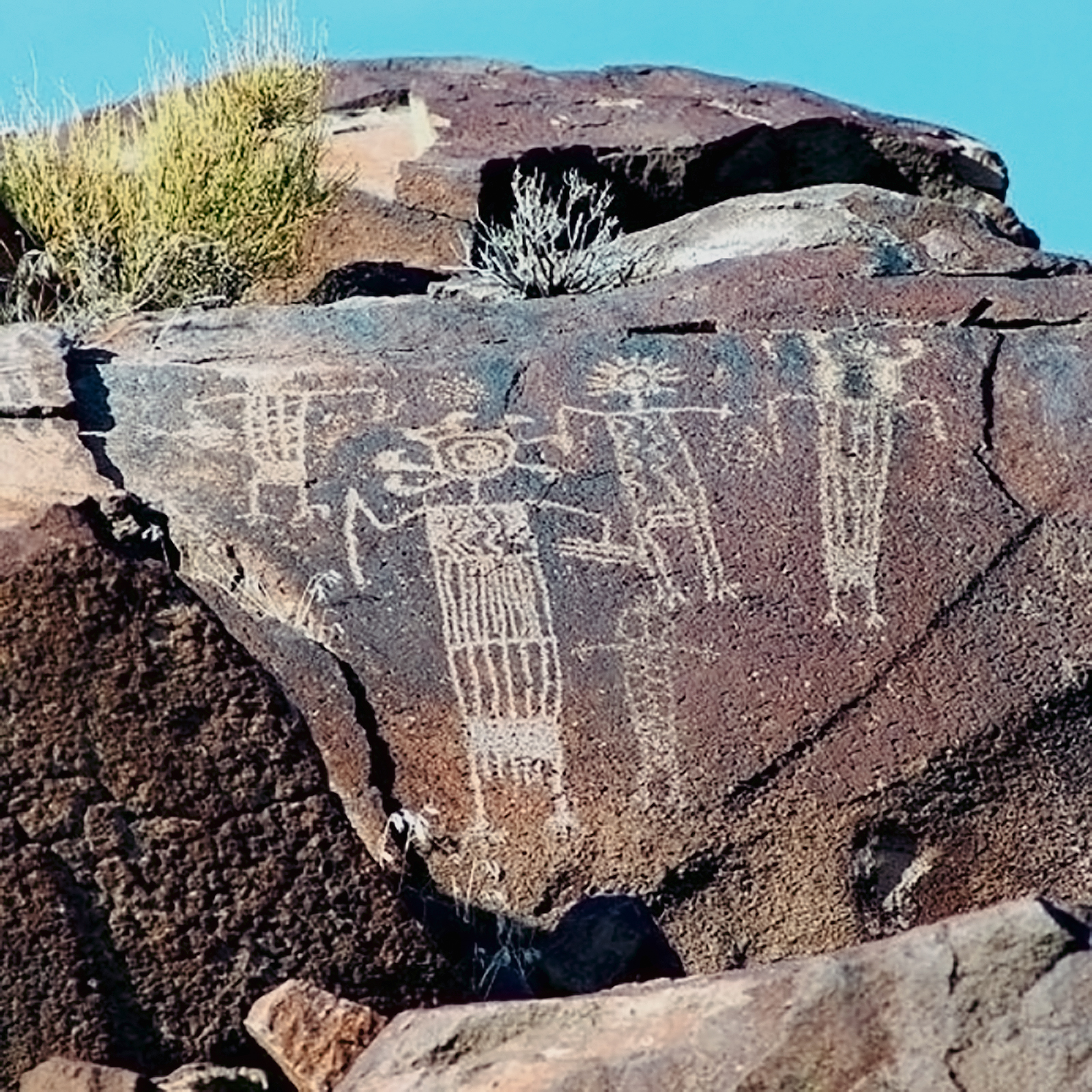
The claw-like bird feet, talons, typical of nearly half the Coso figures (n = 200+) are consistent with the Animal Master analog. These avian figures often carry hunting equipment- an atlatl in one hand and dart foreshafts in the other (cf. Grant et al., 1968:37, middle figures). Other similar Coso figures have darts or arrow points projecting from their heads or shoulders (Garfinkel and Pringle, 2004, Figure 4). This association of hunting paraphernalia would further support the Animal Master referent. Talons are consistent with a “sky god,” who soars into and inhabits the Upper World (cf. Francis and Loendorf, 2002:121, Figure 6.36). Birds are bipedal singers, often messengers from the spirit world, and songs are linked with power (Laird, 1980). Birds are also a metaphor for power (a central Numic religious concept known as puha) and supernatural birds conferred great power. Certain birds (the Eagle) were particularly important sources for success in hunting (Miller, 1983:73). The Coso animal-people figures are rendered in hundreds of different yet grossly similar forms (Maddock, n.d.). This variability was initially problematic. Yet these personifications may have been intentionally rendered in an indeterminate form. Laird (1980:82) indicates that such deities “shimmer” between forms, possessing an iridescent quality “morphing” about, subject to their own whims.

This glyph seems to depict a post-mortem bighorn funeral and propitiation ceremony. I would argue that the panel clearly supports a hunting magic model.
(Figure 3) This panel is hypothesized to be a depiction of a post-mortem animal funeral and propitiation ceremony. The panel is located in Parrish Gorge and is identified as part of the collection of glyphs at CA-Iny-43. This graphic may be a visual representation of the mythic journey: hunt, death, ascent to the upper world via the sacred pole, and seasonal return/regeneration back to the middle human world, upon being restored, traveling up from the lower world-arising from the land of the dead and ancestor spirits.
The atlatl appears to be symbolic of the hunt. The pierced bighorn may represent death. The bighorn skull perched atop a pole may indicate the post-mortem bighorn funeral and propitiation ceremony. The spiral dot pattern perhaps shows the path of the animal’s spirit back to the land of the living and into the hands of the Coso huntsmen.Similar animal rituals have been documented worldwide and have several characteristic elements. They begin with a ceremony for “seeing the animal off” by placing its skull on a sacred pole, orienting it eastward (a metaphor for ascent-toward the rising sun), and “feeding” it with ritual foods.
The atlatl is most likely symbolic of the hunt. The pierced bighorn appears to represent death. The spiral dot pattern might show the path of the animal’s spirit back to the land of the living and into the hands of the Coso huntsmen (cf. Patterson, 1997, 2001). Such an illustration would appear to communicate the central Native American religious theme of the necessity of death to sustain life and to be reborn (see discussion below under The World Pole). This image supports the notion that “hunters and hunt shamans performed propitiatory rituals both to ensure and commemorate hunting success” (cf. Keyser and Whitley, 2006). Malouf (1966:4) identified just such animal ceremonialism, group religious ceremonies, and associated big game hunting rites for Numic groups in the Great Basin (contra Steward, 1940, 1941).
Patterned body anthropomorphic figures. These figures appear to represent human and animal conflations. Note the taloned feet, head adornments, and hunting weaponry associated with the figures. Click each image for an enlarged version.

A Renegade Canyon
B Junction Ranch 3 and Sunrise Cliffs
C Renegade Canyon
D Renegade Canyon
E Renegade Canyon
F Junction Ranch 3 and Sunrise Cliffs
G Big Petroglyph Canyon
H Renegade Canyon
I Big Petroglyph Canyon
The pole, in cross-cultural perspective, signifies the world pillar connecting three worlds (the human world, upperworld, and underworld). This “world pole” is a prominent element of reconstructed, ancient, Great Basin cosmology, hearkening back to an Archaic circumboreal ideology (Hultkrantz, 1981). Ute (Numic) mythology and animal ceremonialism, although central to the bear, manifests remarkable parallels. The pole, originally a deciduous tree, is a metaphor representing death and rebirth as the tree goes through a process of “dying” (shedding its leaves and going into a relatively dormant state in the winter) and coming to life again in the spring. The pole is also a means of travel, a road for the Animal Master, helping to provide a safe return, means of reincarnation, and an aid for leading game animals back to the tribal hunting grounds in the spring (Hultkrantz, 1987a, 1987b; McNeil, 2002, 2005).
Pantomime dances, mimicking animal behaviors, are conducted and associated with reviving the slain creature. The latter are an enactment of the mythic journey. That journey includes: the hunt, death, ascent to the upper world via the sacred pole, and seasonal return/regeneration back to the middle human world, upon being restored, traveling up from the lower world - arising from the land of the dead and ancestor spirits (Hallowell, 1926; Hultkrantz, 1981, 1986, 1987a; McNeil, 2002; Rockwell, 1991).
The animal is fed in hopes of sending messages to deceased ancestors. Finally, ritually drawn images of animals are created for the purpose of restoring game to life and returning the animal medicine back to the tribe (Hallowell, 1926; Hultkrantz, 1981; McNeil, 2001, 2005; Rockwell, 1991).

Bow and arrow armed hunters attacking sheep. A is from Sheep Canyon and B is found in Renegade Canyon. Mountain lions attacking sheep. Mountain lions are often rendered with tails that are nearly as long as or longer than the animals torso and that sometimes curves backwards over their back. Both images C and D are from Renegade Canyon.


Many petroglyphs show sheep running or leaping and engaged in notable movement. Such illustrations have been used as a criticism of the “hunting magic” hypothesis. Yet I would argue that these images were made based on a desire for an increase in game animals - to magically ensure a continuous food supply and a plethora of game. This expression is exactly what would be predicted as the intent of the Coso artisans in order to supernaturally increase game and ensure a continuous abundance of animals.
The Coso panels are replete with many scenes showing long lines of sheep emanating from the rocks and crevices of the lava boulders and canyon walls. Numerous depictions show sheep in disjointed arrays, and collections, sometimes with other game animals (including deer or antelope) in eclectic concatenations. It seems reasonable that the narrative elements of these compositions correspond to specific mythology and restoration beliefs imploring the “Master of the Game Animals” to release the unborn souls of the deceased game animals and lead them back to the middle world of the Coso natives (cf. Matheny et al., 1997; Schaafsma, 1986; contra Keyser and Whitley, 2006). Western Great Basin cosmology and oral traditions emphasize the underworld as a secluded place, yet richly endowed and wonderfully adorned, populated by game animals, an idealized copy of life above, from which a culture hero leads the game animals back to middle world humans (cf. Liljeblad, 1986:652; Zigmond, 1980:175-178).

A number of Coso petroglyph panels and elements (n = 10 panels; 190 individual elements) appear to portray many people dancing or traveling to or from a group ceremony On one panel alone, in Renegade Canyon, there are over 80 individuals shown all in a row.
The Numic Round Dance and Father Dance are associated with world renewal circle dances and songs (Spier, 1935; Steward, 1941:267, 1943b). Those dances served as thanksgiving to a supreme deity for the largesse that had come during the prior season. Such a group ceremony included reverent communication to a central immortal and hope for continuing bounty in the future. For the Southern Paiute (Numic) songs were a central element of the ceremony. These songs originated in the dreams of the attendees at the round dance and were sung to enhance the killing of game (Kelly and Fowler, 1986:383; McNeil, 2001; Patterson, 2001). Such large communal gatherings were associated with periodic abundance in resources facilitated in part by communal hunting of big game (Miller, 1983:77).
Hunters are attuned to the qualities of animals and they become symbols for agility, survival, and power over one’s enemies. Increase rites and world renewal ceremonies regularly feature dancers in animal costumes, masks, and headdresses. The Numic also used hunting disguises. These included headdresses and body suits employing the entire skin and also using the head and horns (contra Keyser and Whitley, 2006; cf. Steward, 1943a:294; Stewart, 1942:242).
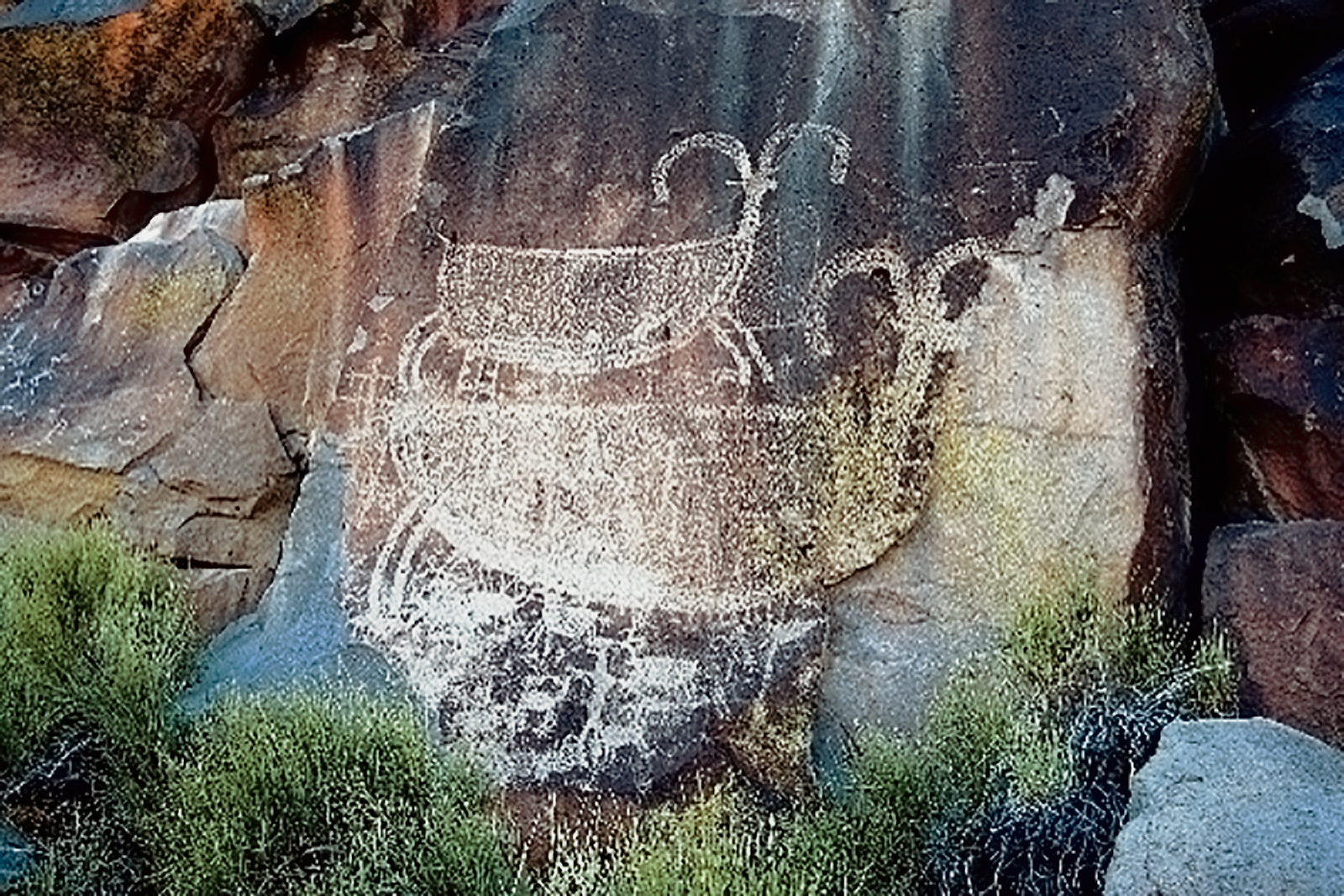
Sheep costumed figures. A variety of depictions of conflated human-animal figures. Full front facing bifurcated horns are a hallmark of the Coso style of bighorn depictions and are a feature common to all the figures.

If it were the Coso intention to magically control the habits of the sheep, ensuring success in the hunt, rendering such images would certainly be a sensible way of getting into the mindset of the bighorn. Miller (1983:79) and Olofson (1979:17) remark that it was the Numic practice to keep in contact with Spirit helpers through their minds, via telepathy, and that this process would routinely produce concrete expressions including personal health, success, and physical rewards. Hultkrantz (1986:633) indicates that spirits, sometimes in animal disguise, were some of the supernatural beings that were recruited by Numic individuals to provide them with success in hunting.
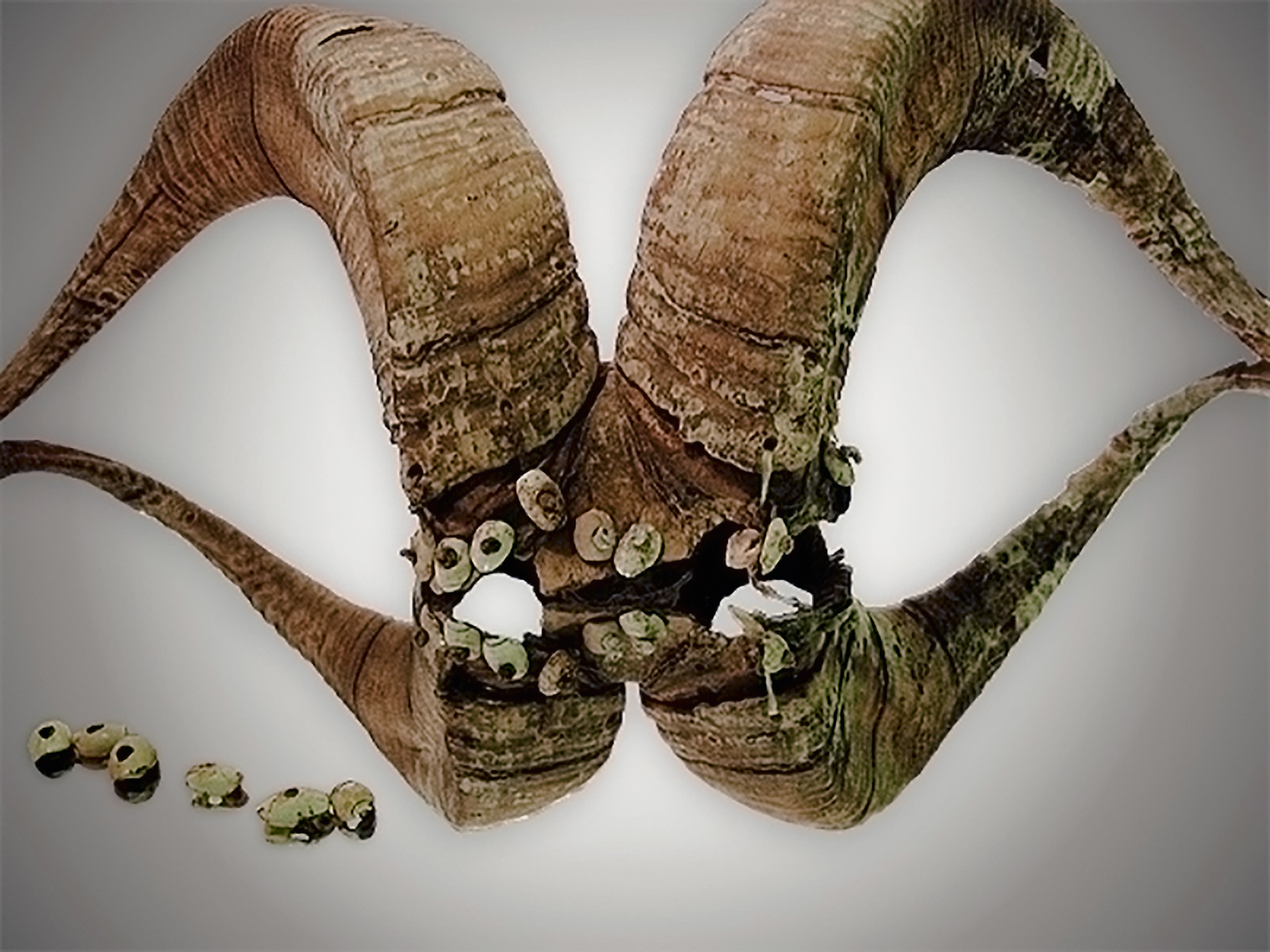
Keyser and Whitley (2006:19, Figure 9a) seem to believe that a sheep horn headdress is impractical. They posit, because of the weight and configuration of sheep horns and crania, that such a disguise would not have been possible. However, ethnographic references document the head and horns as hunting disguises for the Great Basin Numic (Matheny et al., 1997:72; Steward, 1943a:294; Stewart, 1942:242). Also, in contrast to Keyser and Whitley, aboriginal ingenuity seems to have won out, with just such a bighorn crania and horn headdress being discovered in Canyonlands National Park in Utah (Matheny et al., 1997). The horns were divided in half to minimize their weight and were then sewn to the skull to ensure permanent attachment. Olivella shell ornaments were attached to this headdress and the regalia may have been used with a hood. Such a headdress could have served either as a ceremonial accouterment or as a more utilitarian hunting disguise (Matheny et al., 1997:73, Figure 2).
Another analog to the sheep headdress was the bison (buffalo) headdresses of the Plains Indians. These were also heavy, awkward, and improbable but were nonetheless extensively employed and incorporated into animal pantomimes and ritual dances at seasonal increase ceremonies (Harrod, 2000). Murphey (1986:86) also has identified petroglyph elements strikingly similar to the horned anthropomorphs noted in the Coso Range. These petroglyph figures were identified at the Kanaka-Briggs Creek locality in the northern Great Basin in Idaho and were interpreted as similar in age to the peak production period posited for the Cosos or ca. AD 1000. Murphey argues that the horned anthropomorphic images depicted are hunters wearing mountain sheep disguises and/or ceremonial headdress paraphernalia.
Locations and Context
Coso petroglyphs occur at optimally suited ambush and trap locations that allow for communal big game hunting (cf. Grant et al., 1968; Murphey, 1986; Thomas, 1976). The art is prominent in open-air, amphitheater-like settings. In contrast, rock art in more secluded contexts, hidden from public view, has often been interpreted as vision quest sites (cf. Greer, 1995 sensu “private ceremonial sites” versus “public ceremonial sites”). The private sites are where shamans produced imagery associated with altered states of consciousness. The Coso sites differ from these, being situated along well-used game trails in direct association with watering holes (natural tanks) in the steep walled canyon bottoms. Some glyphs are at gorge entrances next to hunting blinds. The largest groupings of rock drawings are in Petroglyph, Renegade, and Sheep Canyons (Figure 1). These are natural sheep “traps” (cul-de-sacs and hunting enclosures) where game could be driven past hidden hunters armed with atlatls and darts, spears, or bows and arrows. Glyphs are also found on stony promontories astride saddles between drainages. Smaller concentrations are located near springs.
Associated Archaeological Features
- Hunting Blinds
Rock structures, interpreted as hunting blinds, are regular components of the Coso sheep trap complexes (Brook, 1980:Table 2; Grant et al., 1968). The blinds are just above the streambed so archers could fire weapons as sheep channeled past them (contra Keyser and Whitley, 2006). Some glyphs are directly on boulders forming the blinds. Several blinds have been recorded within Renegade Canyon, Upper Centennial Spring, and south Sugarloaf Mountain. I noted blinds within Sheep Canyon, Junction Ranch, and Parrish Gorge. Many are also on Coso Peak and Silver Peak in the pinyon zone above 5,500 feet in elevation. - Dummy Hunters
Dummy hunters are found along the canyon rims of the largest Coso galleries. These are not isolated features but rather multiple collections of stacked rock sculptures serving as figurative hunters. Such decoys were used by Native hunters in many areas of North America. Similar stone features are known in Nevada, associated with the Pahranagat petroglyphs (Heizer and Hester, 1974), where they are located just above the game trails and water sources (NevadaPlaces.com 2006). Dummy hunters constructed of wood were used by the Cheyenne on the Plains to funnel buffalo into drive lanes (Coleman, 1996). These wooden sentinels were known as “dead men” since they directed the bison along a path to their death. The hunters of stone are known from several areas in the Coso Range. In Sheep and Upper Renegade Canyons there are large numbers (n = 30+) of these piled rock figures. These rock stacks are sometimes weathered and tumbled from age but many still stand from two to four feet tall. They are always situated on the north-facing, shaded portion of the drainage so that they manifest in silhouette from below.
Muir (1898:321-322) describes the communal hunting of bighorn and the use of such features:
Great numbers of Indians were . . . required. . . . (and) they were compelled . . . to build rows of dummy hunters out of stones, along the ridge-tops which they wished to prevent the sheep from crossing. And without discrediting thesagacity of the game, these dummies were found effective; for with a few live Indians moving about excitedly among them, they could hardly be distinguished at a little distance from men, by anyone not in on the secret. The whole ridgetop then seemed alive with archers.
The narrow defiles of the Coso Range were perfect for such communal drives. The many stone sentinels serve as contextual evidence for the intensive hunting exercises focused on communal sheep hunting.. - Timing and Character of the Hunt
Fall is the only season when rams, ewes, lambs, and yearlings commingle (Geist and Petrocz, 1977). At other times ewes and rams are normally segregated. Aboriginal people were well aware of the highly predictable rutting season of the bighorn. During this season rams vie for top breeding rights. Headlong, thunderous clashes could be heard echoing in the canyons during dominance displays by competing males. This was when rams lose their “competitive edge” and are less wary. At this time human hunters and mountain lions would have preyed more successfully since rams were especially vulnerable. Many hunting forays must have occurred during this season given the concurrence of rams, ewes, and lambs depicted in some Coso drawings. Bighorn hunts were conducted in a variety of ways (Annell, 1969; McGuire and Hatoff, 1991; Stewart, 1941:367). The analog for the Coso pattern are communal hunts, surrounding sheep, driving them into enclosures or nets, guiding the sheep with fire and dogs, and running the sheep past hidden hunters (Stewart, 1942:242). Stewart notes that hunters would also occasionally make loud noises - pounding objects together to imitate the clash of rams in battle. - Tinajas
Rock basins (tinajas) are found throughout the Coso canyons where large concentrations of glyphs occur. These natural tanks, or literally “earthen jars,” are found along the floor of the petroglyph walled canyons in rock crevices that are deep and shaded. The basins often contain sand and trap water, slowing evaporation and holding water for many months. Thundershowers refill the basins and provide watering holes for bighorn that use specific tinajas, generation after generation, tethering the bands to this particular geography during their annual pilgrimages from highlands to valley floor.
Gilreath (1999) developed a novel method to date the Coso petroglyphs. She examined 43 petroglyph sites correlating them with a restricted range of associated obsidian hydration measurements and used these chronological indicators as a temporal fix for the glyphs. Analysis suggested an abrupt decline and termination for the drawings no later than A.D. 1300 (with 94% of the 505 obsidian hydration measurements falling into earlier time spans). Research also indicated that Coso rock art is almost exclusively a pre-Marana Period (A.D. 1300-1850) expression (greater than 3.7 microns of Coso obsidian hydration measurement for lowland archaeological sites), with a distinctive Haiwee Period emphasis (A.D. 600-1300, or 3.7-4.9 microns). Single-component Coso petroglyph sites (those with a restricted range of associated obsidian hydration measurements representing a single prehistoric period) appear initially in the Mojave Period (10,000-6500 B.C.), yet over half (n = 8 of 11) of these sites date to the Newberry and Haiwee intervals (2000 B.C-A.D. 1300). Based on a suite of nearly 100 obsidian hydration measurements for the rock art sites themselves, over half of the rim readings are grouped within the late Newberry and Haiwee periods (1000 B.C.-A.D. 1300) or 50 readings out of the sample of 96 measurements.
Projectile point anthropomorph (pictured left). Analysis of projectile point types depicted in rock art panels helps date petroglyph manufacture to particular time periods.
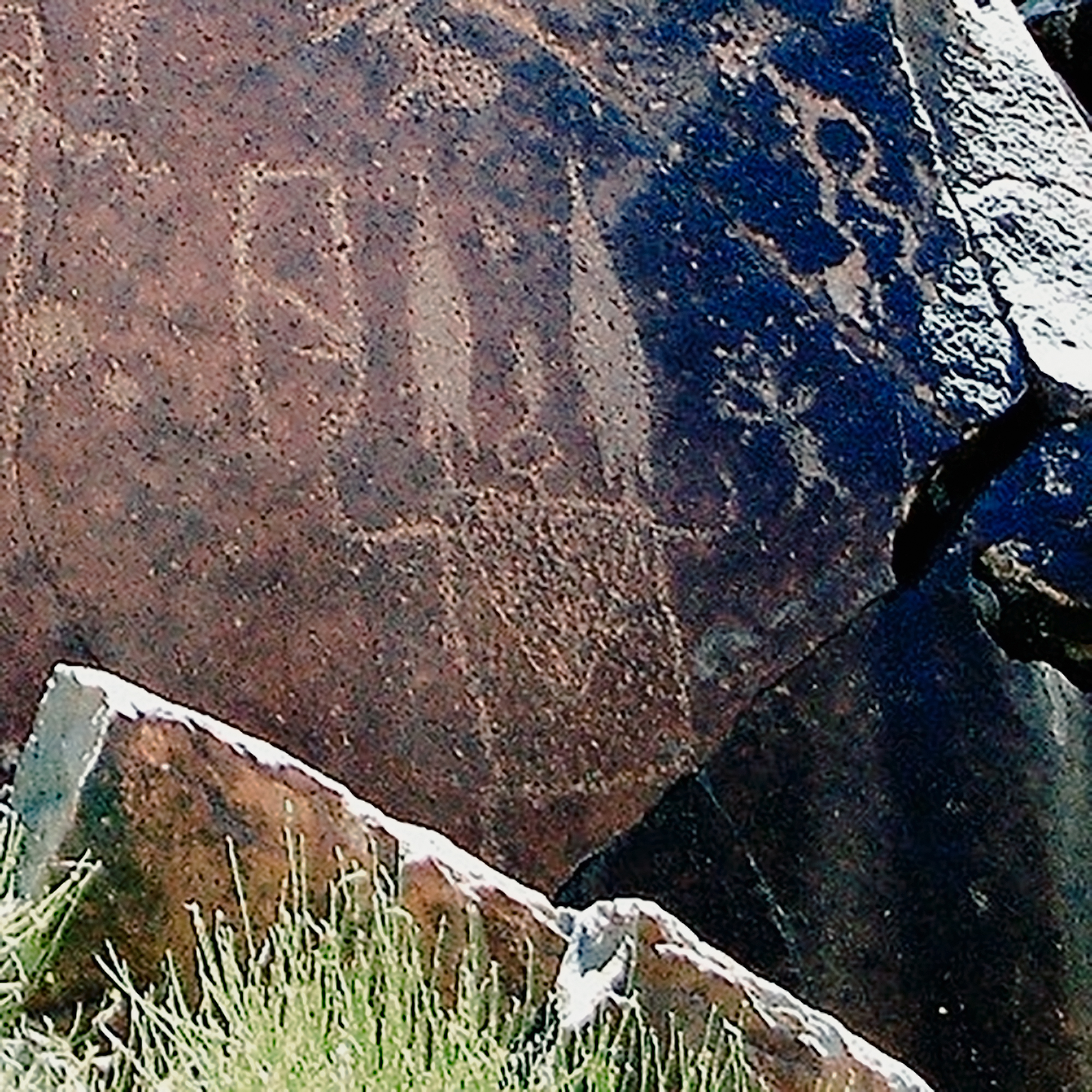
Recent independent testing of Gilreath’s dating scheme supports its general validity (Garfinkel, 2003, 2007). Evaluation of the archaeological associations of stylistically similar drawings at the Terese site (CA-KE-6188), just outside the Coso Range, provided a temporally equivalent suite of obsidian hydration measurements. Further validation of the dating scheme comes from an analysis of the projectile points depicted in Coso petroglyphs. The drawings of realistically rendered arrow points were interpreted as analogs of either Rose Spring Corner-notched or Eastgate Expanding Stem forms (Garfinkel and Pringle, 2004; cf. Murphey, 1986:86, Table 2, Area A). Garfinkel and Pringle (2004) argue that such depictions date the peak rock art production to the Haiwee interval (A.D. 600-1300) supporting Gilreath ’s position.
Systematic surveys, limited excavations, and experimental x-ray fluorescence dating of the glyphs also support the position that most occupation in the Coso Range occurred during the Newberry and Haiwee eras (Garfinkel, 2007; Gilreath and Hildebrandt, 1997; Gold, 2005; Hildebrandt and Ruby, 1999, 2006:27; Lytle et al., 2006). Hence chronometric and relative dating suggests that Coso petroglyphs were not made during the last 600 years (contra Keyser and Whitley, 2006:18; Whitley, 2005).
Assuming that these dates are relatively accurate, Coso style petroglyphs may have been authored by pre-Numic (aka non-Numic) rather than a Numic population (cf. Garfinkel, 2007; Gold, 2005). Late prehistoric Coso hunters may have seen a reduction in the size of the local bighorn population. This bighorn depletion might have been caused by overhunting or alternatively the bighorn herds could have been seriously affected by a loss of quality forage and watering holes caused by a protracted series of intense droughts (cf. Garfinkel et al., 2004; Grant et al., 1986; Hildebrandt and McGuire, 2002). In any event, it appears that after A.D. 1300 large game hunting was de-emphasized with respect to the subsistence pursuits of the local Natives and the Coso rock art tradition abruptly ceased (Holanda and Delacorte, 1999).
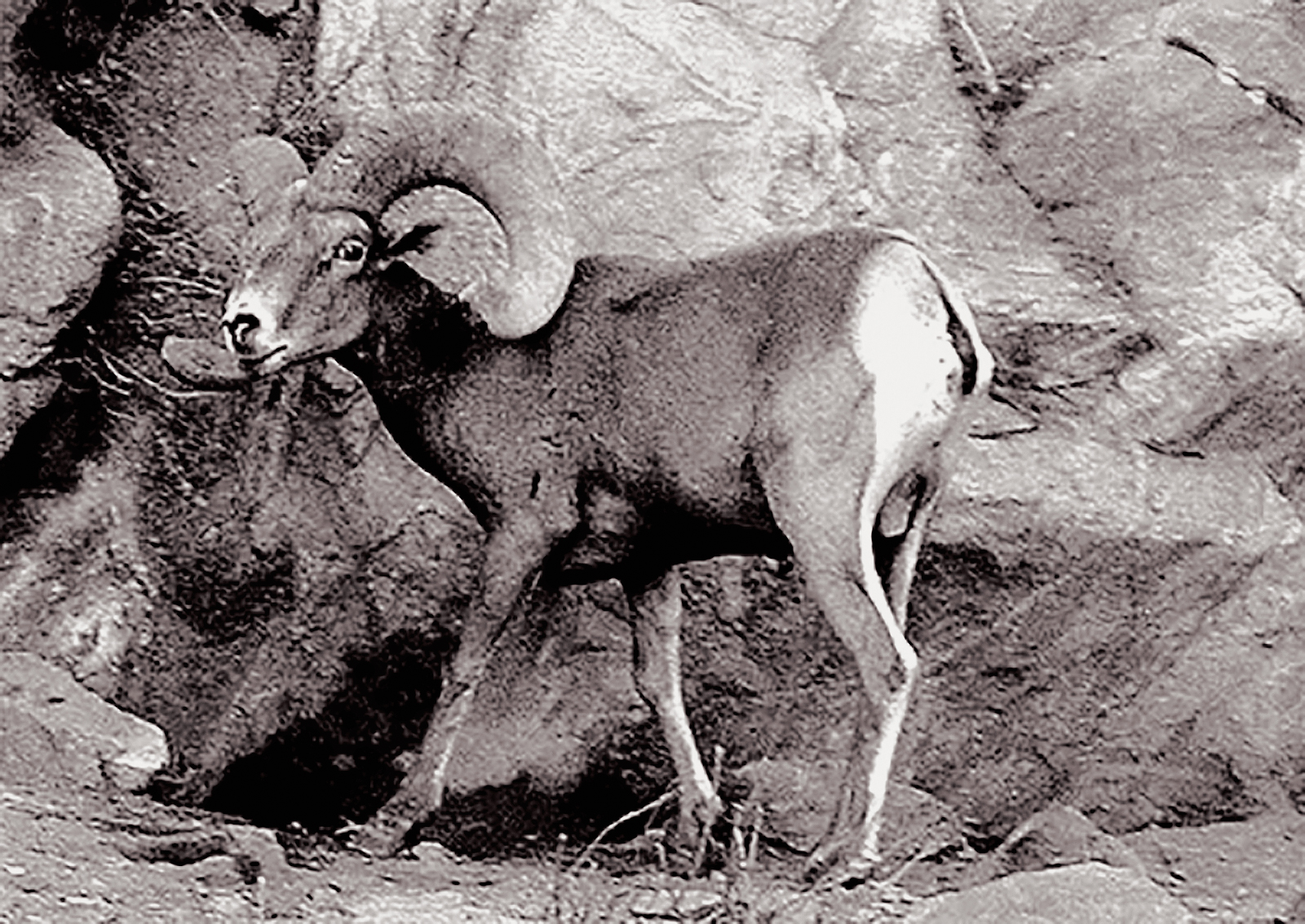
It is massive in size (rams weigh from 119-127 kg), has dramatic qualities in terms of its agility, movement, strength, and in the shape of its horns (Meloy, 2005). The deep religious significance given the animal as a dominant symbol belies the animal’s functionality as an exceptionally aesthetic and cognitive focus. The presence of animal motifs in Coso art reflects a pervasive sense of sympathy, affinity, and kinship between animals and people (sensu Harrod, 2000). Nevertheless, we know for certain that the Coso people hunted bighorn sheep and relied heavily on this big game for a significant part of their animal food.
Holanda and Delacorte (1999) produced a synthesis of archaeofaunal data from the general Coso region (Table 1). Their data include a summary of archaeofaunal remains from Inyo, Mono, and San Bernardino counties and tally 150,000 faunal elements from more than 140 archaeological contexts. In the immediate vicinity of the Cosos are the data from Inyo and San Bernardino counties that include nearly 20,000 pieces of bone identifiable to the family level or better and tally materials from more than 75 prehistoric sites.
| Table 1. Terrestrial Fauna from Southeastern California * | ||||||
|
Newberry
3500-1350 B.P. |
Haiwee
1350-650B.P. |
Marana
650-Contact |
||||
| No. | % | No. | % | No. | % | |
| Artiodactyl | 6083 | 64.3 | 1313 | 51.7 | 162 | 4.0 |
| Bighorn | 510 | 5.4 | 28 | 1.1 | 16 | 0.4 |
| Deer | 8 | 0.1 | 2 | 0.1 | 1 | 0.1 |
| Pronghorn | 8 | 0.1 | 2 | 0.1 | 3 | 0.1 |
| Subtotal | 6606 | 69.8 | 1348 | 53.1 | 194 | 4.8 |
| Marmot | 1357 | 14.3 | 1 | 0 | 0 | 0 |
| Lagomorph | 1241 | 13.1 | 1128 | 44.4 | 752 | 18.8 |
| Subtotal | 2598 | 27.4 | 1129 | 44.4 | 752 | 18.8 |
| Herpetofauna | 103 | 1.1 | 26 | 1.0 | 238 | 5.9 |
| Tortoise | 159 | 1.7 | 36 | 1.4 | 2826 | 70.5 |
| Subtotal | 262 | 1.8 | 62 | 2.4 | 3064 | 76.4 |
| Total | 9466 | 2539 | 4010 | |||
|
* Adapted from Hildebrandt and McGuire, 2002.
Notes: Artiodactyl remains include those fragments of animal bone that could not be classified as to species but would include taxa identified as bighorn, deer, and pronghorn. |
||||||
The highly fragmented artiodactyl bones recovered from eastern California archaeological sites are often difficult to differentiate as to species. Of the artiodactyl remains that were identified to species, bighorn sheep are dominant (510 of 523 or 97 %). Therefore, the pro rata share of the entire faunal assemblage identified by class is most likely dominated by bighorn sheep bone dating to the Newberry era (2000 B.C.-A.D. 600). Furthermore 70% of the entire faunal assemblage for this temporal period is composed of ungulate remains with small mammals, lizards, and desert tortoise making up the remainder.
The bighorn sheep focus for hunting activity appears to have been almost as important during the following Haiwee interval (A.D. 600-1300) dropping to 53% of the total faunal inventory. Again bighorn sheep make up the lion’s share of the taxa classified to species (28 of 35 or 80%). However only 5% of the total faunal assemblage during the Marana Period (A.D. 1300-1850) is artiodactyl remains. Ungulate bone (the bulk being bighorn sheep) is then over 10 times more prevalent in the Newberry and Haiwee periods, when Coso rock art appears to have been at its height, than during the later prehistoric era. Bighorn hunting appears to have been a predominant focus during chronological periods synchronous with the hypothesized Coso rock art fluorescence (cf. Yohe, 1991; Yohe and Sutton, 1999, 2000; contra Keyser and Whitley, 2006). Hildebrandt and McGuire (2002) emphasize the importance of this intensive big game hunting, during the Middle to Late Archaic, in the larger region of the Great Basin.
The Coso Representational Petroglyph Style (Schaafsma, 1986) appears to be indicative of a shared belief system. Distinctive icons are regularly repeated from site to site and include: horned figures, realistic bighorns, “medecine bags,” pattern bodied anthropomorphs, etc. The form of the Coso bighorn is quite standardized - to a larger degree than any other representation. Bighorn were frequently depicted with a flat back, boat-shaped body, full front-facing, bifurcating horns, with ears and hooves sometimes added for a final flourish (Grant et al., 1968). This level of detail and conventionalization implies some definite cultural conditioning as to how the motif is represented. The size of some of these sheep (some larger than seven feet in length) and the attention to detail reflect a great deal of investment in time and energy.
Hence no less than 100,000 hours of labor are represented in a fantastic display of Coso artistry and ceremonial elaboration. This suggests a very localized and intensive occurrence. Such large scale and most likely communal effort would probably signify cult activity and not individualistic shamanic vision quest episodes (cf. Hildebrandt and McGuire, 2002:245-246).
I must admit that with such an enormous number of Coso glyphs (n = >100,000 elements) it would seem rather silly to try and posit a singular purpose and an absolutist perspective covering all of these images. Various sets of glyphs might have been produced for a variety of reasons including shamanism, vision quests, sympathetic hunting magic, pilgrimages, initiation rights, and even bragging rights (keeping score). Also the reasons for creating the images must have changed from time to time. Yet I would argue that the bulk of the current evidence supports hunting magic and increase rites as the primary purpose for the majority of the imagery within this vast iconographic record.
This emphasis on magico-religious ritual activity associated with the hunting of bighorn can also be seen in the Desert West split-twig figurine complex. This cultural expression has been interpreted as part of totemic increase rites focusing on the manufacture of a series of magical and ceremonial objects representing bighorn (Coulam and Schroedl, 2004). These community symbols appear to have been used in rituals of imitative and contagious magic. At Newberry Cave in the central Mojave Desert, pictographs, a cache of largely complete Elko and Gypsum points, 11 whole and over 1,000 fragmentary split twig animal figurines, quartz crystals, painted stone palettes, and sheep dung pendants date from about 3000 BP. These items have been argued to represent the hunting magic rituals of a men’s hunting society that used the cave environs (Coulam and Schroedl, 2004; Davis and Smith, 1981; Smith et al., 1957; Warren and Crabtree, 1986).
Coso glyph makers appear then to have taught succeeding generations of new initiates the elements of Coso symbolism. The transmission of this specialized knowledge and the rules for the rendition of
Coso images argues for an association of glyph production and a communal “sheep cult.” It is the consistency and regularity of the imagery, its continuity over time, the specialized context, and spatially restricted nature that are most persuasive in positing a corporate, community-based, religious system (cf. Coulam and Schroedl, 2004:43). Consistency in execution, continuity in context, and locational patterning appears to best be understood as an artifact of important ceremonial activities for propitiation, increase, renewal, and perhaps initiation.
In contrast, shamanic trance experiences produce entoptic imagery that is unstructured and conforms to the liminal (in-between) states of life-crisis rituals. The vision quest experience transforms the everyday world into the spirit world and new structures (essentially “antistructures”) are created and used (cf. Sundstrom, 1990). Abstract elements, fragmentation, superimposition, and replication characterize the neuropsychological model of shamanic art. If rock art sites exhibit wide diversity in site location, then this pattern would suggest that the images were made as individual ritual elements rather than through communal activities. The concentrated nature of most Coso art is largely inconsistent with such a pattern.
A critical archaeological test implication, proposed by Keyser and Whitley (2006:16) as diagnostic of hunting magic rock art, is that hunting scenes and motifs would occur that were contemporaneous and would be produced in multiple arrays by a single artisan. Shamanistic visionary art, in contrast, would consist of individual scenes or motifs and not repeated acts of identical art produced at the same location. Of course a single shaman could produce, multiple, similar images but these might normally be more varied in subject matter and not as reiterative.
I would argue that there are many Coso petroglyph panels that would support the predicted hunting magic art analog as espoused by Keyser and Whitley (2006). One especially representative panel is located east of Carricut Lake in the Coso Range and is replete with over two dozen (n = 25) sheep figures. The sheep panel includes examples of the same nearly identical element repeated again and again within the composition. Most of these figures appear to have been produced at the same time. There is no superimposition or overlap of the individual element and all but three of the figures face the same direction and have strikingly similar forms. Also the entire panel is arrayed as a single narrative composition with similar levels of rock varnish and repatination. Another powerfully persuasive characteristic of the panel is that most every sheep depicted in the panel is rendered in an unusual, idiosyncratic style. The similarities in the style of the sheep drawings are almost certainly indicative of repeated renderings by the same Coso artist. Each of the sheep has an especially fancy, “cork screw,” or curly cue type horn. The sheep body forms are nearly identical with an unusual, roughly rectangular shape, with concave, upturned back, and slightly excurvate belly. Therefore, this panel appears to represent the intentional manufacture of multiple images by a single artist to foster hunting magic rather than shamanic visionary art or sorcery (cf. Keyser and Whitley, 2006:16).
Given the remarkable abundance and range of realistic bighorn sheep depictions (contra Whitley, 2005:196-199) and the plethora of hunting scenes, it seems incongruous to identify most of the Coso rock art images as the product of individual shamanic visions. The hunting scene rock art of the Cosos reveals a “sophisticated understanding of biological and cultural reality unencumbered by metaphor” (sensu Hildebrandt and McGuire, 2002; cf. Matheny et al., 1997). If the rock art was merely metaphorical - as Whitley and others have suggested - we would predict that the images would be more isolated, more abstract, less detailed, less naturalistic, and certainly less realistic (cf. Keyser and Klassen, 2001:91). Some Coso rock art does contain abstract iconography and images placed in secluded contexts, hidden from public view, and these elements and panels could be reasonably accounted for as shamanic vision quest sites. However I do not believe that most of the Coso petroglyph rock art can be explained with such a model (cf. Hildebrandt and McGuire, 2002; Matheny et al., 1997; contra Keyser and Whitley, 2006). Later dating painted images (historic and protohistoric era) are commonly identified as Numic paintings (or Coso Style pictographs) and do occur in contexts most likely indicative of shamanistic associations (Garfinkel et al., 2007; Gold, 2005; Greer, 1995). These late prehistoric and historic paintings are always found in rock shelters, crevices, caves, and hidden defiles not readily apparent to the casual eye. Such differences in their environmental context and the characteristics of their subject matter argue for a more shamanistic and individualistic origin (cf. Garfinkel, 1978, 1982; Garfinkel et al., 2007; Gold, 2005; Schiffman and Andrews, 1982).
Aboriginal bighorn hunting was a precarious pursuit that would require strong religious rites and keen leadership (cf. Keyser, 1992). Communal hunts are complex and treacherous activities necessitating coordination of men, women, and dogs. It is reasonable that ritual, magic, and the supernatural would be closely correlated with such pursuits. James Teit (1928) relates a story shared by an Okanagan consultant illustrating the difficulties and some of the religious elements involved in a communal bighorn hunt:
- A great many came . . . and proceeded to the hunting ground. Many women joined the part to act as drivers. . . . The hunting chief took off his cap, made of the skin of a ewe’s head and waving it toward the . . . sheep, prayed to them. . . . He then sent many men around to sit at the heads of the two gulches on top of the mountain and shot the sheep with arrows as they came up. The men picked were the best shots. . . . A woman . . . with shamanistic powers . . . approached the sheep . . . gave a sharp call . . . and (her) dog rushed off and drove the sheep fiercely. . . . The men in waiting killed a great number (Teit, 1928 as cited in Keyser, 1992:79).
It is remarkable that a small, now arid, and relatively isolated area of desert (the Coso Range) should be the home for such an extraordinary array of images. That the rocks are still animated and alive with images, many hundreds and even thousands of years in age, commemorate the will, fortitude, and passions of untold generations of Coso natives. I would argue that the Coso Range can best be understood as the center of a distinctive sheep cult, and a natural area to have functioned with prevalent “hunting magic” ceremonies. These ritual activities would have been exhibited as propitiation ceremonies and increase rites. They would have been expressed as a ritual complex with a set of beliefs that sheep and other game animals would be replenished through supernatural means facilitated by the ubiquitous imagery that the Coso artisans adorned the rocks. Success in hunting would have been derived, in part, from recurrent visits to the same sites by succeeding generations (cf. Miller, 1985:60). The Coso Range, through the success of prior ritual gatherings, became known as a powerful and sacred place, a shrine and ceremonial center, where people could come to carry out more successful religious rituals (cf. Stoffle, 2001).
Many people aided in the development of this research. Michael Moratto, Applied Earthworks, Inc., reviewed this article and provided important editorial comments and suggestions. Two of my most trusted colleagues and old friends, John Romani and Dan Larson, Compass Rose Archaeological, also provided valuable insights into general rock art interpretation. Carol Carroll, California Department of Transportation, read and edited drafts of this article. Ken Hedges, San Diego Museum of Man, was most helpful in providing an advance copy of his recent research into the meaning of Coso rock art. Lynda McNeil, University of Colorado, commented on various early versions of the study and offered helpful insights along the way. Carolyn Shepherd should be acknowledged for her profound role in managing the cultural resources of the Naval Air Weapons Station, China Lake. Russell Kaldenberg, Former Base Archaeologist, and Michael Baskerville, Current Chief Archaeologist, Naval Air Weapons Station, China Lake, must be recognized for their stewardship of the fragile prehistoric record on base and for their critical responsibilities in facilitating continuing access for scholarly research. Sandy Rogers, Curator of Prehistory, Maturango Museum, provided ongoing advice regarding the dating of archaeological sites in the Coso region. Ken and Anna Lu Pringle were a source of continuing perspective with decades of experience studying the Coso rock drawings. They graciously supplied their home as my satellite research facility when conducting studies on base. Kelly McGuire and William Hildebrandt, Far Western Anthropological Research Group, gave helpful direction and facilitated access to their research reports on Coso regional prehistory. Caroline Maddock offered much useful data from her unpublished research on the Coso patterned body anthropomorphs. Inspiration and insights into Coso rock art were also garnered from conversations with Amy Gilreath, Far Western Anthropological Research. Photographic documentation was generously supplied by Bill Wight, Don Austin, and Mike Bell. I am indebted to all of these individuals and greatly appreciate their assistance.
→ Subscribe free to the Bradshaw Foundation YouTube Channel
→ America Rock Art Index
→ The Rock Art of Baja California
→ Baja On Film
→ California Rock Art Foundation
→ Baja In Search of Painted Caves
→ Baja Great Murals Gallery
→ Sierra de San Francisco
→ Baja 2018 Expedition
→ The Rock Art of the Lower Pecos Canyonlands
→ Color Engenders Life
→ The Rock Art of Arizona
→ The Rock Art of Nevada
→ Coso Sheep Cult of East California
→ Coso Range Rock Art Gallery
→ The Rock Art of Moab Utah
→ The Rock Art of the Oregon Territory
→ RAN - USA Colloquium 2018
→ Removal & Camouflage of Graffiti
→ Graffiti Dates & Names
→ Vandalised Petroglyphs in Texas
→ Preserving Our Ancient Art Galleries
→ Bradshaw Foundation
→ Rock Art Network