

Professor Richard Atkinson 1920 – 1994 was a British prehistorian and archaeologist. Atkinson directed excavations at Stonehenge for the Ministry of Works between 1950 and 1964. During this period he helped to bring theories about the origins and construction of Stonehenge to a wider audience: for example, through the BBC television programme, Buried Treasure (1954), which, among other things, sought to demonstrate, using teams of schoolboys, how the stones might have been transported by water or over land. He also produced a theory on the creation of Stonehenge.
He also investigated sites at Silbury Hill, West Kennet Long Barrow, and Wayland's Smithy and was a friend and collaborator of Peggy Piggott, Stuart Piggott and John F.S. Stone. His Silbury work was part of a BBC documentary series Chronicle on the monument. In 1958, he moved to University College, Cardiff, to become its first professor of archaeology. He remained at Cardiff until he retired in 1983. He served on the University Grants Committee. He received the CBE in 1979. Atkinson worked tirelessly to promote and develop science-based British archaeology, and was famous for his practical contributions to archaeological technique and his pragmatic solutions to on-site problems, which were listed in the handbook he wrote called Field Archaeology.
Throughout prehistory, around the world, men and women have always expressed themselves within their landscape - taken time out from subsistence to go to the enormous effort of creating a physical expression that took life and existence onto another level. The Neolithic period between 5000 and 1000 BC was no exception.
The distinguishing feature of the Neolithic - the new stone age - was a gradual transition from hunting and gathering to farming. The spread of agriculture over Europe represented a major cultural transition. It was a gradual process, and took several millenia after the earliest farming in the Near East. One reason for the delay was the climate - north western Europe was colder, and these conditions required adaptation. On a global perspective, agriculture was able to support increasingly large numbers of people, which led to new forms of political and social organisation. Societies became more hierarchical.
Leaders were now buried with marks of their special status, ranging from the the treasures of the graves of the Tiszapolgar cemetary on the Great Hungarian Plain to the splendour of the Egyptian pyramids. Craftsmen thrived in this new social milieu. New materials came into use - gold, copper, and its alloy, bronze. The smelting and casting of metals began to be developed. The growing beaurocracies encouraged the adoption of writing. Larger city states stimulated the development of warfare, which stimulated larger defences. The first cities were being born in the fertile valleys of the Nile, the Tigris and the Euphrates, the Indus and the Yellow river. These were the four primary civilisations of the Old world.
But in Europe, it was the age of the megalith, and here, perhaps the most prestigious megalithic monument is Stonehenge, presiding on the rolling hills of Salisbury Plain in Wiltshire, England.
Stonehenge is a megalithic monument. Megaliths, literally meaning large stone slabs, had become the most conspicuous forms of expression within the European landscape for the people of this time. Indeed, by 2000 BC, Stonehenge had become the ritual centre of southern Britain. Archaeologists define a 'henge' as an earthwork consisting of a circular banked enclosure with an internal ditch.
At Stonehenge, the stone circle enclosure is over 300 feet in diameter, containing a complex arrangement of ritual pits, abandoned stone holes and circles made from bluestones and sarsen stones, approached by an avenue. Many henges were created in this Neolithic period, but what makes Stonehenge unique is that it had trilithons - towering stone structures measuring over 24 feet in height. Standing in open grassland, it can be seen from afar at any viewpoint. One can easily imagine the effect this monument would have had on the Neolithic mind.


Around 2700 BC, the henge was constructed. Using only picks made of deer antlers, a ditch about 6 feet deep was dug. The spoil from the ditch was used to make the bank on the inside. On the north-east of the henge, an entrance was created by a gap in the ditch and bank. Within the bank, a circle of fifty six pits known as the Aubrey holes were dug.

From about 2500 BC onwards, the first stones arrived. The bluestones were erected and the Avenue, a grand-scale earthwork monument sweeping nearly 2 miles from the River Avon to the north-eastern entrance of Stonehenge, was begun. Aligned on the midsummer sunrise, was this a ceremonial approach to Stonehenge? Or perhaps the route used to transport the bluestones of Stonehenge from the river to their final destination? The Heel Stone was erected in the middle of the Avenue. When viewed from the centre of the stone circle, it shows the direction of the midsummer sunrise. Immediately within the bank, the entrance was marked by three standing stones, one of which remains lying on the ground, and is now known as The Slaughter Stone. The tall Altar Stone, which was later to feature in the Sarsen ring, made its appearance at this early stage.
Now, at an accelerating speed, the next hundred years, around 2000 BC, saw the construction of the sarsens. This was the final splendour of Stonehenge, the pinnacle of its construction - a continuous ring of sarsens 90 feet in diameter elevated in the air. This was to become the first and only raised stone circle known.

The first group, the Windmill Hill people, named after one of their earthworks on Windmill Hill, near Stonehenge, built the large circular furrows and mounds. They had collective burials in large stone-encased tombs. Most of their burial mounds point east-west. Originating in eastern England, they were one of the first semi-nomadic hunting and gathering groups with an agricultural economy, maintaining a strong reverence for circles and symmetry.
The second group - The Beaker people - is thought to have originated in Spain, migrating northwards and colonising north-west Europe. Their name comes from their ancient traditions in which they would bury beakers, or pottery drinking cups, with their dead.

The Wessex People are considered the third and final group to work on the Stonehenge site. They arrived around 1500 B.C. at the height of the Bronze Age. They were among the most advanced cultures outside the Mediterranean during this period. Since their tribal bases were located where ridgeways, or ancient roads, met, we can assume they became skillful and well-organised traders, controlling trade routes throughout southern Britain. These people are thought to have been responsible for the bronze dagger carving found on one of the large sarsen stones within Stonehenge.


They are not typical of the local geology- indeed, the source of the bluestones, the first stones erected, has now been traced to the Preseli Mountains of south-west Wales. Somehow these enormous stones were transported to the Salisbury Plains. The stones were surely too heavy for timber rollers. Perhaps they were transported on sledges, on greased tracks of wood, pulled by rope that had been made from the plant fibre of the indigenous lime bark soaked in water for weeks. Modern engineering simulations have surmised that the massive uprights were hauled into place then tipped, using stone counterweights, into position, demonstrating an understanding of the centre of gravity.

To get the 9 ton lintels into place, the most likely method of construction may have been via the use of an earth ramp piled up against the uprights. The lintels would then have been hauled up the ramp by ropes into their exact position.
Whatever the methods used, for we are still not certain, they demonstrate an astounding level of both achievement and ambition.


But one presents itself immediately - Stonehenge is aligned northeast-southwest, and it has been suggested that particular significance was placed by its builders on the solstice and equinox points, so for example on a midsummer's morning, the sun rose close to the Heel Stone, and the sun's first rays went directly into the centre of the monument between the arms of the horseshoe arrangement. It is unlikely that such an alignment can have been merely accidental.
Or is this too simple? Turning 180 degrees, another alignment becomes apparent…..at the precise moment of the winter solstice, the sun sets exactly between the largest sarsen stones.
To validate this, we must look at the society of the time. It had become a society now dependent on the seasons, which determined the success of agriculture. Would mid-winter have been more important to a society that had now become dependent upon the fortunes of these seasons? Psychologically, mid-winter would have been more of a critical turning point than the balmy days of summer.
Perhaps therefore it is a mistake to overstate the monument’s spiritual significance. Certainly the area had been of importance prior to its construction, but it had become more than that - Stonehenge was a clock, a clock that foretold the time not only of the solstices but perhaps also of sun and lunar eclipses. This is not to say, however, that the priests did not utilise this very functionalism for religious importance - he or she who could announce or predict the return of the growing season would have wielded great power.
That Stonehenge was of significance is obvious from its splendour and the sheer amount of time dedicated to its evolving construction, but what emphasises this is the fact that the area chosen to place it in is steeped in prehistoric importance. The barrows around Stonehenge are not rare for their individual structure or contents, but they certainly are for their unique grouped and dense distribution. Numbering some 460, there are 6 types - bell, bowl, disc, long, pond and saucer.
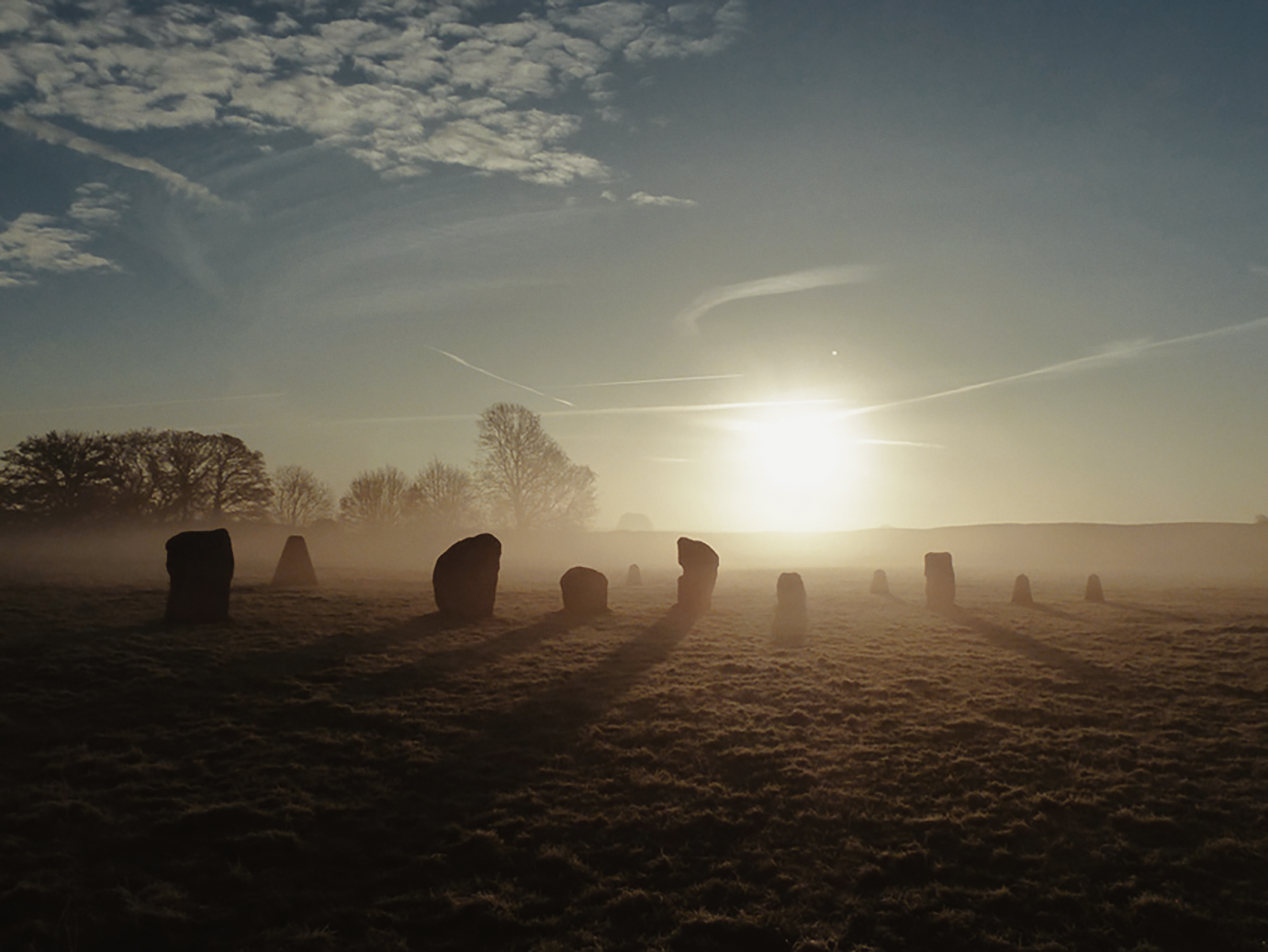
A few miles further on lies Avebury, built between 2500 and 2200 BC, shortly after the stones began arriving at Stonehenge. It is the largest stone circle in Europe, containing 100 stones encircled by a 20 foot high ring mound. Nearly 30 acres in size, the equivalent of 15 football pitches, it has 4 cause-wayed entrances, leading in to 2 inner stone circles. These sarsen stones, quarried from the Marlborough Downs, are gigantic although not not as elegantly dressed as those of the neighbouring monument.
Shortly before the construction of Avebury, what is now known as the Durrington Walls was built - a massive circular earthwork, or henge, 300 yards in diameter. It would have contained 2 circular buildings, roofed and thatched, used for ceremonial and trading purposes.
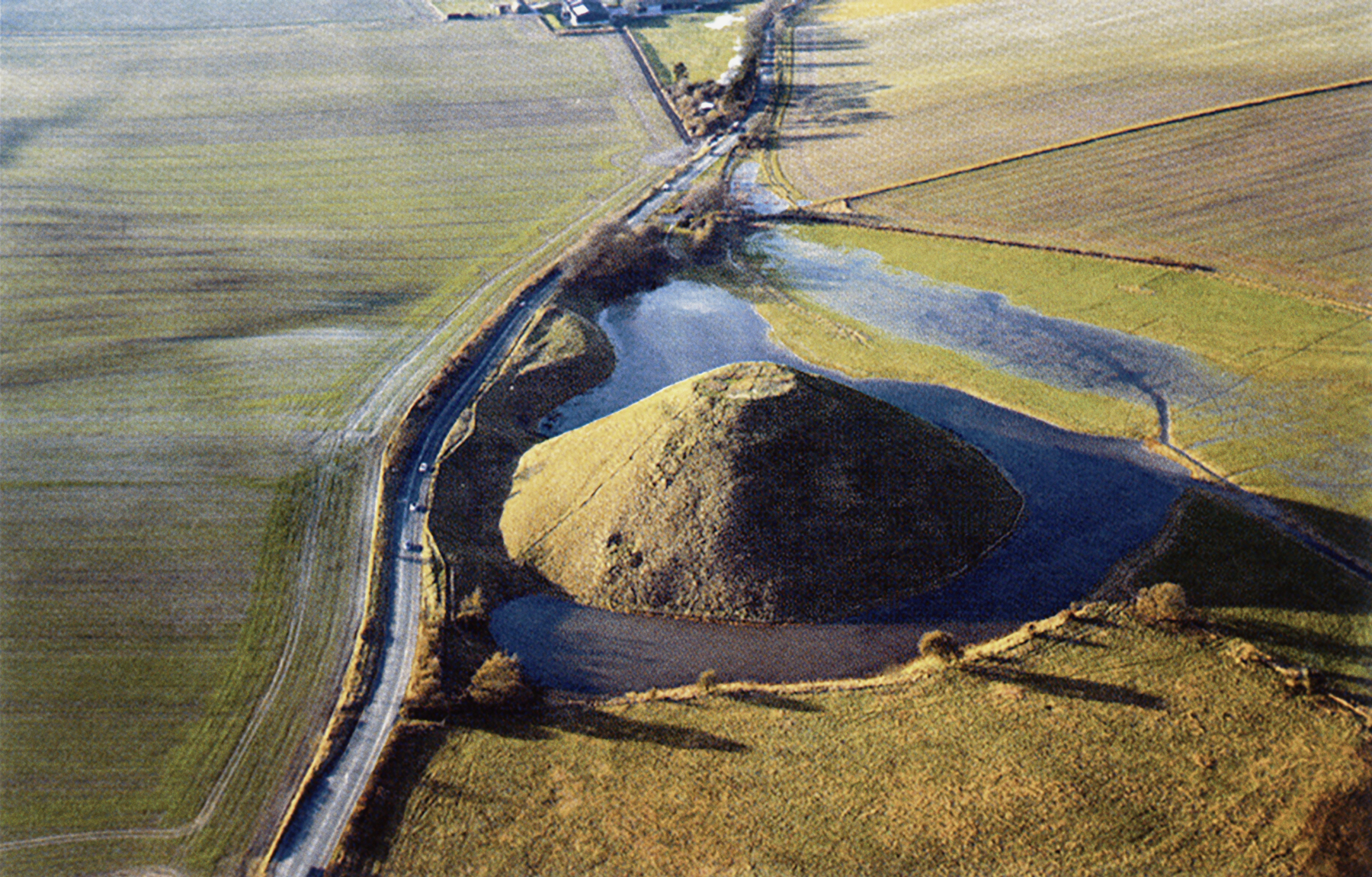
Woodhenge, lying just over a mile north-east of Stonehenge, was another Neolithic monument, originally made up of a series of concentric circles of wooden poles within a circular bank and ditch. It would have been of a similar size to Stonehenge, originally consisting of 6 rings of wooden posts radiating out from a central point. It is tempting to assign this as the precursor to the neighbouring megalithic monument, but dating the structure tells us it was being made as the sarsen lintelled circle was being added to Stonehenge.
We must not underestimate the capabilities of ancient man - Stonehenge is proof that the Neolithic population was capable of observing the rising and setting of the sun and moon extremely accurately, and interpreting the results in order to predict both the seasons as well as the terrifying disappearance of the sun or moon during an eclipse. But Stonehenge should really be seen as the jewel in the crown.
The sheer scale of activity within this region of England during the Neolithic period is staggering - a scale of activity that can be compared with that of a modern Olympic village. The numerous and varied structures were being created and used concurrently, over hundreds of years, and many generations, for ceremonies, burials, trade and astrological predictions. It was a region of the utmost importance.
As to Stonehenge itself, in effect, it spanned two eras - Britain was nearing the end of the Stone Age and the start of the Bronze Age, and as such the monument represented a social revolution. This prehistoric renaissance in Europe saw tools of wood, bone and stone being replaced by metal. It saw society changing from the communal to the powerful individual. Stonehenge was the product of a chance succession of distinct cultures, each lending to it their own particular values. Perhaps it was this unique cocktail of influences which produced a megalithic monument that was to prove to be utterly unique.

→ Subscribe free to the Bradshaw Foundation YouTube Channel
→ British Isles Prehistory Archive
→ British Isles Introduction
→ Stonehenge
→ Avebury
→ Kilmartin Valley
→ The Rock Art of Northumberland
→ Rock Art on the Gower Peninsula
→ New rock art discoveries in the Peak District National Park
→ Painting the Past
→ Church Hole - Creswell Crags
→ Signalling and Performance
→ Cups and Cairns
→ Ynys Môn, North Wales
→ Bryn Celli Ddu
→ Remembering Stan Beckensall
→ The Prehistory of the Mendip Hills
→ The Red Lady of Paviland
→ Megaliths of the British Isles
→ Stone Age Mammoth Abattoir
→ Bradshaw Foundation
→ Rock Art Network