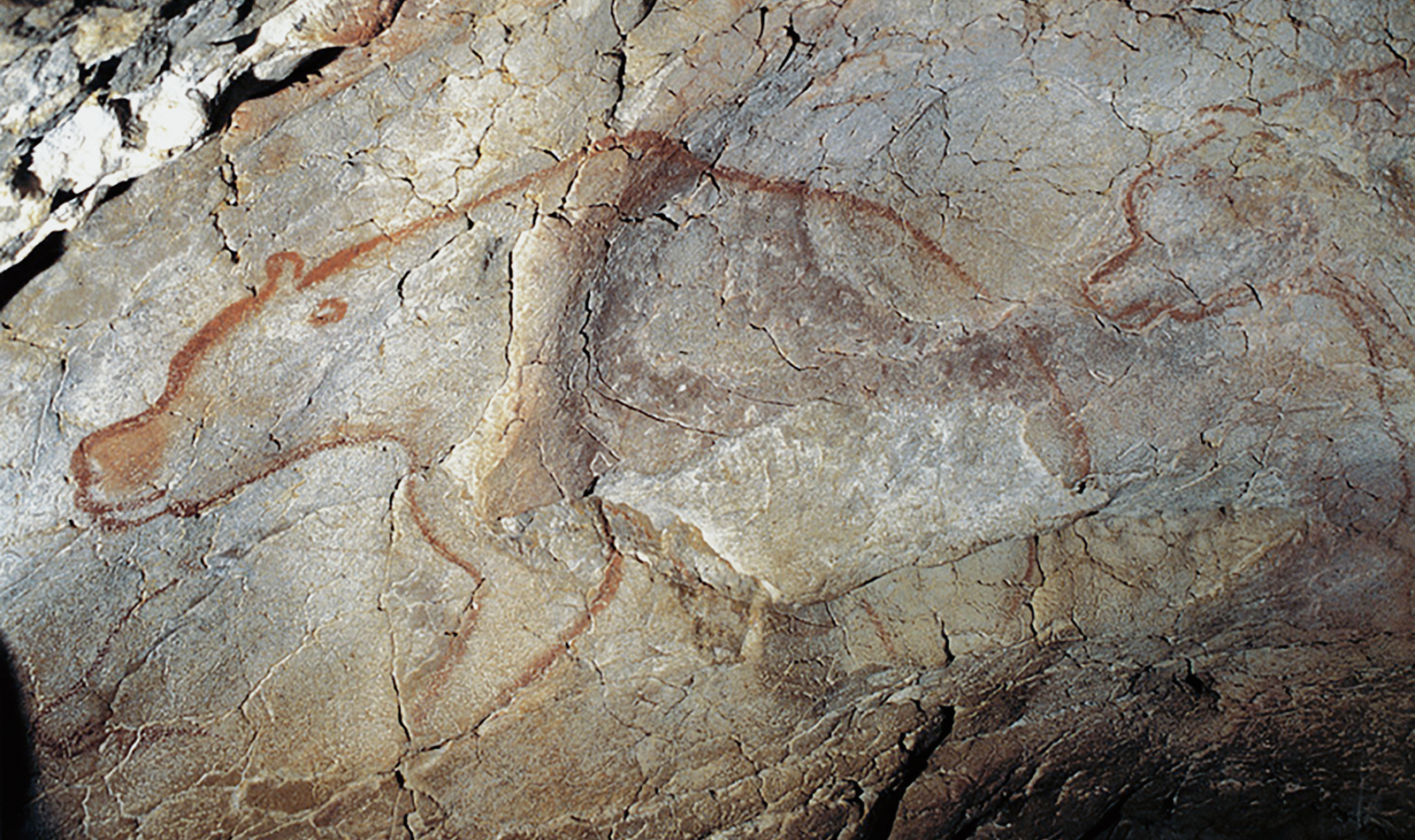
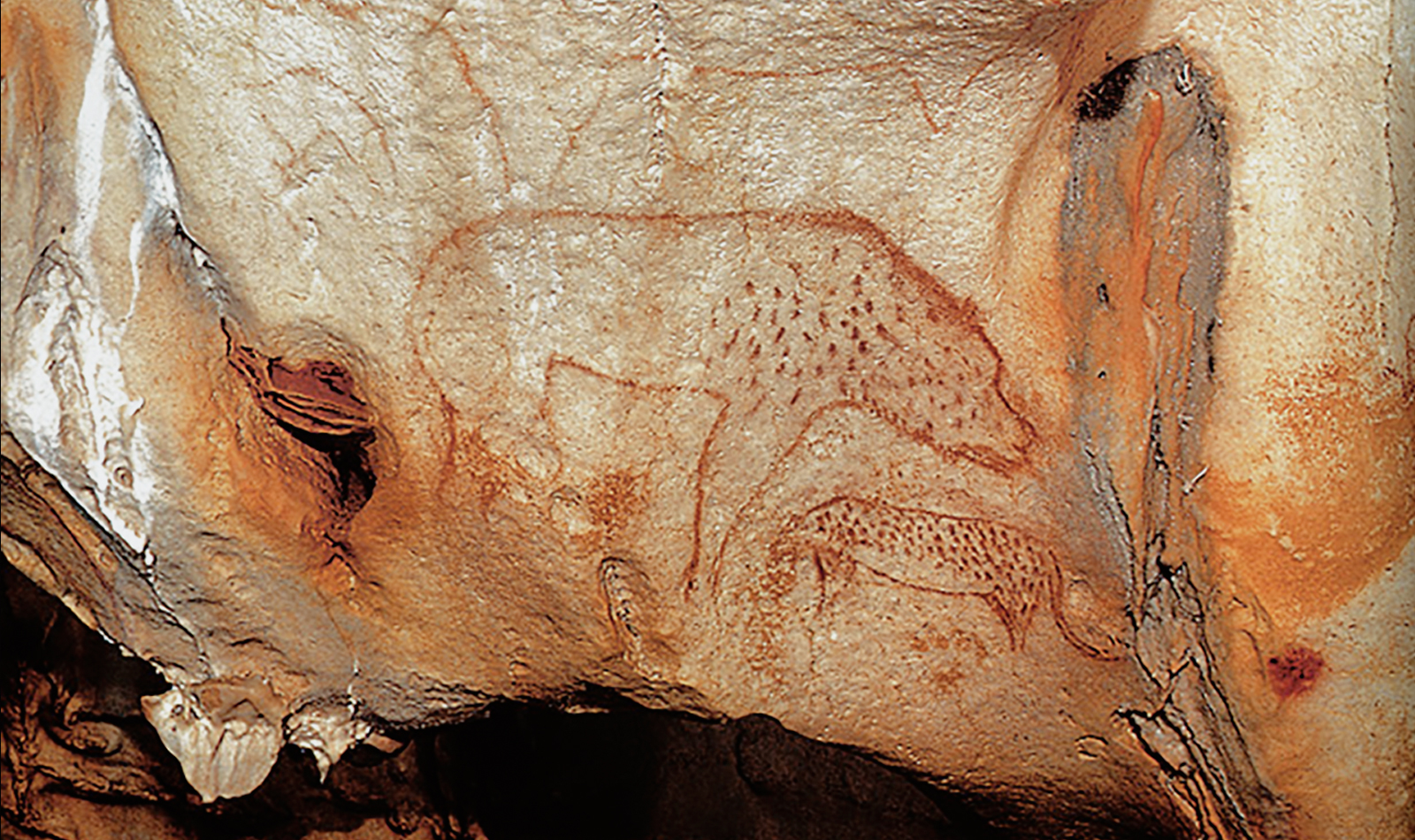
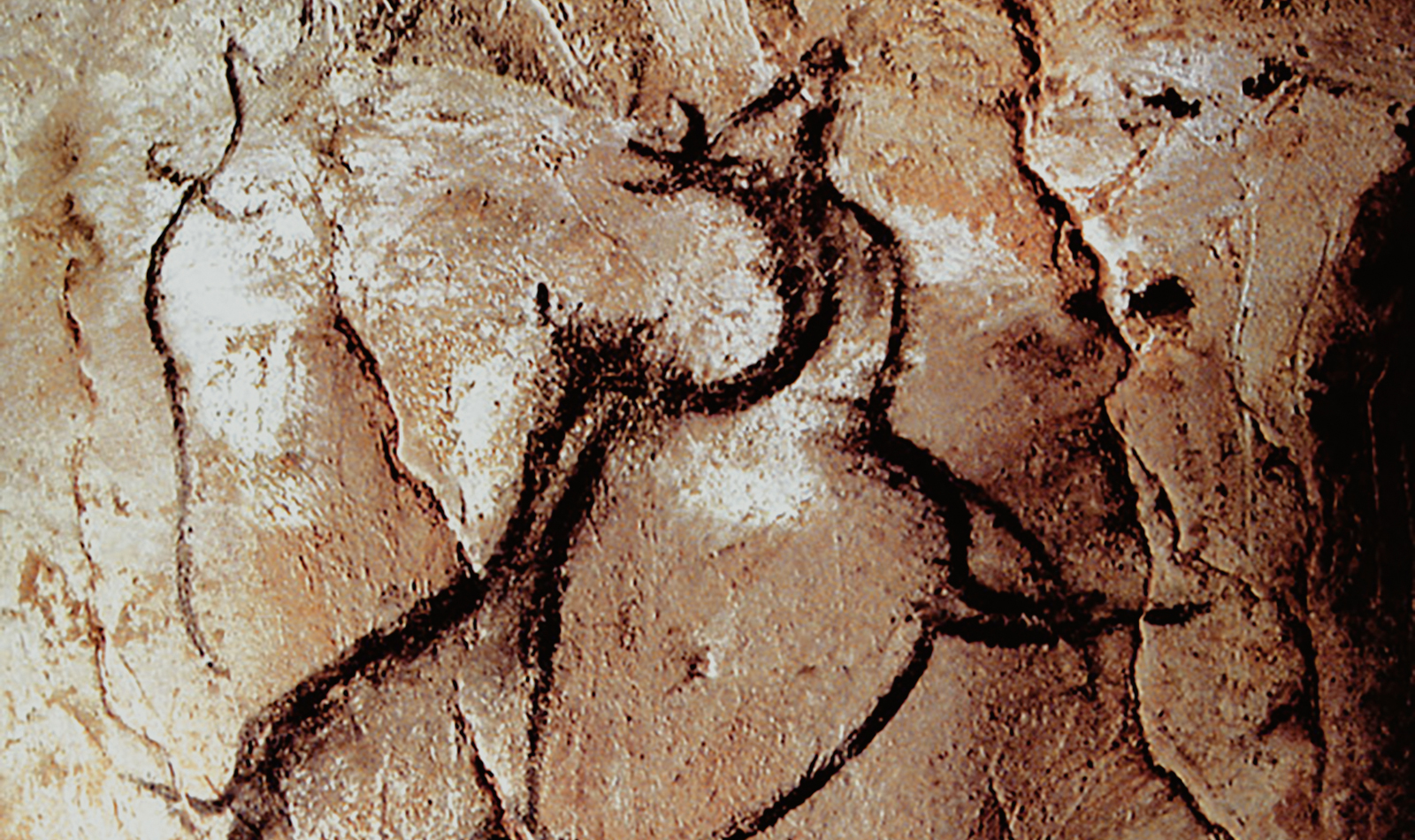
A number of cave bears are depicted in Chauvet. Cave bears are identifiable by the steep incline of their foreheads. These three bears are found near the prehistoric entrance [not the present entrance] to the cave, on a panel in a small recess. The bears are painted in red. The central bear has been painted using the natural relief in the cave wall, with the shoulder following the line of the rock surface. This is a common artistic technique employed in prehistoric parietal art, suggesting that the cave wall topography whilst seen by torch light inspired the subject matter. The central bear is a complete figure, whilst to the left of it is an isolated bear head, and to the right of it a near complete bear. This may depict a sleuth of bears. The artist used a technique known as 'stump-drawing' - the use of fingers or a piece of hide to paint the muzzle and to emphasize the outlines of the head and forequarters; a form of perspective.
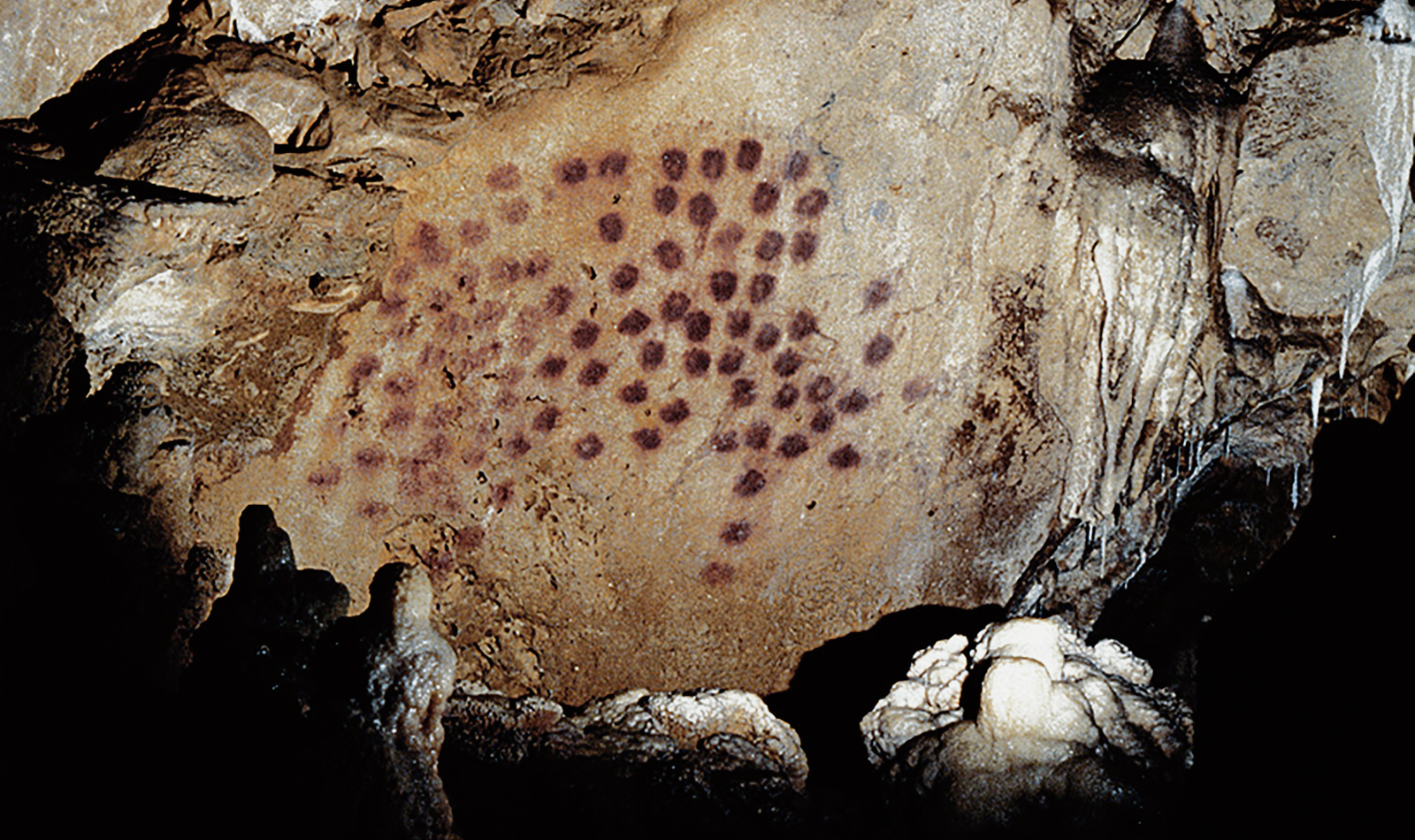
This is a cave painting located near the Chauvet Cave entrance composed of a cluster of large dots, which may represent a mammoth. It is perhaps one of the earliest examples of pointillism. The scientists discovered that the dots were created by covering the palm of the right hand with wet red paint and applying the hand to the wall. The consistency of the dots suggests that the painting was created by one person. The artist would have had an image in his or her mind before beginning the piece. In other words, it appears not to be a random composition.
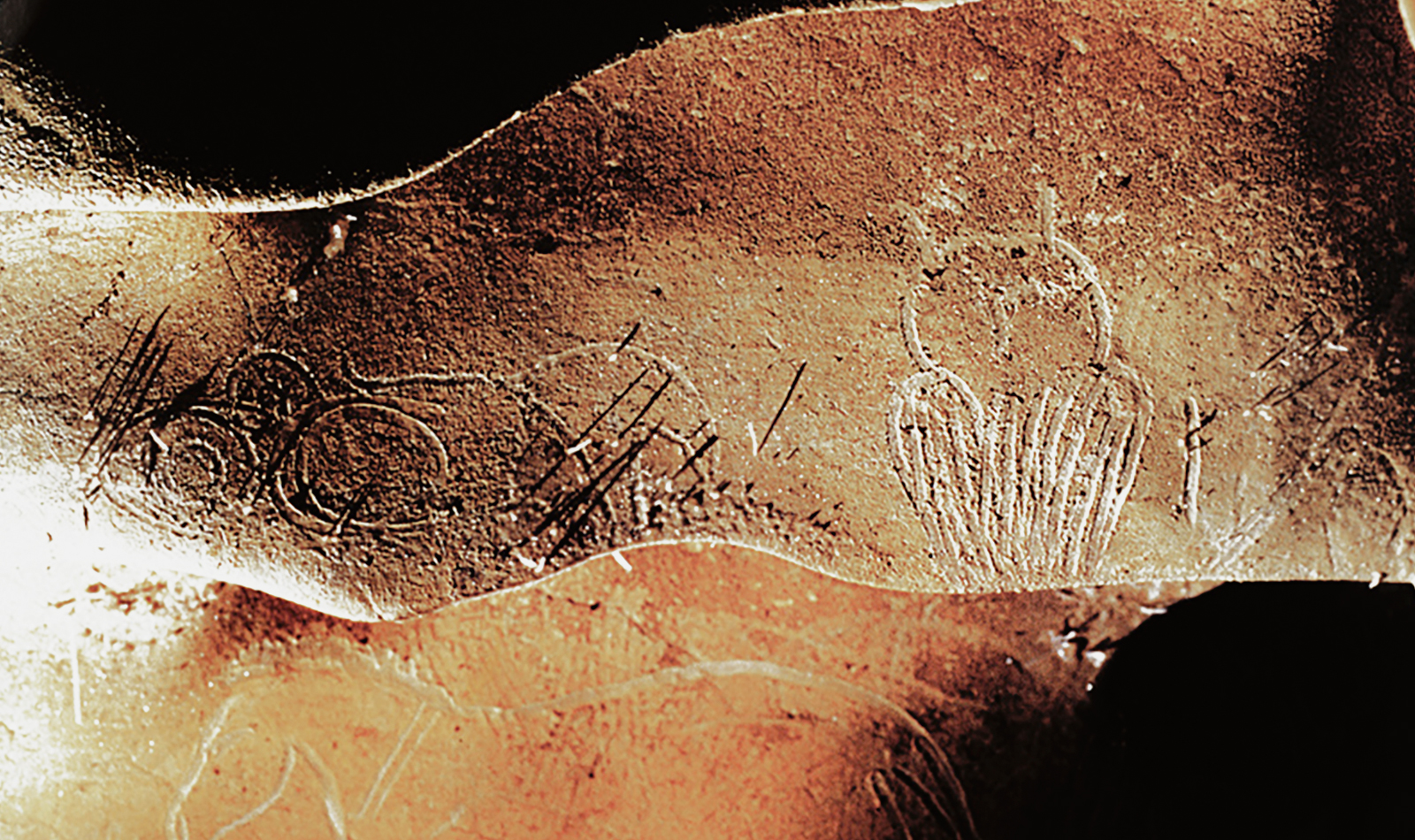
The sections of the Chauvet cave are geologically distinctive, and the artists used this to differentiate the rock art. The long-eared Owl is found in the second section of the cave, which is separated from the first section by a chamber which contains no wall art, even though there is suitable rock canvas for it - an archetypal curatorial device. The second section of the cave offers different artistic techniques. Black is now the predominant colour, and engraving is common. The Owl has been engraved by using a tool on the soft surface of the rock, once this surface had been prepared and scraped clean. The intriguing aspect of the Owl is that it is depicted with its head seen from the front but its body from the back. It may well be the earliest representation of the birds unique ability to turn its head through 180 degrees, an ability which many cultures associate with supernatural powers. One sees the Owl whilst returning from the deepest depths of the cave - is it looking back down there, with its inhumane ability to see in the dark?
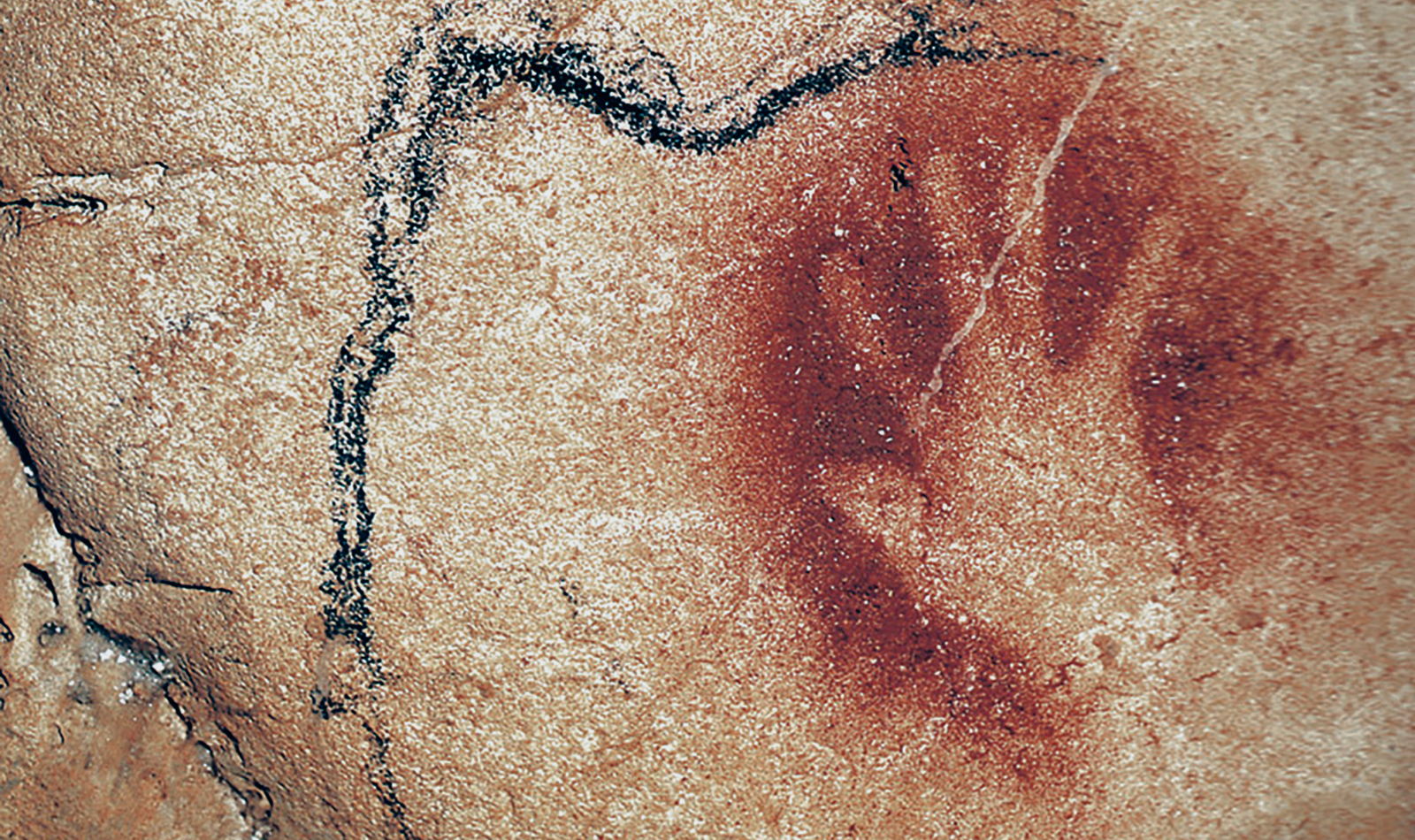
The Red hand stencil and partial outline of a black mammoth, found in the Red Panels Gallery, are located more specifically on the Panel of Hand Stencils. The hand stencil has been placed inside the outline of the animal, on its flank.Researchers have been able to determine that the mammoth was drawn before the hand. The mammoth was reduced by the artist to its trunk, neck line and a short dorsal line. On either side of the outlines there are some slender marks; the one between the trunk and the red hand appears to represent the tusk.
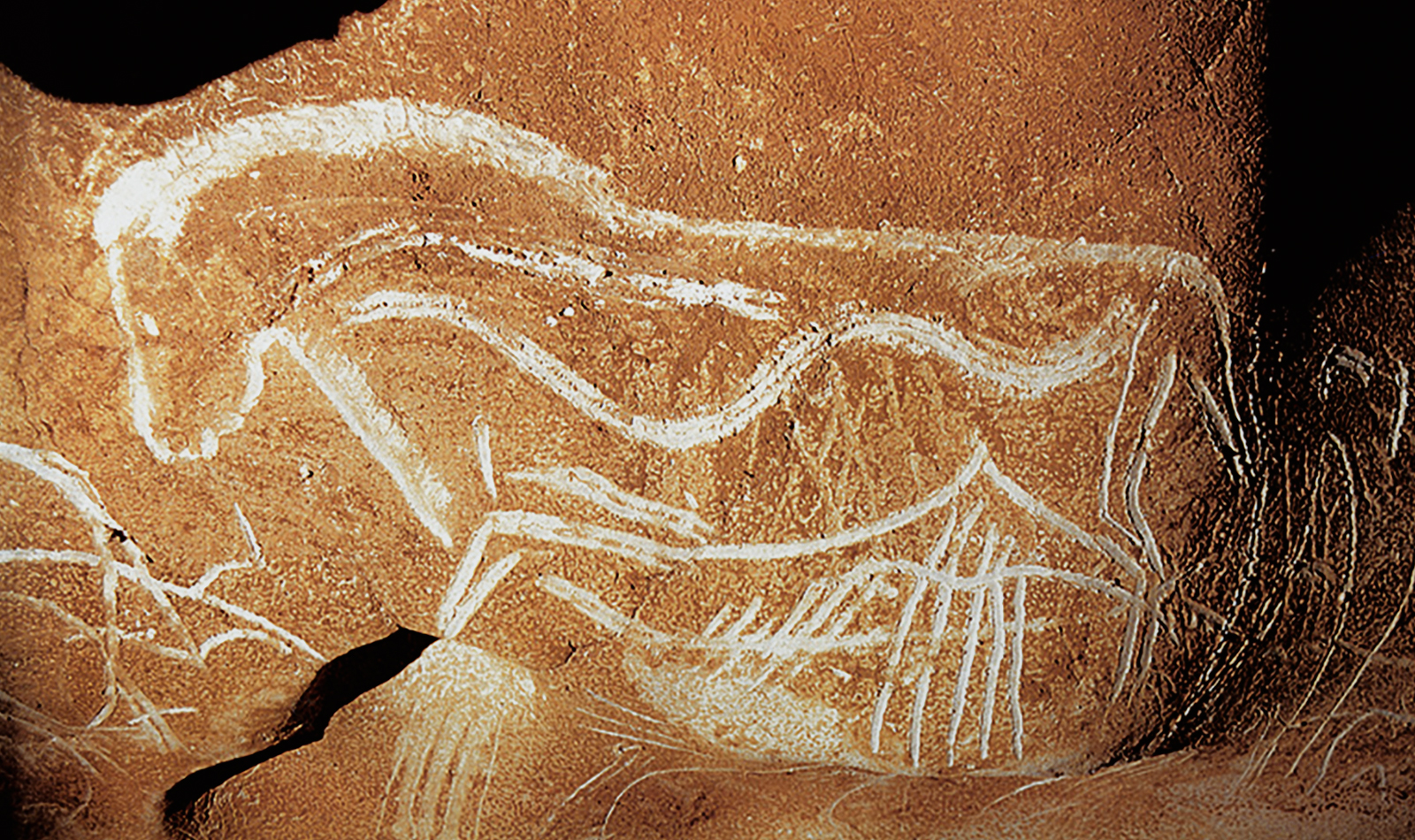
The Horse is found near the Owl in Chauvet Cave, and has been drawn using the same technique. The figure is complete, showing details such as the full mane, its eye and a furry chest. However, this engraving is not entirely representational, as the legs taper into lines, whilst other lines echo the mane and the back. There are also unexplained parallel lines under the Horse.
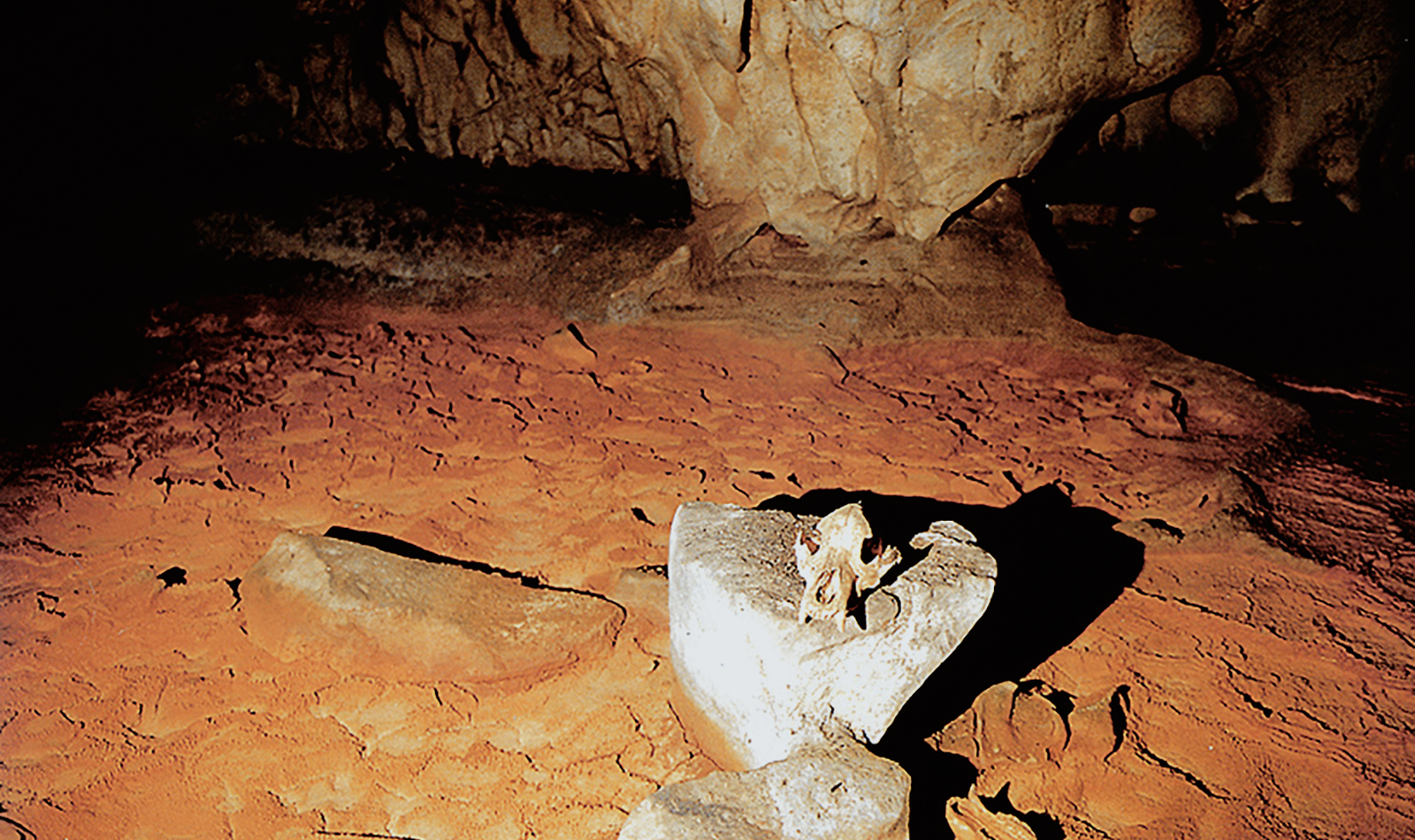
Another example of human activity within the cave can be found in the Skull Chamber. In this space it is possible to see prints and bones on the floor, and on the walls, claw marks, engravings, paintings, hand prints and torch wipes. But in the very centre a cave bear skull was moved and placed on the rock. This would have been done either 32,000 to 30,000 or 27,000 to 26,000 years ago.
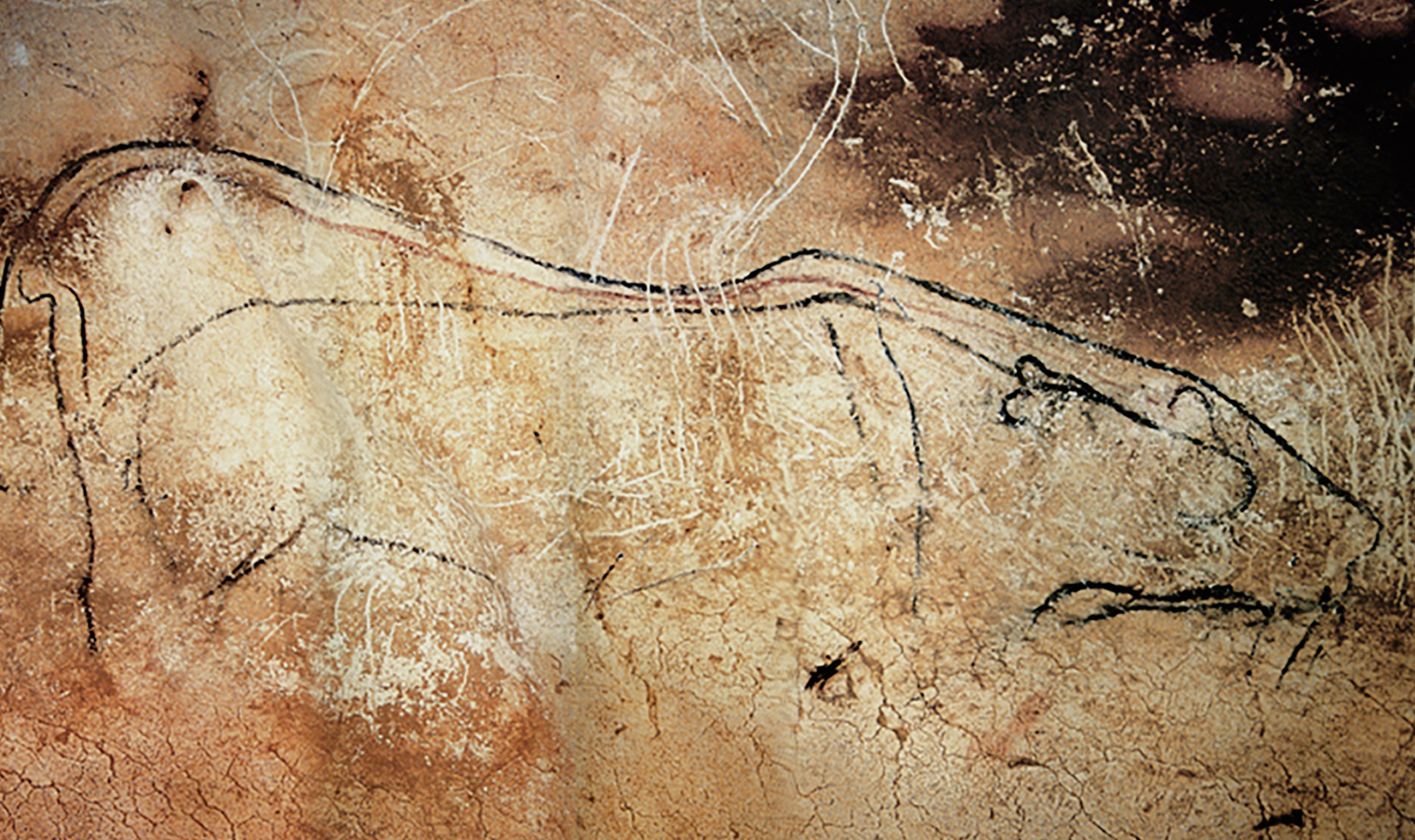
The panel is dominated by two black lions, side by side. The male lion is identifiable by his scrotum, drawn in the background, and a female lion in the foreground, which appears to be rubbing against him. Given the size of this drawing, the elegant and simplistic lines demonstrate a great confidence in the artistís hand. Notice also the red line that echoes the outline of the male lion, and separates the two felines. One explanation is that the red line was drawn first in order to position the drawings of the lions, one above and one below. This argument presupposes a conception of the whole, which would not be the first example on show in this cave. Another explanation is that the artist realised the artistic impact a change of colour, particularly red, would give the composition.
The End Chamber of the Chauvet Cave was clearly reserved for a considered display of cave art. In the centre of the large panel is a recess which demonstrates this selectivity; only one image was drawn here. As usual the wall surface was scraped clear, and a single horse was drawn upon it. The tail of the horse was drawn into an indentation in the rock. The effect of this, on viewing the single image in this central recess, is that the animal appears to be coming out of the rock, as if the rock is simply a veil, distinguishing it yet not separating it from the spirit world.
Ten drawings are arranged over the area. The animal figures include 3 bears, 2 felines - including a panther - 2 ibex, 3 unidentifiable animals and 1 red dot, made with the palm of the hand. The central piece of the panel is dominated by the panther and the 2 superimposed bears. Whilst the outlines are precise and 'essential', the figures are incomplete. The spots on the panther represent a feline coat, where as the spots on the cave bear probably suggested a thicker fur. The figures are all drawn in red. Other visible marks on the panel are attributable to bears - paw-rubs and claw marks.
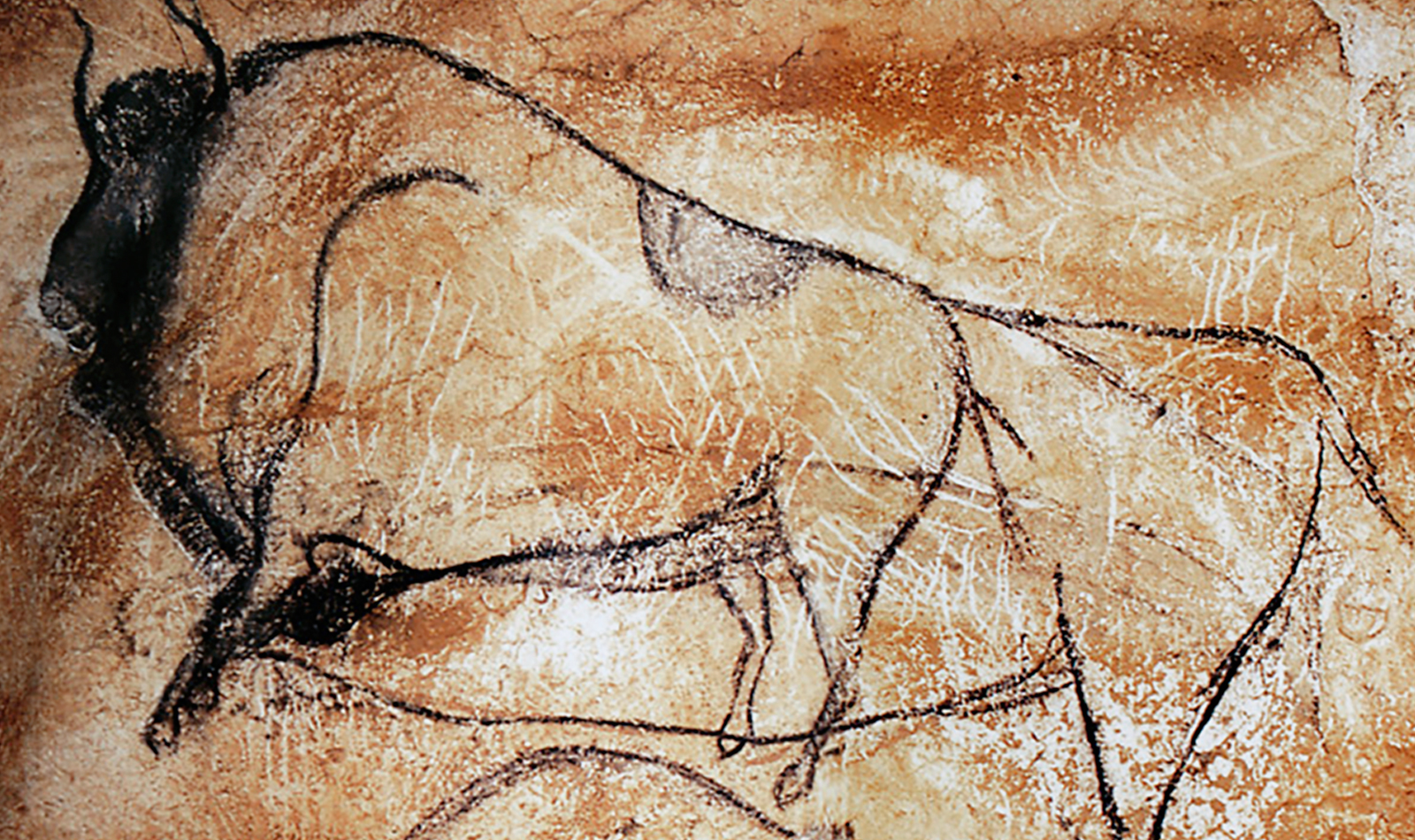
The bison, dated at 30,340 +/- 570 BP, is drawn in black, and its highly systematic representation is repeated for the other bisons in the Chauvet Cave, with its arched lines, accentuated features and small round eyes. The bison is part of the Bison Panel, with two other bison and an engraving of a partial mammoth. This engraving, along with several others, was made before the black drawings. The panel is covered with clawmarks from cave bears, which predate the cave art. The wall of the black bison figures faces the arriving visitor. The bison appears to be a species that is not only rare but also limited to the deepest parts of the Chauvet Cave.
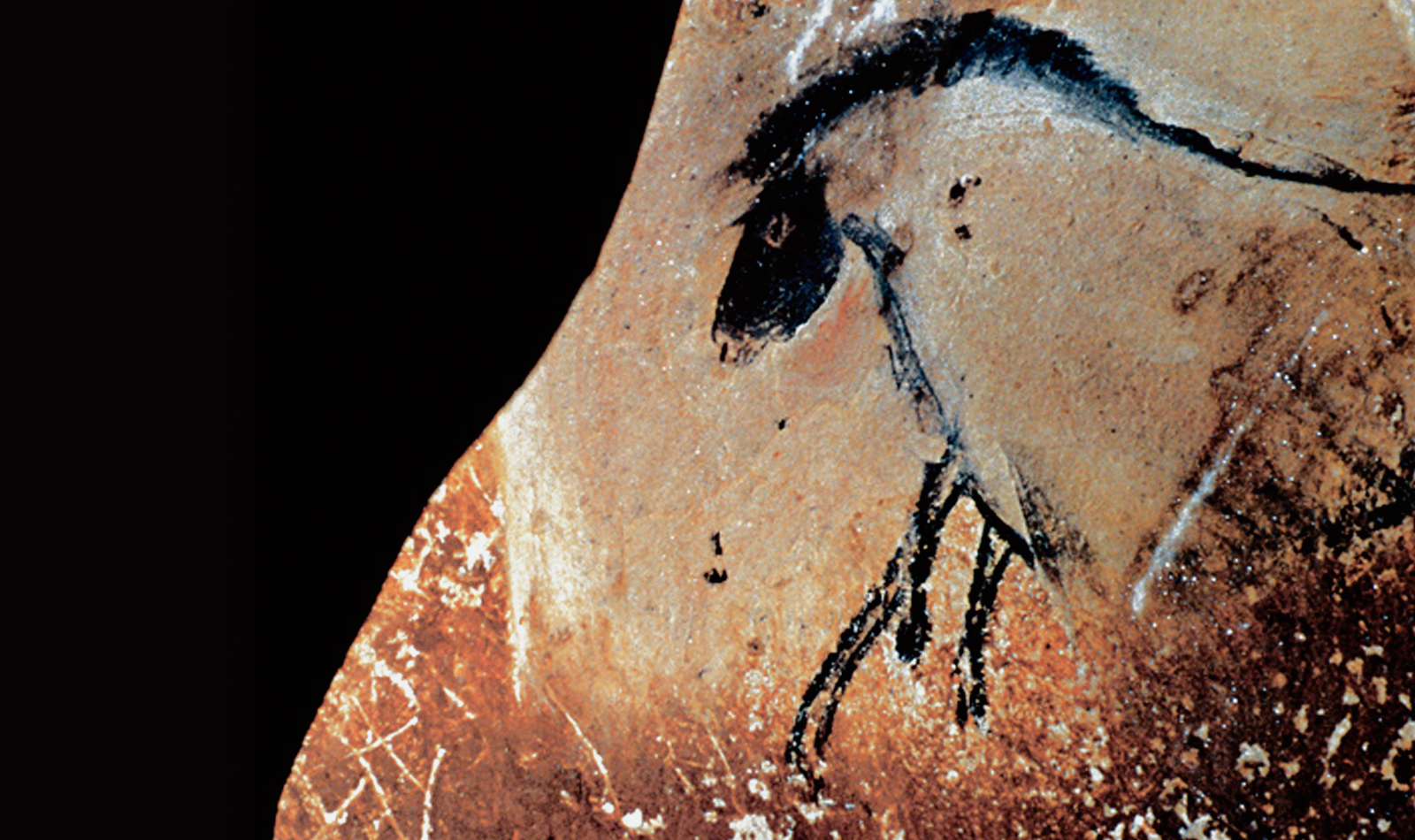
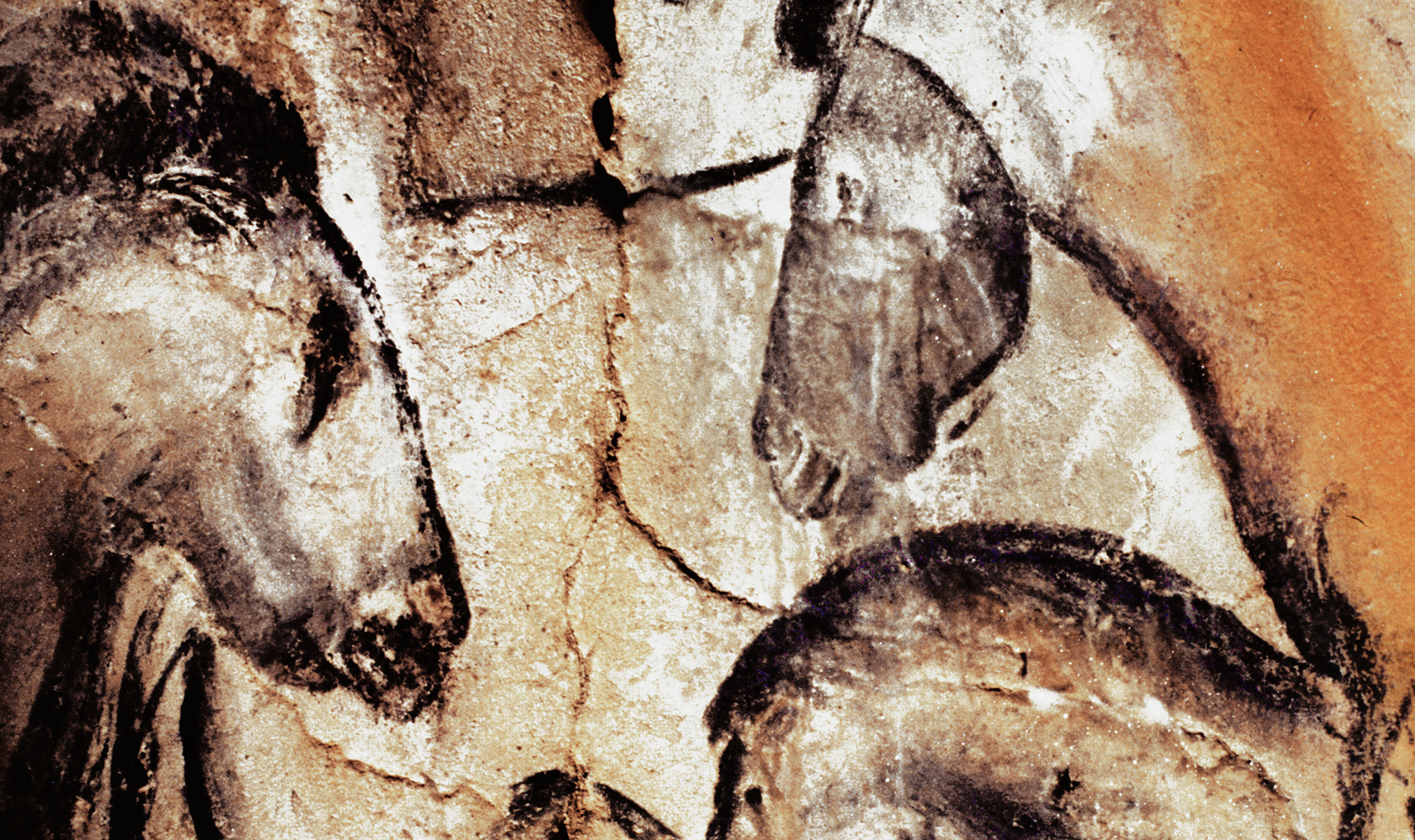
These four horses occupy a small recess in the Chauvet Cave. They bare similar artistic attributes. The artist used fingers to mix and spread a charcoal paste and applied it in order to emphasize the main outlines and give relief and shading to the heads. Notice another figure drawn subsequently, that of a large lion drawn facing to the right [its hindquarters and tail are clearly visible], but without interrupting the lines of the earlier horses [except the lower horse].
The Megaloceros is an extinct type of giant moose. It was drawn in charcoal with lines drawn rapidly and confidently, and finished with some stumping. This animal, which disappeared more than 10,000 years ago, had impressive antlers, although they are not depicted here, despite the detail given to the rest of the animal's features. Notice how different activities occurred on this panel: black paintings, clawmarks, scrapings and black drawings.
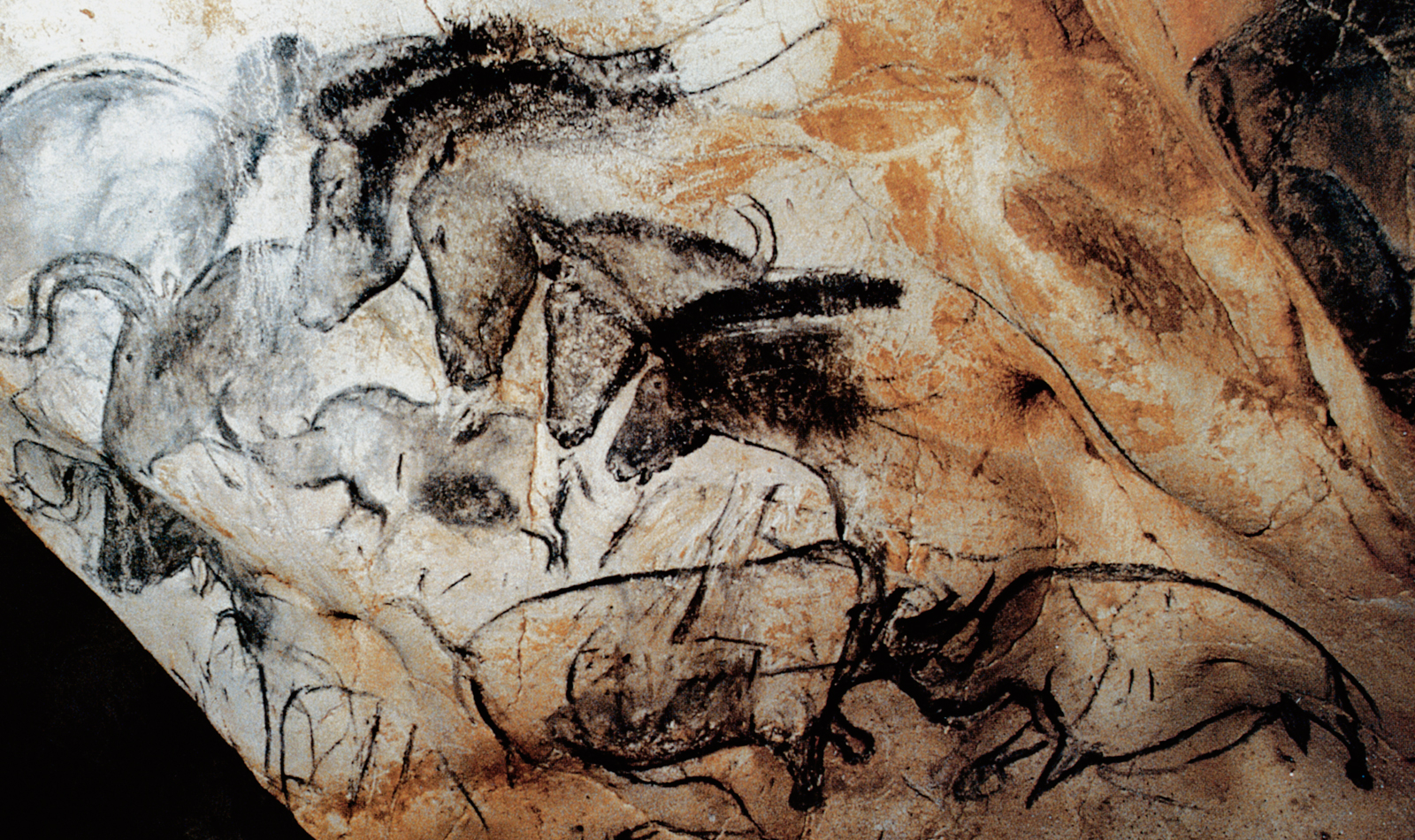
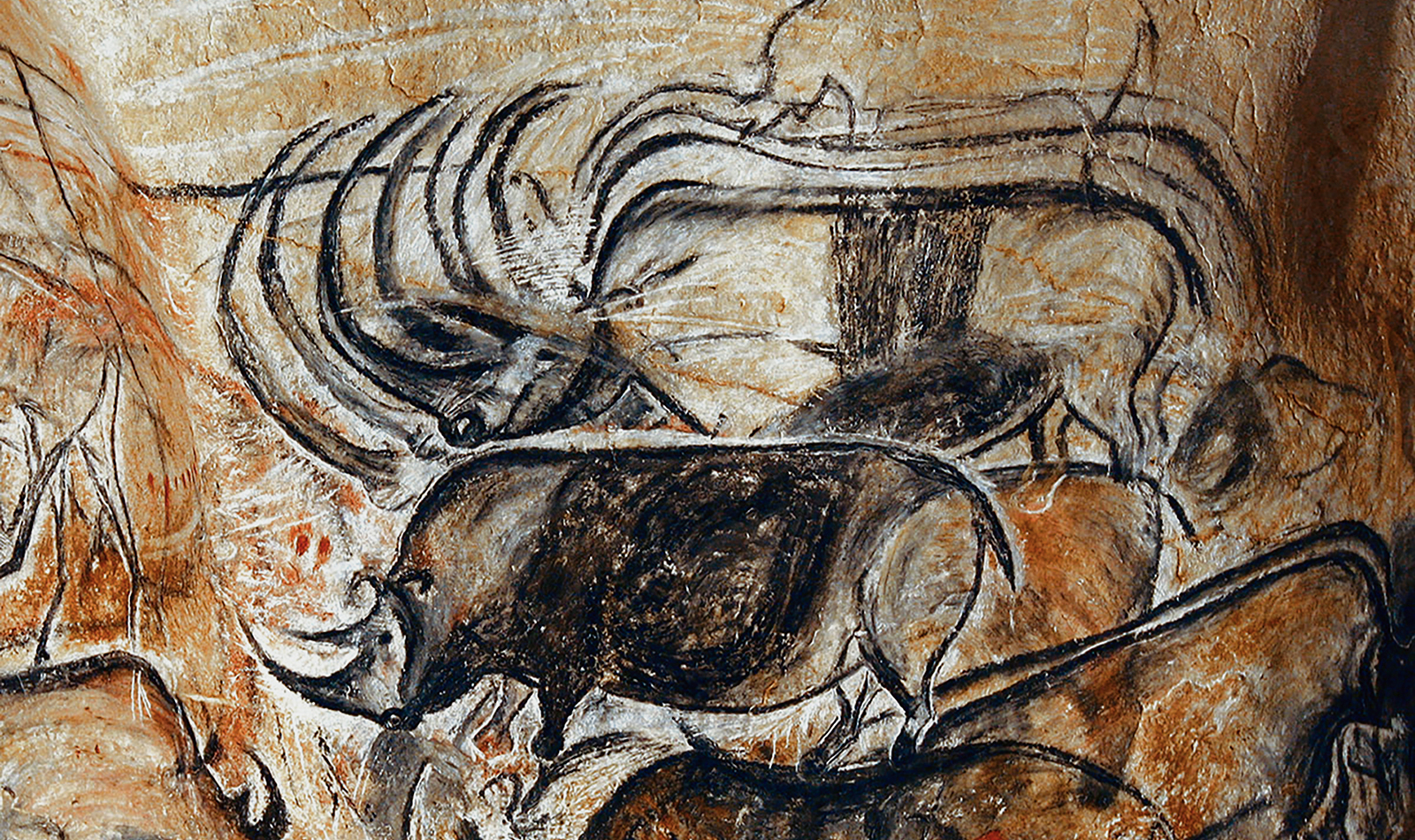
This is considered one of the most important panels of the Chauvet Cave. It contains twenty animals. The drama is clear to see, highlighted by the rhinoceroses confronting each other. This is unique in Palaeolithic cave art. The two rhinos were drawn at the same time, probably by the same artist. The charcoal used has been dated between approximately 30,000 and 32,000 years before present. The four horses heads were drawn in charcoal after the rhinos as well as the other animals - two more rhinos, a stag and two mammoths - on this panel, which as elsewhere in the cave had been prepared and scraped. Of the four horses, the top one was drawn first and the lowest one drawn last. The artist who drew the horses - almost certainly one artist - mixed the charcoal with the surface clay to obtain various hues and visual effects [shading and perspective]. The technique was stump-drawing, as well as scraping the outer edges of the images to highlight them with a pale aura.
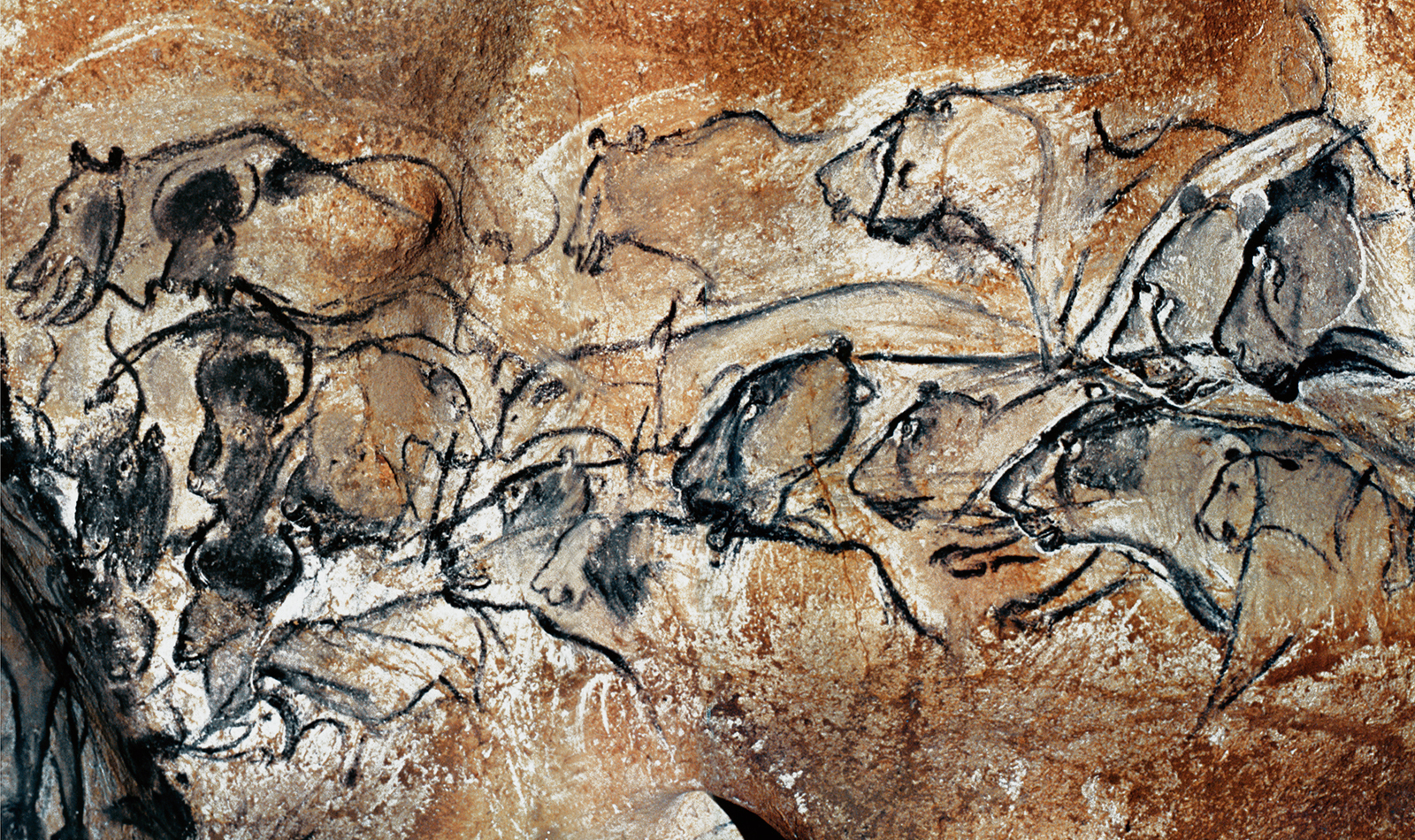
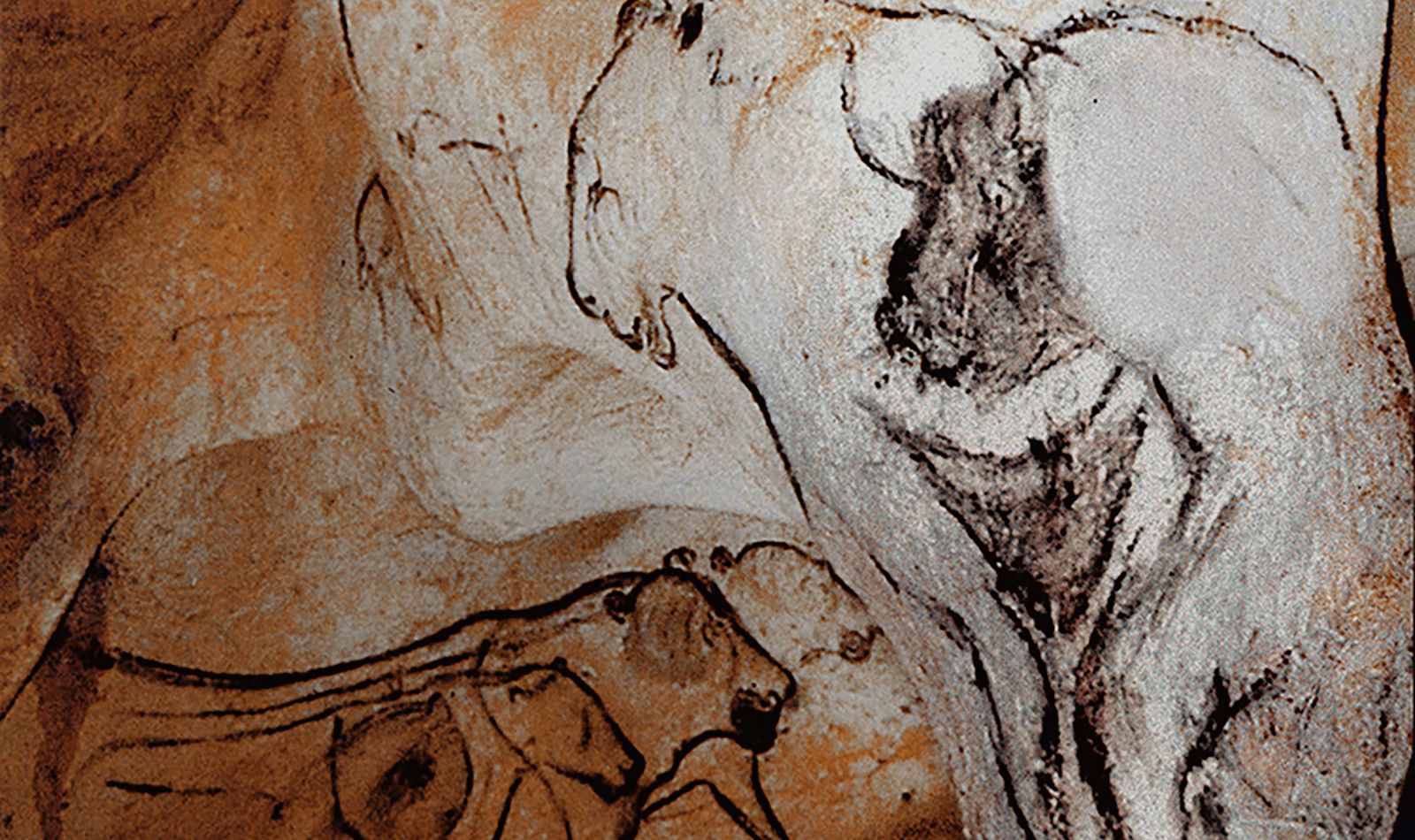
The wall to the right of the central recess has a large number of animals drawn on to it. The overall scene depicts a hunt. On the right of the composition there is a rhinoceros and a mammoth. On the left, there are four bison heads, and two more rhinos. Then there are seven bison, pursued by a pride of sixteen lions, mainly depicted by their heads alone. Above all of this drama, at a different scale, there is a large feline figure shown standing face to face with a lion cub. Almost all of the animals on this panel face left. This composition is unique in Palaeolithic art.
Right at the very end of the End Chamber a hanging rock formation reaches down from the ceiling to a metre off the ground. This striking natural relief, as you might expect, is adorned with black drawings and engravings: four lions, one horse, two mammoths, one musk ox and a composition creature - half human and half bison - referred to as the Sorcerer. Beside it there is drawn the front view of a woman's lower body with long tapering legs. Her pubic triangle and her vulva are clearly drawn. The Sorcerer's figure folds around and faces in to the pubic triangle. This is certainly a powerful composition, perhaps symbolising a relationship between a mortal woman and a supernatural animal spirit.
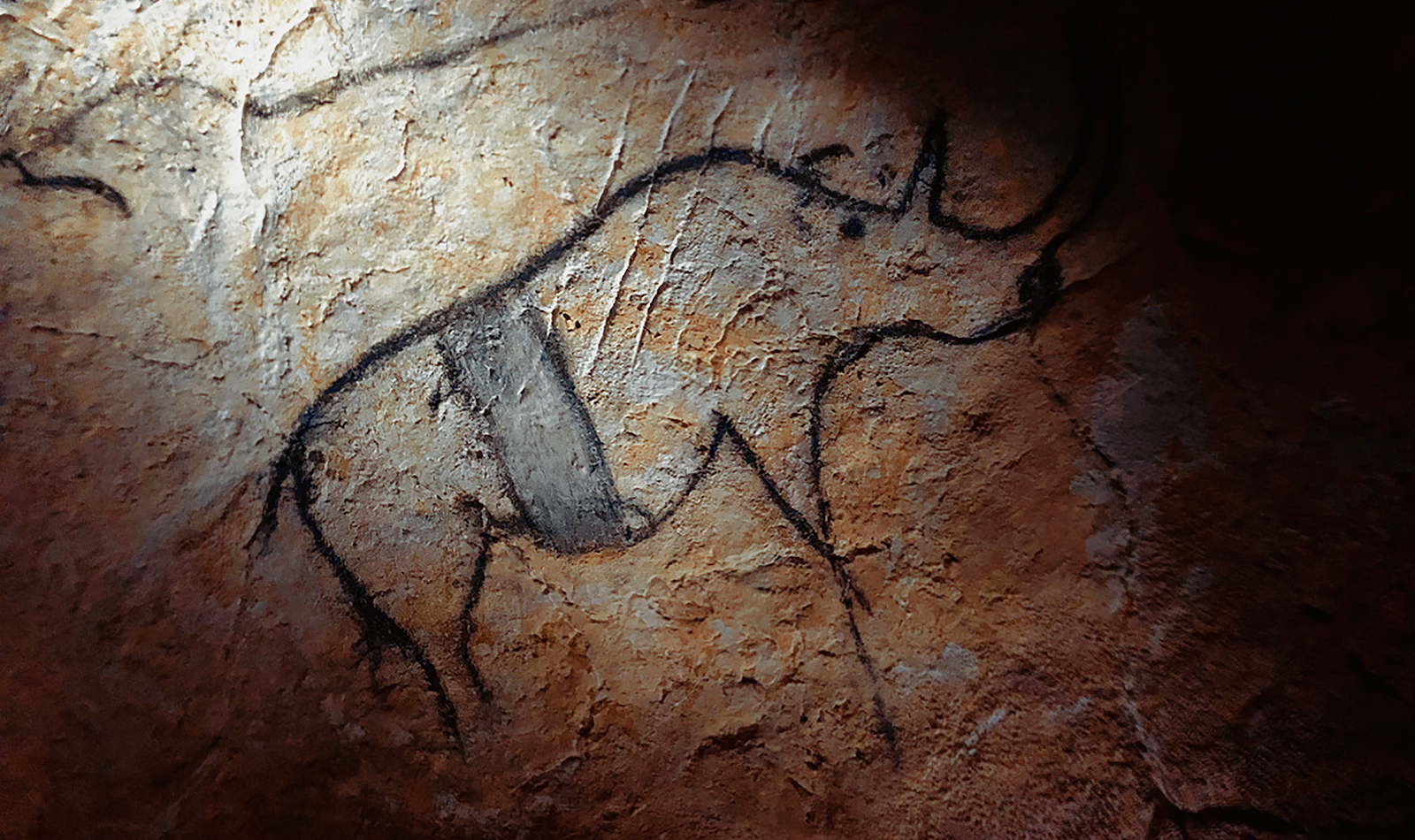
Two small rhinoceroses facing in opposite directions, at the entrance of the Megaloceros Gallery. The one at the top left is limited to the line of the back. The one below is stiffly drawn, with a broad stripe on the abdomen which may depict one of the thick skin plates.
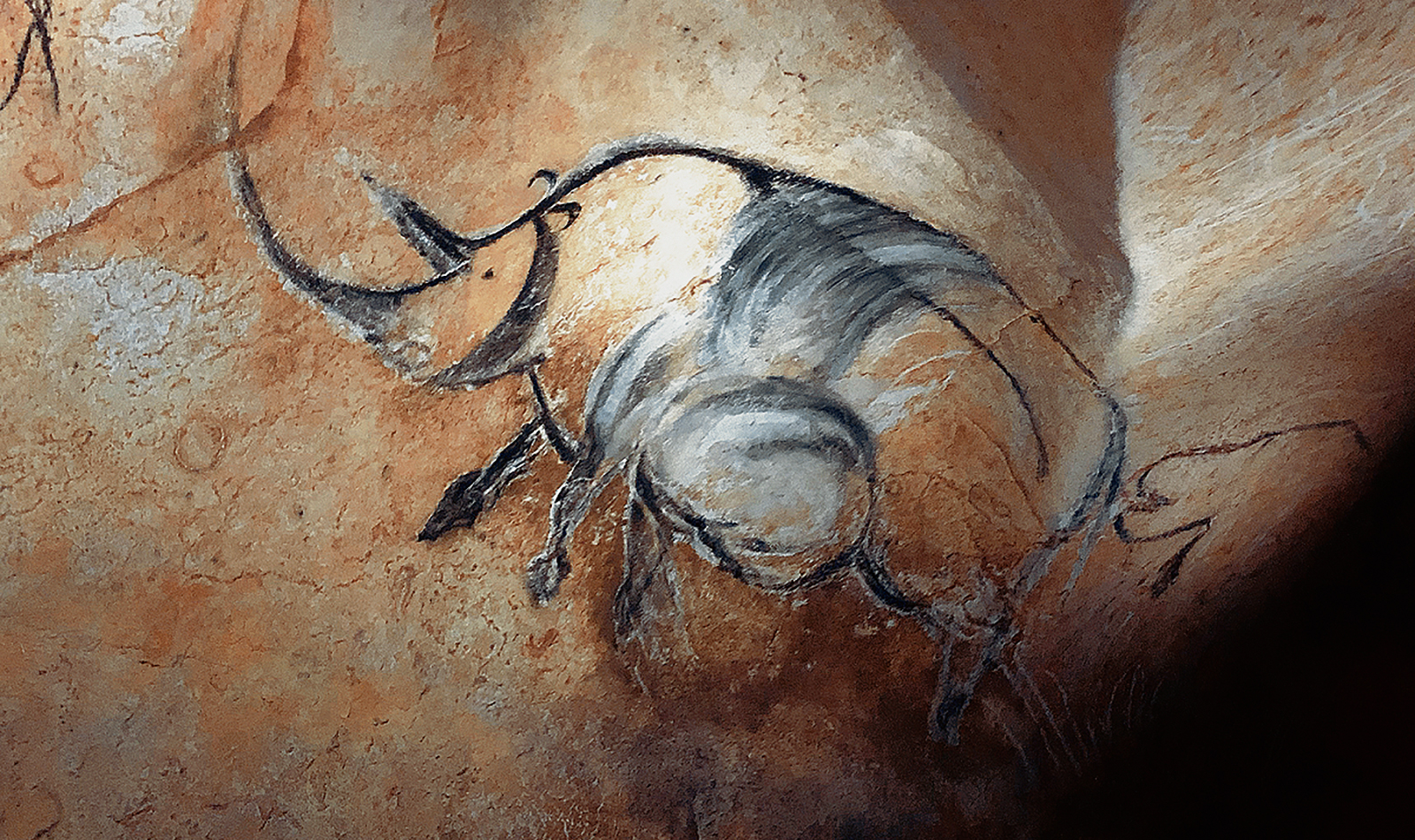
A rhinoceros represented in true perspective, with ‘double arc’ ears and partially shaded by the stumping technique.
A troop of rhinoceroses have their horns represented in true perspective, but the lines of their backs in false perspective. The decreasing perspective of the horns may have been a technique to depict a herd side by side or to depict movement. The body has been partially shaded by the stumping technique – applying paint or charcoal with either the hand or a pad in order to shade a figure and give it depth.