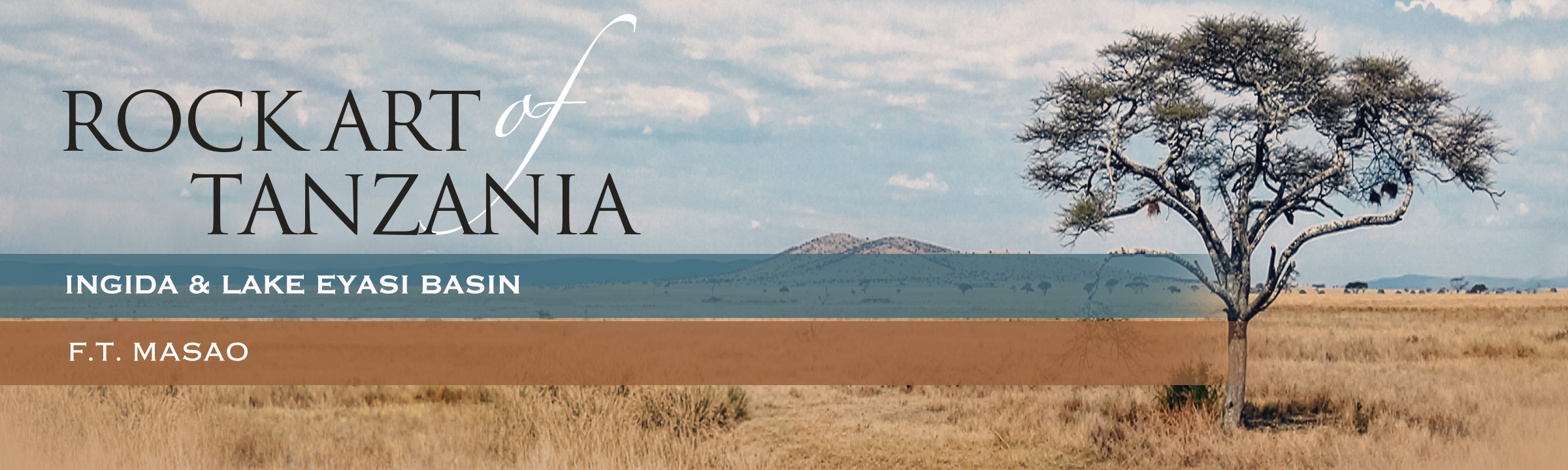
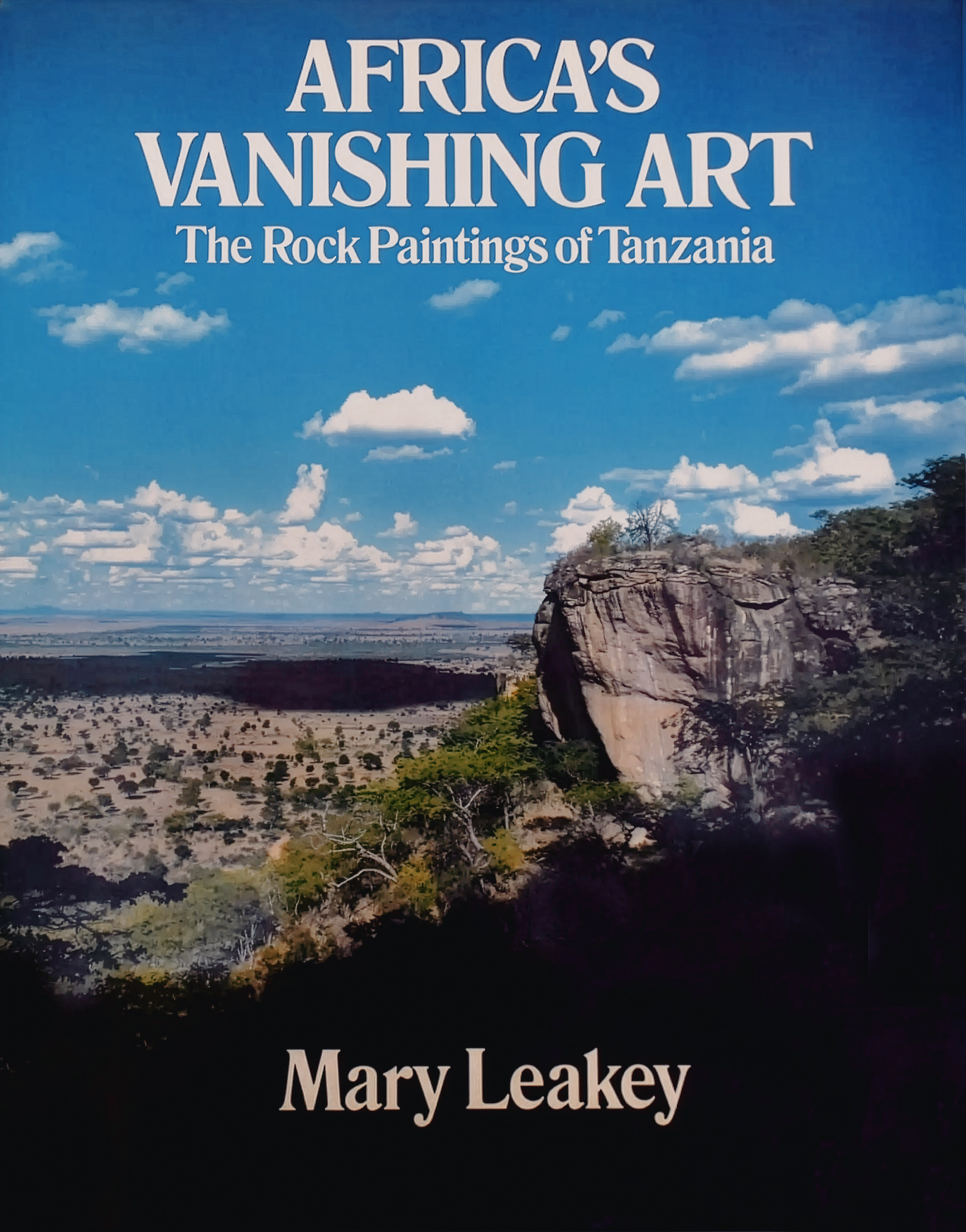
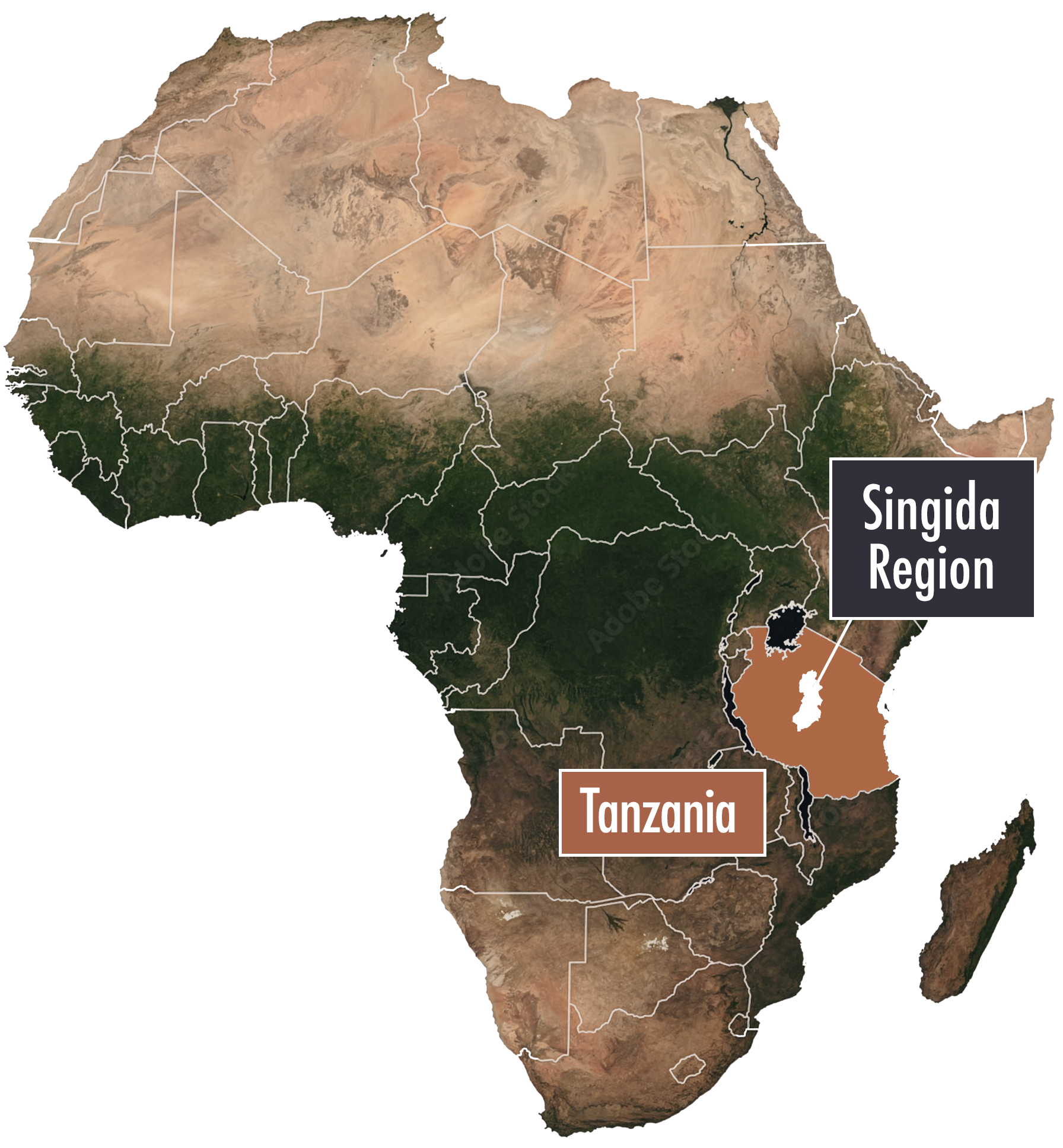
Despite its significant position astride the most important rock art regions of Africa, i.e. southern Africa and the Sahara, the study of rock art in Tanzania is relatively new. It was M.D. Leakey’s treatise, Africa's Vanishing Art: The Rock Paintings of Tanzania (1983), that first put the rock paintings of Tanzania on the map. M.D. Leakey's book concentrates on the Kondoa paintings, but the rock art from the rest of central Tanzania is equally interesting, though little known. The choice to concentrate on the rock paintings of Singida and the Lake Eyasi Basin was therefore influenced to a large extent by this lack of comparable knowledge about the paintings in the present study area. An equally strong justification was and still is the need to document as much of this unique patrimony as possible before it is completely lost through the various natural and human deteriorative agents currently threatening its continued existence.
Our research was focused on recording and studying as many sites as possible and initiating analytical study where possible. The objectives of the fieldwork were modest and straightforward:
- To survey as much of the area and record as many sites as possible.
- To describe the sites and their contents as fully as possible.
- To attempt a study of the meaning of the subject matter depicted by recourse to ethnographic enquiry.
- To comment on the state of preservation of the sites in order to bring about public awareness and that of the Government and other interested bodies.
With these objectives in mind, five field projects were carried out over the course of 10 years. All in all, 140 sites were recorded in the Singida region and 35 in the Lake Eyasi Basin during the five seasons of fieldwork. Much more still needs to be done to record and preserve both the existing sites and those still undiscovered lying deep in silent bush covered country. Unfortunately, there are very serious problems of conservation and management that need to be addressed as a matter of urgency.
It is hoped that the photographic record resulting from this work will enthuse all the stakeholders in this heritage to conceive plans for conserving and opening up the sites to the world. Needless to say, this work has only touched the surface of what is there and that is clamouring for more research, attention and above all preservation.
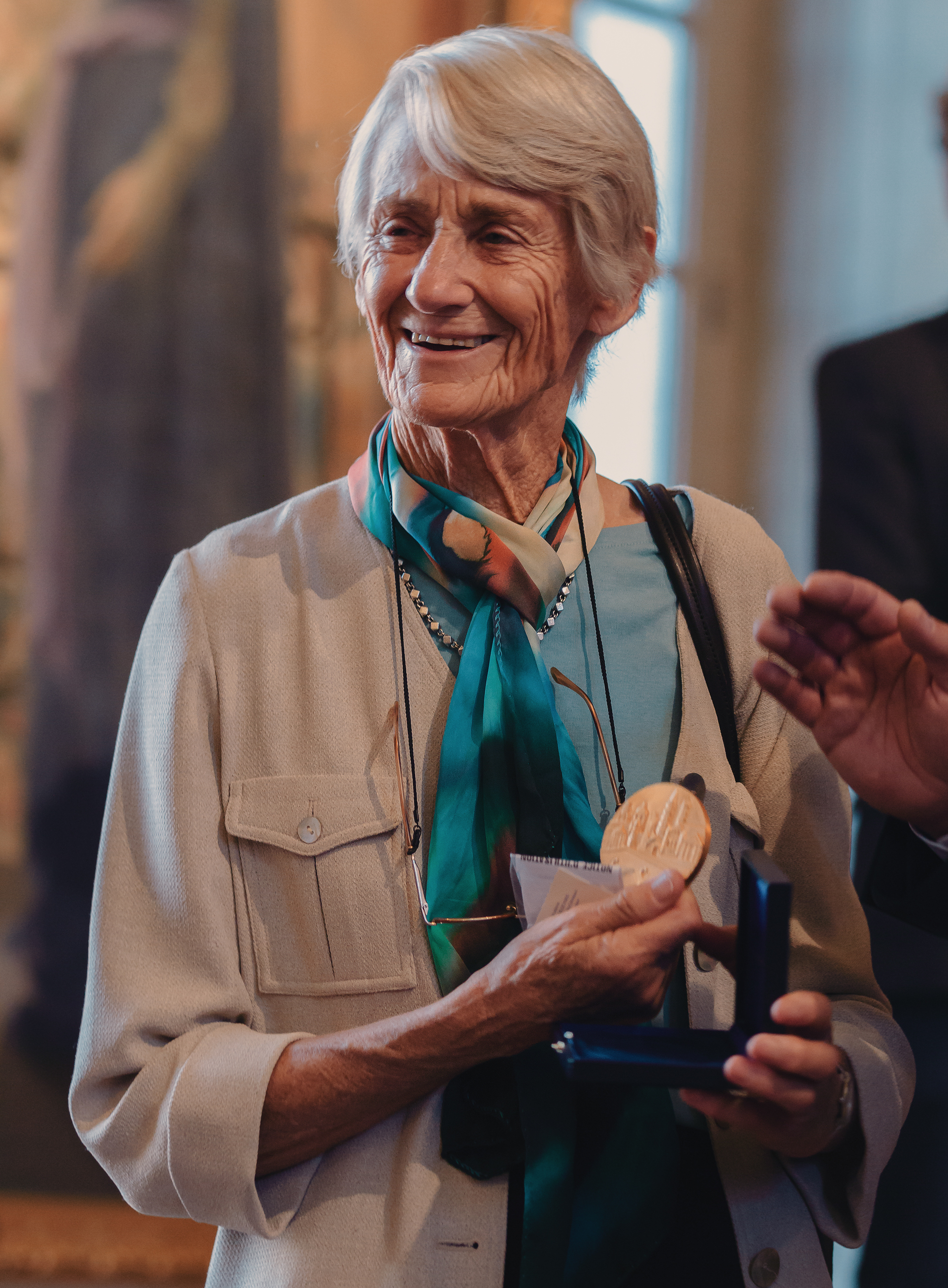
I have often wished over the years that the Tanzania rock paintings might be better known and more widely appreciated. They are so beautiful and disappearing so fast. (Mary D. Leakey 1983).
Many people believe that prehistoric rock art is restricted to the Palaeolithic paintings in the European caves of France and Spain.
Few appreciate that Africa has an equally impressive record, and that some of the most beautiful paintings are to be found in Tanzania. The majority of the Tanzanian rock paintings are found in Kondoa and the contiguous Lake Eyasi basin. Those at Kondoa are the most easily accessible and perhaps the most dramatic because they are frequently painted on impressive rock faces, situated on steep rocky slopes overlooking valleys below. These paintings were also the first to be reported, as long ago as 1908.
Surprisingly they were given little attention, being described and recorded only in brief publications by various scholars until Mary Leakey published her beautifully illustrated book describing the art of Kondoa-Irangi. The renewed research efforts described in the following pages extend this record, and illustrate how rich this heritage really is; in five field seasons, Dr. Fidelis Masao and his colleagues recorded 140 new sites in Singida and 35 in the Lake Eyasi basin. This book thus represents a significant contribution in promoting public awareness of this priceless Tanzanian heritage.
My interest in the Tanzanian rock art began in 1978 when I came across tracings of the Kondoa rock paintings that Louis and Mary Leakey made in a three month field season in 1951, lying forgotten in the Kenya National Museum’s archaeology laboratory. After completing their field documentation, Louis and Mary unsuccessfully approached a number of potential publishers, and on failing to find a publisher they eventually gave up. After I came across the paintings in 1978, renewed efforts by Richard Leakey led to the publication of Mary’s Africa’s Vanishing Art.
I was fortunate to have the privilege of working with Mary for several most enjoyable weeks on the preparation of this ground breaking book. As we studied each painting in detail prior to writing descriptions, I came to appreciate fully the beauty and simplicity of the art. A few very simple lines clearly define the essential characters of the animals painted, cleverly depicting their characteristic behaviour and movements. Later I was able to visit Kondoa with Mary and see the original paintings on the huge granite outcrops set in beautiful Brachystegia woodland.
Sadly, many of the paintings that Mary and Louis recorded in the early ‘50s are now severely deteriorated, or in some cases completely destroyed. Conservation measures are urgently required to prevent the loss of additional paintings. But even as long ago as 1935, when Mary Leakey first saw the Kondoa paintings and the majority were in a relatively good state of preservation, Mary recognised the deteriorating condition of some of them and their conservation was one of her greatest concerns. Fortunately, in recent years a number of foundations have been formed specifically to raise awareness and conservation funds for Africa’s rock art. These foundations are largely regionally based, and mostly in southern Africa, but in 1996 TARA, the Trust for African Rock Art, was founded to protect the rock art of Africa. TARA recognises that Africa’s art is a world heritage. It is thus dedicated to create a greater global awareness of the importance and endangered state of Africa’s rock art; to survey and monitor sites, to be an information source and to promote and support rock art conservation measures. Mary Leakey described the rock art of Africa as “the richest variety of rock art anywhere on earth”. These increasing conservation efforts give hope for the future.
Before meaningful conservation measures can be put in place, it is essential to have good records of the sites and their state of preservation. Dr. Masao’s fieldwork has gone far in improving this record; many new sites, previously undocumented are described here, and in some cases these were unknown even to the local people. Although there remains much to be done, this work is timely, not only in promoting awareness of the Tanzanian rock art, but also in providing stimulus to the authorities to take action in introducing effective conservation measures. If this does not happen, in a few decades much of this unique heritage will be lost forever. Tanzania is internationally recognised for its prehistory; the fossil remains of human ancestors excavated at the Olduvai Gorge, the long footprint trail at Laetoli, and the exceptional dinosaur record at Tendaguru and other sites. The rock art of Central Tanzania is an important part of this heritage. It must not be allowed to vanish.
Meave Leakey
December 2003
Possible materials used to create rock paintings include fat (now also used in industrial paints) from game animals, termites, bullfrogs, and plant oil from nuts and seeds. Others, which have been revealed by ethnographical research, are dung from cow and hyrax mixed with urine, fat or water. Blood seems to have been used as a fixative or may also have been used for ritualistic purposes. Pigments for the red and brown colourings have been revealed to be mainly iron oxide.
We do not know for certain whether comparable materials were used to create the rock paintings in central Tanzania, but we can assume that this was the case. At any rate it has been proven that the red pigment was made from haematite, which occurs naturally in the area. Based on what has been reported from South Africa, the white colourings were probably made up of clay, lime, zinc oxide, gypsum, calcite, talc, ash, plant latex, bird or lizard droppings.
The rock art sites are usually located midway on hill slopes and are sometimes difficult to reach because of the rocky terrain and thick bushes that surround them.
Some can also be found on hill tops (kopjes). In either case, they seem to have been chosen deliberately for their unique location and advantageous view of the surrounding areas. In many cases it was observed that the painted face overlooked some extensive plains or valleys. Most paintings are found on overhang rock shelters likely used for ritualistic practices or as a shelter.
The paintings in better known central Tanzania, espcially those of Kondoa and Singida, and to some extent those of Mbulu, share so many similarities that it is very tempting to think of them as belonging to one tradition and perhaps as the work of one group of hunter-gatherers, a supposition which is not unreasonable given the fact that there are no major natural barriers between the three regions. Indeed, they are part of the same geomorphologic and ecological area with identical biota and climate. Pictographic similarity is seen in terms of subject matter, styles, pigment used and even site types.
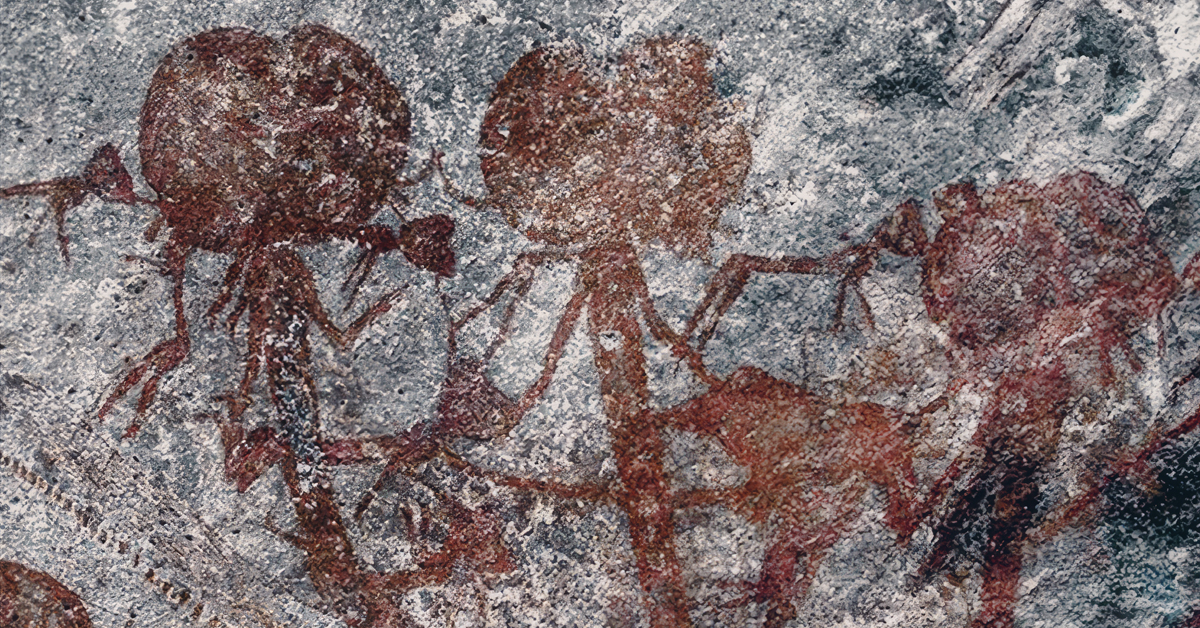
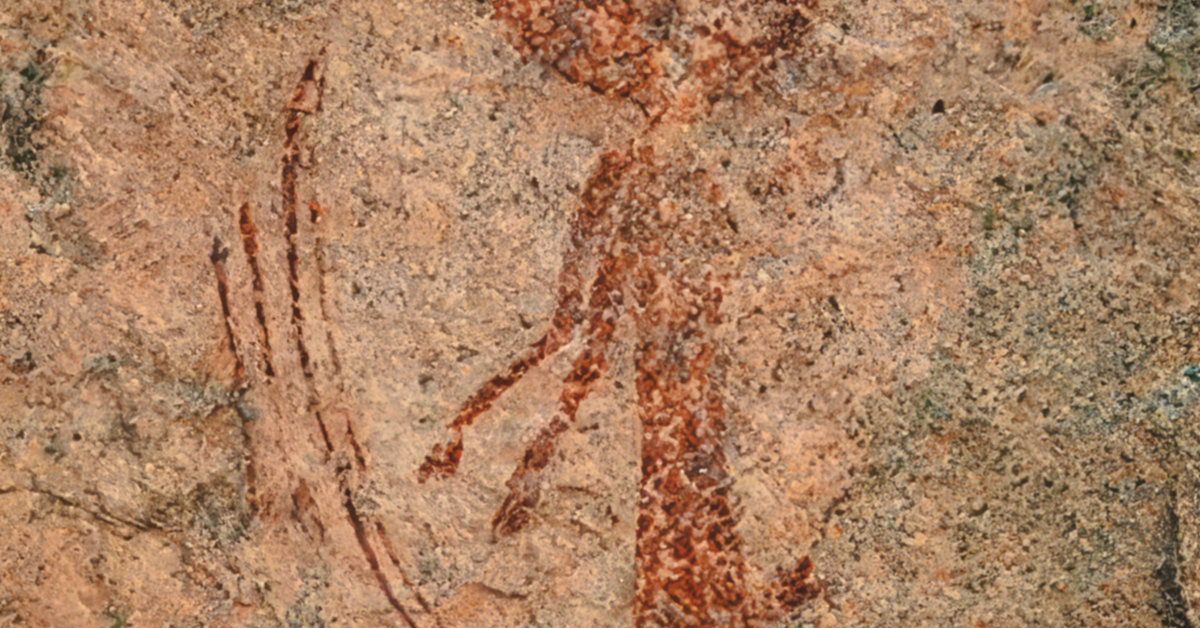
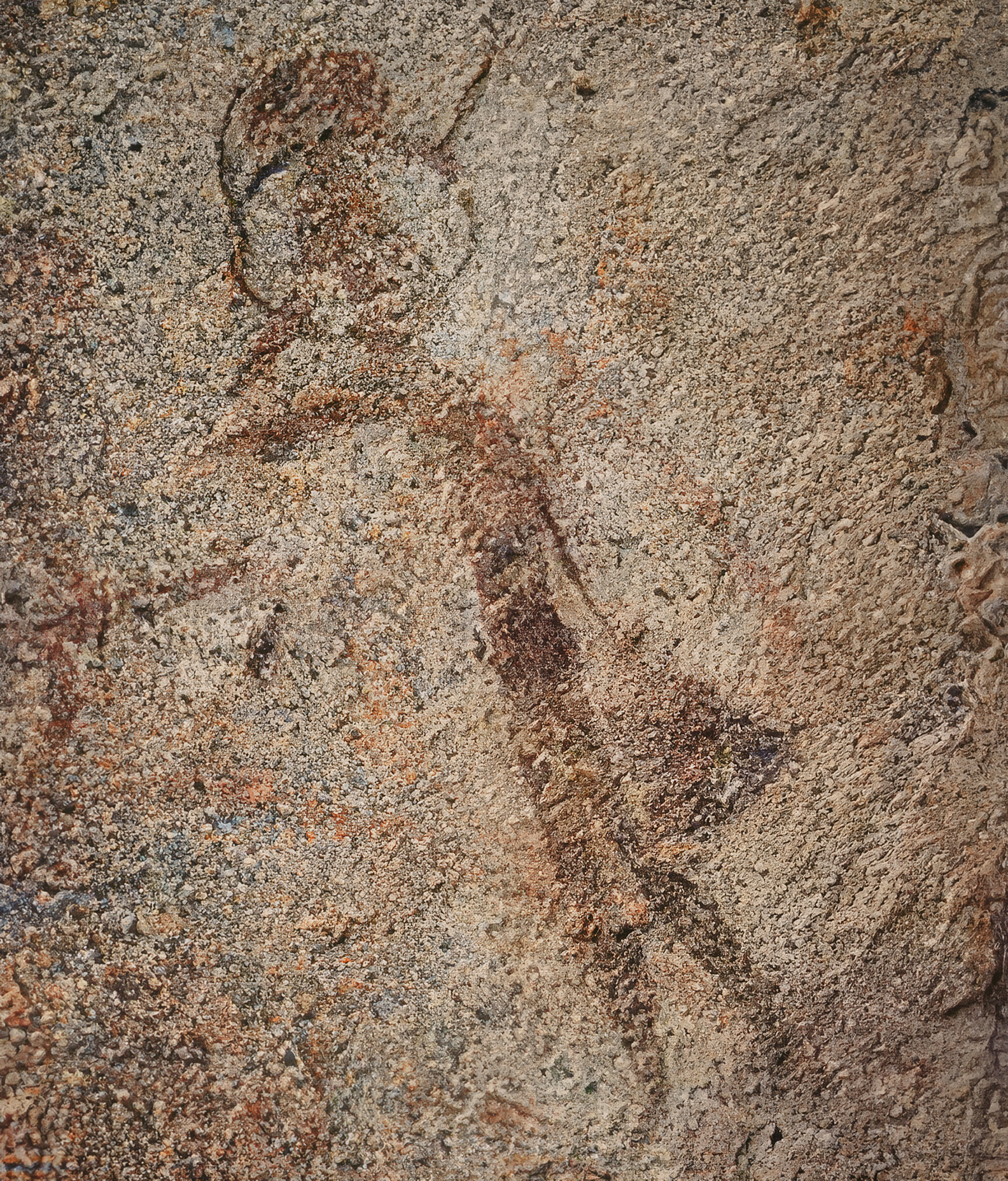
Humans are almost as common as mammals, but unlike the latter, they are generally depicted in highly stylised forms whereby the head is represented by a simple blob or a small circle. The trunk and limbs are always exaggerated especially in the figures executed in shades of ochre red. As M.D. Leakey has observed, nearly all of them were drawn with very elongated bodies. Usually they are depicted in small groups or pairs rather than individually. In a number of cases, they appear to be associated with some kind of activity. The techniques of execution range from a few single thin lines, perhaps drawn by the tip of a straw or quill, single thick lines drawn by a brush or finger tips, to more complex styles showing the details of the hand, feet, and headdress. The headdresses seemed to be of reeds or grasses, but there are also instances in which animal head masks are used. Humans are seldom wearing any kind of attire, but in the rare occasions encountered, the figures are clad with a loincloth. Examples of this are the human figures at Kisana Nzuni and Mjakhuda 1. In the Kondoa area M.D. Leakey has reported human figures clad in cloaks, or skin karosses, waistcloth, and a back apron, probably made of skin. In later and completely different styles, the so-called dirty white (executed in broken white), the human figures are semi-naturalistic, poorly drawn silhouettes lacking anatomical details. In this style, the outline is fuzzy and the limbs are stumpy. The different styles in which animals and humans are executed perhaps suggest different motivations.
The precise proportional relationship of the animal representations compared to those of humans has not been worked out, but zoomorphic exceed the anthropomorphic figures by far. Animals are depicted in representational naturalistic and semi-naturalistic styles, mostly in shades of red ochre paint, but also ashy or latex white. Less frequent are rock paintings in black and shades of brown. On rare occasions, there are pictographs of domesticated animals such as cattle, goats, sheep, and dogs. Mammals are by far the largest group portrayed and within it, antelopes (eland, kudu, impala, hartebeest, wildebeest, gazelle, and some unidentified ones) are the most common, with the eland significantly standing out as the most common form. However, among the mammals as a whole, the giraffe is the most common single species, a phenomenon which may have some far-reaching mythological and symbolic significance, perhaps related to fertility. Also common are elephants, and to some extent, warthogs, while on average, buffalo and rhino are rare. Among the carnivores, the most common ones are hyena, wild dog, and possibly some felines. Reptiles included snakes, lizards, crocodiles, and in rare cases, tortoises. Fish are on the whole rare, but they have been found painted together with reptiles in the Misughaa cluster of sites.
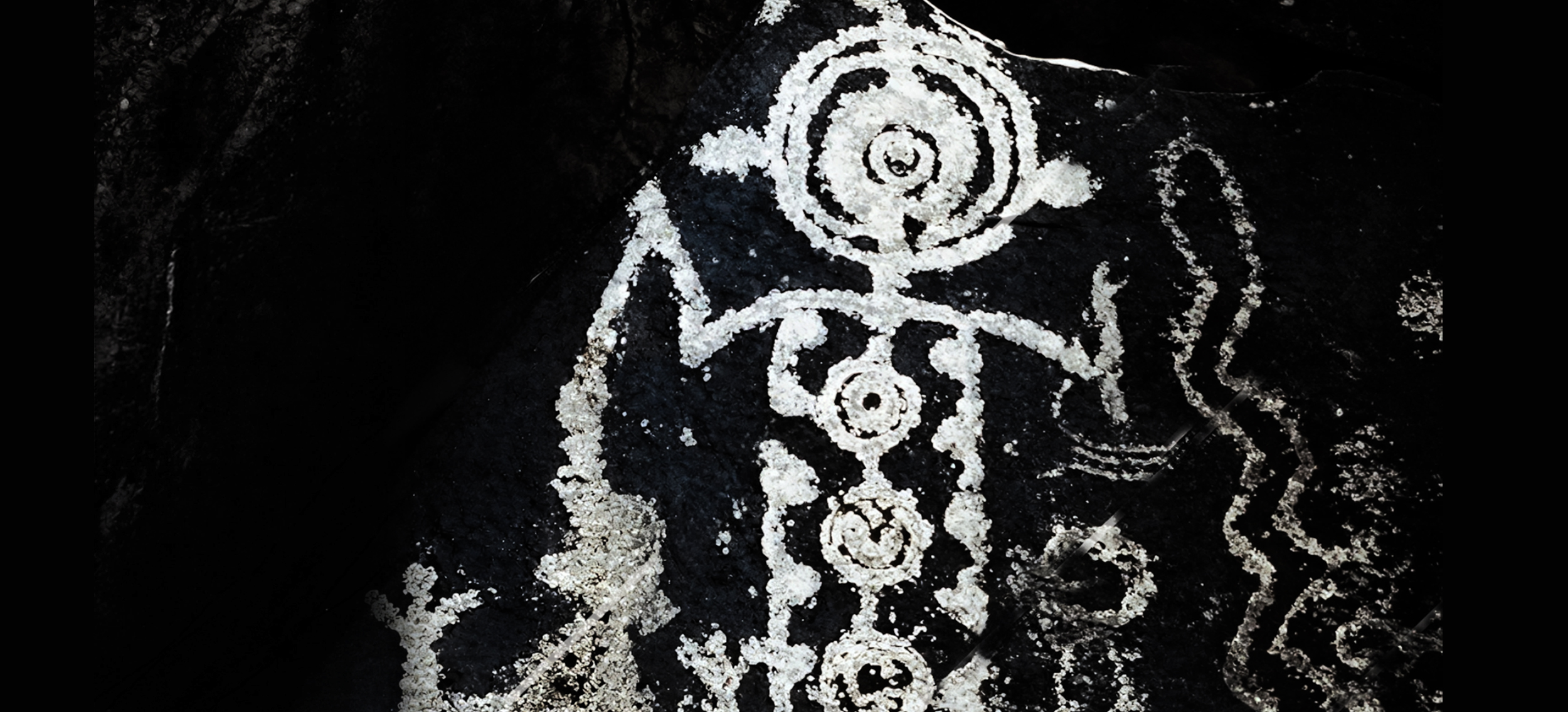
In addition to animal and human depictions, a number of symmetric and asymmetric designs were found. Suggestions are that they represent ethnographical objects such as fish weir, birds’ cages, traps, or the skeletal woodwork of a hut. In a descending order of frequency, rock faces were also seen to have lines, squares, ladders and circles. However, the most interesting are the signs and symbols such as the circle and rays, the spiral, and what, for want of a better term, we refer to as clan or individual artist's designs. These would be comparable to the pastoralists' cattle ownership signs.
The rock art sites (in the Central Highlands of Tanzania) provide an invaluable historical record of the diverse economic and social activities of human communities and their intellectual, imaginative and emotional expressions over many millennia. This patrimony should be protected, preserved and illustrated. It should become a source of historical awareness, of culture and of education for the people of Tanzania, for Africa and for the World. Every effort should be made to save it for future generations. (UNESCO report 1980).
Ancient rock art is often found in areas where the art itself is not protected from involuntary and voluntary deterioration, yet there is ample evidence to show that with the implementation of relatively simple measures, most of the man-made deterioration can be stopped. In the case of the prehistoric rock art of Singida and the Lake Eyasi Basin, North Central Tanzania, the work of Fidelis Masao highlights the urgent need for conservation efforts.
The state of preservation of the majority of the sites in Singida, Iramba and the L. Eyasi Basin is generally poor. Equally bad conditions of preservation were also observed in the Kondoa area. M.D. Leakey remarked that even as far back as 1929, T.A.M. Nash had described the sites as being in a bad state of preservation. The sites are deteriorating so fast that unless the process is checked, most of the paintings will have completely disappeared by 2010.
Exposure to wind, rain, fluctuation of temperature, groundwater, seepage, biological growth and encrustation, all contribute to the deterioration of sites by the process known as weathering. Water and the organic acids secreted by lichen and other growths can slowly alter a sound and hard rock until it becomes chemically weathered. The building of concrete ledges to stop seepage or to increase the effectiveness of overhang, as in some Kondoa sites, has proved completely ineffective and in some cases accelerated the deterioration.
In central Tanzania, a number of the sites are also prone to strong winds for part of the year. As it blows, the wind picks up small grains of sand and pebbles that are hurled against the rock face, thus gradually contributing to the deterioration. In addition, the wind knocks off small flakes, which might otherwise have held on to the rock face for a longer time, finishing off the process started by the fluctuations of temperature.
Despite these numerous natural elements of deterioration, vandalism is by far the most pernicious threat to rock painting sites in Singida, Iramba and Mbulu. Visitors’ habit of writing names, initials, dates, slogans and all sorts of graffiti unfortunately seem to be on the increase. School children are perhaps the most notorious perpetrators. They use white and coloured chalk, charcoal, crayons and even industrial paint on the rock faces, causing serious damage to the paintings. Equally destructive, is the practice by some herders of using the rock shelter as a temporary kraal for their cattle. As the cattle rub against the painted rock panel, they accelerate the process of deterioration.
Of late, the worst culprits have been the cave robbers in search of German gold coins. Over the last few decades, some unscrupulous people spread the idea that the paintings were markings executed by the Germans during and after the First World War as identification symbols for shelters under which they had buried some treasure, supposedly including German coins and gold. The rumour spread so fast and extensively that almost every other painted rock shelter has now had its ground excavated, which has badly disturbed archaeological deposits. In their greed for immediate wealth, the culprits make big fires at the base of the shelters or use dynamite to crack and thus easily break the rock. Unfortunately there is still much evidence that this practice continues to this day.
As the recent expedition in 2003 to further document the sites by Fidelis Massao and Peter and Annabel Sykes shows, significant deterioration, man made or natural, is continuing and in some cases accelerating.
The most effective conservation measures have not yet been discovered and even with the appropriate knowledge, Tanzania may lack the resources and technology to implement them. Alternatively, it should be possible and relatively cheap to stop or reduce vandalism. Little has been done to include the local people in any conservation effort and this has distanced them from these sites, which form an integral part of their heritage. Due to the visits by governmental officials and scientists, the sites are often shrouded in an aura of mysticism. While this raises curiosity it does little to help their preservation.
It is vital that the local people be fully involved in any management programmes of these prehistoric rock art sites. Much can be done to raise awareness about the importance and historical significance of the rock paintings. By doing so it should be possible to instil a sense of pride and ownership in the paintings, which would go much further to protecting them than metal bars and wiring. More importantly it is critical to pursue further research and use the new photographic technology now available to record this vanishing patrimony. In particular, the use of some of the latest digital photography and three-dimensional laser modelling should be investigated.
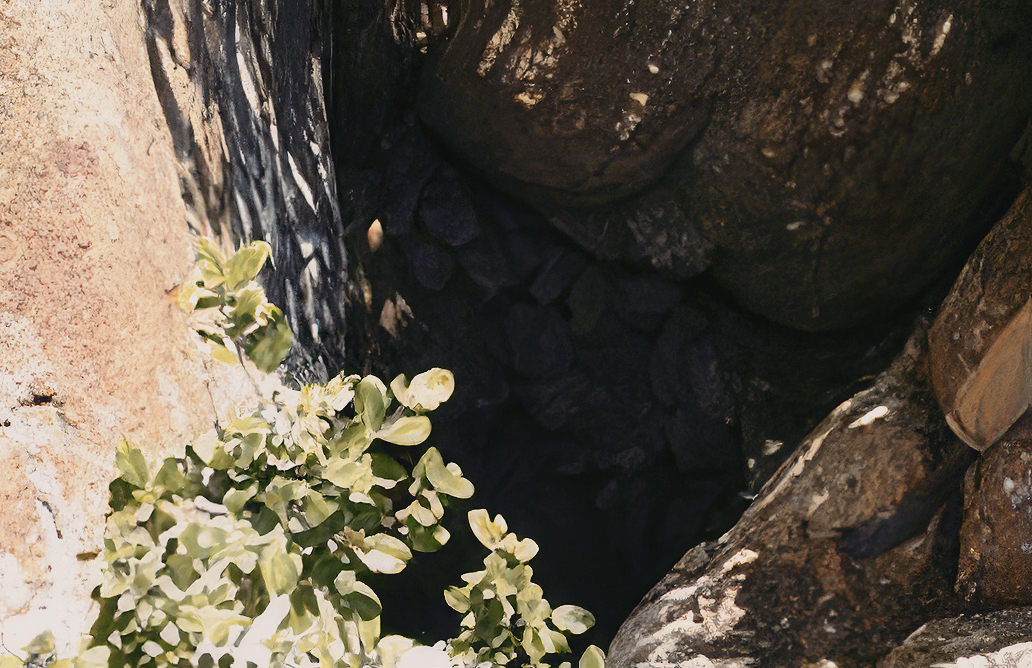
Looking for Gold: A typical hole in Guwe made by locals looking for gold. The digging not only disturbs potentially vital archaeological deposits but also significantly weakens the rock face.
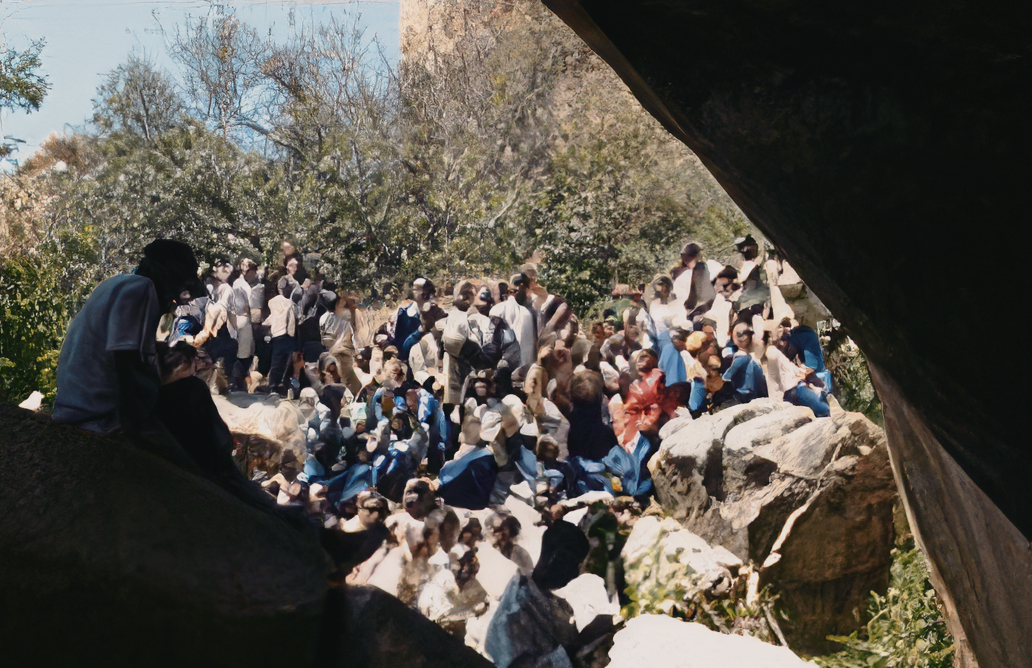
Graffiti: Many of the sites are spectacular both by the size of the rock face and the extensive view of the surrounding landscape. This has made them a natural place of interest where children and local people gather causing damage through fires and graffiti.
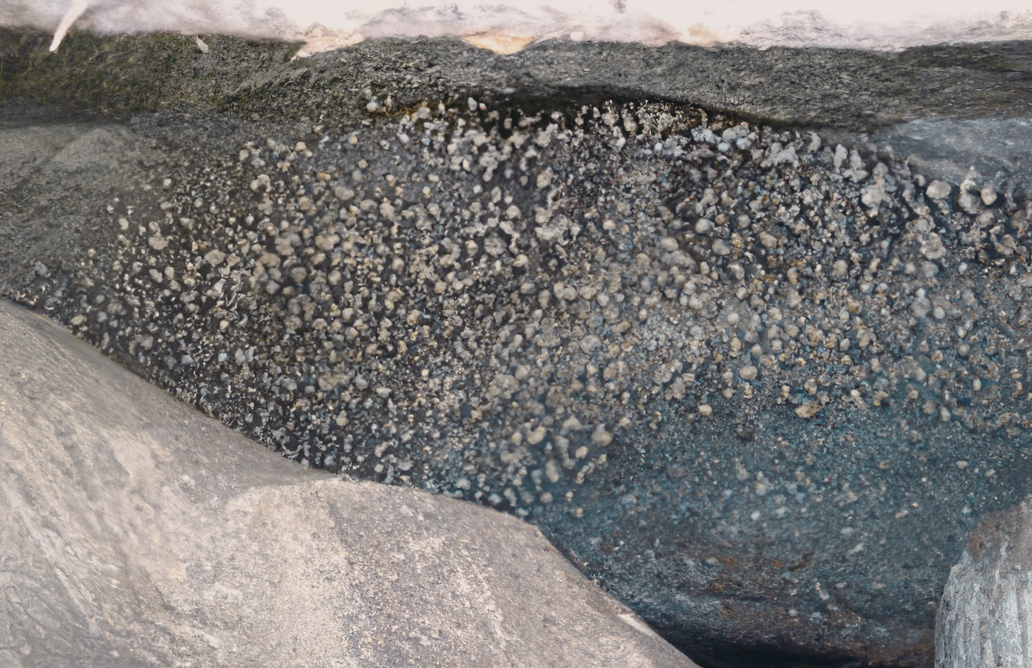
Hornets’ Nests: Hornets’ nests are often found on the rock sites, causing serious degradation to the rock face and paintings. Bird colonies also affect the paintings.
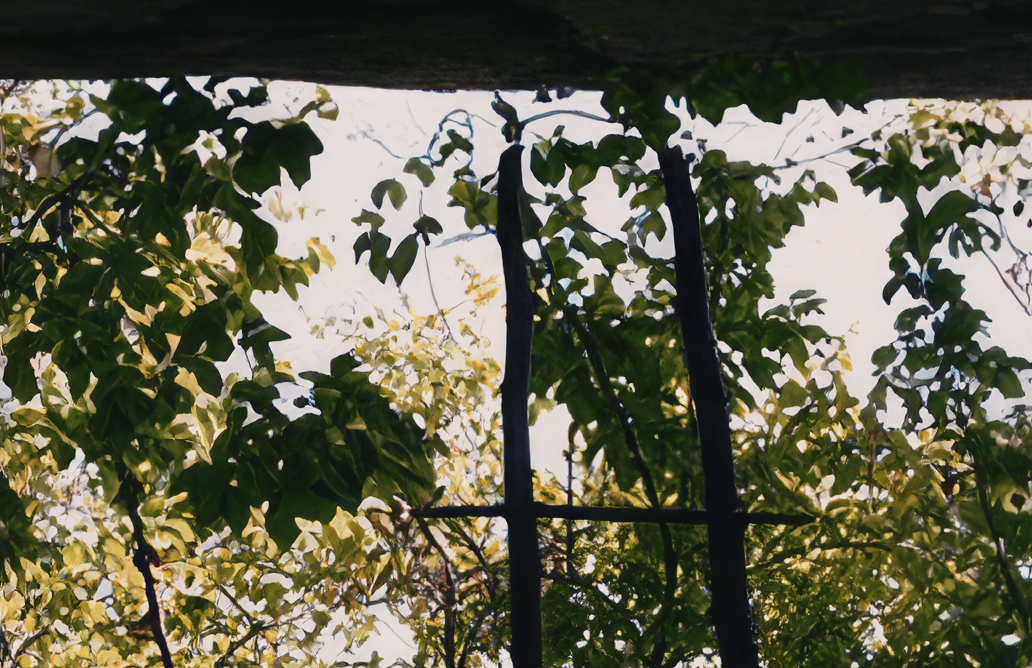
Honey: A number of rock paintings indicate drawings that resemble a ladder. We found a number of ladders at or near the sites that are used to collect honey. Bee hives are also a natural source of degradation.
Local population: The explosion in the size of the local population has certainly been one of the most dramatic causes of destruction of the rock art. Paintings hidden for hundreds of years have now been exposed to the elements because of the clearing of thick protective vegetation to make land available for farming.
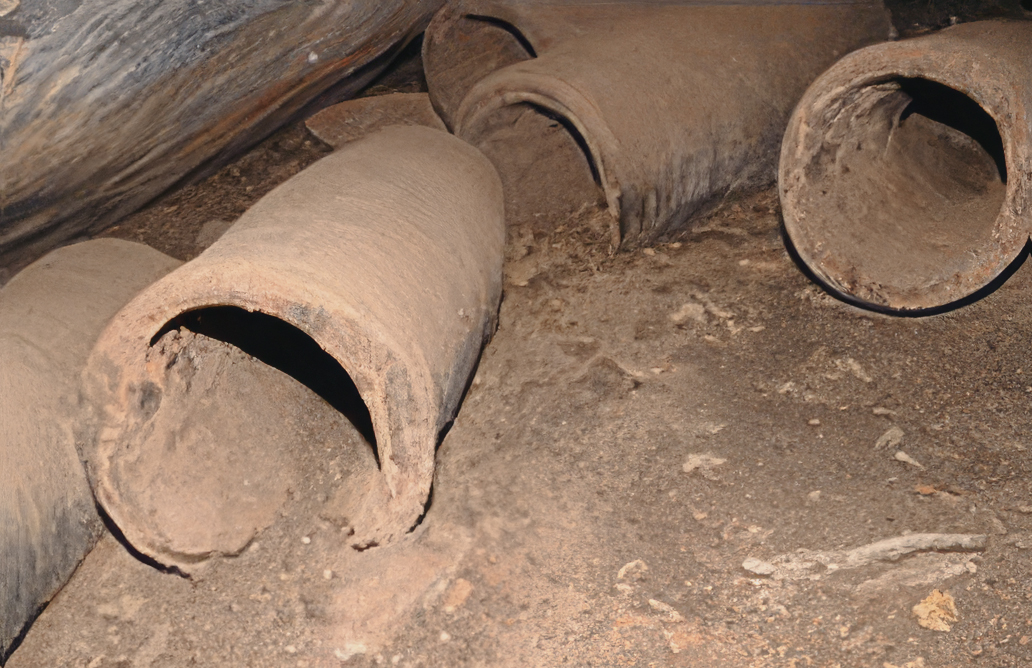
Drums: Many of the sites still maintain a religious significance for the local people. Evidence of recent rituals could still be observed. Local rituals or celebrations often include making fires, which significantly degrade the paintings.
Lake Eyasi Region / Mbulu District
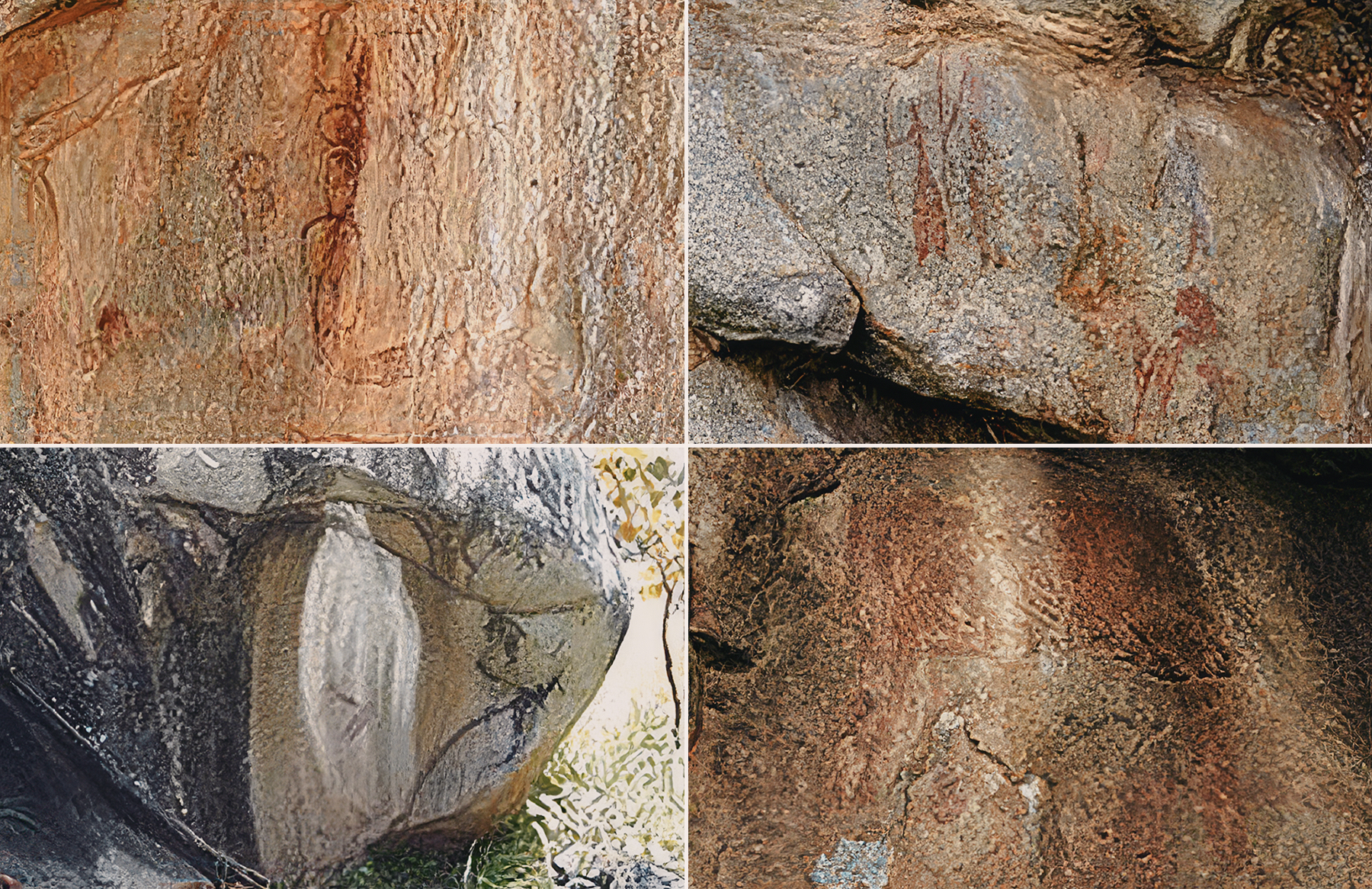
Yeda Chini sites: The following 11 sites form a cluster of inselbergs in the Endagulga plains near Yaida Chini in southern Mbulu. Like the northern Mbulu sites, the majority of them as it will become apparent are in relatively good state of preservation. To get to them one would have to get guides from Yaida Chini village.
The subject matter includes anthropomorphic and zoomorphic figures executed in semi-naturalistic and naturalistic styles respectively. A shade of red ochreous paint is used. It is noteworthy that there seems to be a deliberate attempt to portray the human figure less stylised than is the case in Singida. Whatever the significance of this is, it is premature to speculate pending further study. For now it is in good state of preservation, but there is nothing to arrest threats posed by incrustation and exfoliation.
Singida Region / Iramba District / Kisiriri Division
Roughly due southeast some 4km from the Isanzu Mission is an area of many hummocks (kopjes) and inselbergs. The local people, Wanyisanzu, refer to this area as the region of Igwe la Mbao, a name, which translates to ‘the rock of drums’, refers to an impressive exterior cave, which contains the huge Iramba drums associated with rainmaking rituals. In this area is a rock shelter decorated with friezes of animals, anthropomorphic figures, and presumed to be an ethnographical object. The paintings are executed in two shades of red, a scarlet and a lighter ocherous red. The latter seems to overlie the scarlet red. Subject matter consists of animals such as giraffes, hartebeest, waterbuck and several other antelopes.
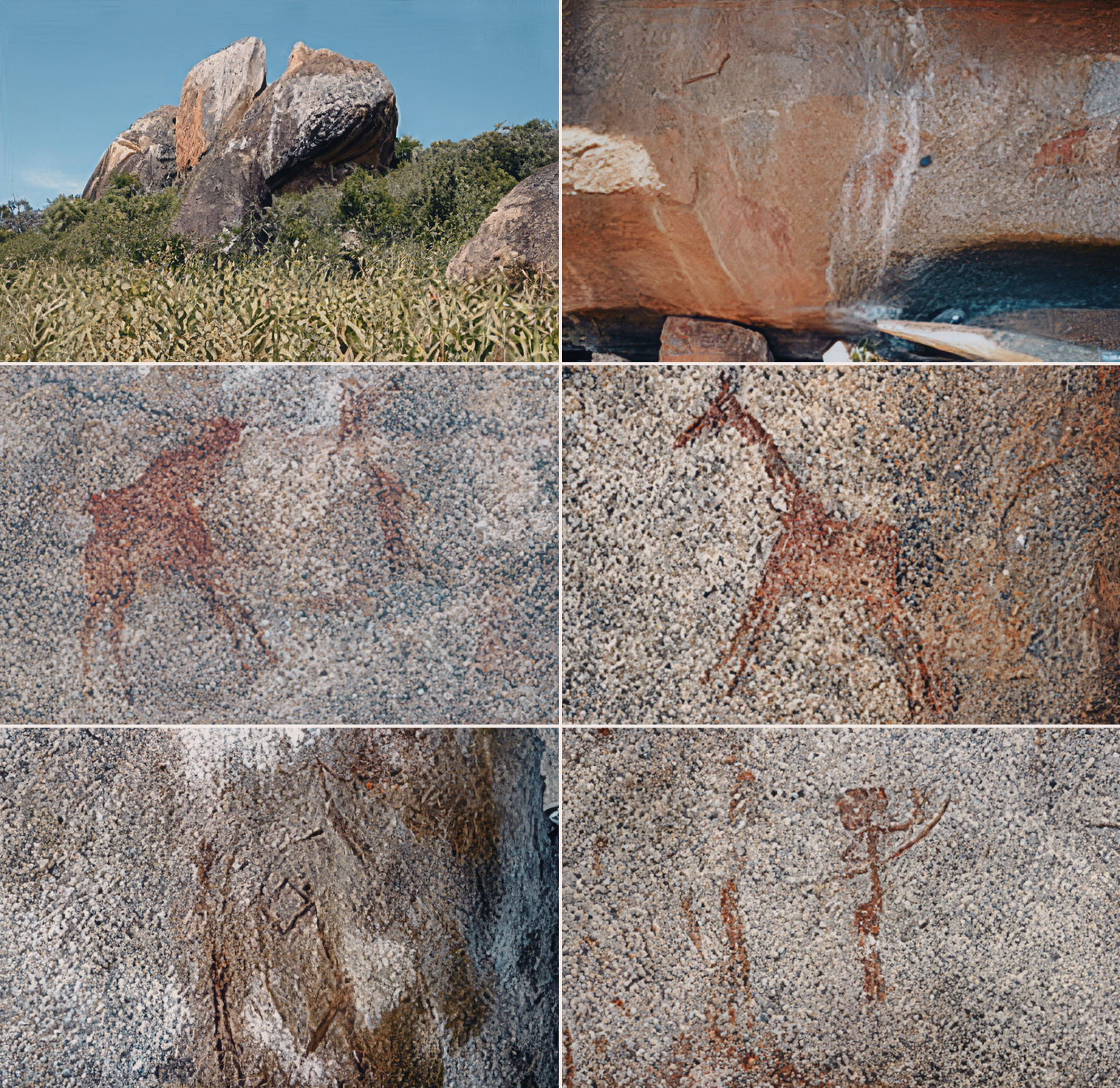
There are also human beings and day-to-day life objects, the precise identity of which has not been ascertained as yet. Thematically, it is tempting to group the paintings into two tentative themes based on visual clues only: hunting and dancing scenes. Instances of the former are animals depicted lying down, a file/row of people presumably rejoicing over a successful hunt, and an anthropomorphic figure holding a bow while another is portrayed as having thrown an object at a giraffe. The latter is represented by a line of eight figures, which is interpreted as dancing.
A little further down the rock face are four more human figures, two of whom are holding walking sticks (possibly bows) of some sort. The animals are drawn in a naturalistic style while the anthropomorphs can be said to be semi-naturalistic. Some of the figures are shown with a type of dress, perhaps a skirt. It must be reiterated that such interpretations are, in the absence of ethnographical or folkloric evidence, only subjective and tentative.Overall, the site is in good state of preservation and will probably remain so for some time since it is a long distance from the village and in an area that is not attractive for cultivation. The painted area which runs in a semi circle from east to west is 8,25m long and the highest painting 2.55m high. The surrounding area is littered with lithics, which can tentatively be assigned to the LSA.
Singida Region / Iramba District / Nduguti Division
This is an almost straight sided rock shelter in the village of Ilunda. Depicted on the rock panel are animals for example giraffes, kudus, etc. and anthropomorphic figures. Above the giraffe is a complex scene of lines with one of the giraffes lying upside down and probably bleeding. When I first saw the site in 1774, I interpreted the lines as representing a barrage of missiles aimed at the giraffe i.e. a hunting connotation, but as I have pointed out elsewhere, such simplistic interpretations should be discouraged until there is ethnographic evidence in their support. The associated human figures are highly schematised. Two shades of red, a scarlet and a bright red superimposed on the former are used. The vicinity is littered with archaeological artifacts.
Singida Region / Singida District / Ikhanoda Division
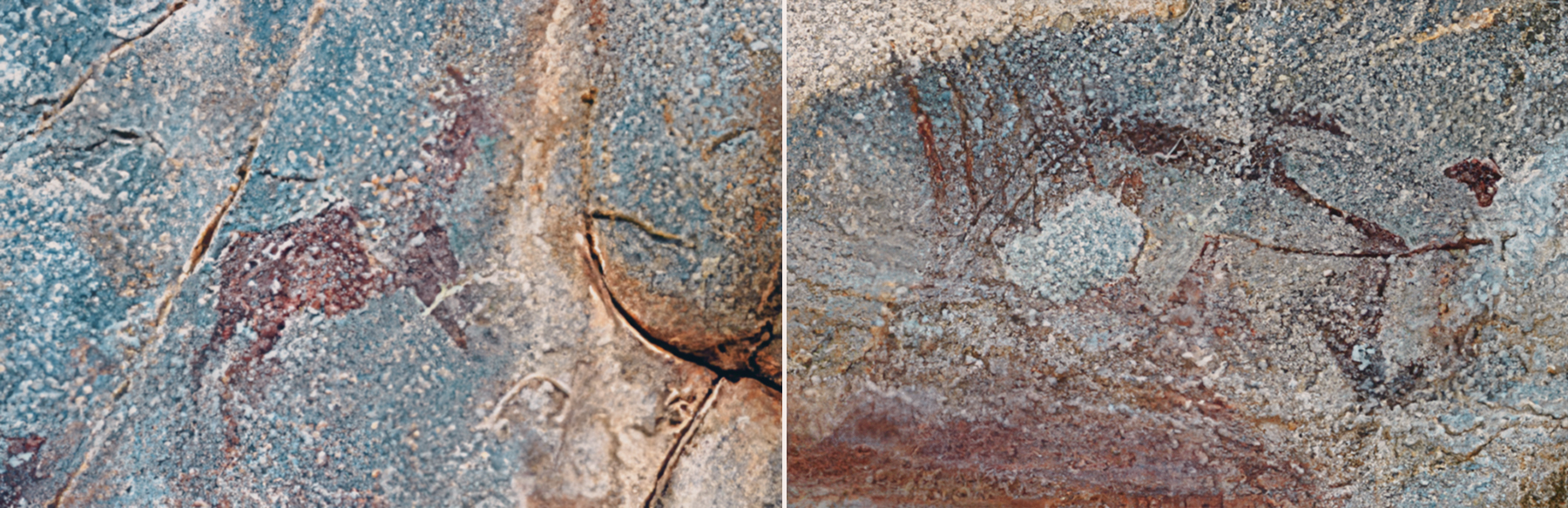
The site is on Ikhanoda hill and facing the plains of Lake Mikuyu. The rock shelter faces north, but it is the eastern side, that is decorated with pictographs. Only one animal is represented. It is executed in a light shade of red employing the thick line open profile style infilled with blotches. Precise identification of the animal is difficult for, as is the case with Mjakhuda 1, the head and the neck of the animal have been deliberately omitted. In an earlier publication (Masao 1979), it was identified as a hyena, but subsequently reflecting on it, the interpretation is found to be rather subjective. The Ikhanoda hill is full of rock shelters suitable for rock painting, but our thorough search of the area revealed only two more sites though not as well preserved as Ikhanoda 1.
Singida Region / Iramba District / Kisiriri Division
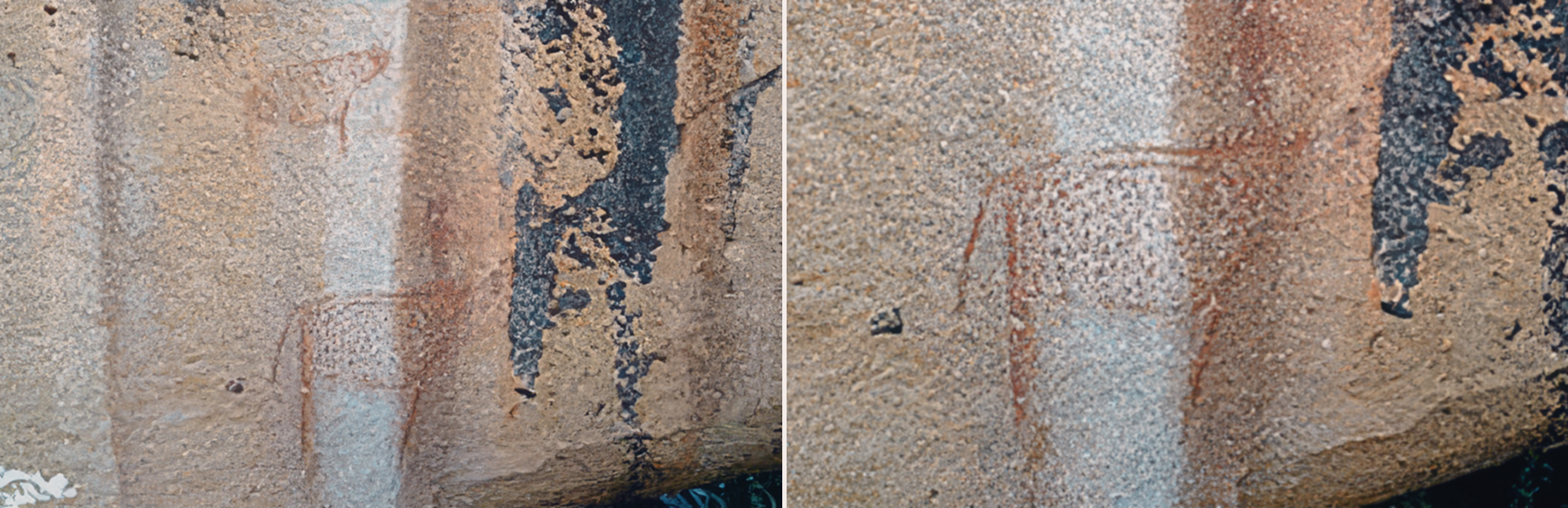
In the Mpogolo area south east of Kirumi is a rock shelter known as Ikurungu la Nyakidarama, which in the language of the Wanyisanzu people is translated as: Nyakidarama’s shelter. According to legend, Nyakidarama was a very famous man who used the shelter as a sanctuary. It is claimed that the site is still used by the people of the Wanyakirumi clan who inhabit the area. The shelter was once decorated with many paintings executed in three different pigments: a bright ochreous red, a light brown and a thick ashy white. However, due to exfoliation most of the paintings have been so damaged that the subject matter cannot be made out with ease. Still recognised, however, are a giraffe depicted upside down, humans in many stylised forms and other animals too faint to make out. One of the giraffes has a concentric painted over it. While it is conceivable that the anthropomorphic figures are engaged in some activity, the fading has rendered identification rather subjective. It should however be of interest to note that the anthropomorphs are squat and depicted with relatively large heads. They are also considerably squat. One figure is depicted inclined as if in the act of falling down, while others are portrayed with hands akimbo.
The painted area is estimated at 9.4x1.5 sq.m, while the highest painting is 2.45m from ground level. The site is still in use as attested by the presence of pots when it was last visited in June 2003.
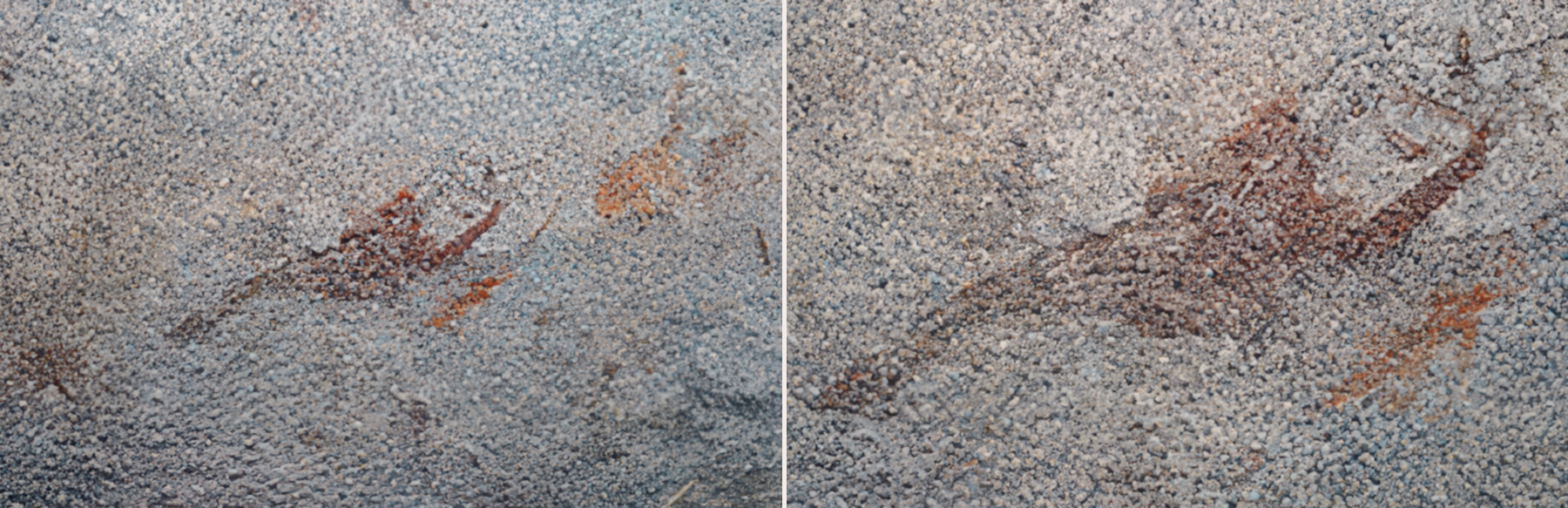
Singida Region / Singida Rural District / Mgori Location
As the name implies this site and the following four are in another local range of hills different from the Ng’ongo ya Mghumo area. Ng’ongo ya Isungi is one of the hills in the Ngimu area and is about 1.5km east of Ngimu Primary School. On one of the rock shelters are paintings depicting animals in naturalistic styles while the anthropomorphic are schematised. Most of the animals are antelopes, possibly impala. In the vicinity are archaeological lithics scatters of LSA type.
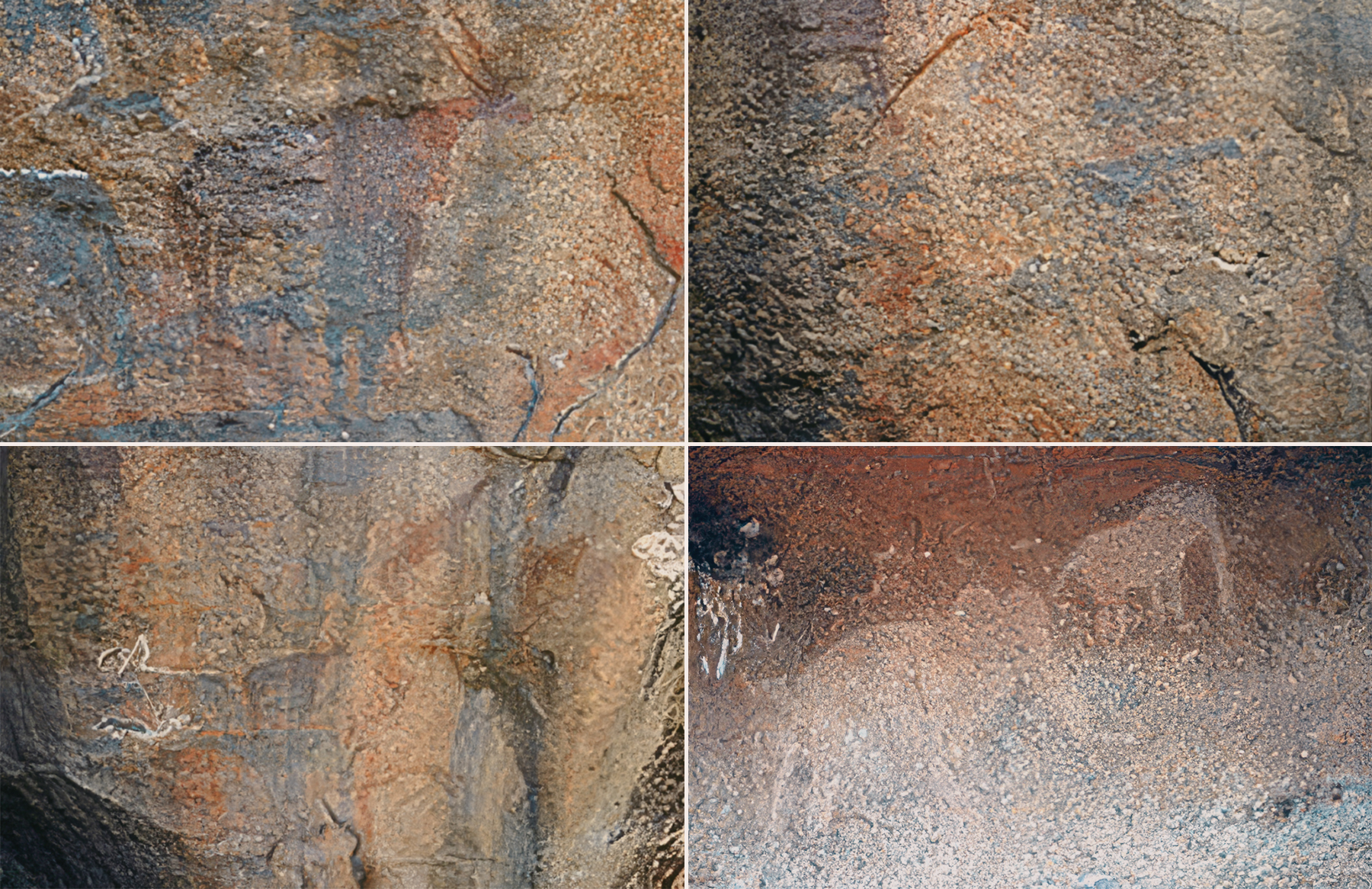
Singida / Iramba District / Kinyangiri Division
On the other side of the valley and opposite Ntwiga hill, is a ridge locally known as Kipiti (hyena), and after which the site on the southern slopes is named. The subject matter of the paintings consists of animals, anthropomorphic figures, weapons such as bows and arrows and other ethnographic objects. There are also depictions of spheres or balls. The animals are depicted in three different styles i.e. outline profile infilled with varying motifs, open-line outline without infilling, and boldly washed silhouettes. The anthropomorphic figures, though stylised, are depicted in two distinct styles. In some cases, they are depicted with some kind of attire, i.e. a loin cloth or some sort of a skirt made of reeds and appears to show anatomical lines, but in others the portrayals are simple line drawings with the head and the buttocks exaggerated. The heads have a crescentic shape.
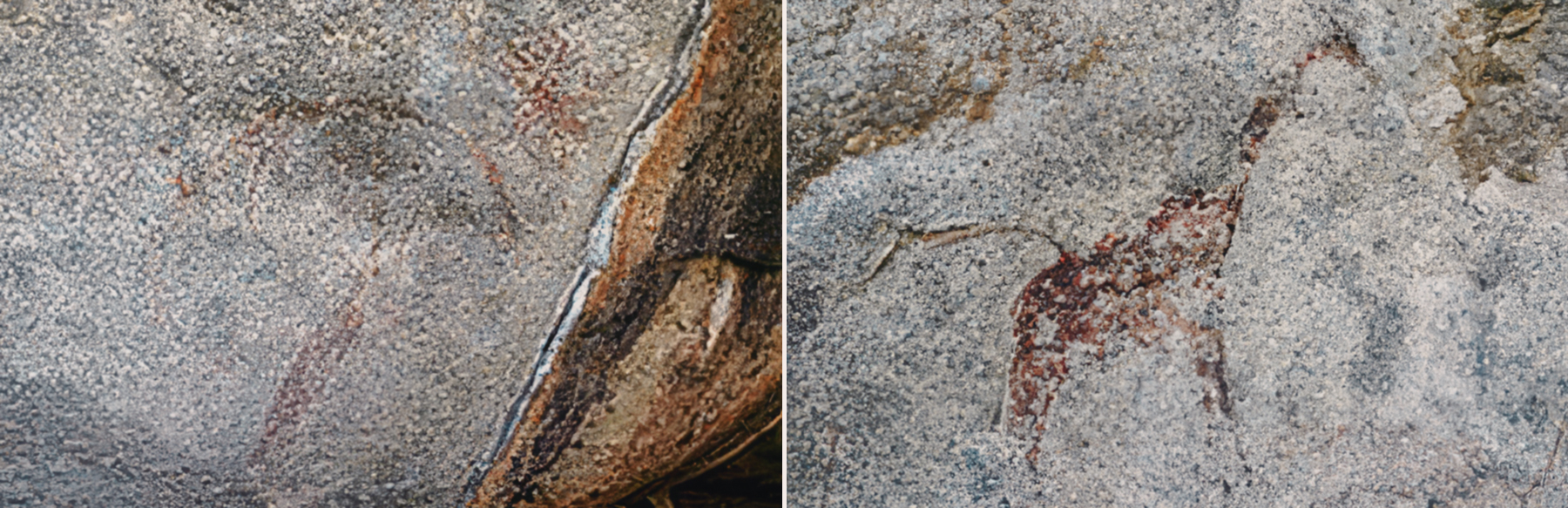
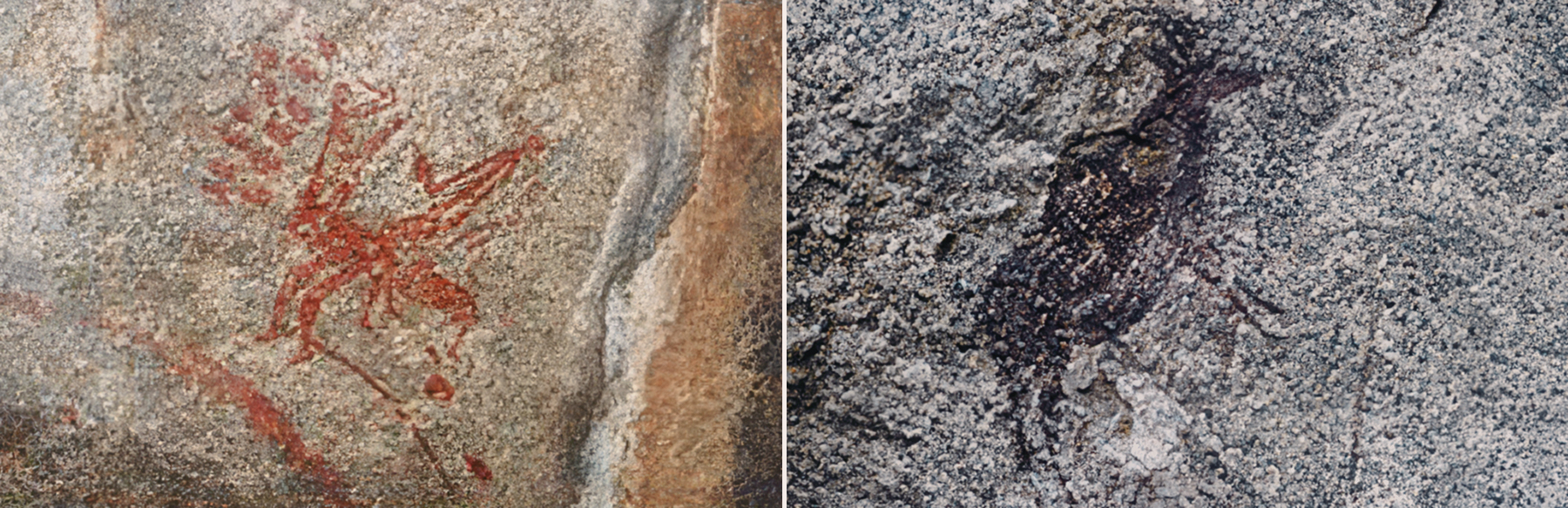
Singida Region / Iramba District / Nduguti Division
Some 800m away from Kisimbu village and about 10m off the right side of Ishenga Iambi road is a rock shelter, which the people call Kipuputi. Brief examination of the rock shelter immediately revealed that it was once covered with paintings, but they are almost completely faded. As a result, it was not possible to identify any of the representations. The site is richly stratified with artifacts as manifested by several lithics on the surface.
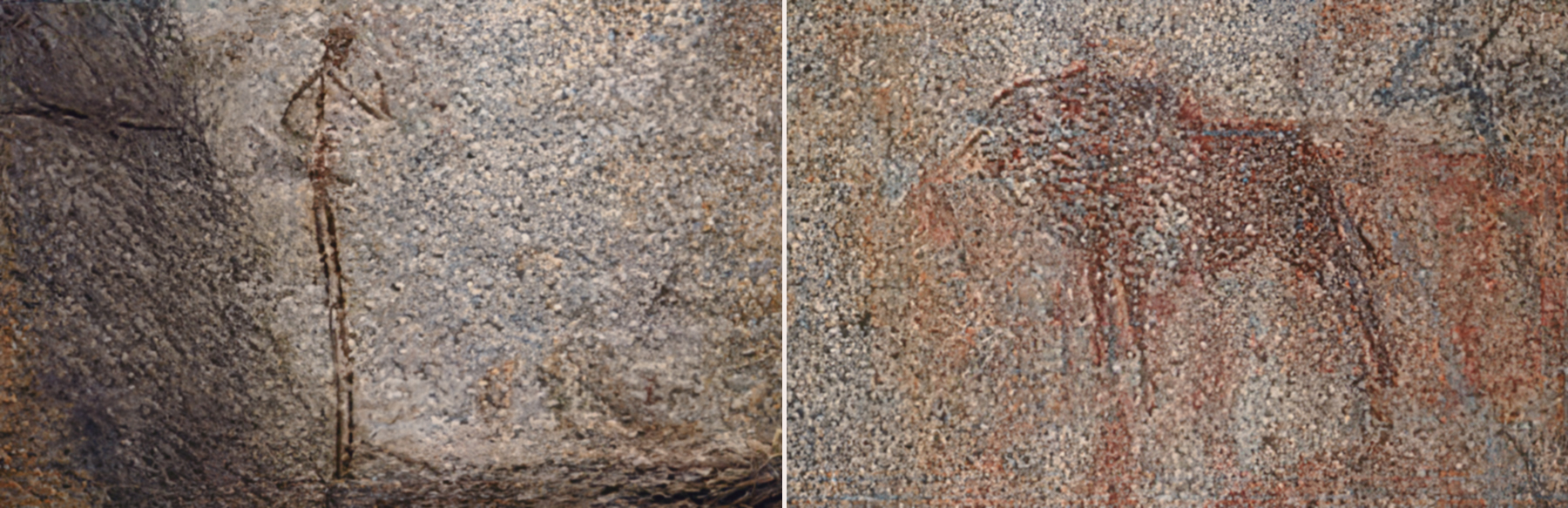
Singida Region / Iramba District / Kisiriri Division
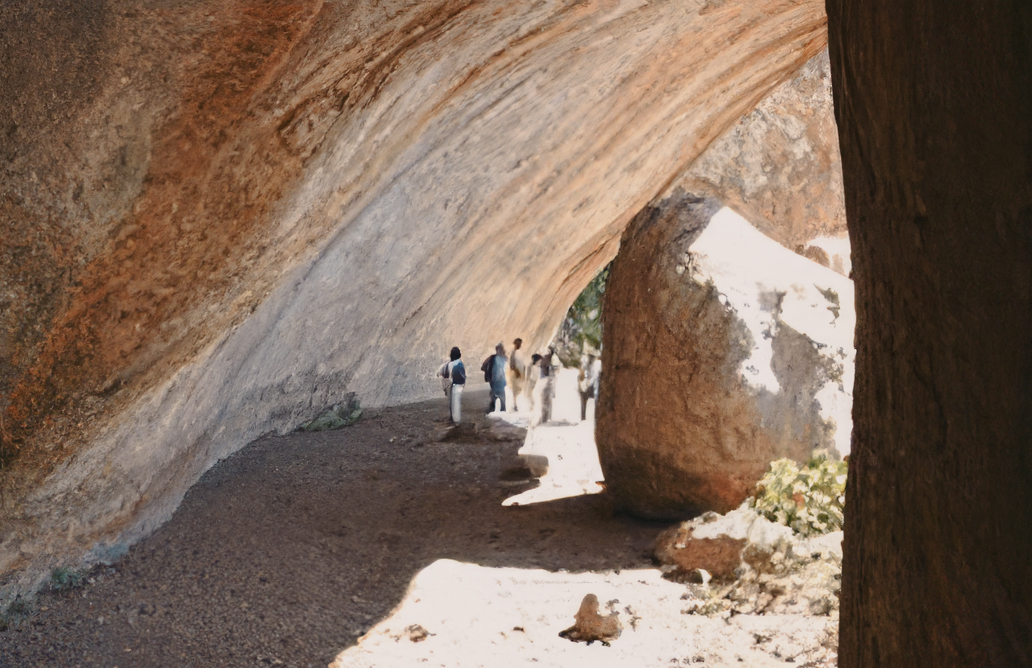
This site is a very impressive exterior cave, formed by a huge overhang supported by two boulders and extending almost to the ground level. It is a site that is well known and visited by local inhabitants from both Matongo and Kirumi and as such is relatively easy to find. The site was one of many rock painting sites visited and recorded by the Khol-Larsens in their ‘Deutsche Afrika-Expedition 1934-36’. They referred to it as Kirumiwand (Kohl-Larsen 1938: 35-36). In 1974, Masao excavated the site to study its possible use in prehistoric times and also to look for clues for dating (Masao 1979:74-91). In the absence of art mobilier, a direct clue for dating the rock art was not found.
Briefly, the site contains several silhouettes of animals and humans drawn mostly in white paint, but also in light brown or orange. The style of the white pigment figures is best described as a poor attempt at semi-naturalistic representation. Giraffes seem to have been the most popular subject of this style not only at this site, but also at others. Invariably, all the animals seem to have been drawn with exceptionally long necks while the feet are rather stumpy. The outline is generally fuzzy. The style differs so much from those executed in the red pigment that we can only surmise that we are viewing the art of different people from previously described sites. In cases of superposition, the white figures seem to overlie red paintings. Some light brown pigment has been used, but figures drawn in this pigment seem to be less exaggerated and definitely not as numerous as the white ones.
Not only is the site littered with lithics and pottery, but the 1974 excavations also revealed a continuous cultural sequence from historical times to deposits dated to 3.500 years BP. A slab of rock with white paint presummably of recent times and similar to that used in the pictographs was found lying on the floor but the local people of the area, the Wanyisanzu, deny knowledge of the paint and authorship of the paintings.Generally speaking, the site is still in a very good state of preservation despite many instances of the vandalistic ‘I was here’ syndrome. The highest painting is 3.2m from ground while the painted area is 8.3 x 4.3m.
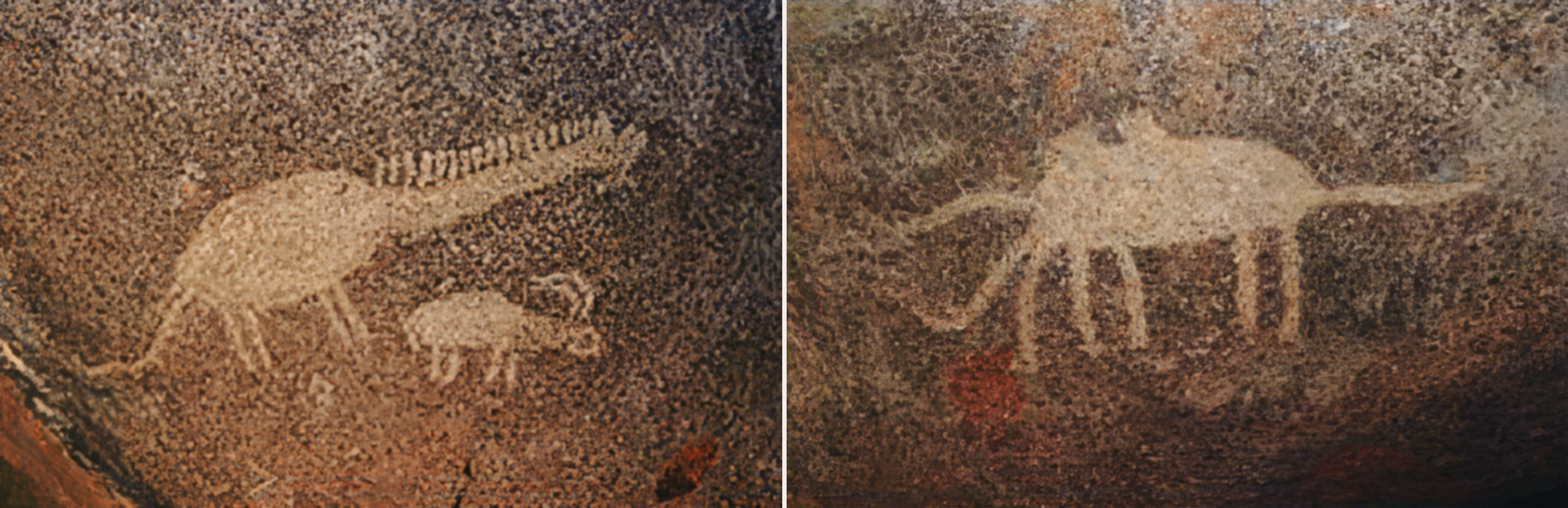
Singida / Iramba District / Kisiriri Division
On the western shoulder of Nzuni ridge, the vicinity is studded with several impressive outcrops. One of these, a huge boulder with a low-lying overhang, facing southeast to the Nzuni Valley, has paintings that include drawings of animals, anthropomorphic figures, enigmatic or abstract forms and possible cultural or ritual paraphernalia. There are bovids, antelopes, possibly impala, which are portrayed in a foreshortened style and most likely cercopithecoids, depicted in naturalistic styles. Humans are represented in two styles; stylised painted figures, and in semi-naturalistic single line outline profile. In both cases, the human figures are depicted engaged in some activity such as hunting, as the hunting weapons (bows and arrows), can be seen.
Other scenes could be interpreted as dancing and fighting. These interpretations, it must be pointed out, however, are only tentative, for until the paintings are related to the life ways, beliefs and cosmology of the painters, we cannot be sure about their meaning. Varying shades of red ocherous paint have been employed, producing as a result, a confusing order of superposition. More humans seem to have been executed in scarlet red, which appears to overlie ocherous light red. On the last visit to the site in June 2003, a young man claimed that the site belongs to and is used by the Kitinali family for ceremonial performances. In fact, he asked for a sheep to appease the spirits, which he claimed had been disturbed by our presence.
The nearest source of water is about 50m away while 20m to the east there is a rock shelter with a very badly faded painting of an unidentified animal. The ground in the vicinity is littered with lithics of LSA nature.
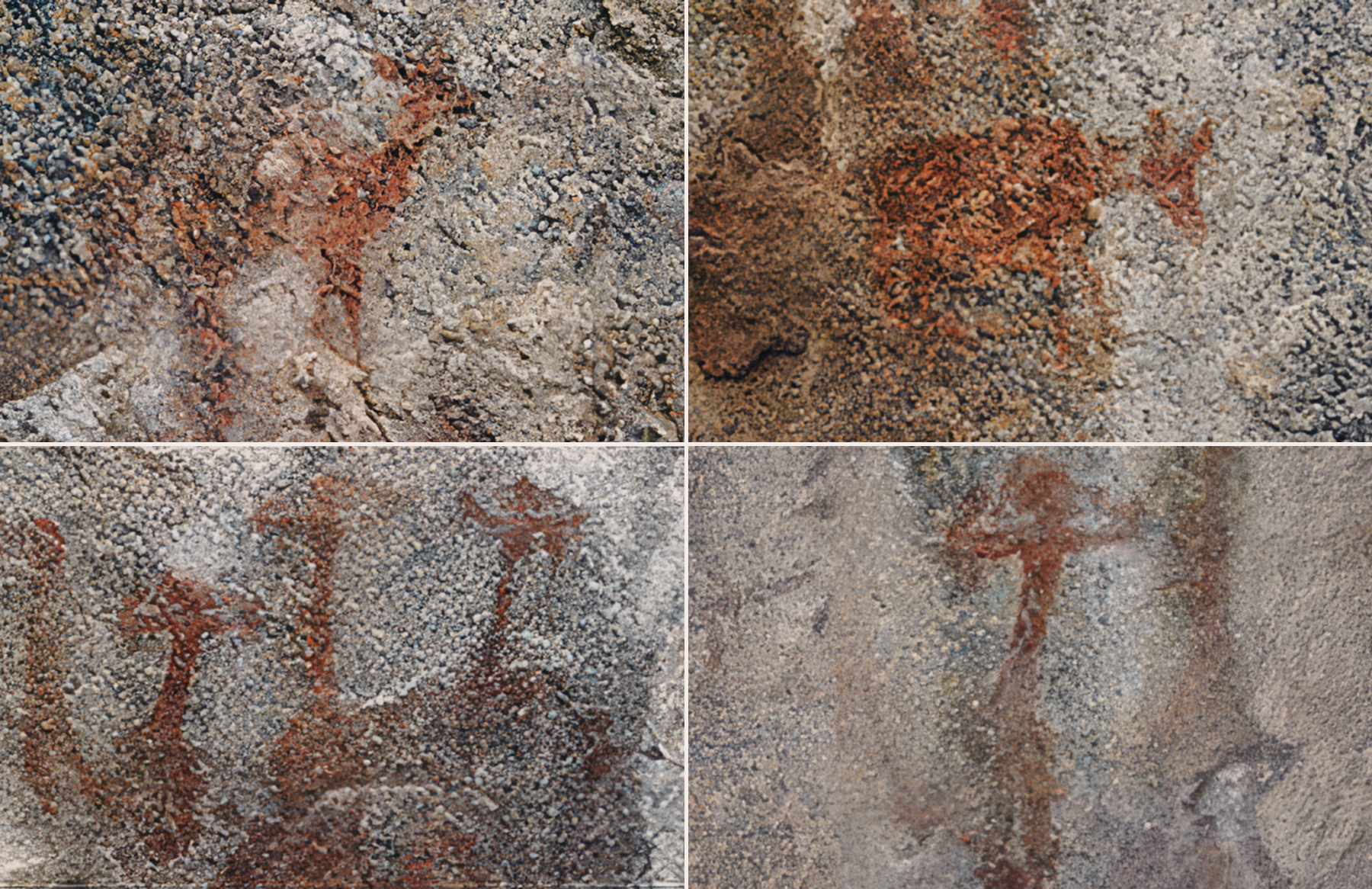
Singida / Iramba District / Kisiriri Division
About 10m southeast of Kisana Nzuni is a coarse granodioritic rock shelter with such a low and unimpressive overhang that it looks like a boulder. As the name suggests, it is interpreted by the local people as a picture of cattle, “Ngombe” in the Iramba language. However the subject matter shows no cattle, but instead includes game animals such as the eland and kudu depicted in naturalistic styles and also representations of presumably ethnographic objects, the identification of which must await further research. Some illustrations are suggestive of missiles such as bolas and strings, but they could also have symbolic significance that may become meaningful after studying the ethnography of the Wanyiramba or their predecessors. Since the paintings are not in good state of preservation their touristic potential is doubtful. Nevertheless they should not be allowed to deteriorate further for such sites could serve as case study and demonstration for any site management programmes.
Singida Region / Iramba District / Kisiriri Division
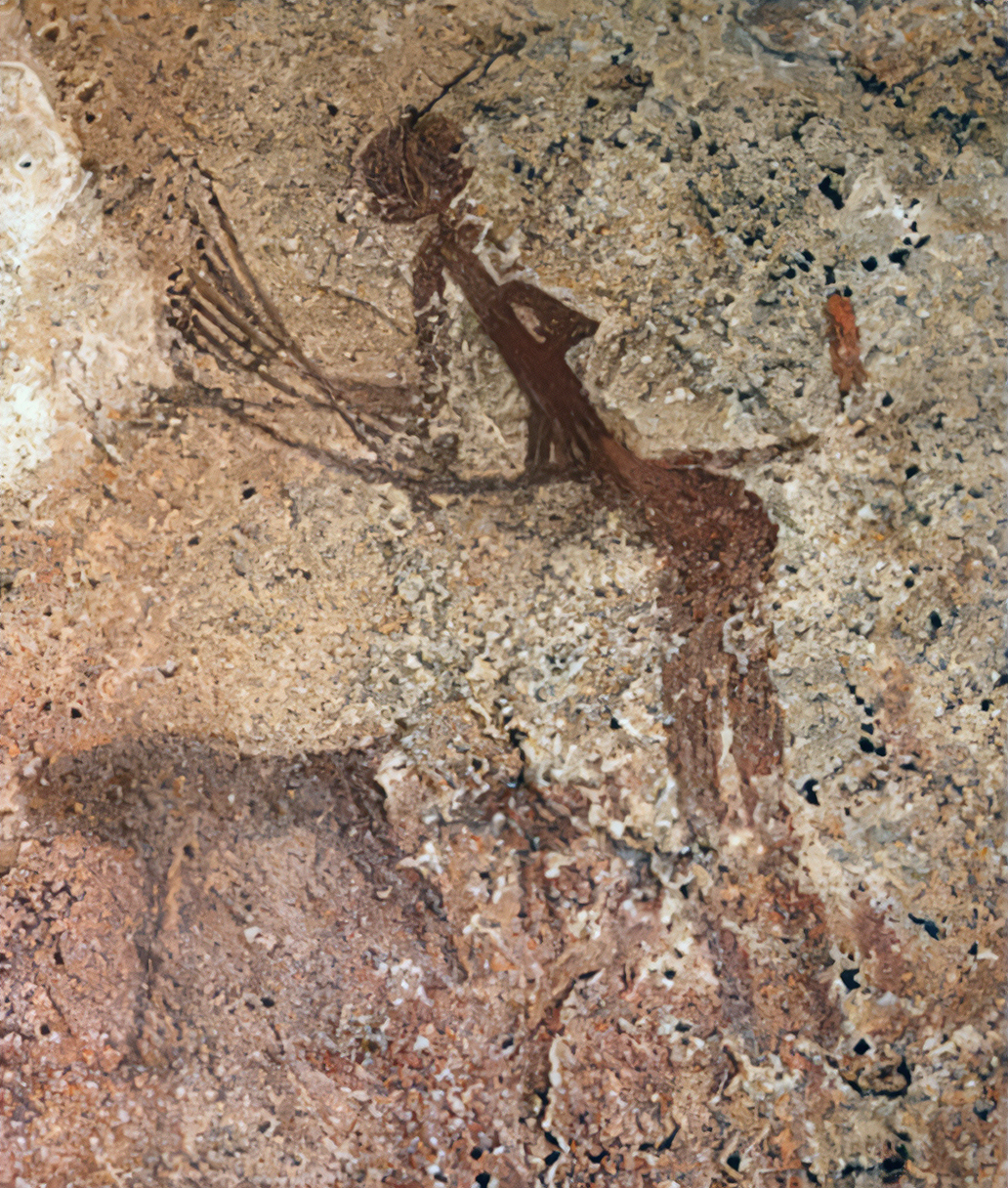
On the northern side of Ngwaginki (Kitaturu) A and about 50m away is Ngwaginki (Kitaturu) B. Unlike the previous site, it is easily accessible, especially from the school, and hence vandalism has taken its toll on the site. The subject matter includes animals such as giraffes and others, some of which resemble dogs and hares. Most prominent is a scene of stylised anthropomorphic figures executed in thick bold lines. One of the figures is depicted carrying something like a pot on the head while the other hand seems to be holding something like a small bag.
Note that the human figures seem to have a ring around their necks. The less pronounced humans executed in thin lines do not display the rings. Aso depicted are thick parallel lines executed in a lighter shade of red. On the left side of the shelter is a human figure with a bow and arrows, seemingly aiming at at an animal surrounded by other miniature anthropomorphs. Overall, three shades of ochres red have been used, a dark shade, light and, dusk red. However no instances of superpositioning were observed, but judging from the sequence in other sites, it can be safely assumed that the white is later than the ochreous red.
Singida Region / Iramba District / Nduguti Division
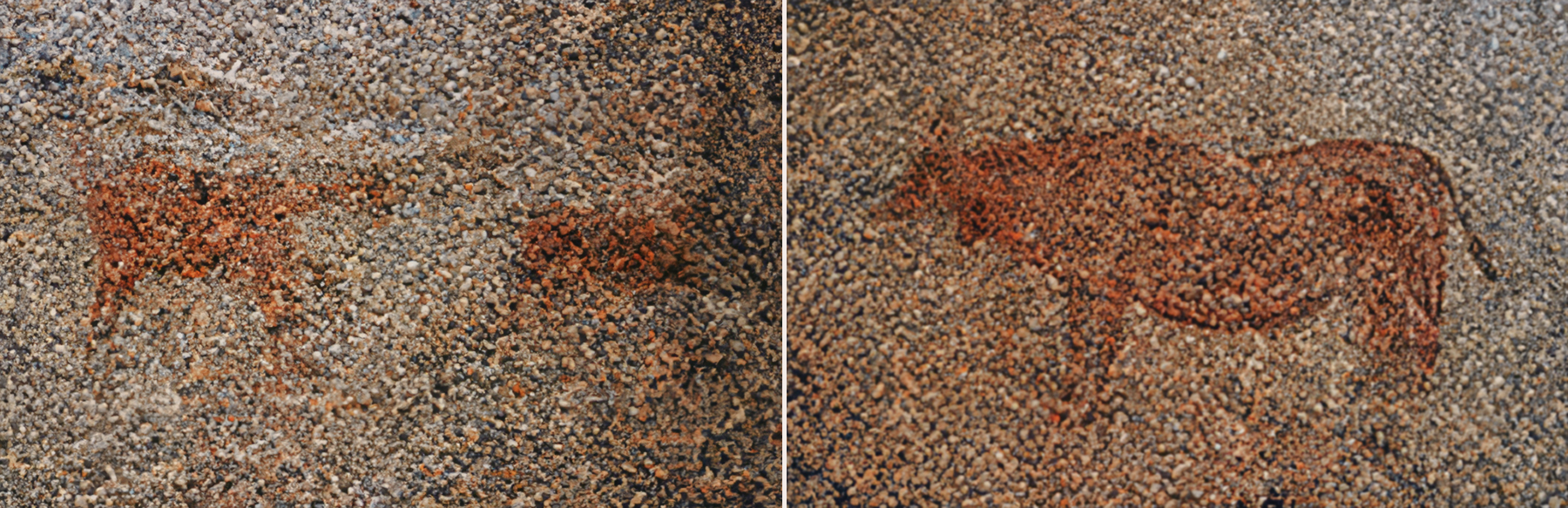
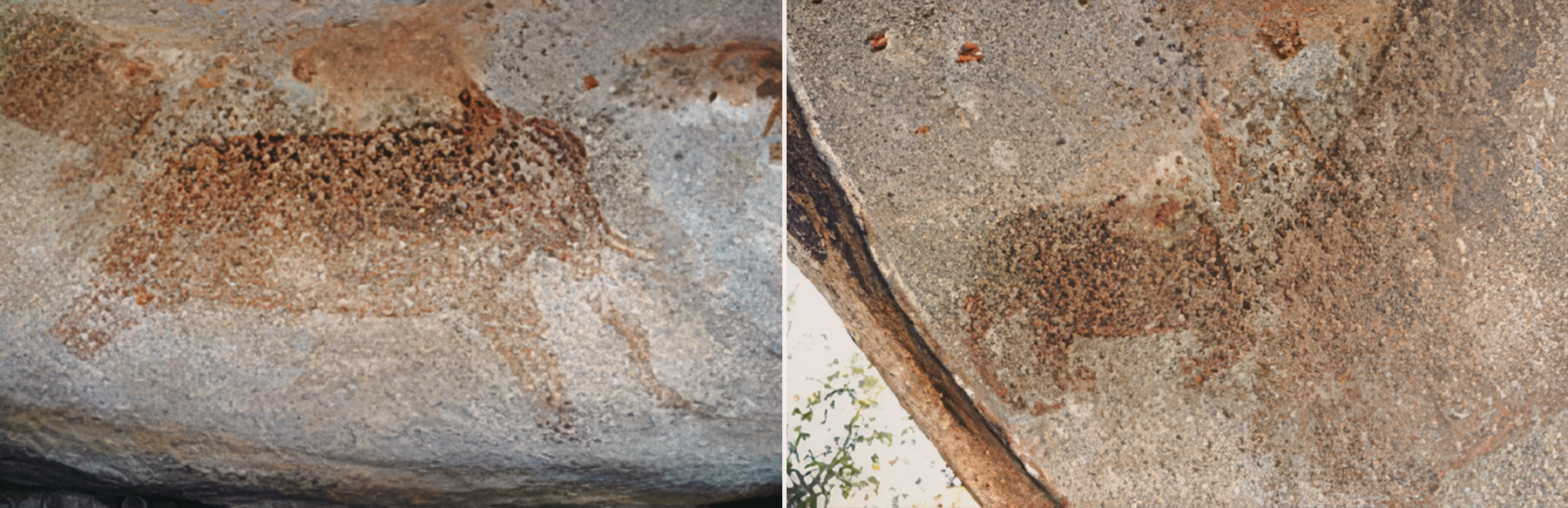
The name ‘Kikonko kya Nzogu’ means ‘elephants’ hill’ in the dialect of Iambi people, a form of Kinyiramba language. Not only does the name refer to the site, but also to the whole area. It derives from the fact that the site, which is very well known by the local people, has pictures of elephants. A huge inselberg with an equally impressive overhang harbours the site, which overlooks the Masiga river on the west and lies about 100m up the slope from the river. The paintings are on a huge boulder resting on a bedrock outcrop and protected from rain and overhead sun by the overhang above it.
The subject matter consists of two elephants painted in a very realistic style employing curves and lines as the infilling motif and comparable to the streaky style described by M.D. Leakey (1983). One of the elephants is kneeling down and has its head lowered as if in the process of falling down or dying. To the right of the elephant, is a human figure holding what look like spears. The visual clues suggest a hunting scene, but this must be corroborated by ethnographic research. For one thing, spears are not common hunting weapons and are hardly encountered in the rock paintings. Additionally, if the rendering is a realistic depiction of a hunting scene, then we would expect to find many more human figures associated with the scenic portrayal because one person does not bring down an elephant, especially in the absence of poisoned arrows. Perhaps, there is much more meaning in the depiction than what meets the eye. As usual the human figures were depicted in stylised manner.
There was no clear case of superpositioning detected, but the elephants appear to have been painted over some previous paintings now too faint to make out. On the other side of the boulder, are recent designs presumably, Taturu (Barabaig) cattle ownership symbols. Overall, the site is in good state of preservation. There is no indication of artifacts on the floor.
Singida Region / Iramba District / Kisiriri Division
Getting to this site is rather arduous being about 6km away from Isanzu Lutheran mission and in the midst of a dense thicket known as Mgumo forest. This factor, more than any other, has offered protection against too much vandalism. In addition, the site is a good distance from the village and away from areas favoured for cultivation.
In physical configuration, it would be described as an exterior cave, since the overhang curves in front to connect with some huge boulders, so that a cave with openings in both directions is formed.
Patches of paint suggest that there have been at least two phases of painting. The first phase is represented by faint drawings of animals in a naturalistic style. These include a huge pachyderm or rhino and several giraffes, executed in red, painted on the ceiling, but which can hardly be made out now. There are more representations in this style, but they are so faint that it would be mere conjecture to attempt identification.
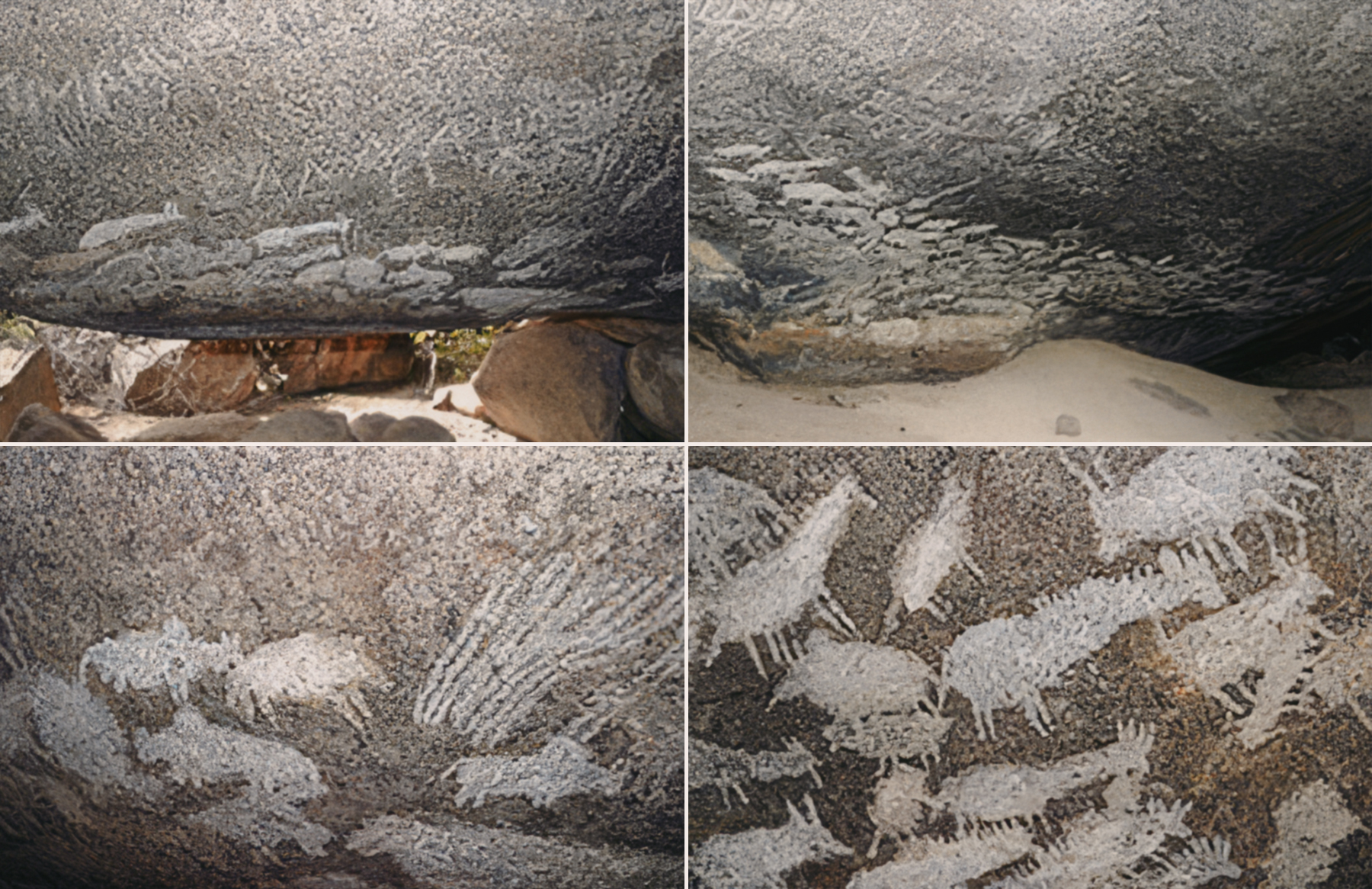
The later phase of paintings consists predominantly of animals in the so-called ‘dirty white’ painted on the lower part of the ceiling and from one end to another. There are also a few anthropomorphic figures. Stylistically, the pictographs fall under what, for want of a better term, has been referred to as ‘the dirty white’, in which the pigment turns out to be ashy or latex white. The animal friezes, which decorate the ceiling of the cave, are semi-naturalistic silhouettes in which details are missing, borders fuzzy and the finished product comparatively poor. As with the case of Kirumi Isumbirira, exceptionally long necked giraffes seem to have been the most popular subject matter. These later paintings appear superimposed on the earlier phase, especially on the ceiling. Elsewhere, cases of superimposition can only be guessed at.
Of special interest is the fact that some of the pictures appear to represent domestic animals such as the cow and possibly the dog. The historical significance of this observation is immense for it could provide an independent clue about the introduction of domestic animals to the central Tanzania area, but this identification is still tentative pending further study.The site is also stratified with archaeological deposits and like many of the best rock art sites in Singida, Iramba, and Lake Eyasi, it has been disturbed by cave robbers hunting for German gold coins. Overall the site is in good state of preservation and since it is rather difficult to reach, it is not greatly threatened by vandalism.
Singida Region / Singida District / Mjukhuda Division
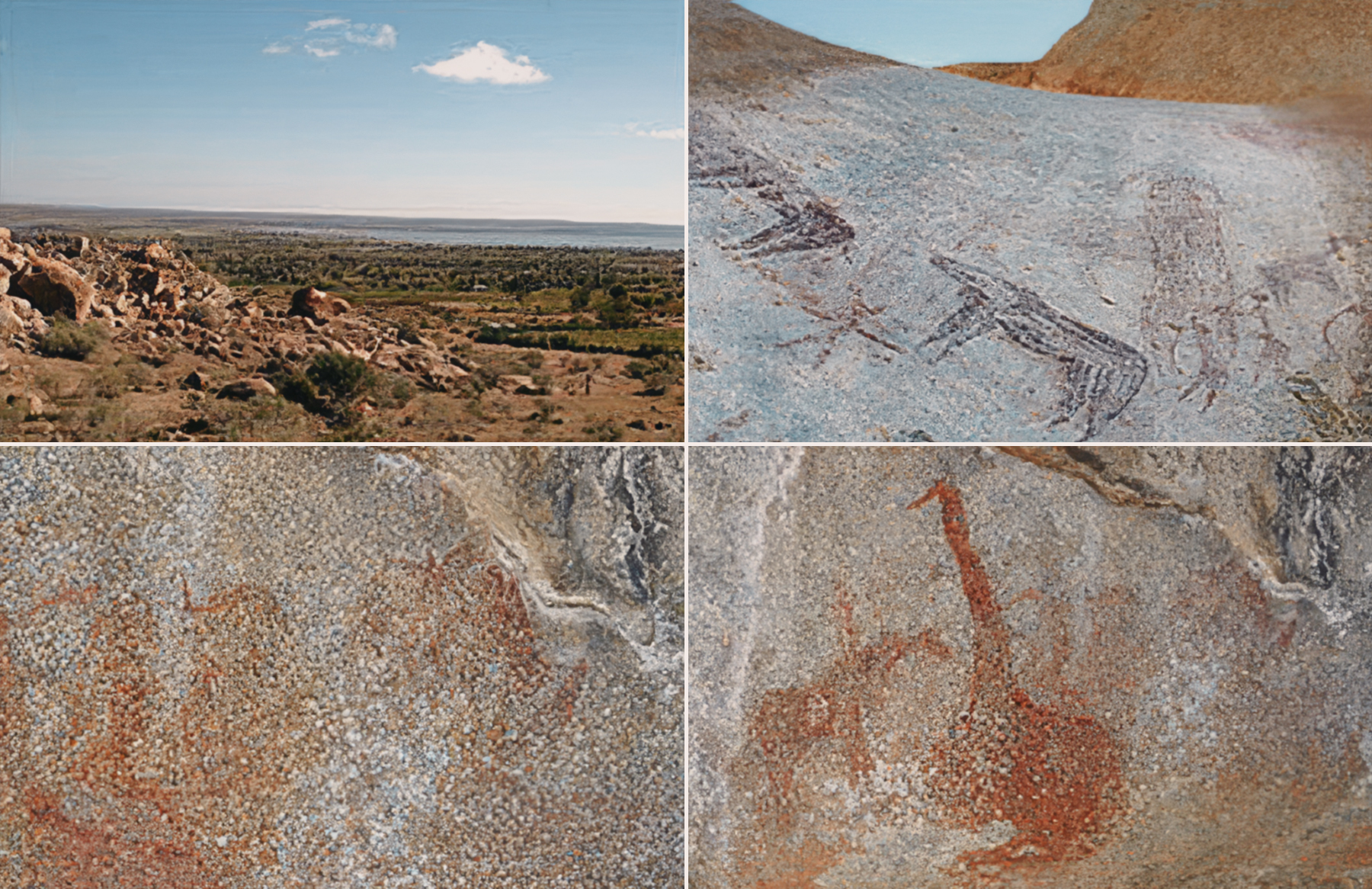
The site is located on one of the highest outcrops on the Mjakhuda range of hills in Ilongero Division (I), near the village of Msisi. It is one of the sites briefly visited by the author in 1974 and reported in Masao 1979. It is among the more unique sites in the Mjakhuda area because not only is the subject matter more varied, but the rock shelter is painted on three different sides, a phenomenon which is rather rare.
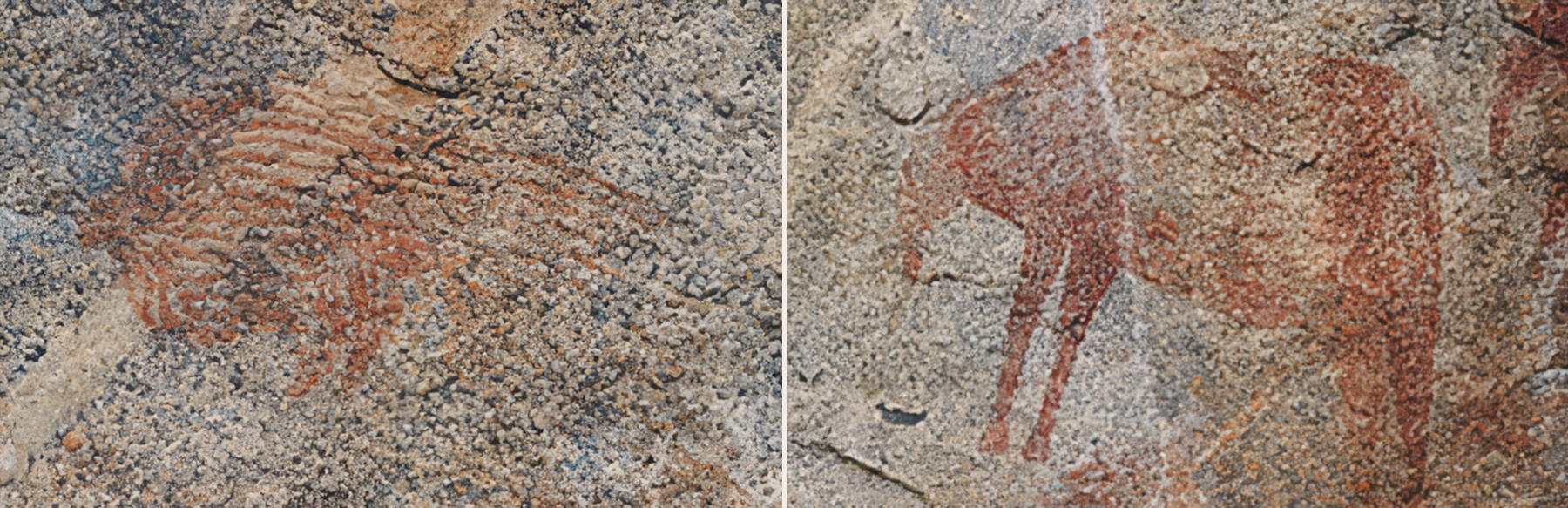
Depicted are humans and animals. The animals, which are executed in three styles: boldly filled-in silhouettes, infilled with shading and open line profiles without infilling, include giraffes, eland, elephant and various antelopes. Two of the animals, presumably elands, are executed in the streaky style whereby the body is infilled in streaked line patterns. These two animals are also depicted without their heads, a style, which has been found in other sites not only in Singida, but as M.D. Leakey (1983) reports, also in the Kondoa area. I have not been able to suggest what it could symbolize, but it is hoped that further investigation will shed some light on this rather puzzling style. The human figures can be described as being semi-naturalistic, for although the element of stylisation is still very strong, an attempt has been made to draw them clad with some attire, perhaps symbolizing camouflage as utilised by the Hadza when hunting, or some sort of ceremonial or initiational dress or garb.
Scarlet red and light ocherous red pigments were used with the later overlying the former. On the basis of literal interpretation of the visual evidence, hunting and dancing seem to be the activities represented. Overall the site is still in a good state of preservation. The highest painting is 2.35m from ground level. Despite a high surface concentration of quartz chips comparable to LSA artifacts, the site does not seem stratified with archaeological deposits. It may also be of interest to note that there seems to have been a deliberate preferance to paint on the whitish part of the panel as opposed to the other portions. The white seems to be associated with evaporated salts deposited on the rock panel by rainwater.
Singida Region / Iramba District / Nduguti Division
This is a site, which is rather difficult to reach, being in the midst of Mtintimo bush. It is about 5km away from Iambi village on the right side of the footpath to Ishenga village. The site, a rock shelter with an overhang and a raised platform, is painted with animals and humans. In one scene, there is a man with arrows and some animals in the vicinity apparently symbolizing hunting. Among the animals identified, are three elands and one warthog. Two of the elands, which are very elaborately rendered in a curved line-shading motif are in a necking-like posture with one kneeling as if expressing submission or receptiveness for mating. On the whole, the animals are executed in three styles; boldly filled-in silhouettes like the eland and warthog on the lower left and right of the panel, the thick line open line profile infilled with different motifs as in the case of the eland on the right side, and the thick line profile without infilling. There is also a geometric representation looking like a complex Chinese character. It is among the sites reported by the Kohl-Larsens. The site is in a relatively good state of preservation. The highest painting, an anthropomorph with bow and arrow is 1.9m high, while the painted panel is 5m wide.
Singida Region / Singida Rural District / Mgori Division
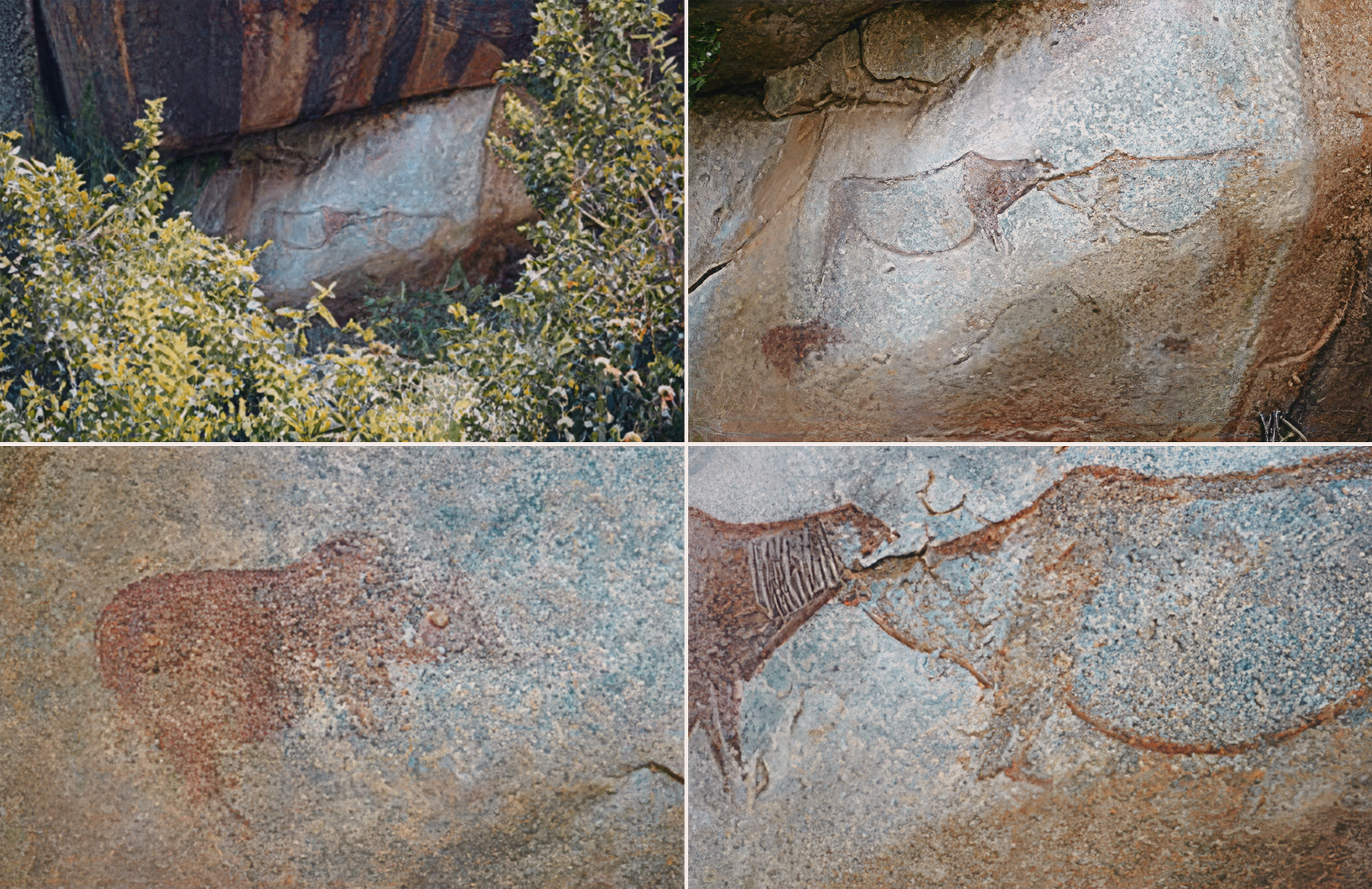
This is by far the largest and most impressive rock shelter in the Ngimu area, rising to a height of more than 30m from the ground. The name of the village derives from that of the rock shelter, which according to legend, is a lasting tribute to Mr. Ngimu, the first man to settle here. The site is also a sanctuary to a certain clan of the Wanyaturu and is still in use today for propitiatory and ritualistic activities.
The site is located on the northern slopes of the Ngimu hill, which runs in an East-West direction for about a kilometer. Ngimu Primary School is on the southwest foot of the hill. It is a straight-faced rock shelter divided into two parts by a vertical fault line. The painted area of 152.2sq.m makes it the largest in the Singida Iramba rock art belt and, I would presume, possibly the whole of central Tanzania.
The subject matter is quite varied, and includes animals such as giraffe, eland, kudu, buffalo and several antelopes. Also depicted are humans engaged in different activities presumably such as hunting and dancing. In one of the scenes, animals are depicted upside down and enclosed in a circle. Stylistically, all the animals are executed in a bold wash of two shades of red; a scarlet red, and a bright red, producing naturalistic silhouettes. However, no clear order of superpositioning could be detected although there are instances of overlap where the bright red overlies the scarlet red.
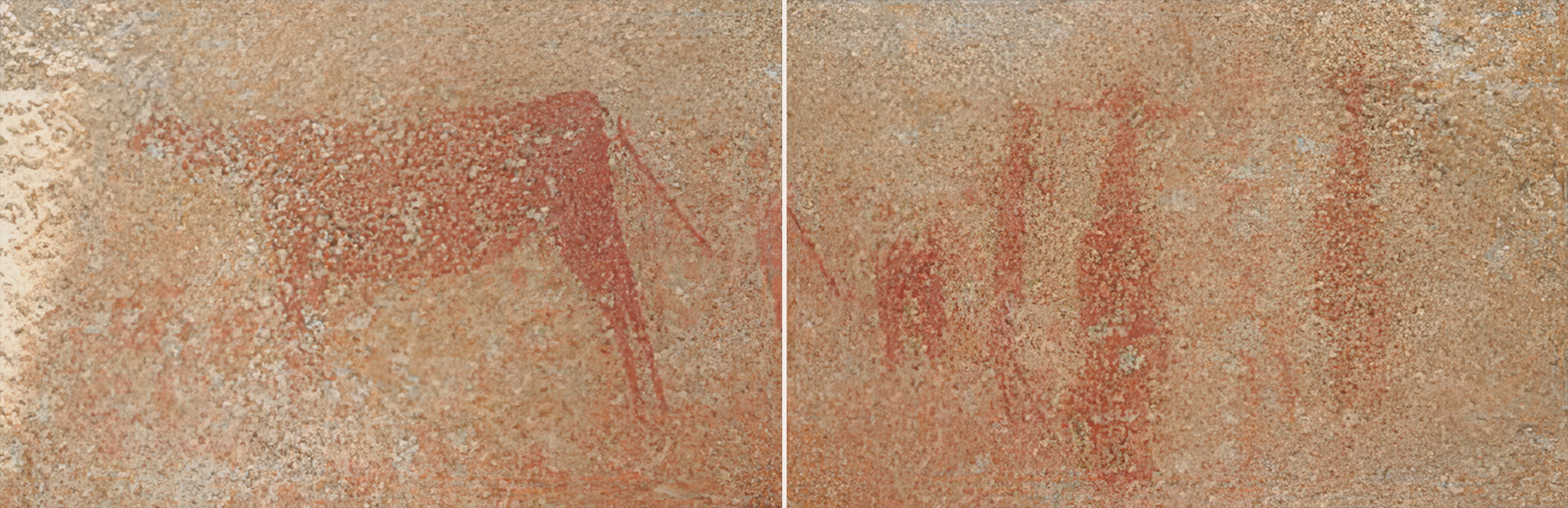
Of special interest is the position of the paintings especially as regards their heights from the ground. Some of the paintings are as high up as 10m or more from ground level. The painters must have used some form of scaffolding to paint so high. It seems that special and deliberate efforts were made to locate the paintings so high, but the significance of this is not known although it is quite possible that this has something to do with the value that the painter attached to his paintings; i.e. the higher or the more difficult to reach paintings, the more valuable it is in terms of an aesthetic, or symbolic meaning, or both. Obviously, neither does sympathetic magic nor art for art’s sake can explain why people would go into so much trouble to paint.
Exposed to all natural agents of weathering; direct sun, rain and wind as well as people, the site is in imminent danger of deterioration. The area around the site has been cleared since 1977 for cultivation and this poses a constant risk of vandalism to the site. I strongly recommend that this site should be preserved as it is indeed unique. Although it is, relatively speaking, still in a fairly good state, the deterioration caused mainly by exfoliation is taking place at such a fast rate that unless curative measures are adopted immediately, the site will not be worth visiting ten years from now.
It is also stratified with archaeological deposits, which on the basis of excavations conducted in 1987 by Masao and Liesegang (Masao unpubl.), span a depth of more than two meters and are basically LSA in nature. No Carbon dates for the deposits have as yet been obtained.
Singida Region / Singida Rural District / Mgori Division
This site was once part of Ng’ongo ya Ngimu 1, but due to faulting and fracturing, the southern part now stands as an isolated rock shelter. Unlike the latter, which is straight faced, Ngimu 2 has a slight overhang. All the paintings, which would be considered contemporary with those of Ngimu 1 are now completely faded. However, unlike the latter, the paintings are executed in a different shade of red, which is lighter. On the basis of this it is tempting to surmise they may be later than those of Ngimu 1.
The subject matter is predominantly geometrics and symbols, but there are also zebra-like animals, one of which is depicted fallen down. Associated with the fallen animals, is an anthropomorphic figure, which seems to be throwing, possibly bolas or missiles, at the animal. Once again it is tempting to interpret this as a hunting scene, but there are perhaps other equally plausible speculations which future research might discover. Overall the paintings seem to be later than those of Ngimu1. They are in a very good state of preservation. Even discounting the protection offered by the overhang, the paintings are in too good state of preservation to be contemporary with those of Ngimu 1.
Singida Region / Iramba District / Kisiriri Division
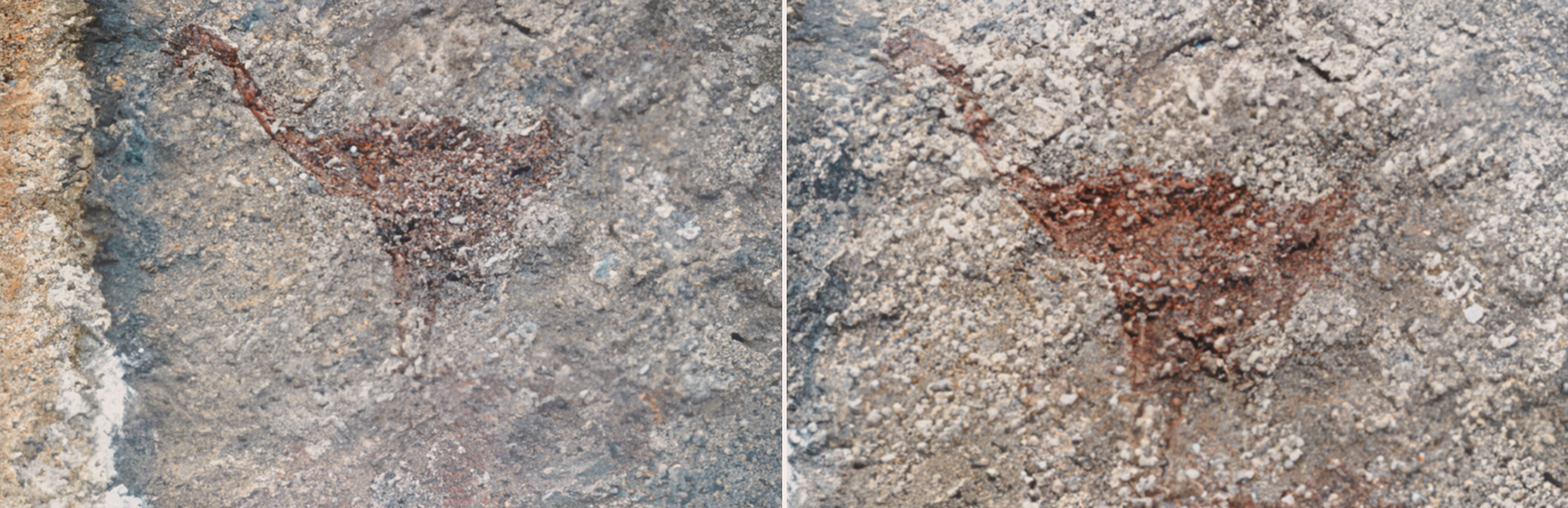
Kinto is a small village some 4km southeast of Isanzu Mission. The Kinto site is therefore named after the village of the same name. It features an exterior cave with very large openings on the east and west side. On the north side of the western end and the lower part of the overhang is a representation of an ostrich and beside it are near spherical drawings which have been interpreted as the ostrich’s eggs. Birds are as a general rule not a popular subject matter in central Tanzania. The spherical drawings appear to be in a nest. All the pictographs have been executed either in scarlet or light ocherous red. In some sites, the lighter shade seems to overlie the scarlet one where the two pigments overlap. The same site was studied by Ludwig and Margrit Kohl-Larsen in 1936-38. They also excavated the site and found LSA deposits of Wilton nature. They referred to the site as Mkirampirewand (Kohl-Larsen 1958: 52-53). The site was in a reasonably good state of preservation in 1995, but when it was visited in June 2003, it had depreciated considerably.
Singida Region / Iramba District / Kinyangiri Division
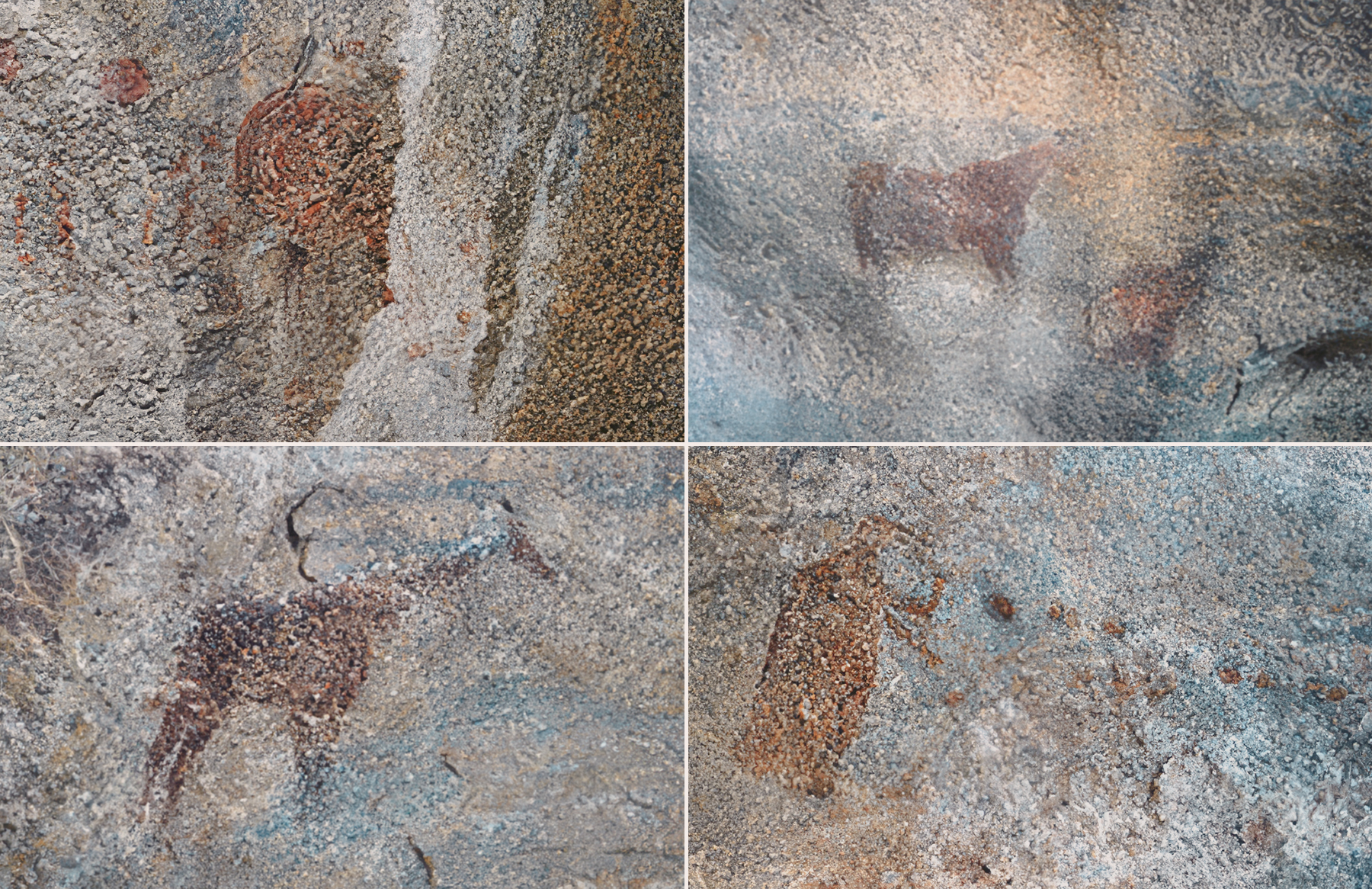
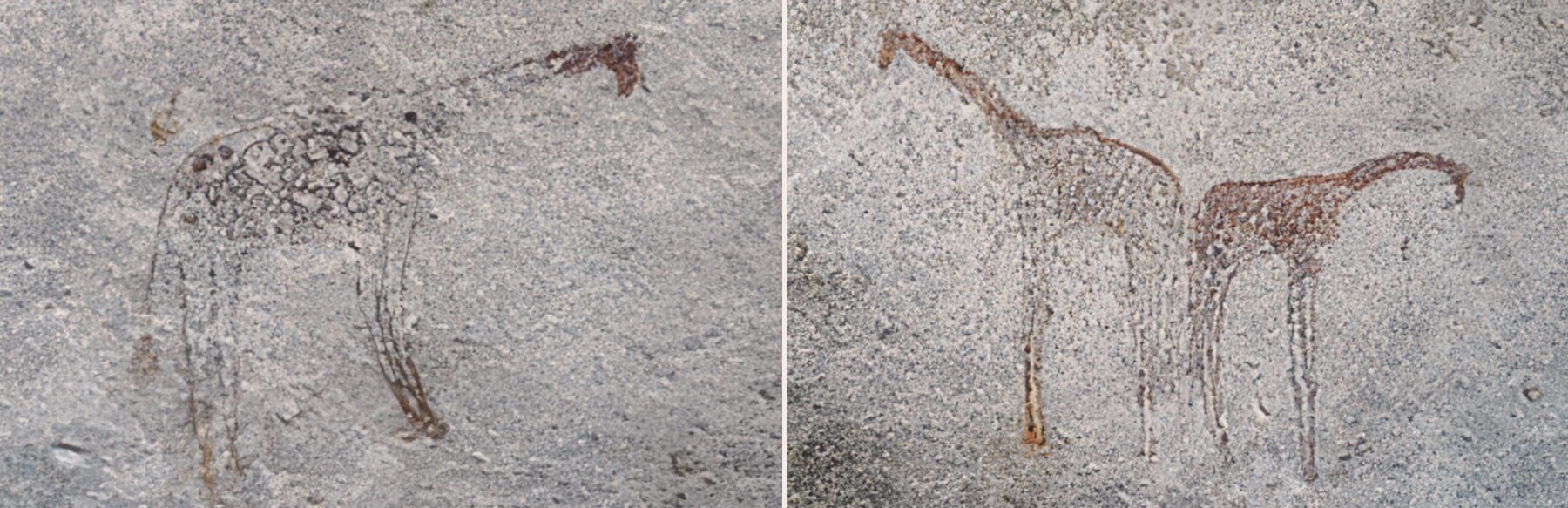
As the code suggests, this site is in the division of Kinyangiri. It is also near the village of Ishenga. The site is located on the southern slopes of Ntwiga hill, which overlooks the village of Ishenga. The hill apparently received the name from the site, which is popularly known for its paintings of giraffes.
There are three giraffes all done in somewhat different styles. All are executed in ocherous red, but two of them have their hind parts abutting each other. One is infilled with squares and checkers while the other is infilled with blotches and lines - or as M.D. Leakey (1983) would have it, geometric streaky. The third is infilled with reticulate.
It is however suspected that these paintings are much later than either the red or white ashy paintings found in other sites because:
- They are less naturalistic than giraffes in other sites done in the same pigment.
- The tail is depicted in a new style; i.e. having tassels at the tip.
- The feet lack hooves.
- The paintings are very fresh, as if they were painted a few months ago.
- Unlike many other sites, which have a habitable floor, this one does not seem to be associated with archaeological deposits.
Yet all these observations do not make it any easier to assess the cultural and historical significance of the site. If anything, they make the situation even more baffling. An old man by the name of Ali Hasan, aged about 65 years old, who now lives in Iambi, claimed that when he was a boy, his grandfather told him about the paintings. Being perhaps of the same age then as he was when I interviewed him, his grandfather claimed he did not know when the paintings were executed and that when he grew up as a child, the paintiings were already there. This story would make the paintings at least 120 years. The site is in a very good state of preservation, but like many other painted rock shelters, it has been affected by cave robbers.
Singida Region / Iramba District / Kinyangiri Division
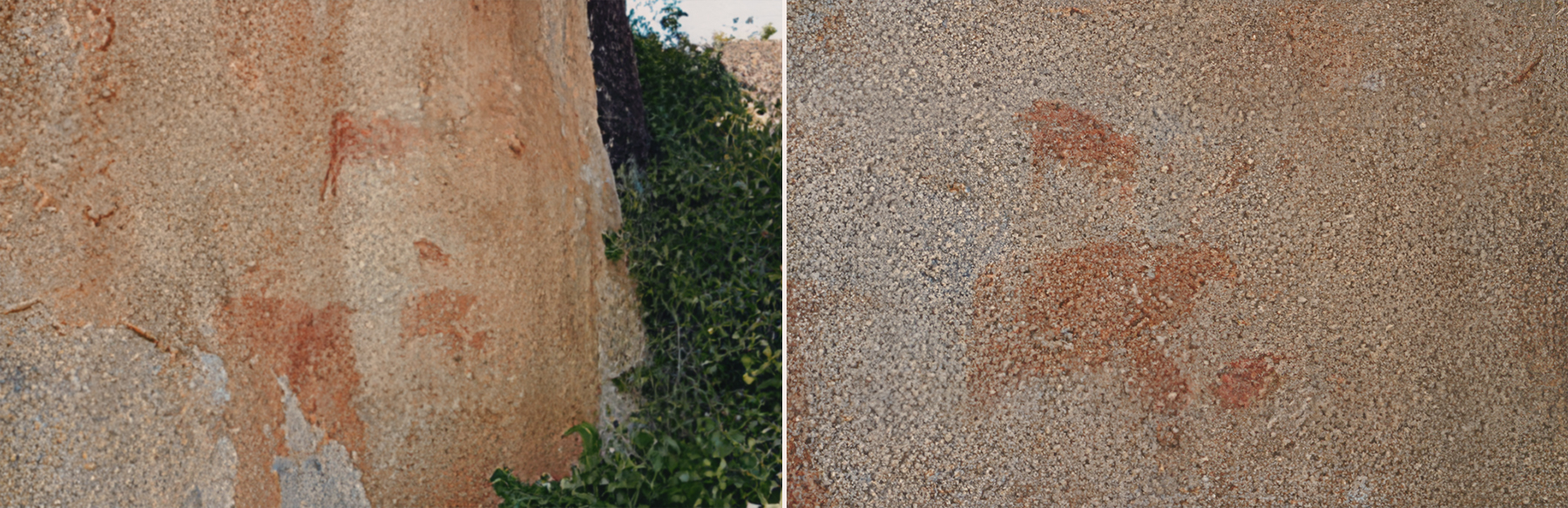
This is a straight-sided inselberg on the southern part of Ntwiga ridge. The painted area faces north. The subject matter includes animals such as elands, giraffes, elephants, baboon-like and lion-like animals. There are also humans with arrows. All these are done in ocherous red pigment, the animals being naturalistic silhouettes while the anthropomorphics are stylised. Although there are instances of superpositioning, the sequence is difficult to establish especially when there is little time to spend on any one site. Distinguishing the sequence was also made difficult because the shades of red pigment used are very similar. The floor was littered with recent potsherds, but unlike the previous site, it seems, at least from the dirt excavated by cave robbers, to be archaeologically stratified. Also around the site were found artifacts of LSA nature. The site was considered to be in a good state of preservation.
Singida Region / Iramba District / Kinyangiri Division
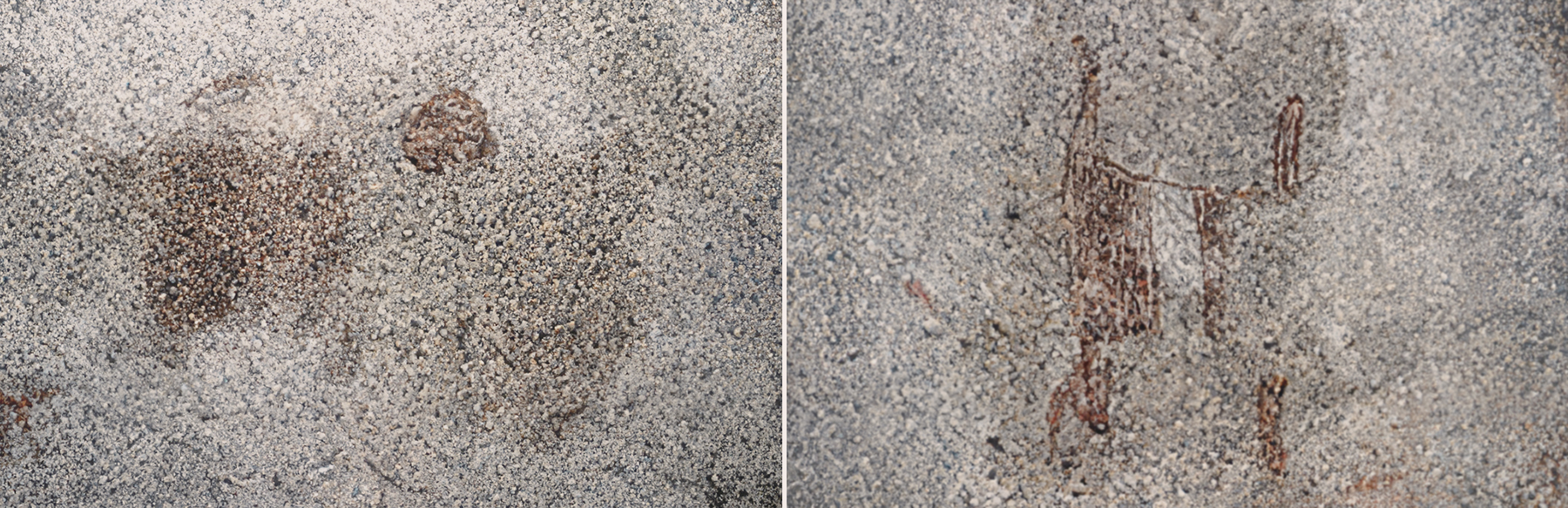
On the northwestern slopes of Ntwiga ridge are several grano-dioritic inselbergs, one of which has pictographs. They are protected from rain and direct sun by a huge overhang.The subject matter consists of naturalistic silhouettes of animals chiefly antelopes and bovids, stylised anthropomorphic figures and geometrics. Three shades of ocherous red, deep, medium and light, seem to have been used, but no order of superpositioning was detected. There are also representations of what are believed to be ethnographic objects, very similar to the present day grain storage containers made by the local inhabitants from saplings. In terms of style, the animals are executed in the naturalistic single line outline as well as in the boldly washed silhouettes. Among the animals are an elephant rendered in the open line outline style, a hartebeest depicted alongside a man holding a bow and three other animals, painted in such a way as to deliberately omit the front part of the animal. This is a style, which has been observed not only in several sites in the Singida-Iramba area, but also in the better-known rock art area of Kondoa. Presumably it has ritualistic or symbolic meaning, which the author has not yet been able to discover.
From the point of view of visual interpretation, one activity pattern seems to stand out. This is a hunting scene represented by a schematized human figure holding a bow while an animal runs away. Another scene involves the anthropomorphic figures in body contact suggesting dancing, or perhaps as some crew members intimated, copulation., but which on a closer look is more like dancing. The geometrics include circles, lines, crosses, etc. We can only surmise that some of the portrayals, especially the unidentified ethnographic objects and the crosses which are of the same pigment, are historical and perhaps mark the introduction of Christianity in the area just like the painting of a locomotive in a site in Sanga Mwadifu, perhaps marks the time when the railway reached Singida. Whatever the meaning, the site is in good state of preservation and will hopefully remain so for some time so that it can be studied further.
Singida / Singida District / Sanga Division
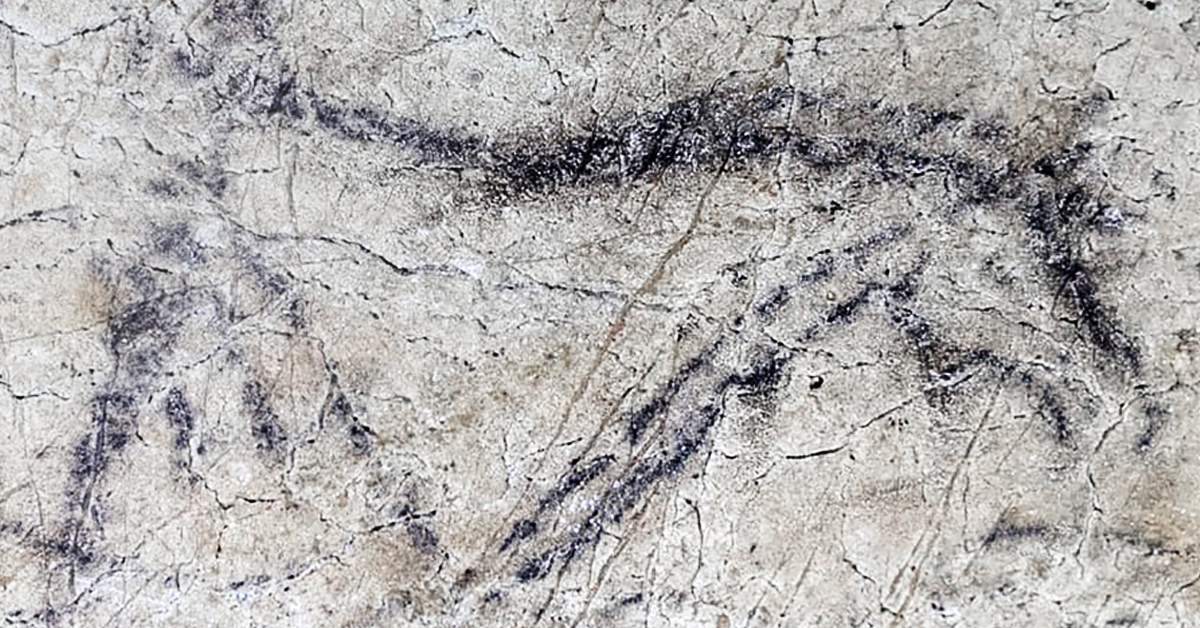
The site is a straightfaced rock shelter in the midst of several inselbergs in the Unyambwa plains facing north. It is easily reached from Unyambwa primary school.The subject matter includes animals, anthropomorphic figures, a locomotive engine, unidentified objects and doodlings, all in black, overlying earlier paintings done in red pigment. Included in the animals are domesticates such as dogs, sheep, and perhaps cats.
Obviously part if not all of the subject matter is historical. However, in 1995, an old villager of about 65 years old denied knowledge of the time of the paintings, but I think he was withholding the information for reasons which may have something to do with the ritualistic significance associated with rock art sites. It can, for instance be argued that there are very good chances that the painting of the locomotive engine was executed in 1946 or shortly after, for that is the time when the railway reached Singida town, some 15m from the site. By inference therefore, all the other paintings in the same style and pigment (black), must be contemporary with the picture of the locomotive. By the same argument, the representations executed in ocherous red and overlain by the black pictographs must have been painted before 1946.
Further investigation revealed that some of the paintings were the work of one villager whose name is represented by some letters, which are difficult to make out. This information was volunteered by young people, some of whom had graduated from the nearby primary school a year before. It is necessary to check this information with elders before it can be accepted as being a true account of the paintings. The area around is littered with lithics some of which are artifacts. The state of preservation is reasonably good.
Singida / Singida District / Sanga Division
In the same area as Unyambwa 1 is another site, which will be referred to as Unyambwa 2. However, unlike the previous one, the pictographs are depicted in one style, i.e. naturalistic silhouettes and also in one pigment; a bright ocherous red. The subject matter includes animals such as giraffe, eland, etc. Humans are also depicted.
Singida / Singida District / Ikungi Division
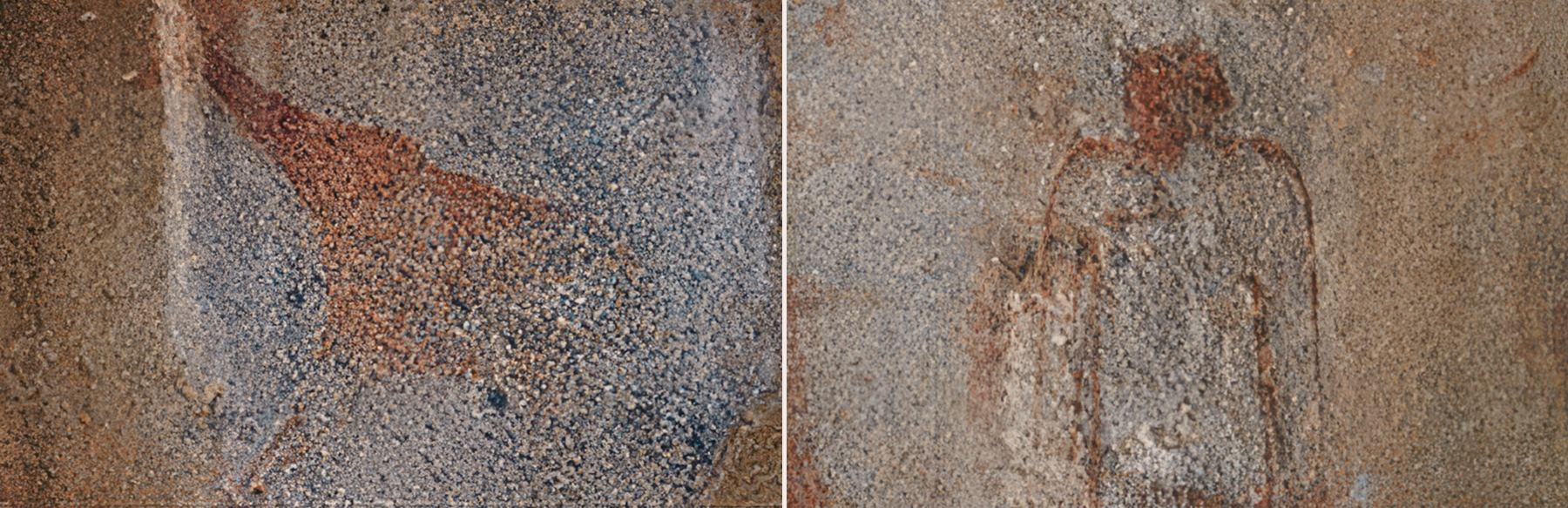
This is perhaps the most prolific and the best-preserved site in the whole of Ikungi division. It is in the same kind of vegetational pattern as the previous three, but on the slopes of Taru hill. The site is a straight faced rock shelter on the southern face of which are depicted several animals in very elaborate style employing two shades; deep red and light ocherous red.The subject matter includes animals such as elephants, giraffes, eland, ostrich, monkey, porcupine and so forth and anthropomorphs. The animals are drawn in three main naturalistic styles; the open line profile without shading, open line outline with shading, and bold silhouettes. The humans are mostly stylised, but they do not seem to suggest any kind of activity. Instances of overlap suggest, unlike in many other sites, that the scarlet red was painted over and therefore later than light ocherous red.
As mentioned earlier, the site is still in a good state of preservation, but since we do not know how long it will remain in this state, it is strongly recommended that it should be carefully documented for possible preservation and reproduction at the museum.
Singida / Iramba District / Kisiriri Division
These three names, which are used interchangeably, refer to an exterior cave with openings aligned on the North West and South West orientation. It is located about 1.5km east of Isanzu mission and easily accessible via a path from the mission.
The site has two painted areas: the ceiling in the central part of the cave and a huge boulder on the southwest opening of the cave. In the former, most of the paintings, which are now badly faded, are done in white ashy latex paint. In the majority of cases, the subject matter seems to have been pacyderm-like animals, probably elephants. In the latter, the paintings, which are done in shades of ocherous red are still very clear, but there is no evidence of these having been superimposed on the faded white animal paintings.
Most of the red paintings do not appear on the ceiling, but are drawn on the boulder in the Southwest entrance of the cave. The friezes include many animals such as eland, zebra, and various antelopes, but the predominant species represented is the giraffe. All are portrayed in boldly shaded naturalistic silhouettes. There are also several human representations either in stylised or semi-naturalistic styles depicted in association with the animals in red pigment.
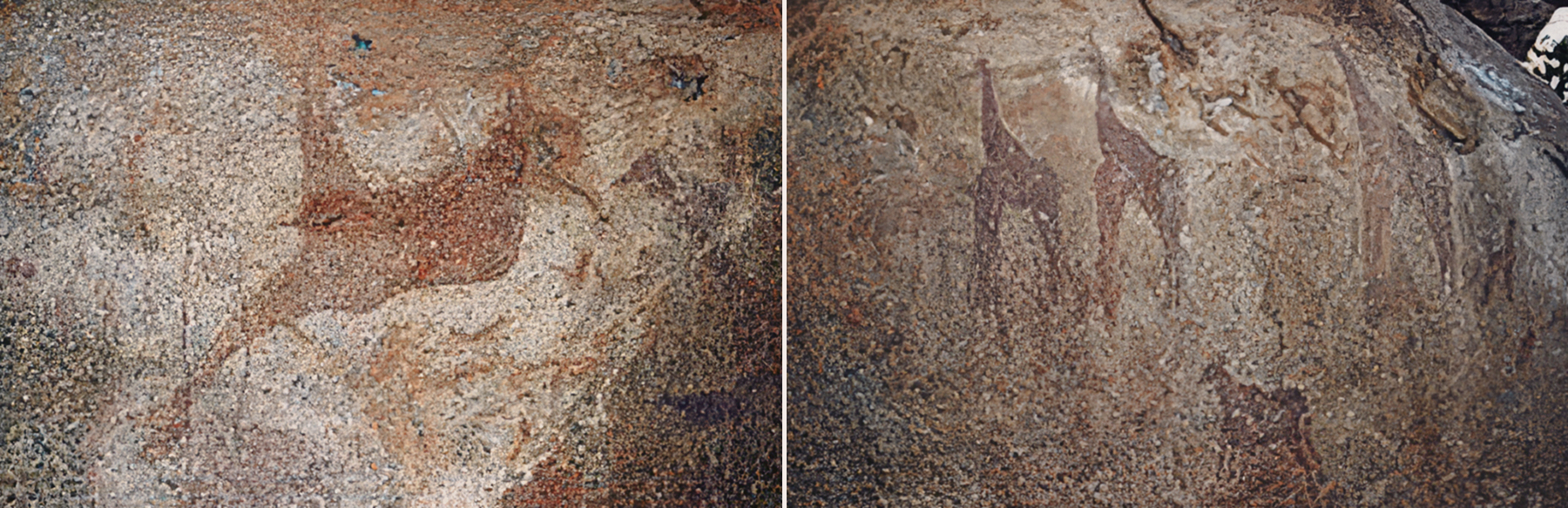
This is one of the sites whose pictographic representation can be identified as a hunting scene (Masao, 1979). This conclusion was arrived at because some of the drawings show animals, which have fallen down or are lying upside down, suggesting that they are dead. In addition, a giraffe is shown with three possible arrows sticking from its hindquarters, while behind it is a hunter with a bow and arrow. It is also thought that some of the human figures were in a festive mood rejoicing and dancing, perhaps after a successful hunt. In addition, alongside the fallen giraffe, one can see what looks like bolas or missiles in the form of three spherical objects tied to what looks like a piece of string. While this interpretation may be correct, it is as already cautioned, misleading to draw literal translations from the visual imagery of the paintings. Indeed in the light of recent work elsewhere, such interpretation would be considered very simplistic. Such depictions may have had completely different meaning in the lives, beliefs and cosmology of the artists.
Ng’wa Mwango is a site at which the varying shades of red suggest that the pictographs were painted at different times. For instance, it was observed that the scarlet red pigment invariably overlies the light ocherous red. This would suggest that at this site scarlet red was used after the light ocherous red, but we do not know how much time elapsed.
The same site was visited and excavated in 1974 by Masao and his crew (Masao 1979). The archaeological deposits have been dated to 3.600 BP, but hitherto, it has not been possible to associate the rock art with the stratified cultural material. The significance of an upper grinding stone stained with the red ochreous pigment found in association with datable archaeological deposits is difficult to assess because the pigment stains could have been associated with activities different from those of rock painting.
Two skeletons, one of an adult and the other of a child were also excavated in 1974. Studies of these showed that they belong to a Bantu stock not very different from the present occupants of the area. However, the grave seems to have been dug through LSA deposits and so it appears to be of Iron Age. Overall, the site is in a good state of preservation although it has also been disturbed by treasure hunters, who have dug a hole on the south western entrance.
- The Rock Art of Africa
- Tassili n'Ajjer
- The Dabous Giraffe Petroglyph, Niger
- The Rock Art of Niger
- The Rock Art of Namibia
- The Rock Art of South Africa
- Hunter-gatherer rock art sites in Africa
- Gilf Kebir - Cave of Swimmers
- Animals in Rock Art
- Rock Art of Western Central Africa
- Where is the Oldest Rock Art?
- Africa's World Heritage Sites (Film)