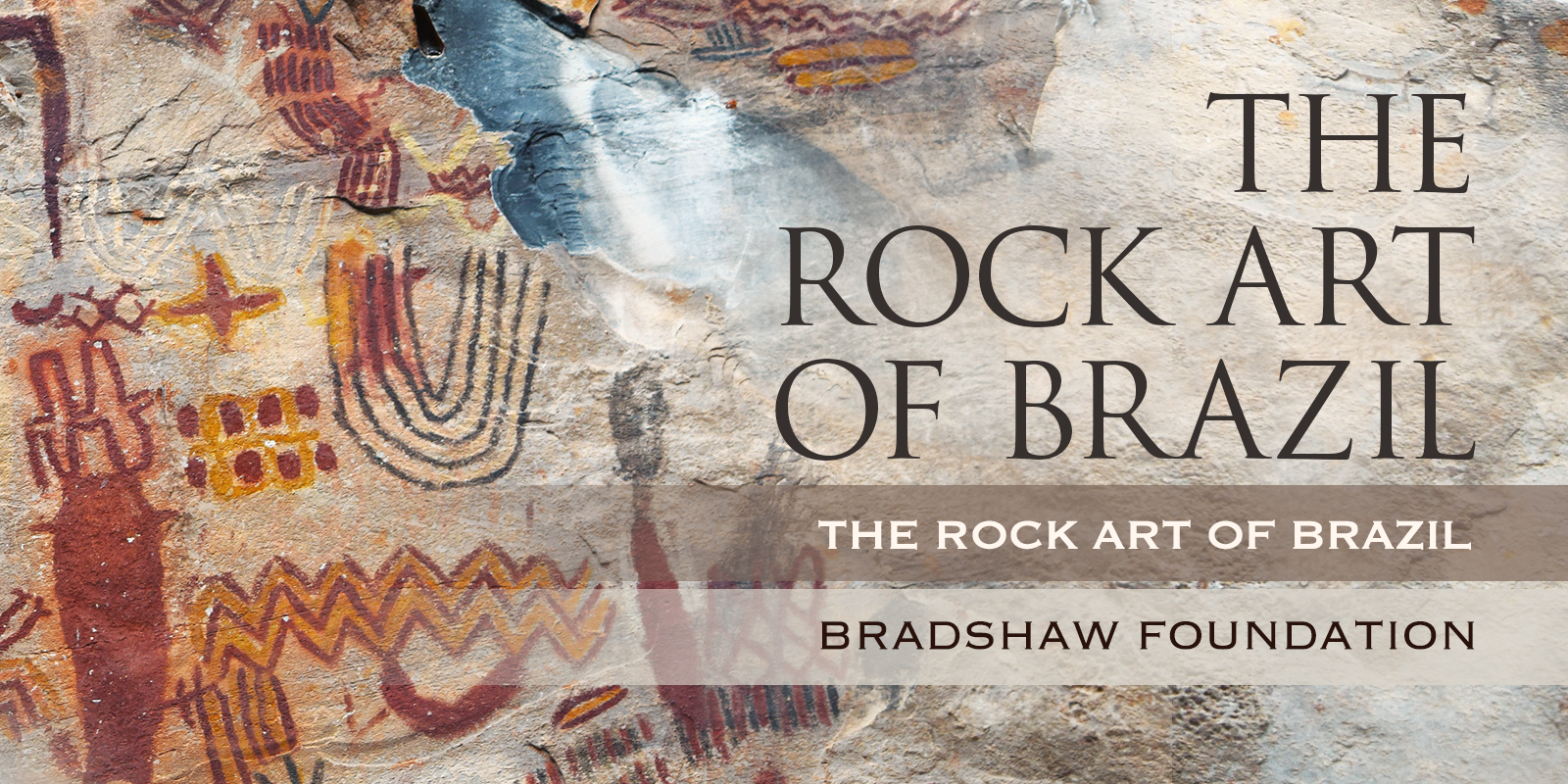
Introduction to the Rock Art of Brazil
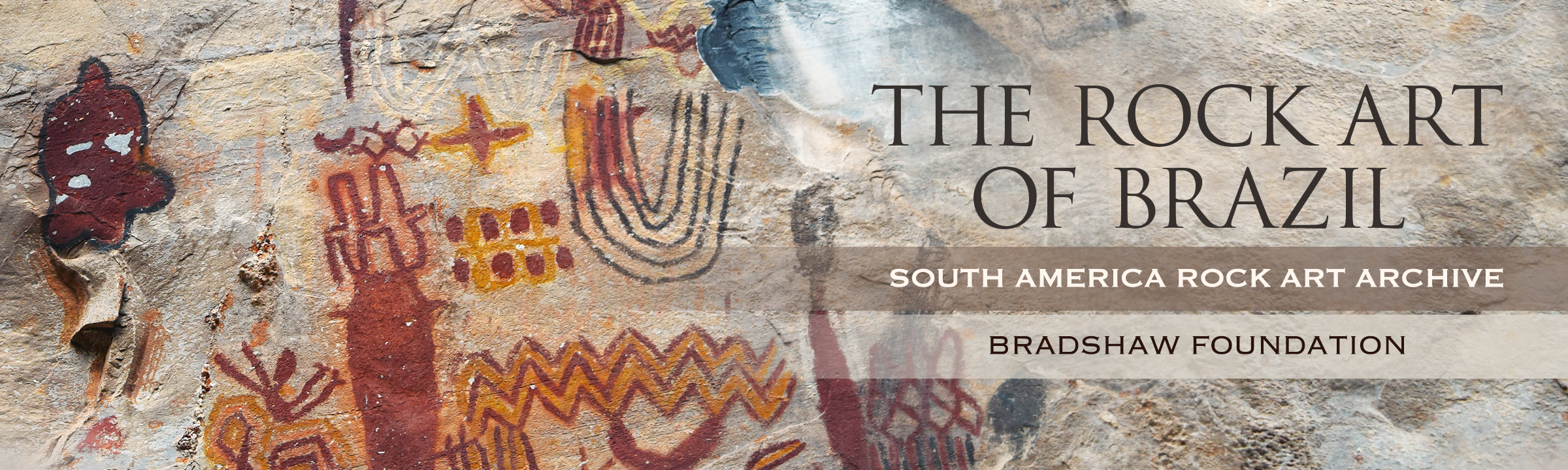
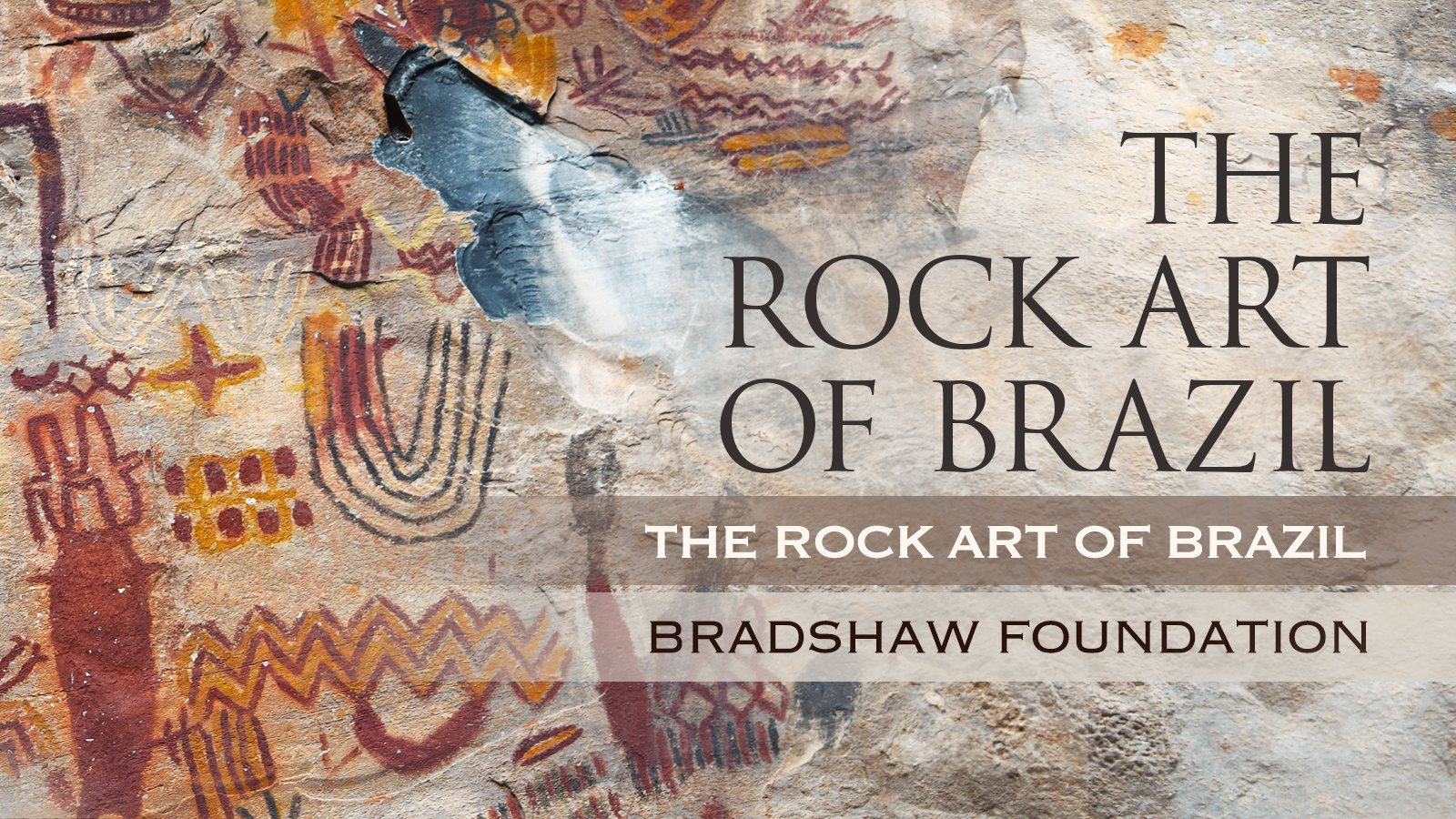
The Rock Art of Brazil
Introduction to the Rock Art of Brazil
South America Rock Art Archive

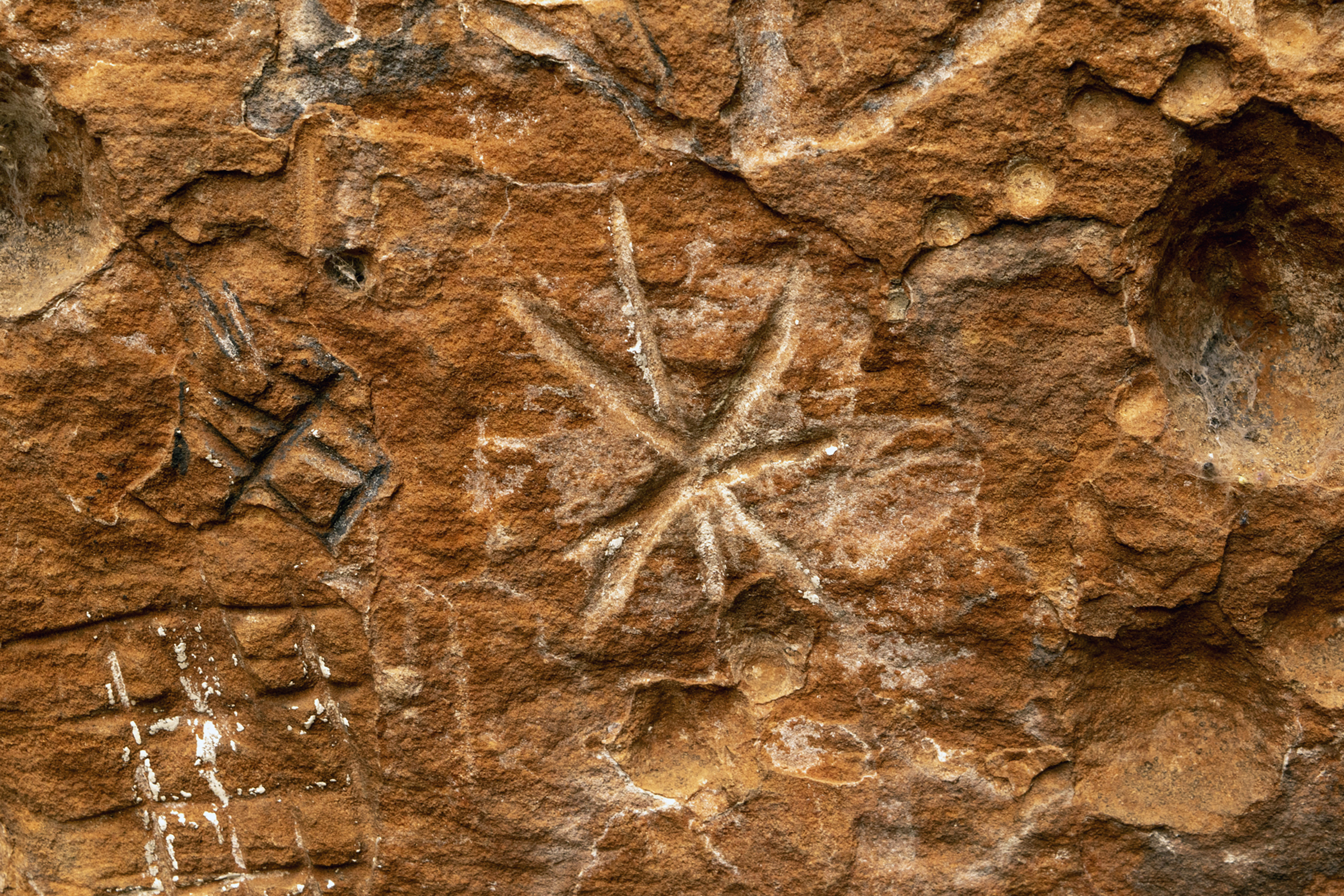
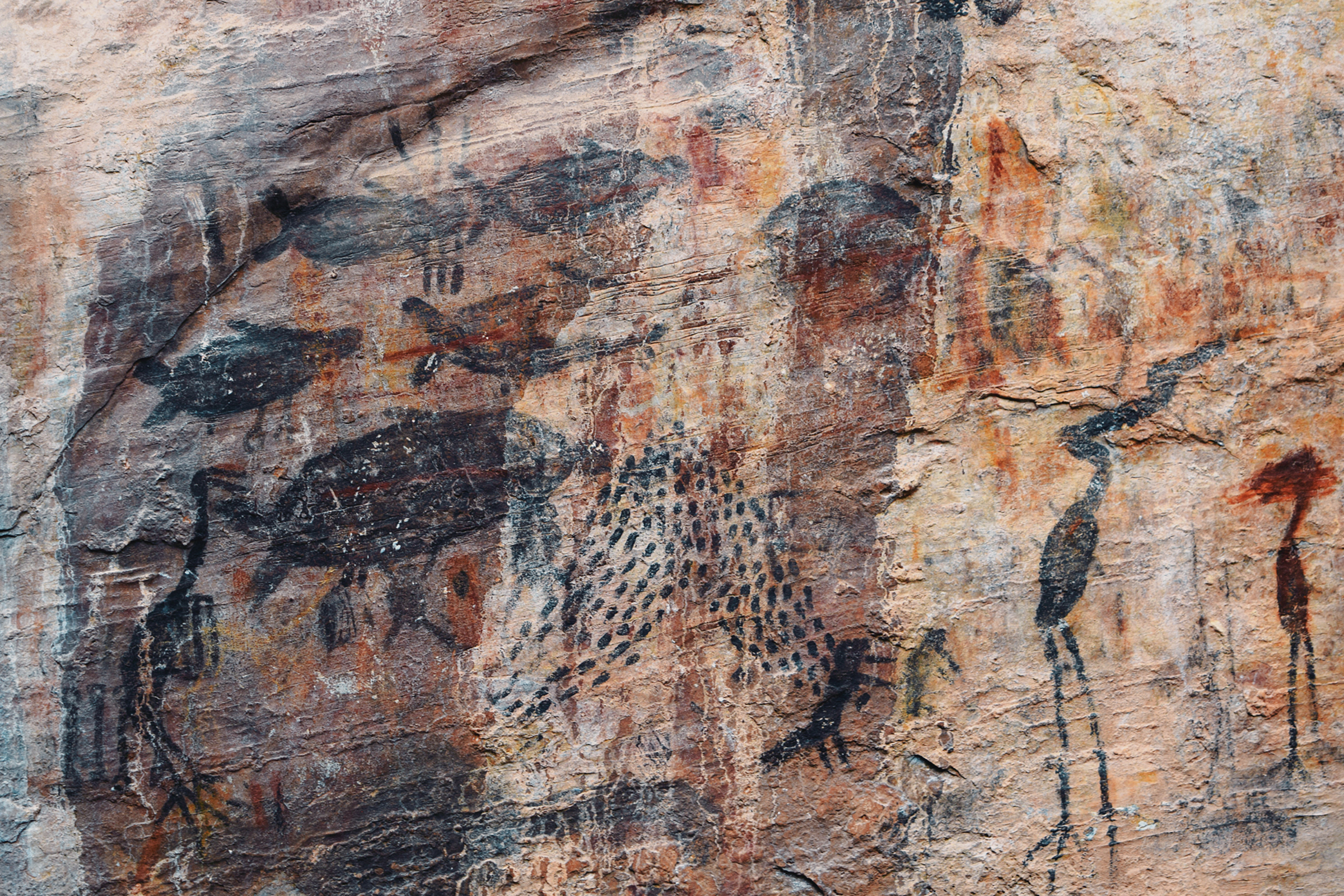
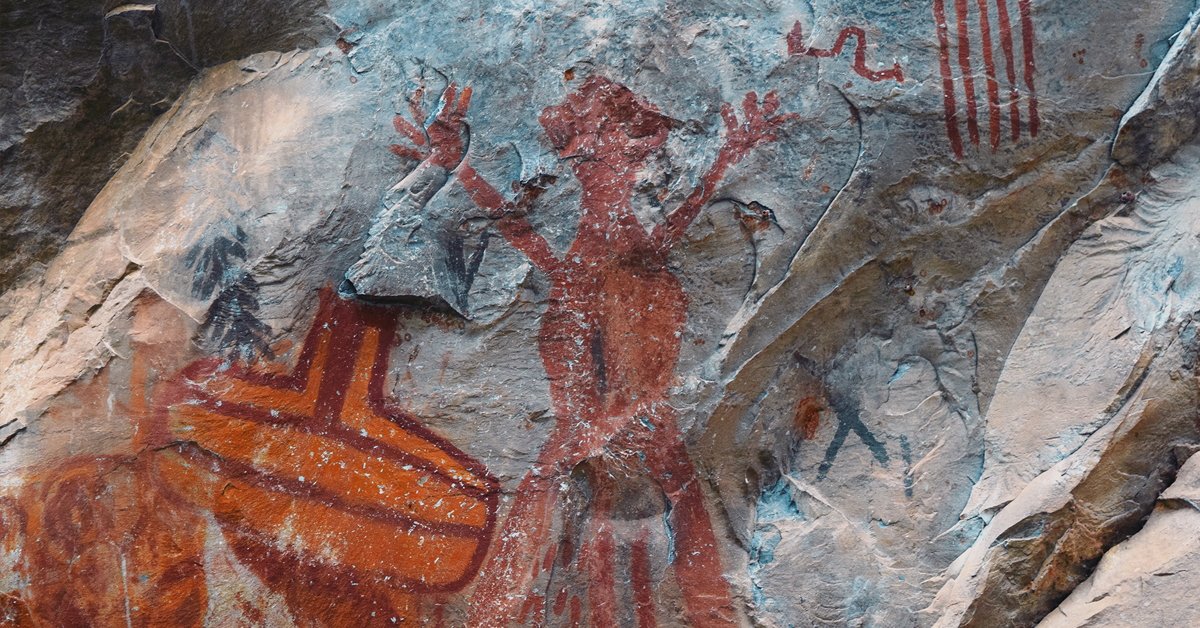
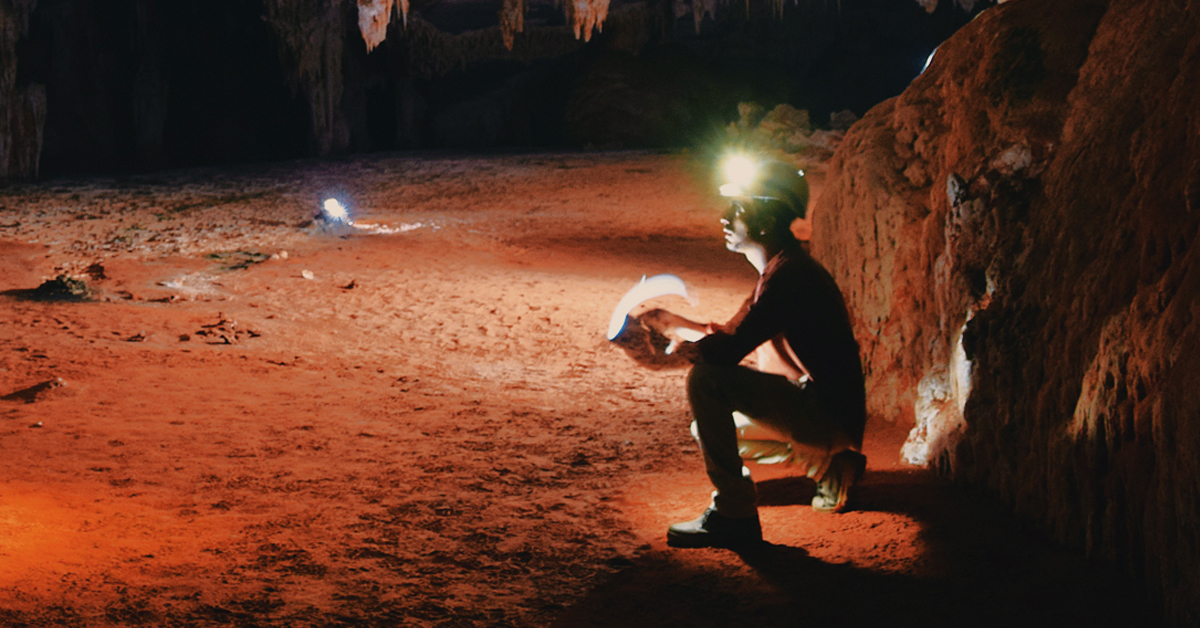
Peruaçu National Park Rock Art Petroglyph Petroglyphs Brazil South America Archaeology
In 1998 John Robinson, the co-founder of the Bradshaw Foundation, travelled with his wife Margie from the UK to Brazil to meet the archaeologist and rock art researcher Keler Lucas following their correspondence regarding Keler's discoveries and documentation of petroglyphs on Ilha de Santa Catarina - and the other smaller surrounding islands - in the Brazilian state of Santa Catarina, southern Brazil. It was this visit that formed the basis of the Bradshaw Foundation's modest representation of the rock art of Brazil, but perhaps more significantly that led to the official visit to the islands by the Director of Instituto do Patrimônio Histórico e Artístico Nacional, IPHAN [The National Historic and Artistic Heritage Institute] who immediately instigated an analysis and preservation project which Keler was to coordinate. In the year 2000 Ilha de Santa Catarina and Archipelago was declared a National Heritage Monument with Historic Patrimony of the Nation.

Peruaçu National Park Rock Art Petroglyph Petroglyphs Brazil South America Archaeology
In 2025 the Bradshaw Foundation received further contact from Brazil; an email from the archaeologist and Heritage Consultant Leonardo Troiano. He correctly pointed out that the Foundation's coverage of rock art in Brazil was featured only under 'South America Rock Art'. Moreover, he had extensive documentation for at least fourteen major 'world-class' Brazilian sites. He suggested that a new Brazil Rock Art Archive should be created, beginning with 5 of these 'world-class' sites [as well as incorporating our existing pages on Serra da Capivara and Petroglyphs of the Santa Catarina Archipelago], with more to follow in the future.

Based on the research and curation of Leonardo P. Troiano, the new Brazil Rock Art Archive features the Decorated Ravines of Lajedo de Soledade, the monumental Poty River Canyon Petroglyphs, the Serrote do Letreiro Petroglyphs and Dinosaur Tracks, the Pedra Grande site, the Peruaçu National Park and the Ingá Rock.

Leonardo P. Troiano

Leonardo P. Troiano Archaeologist Historian
Leonardo P. Troiano
Archaeologist & Historian
Leonardo P. Troiano
Leonardo P. Troiano is an archaeologist and historian specializing in visual anthropology, Indigenous history, ritual theory, and rock art studies, with a focus on Northeastern Brazil. He is a PhD candidate in Prehistoric Archaeology at the National and Kapodistrian University of Athens, Greece, where his research explores the visual and ritual dimensions of prehistoric imagery and its relationship to landscape.

Troiano holds a Master’s degree in Eastern Mediterranean Bronze Age Archaeology and has served as Coordinator of the National Center for Archaeology at Brazil’s National Institute of Historic and Artistic Heritage (IPHAN). In this capacity, he contributed to national programs in archaeological documentation, data management, heritage education, and international cooperation for the protection and recognition of Brazilian sites, including several inscribed on the UNESCO World Heritage List.

His work at the Serrote do Letreiro site, where petroglyphs occur alongside fossilized dinosaur footprints, has helped illuminate the dialogue between archaeology and paleontology by showing how ancient Indigenous societies perceived and inscribed meaning within fossil-bearing landscapes, thus expanding the interpretive scope of South American rock art.
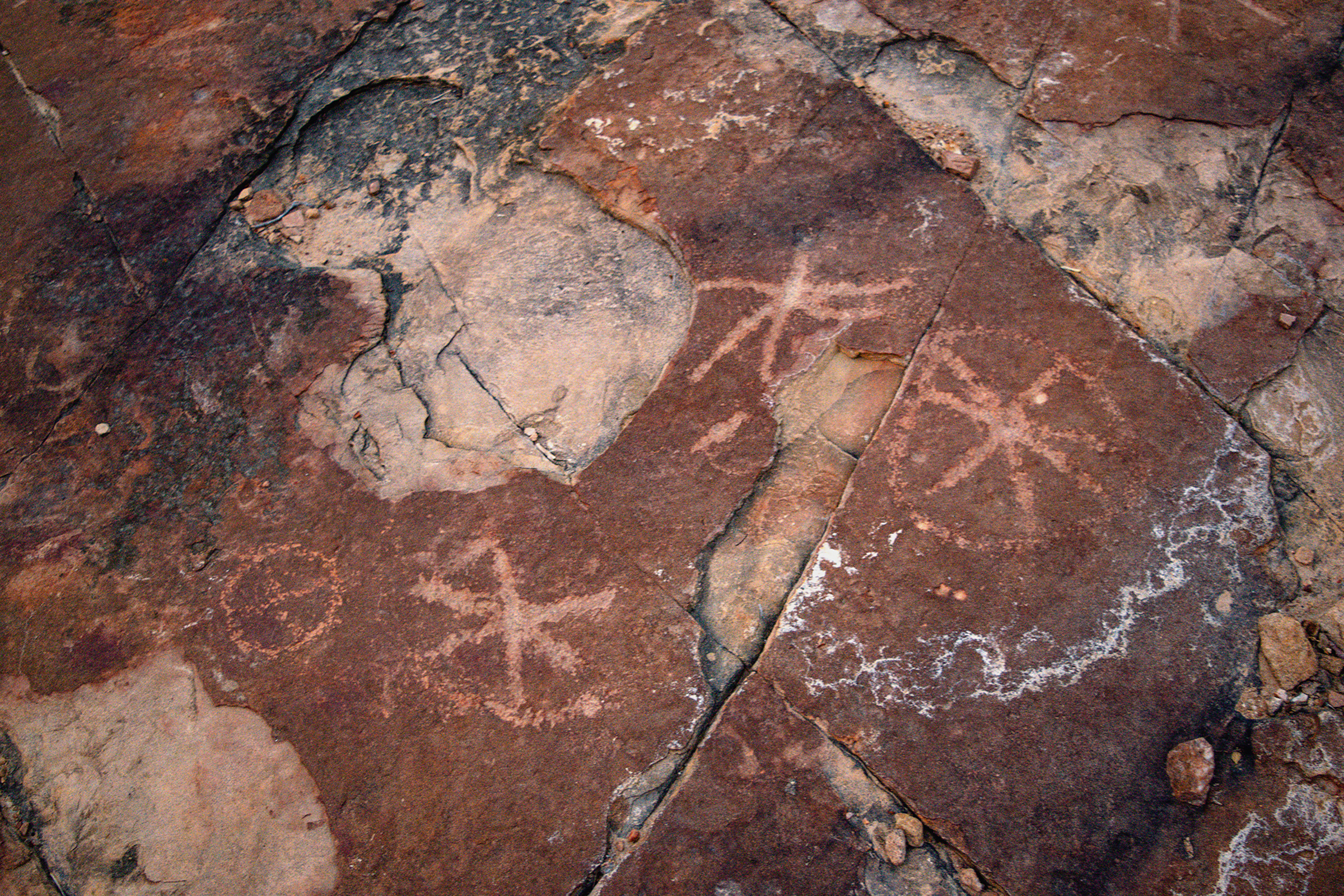
Serrote do Letreiro Rock Art of Brazil Bradshaw Foundation Archaeology
Serrote do Letreiro
Leonardo P. Troiano
 
Lajedo de Soledade Rock Art of Brazil Bradshaw Foundation Archaeology
Lajedo de Soledade
Leonardo P. Troiano
 
Pedra Grande Rock Art of Brazil Bradshaw Foundation Archaeology
Pedra Grande
Leonardo P. Troiano
 
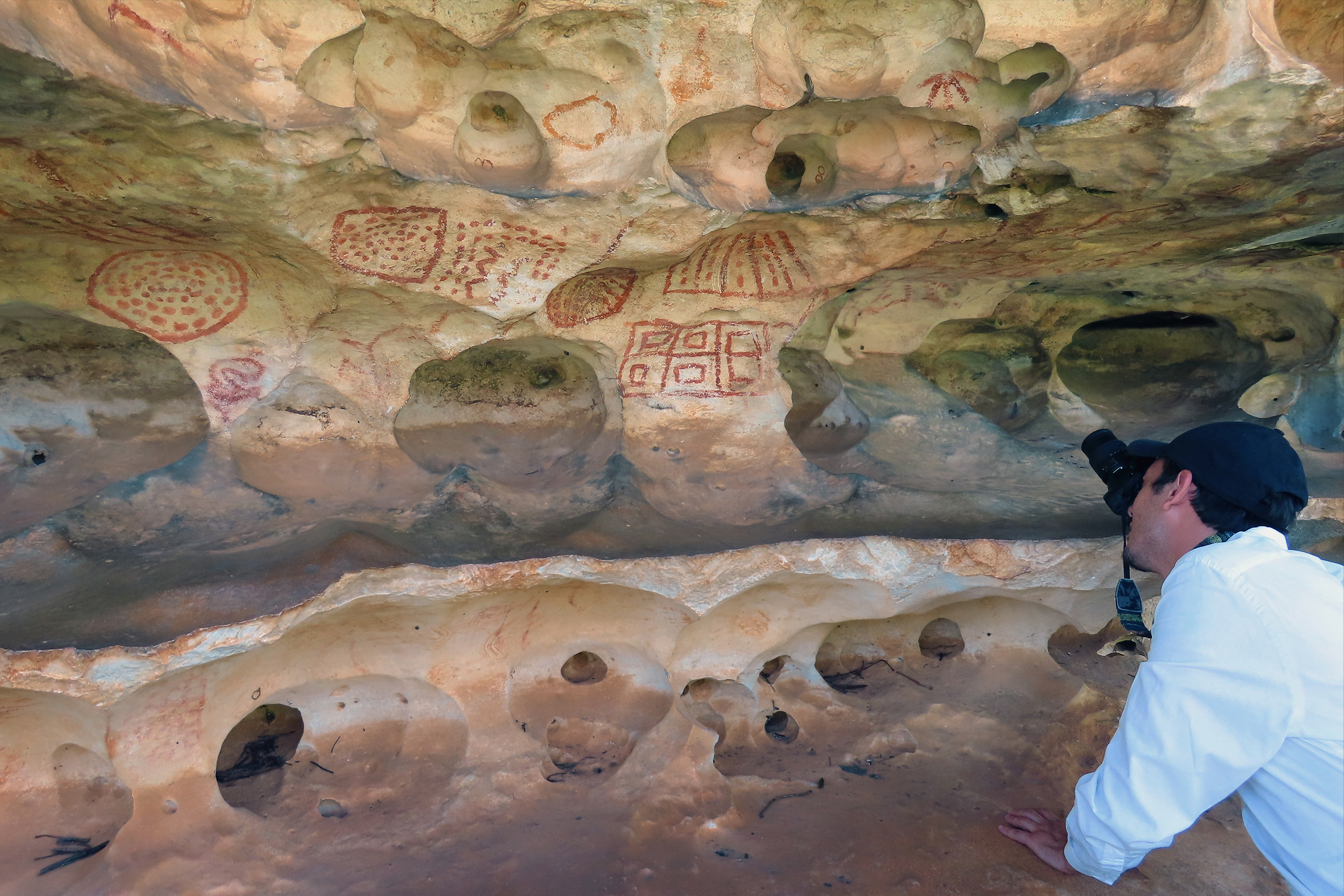
Peruaçu National Park Rock Art of Brazil Bradshaw Foundation Archaeology
Peruaçu National Park
Leonardo P. Troiano
 
Poty River Canyon Rock Art of Brazil Bradshaw Foundation Archaeology
Poty River Canyon
Leonardo P. Troiano
 
Inga Rock Rock Art of Brazil Bradshaw Foundation Archaeology
Inga Rock
Leonardo P. Troiano

Prehistoric Contacts in Santa Catarina

Keler Lucas

Prehistoric Contacts in Santa Catarina Brazil
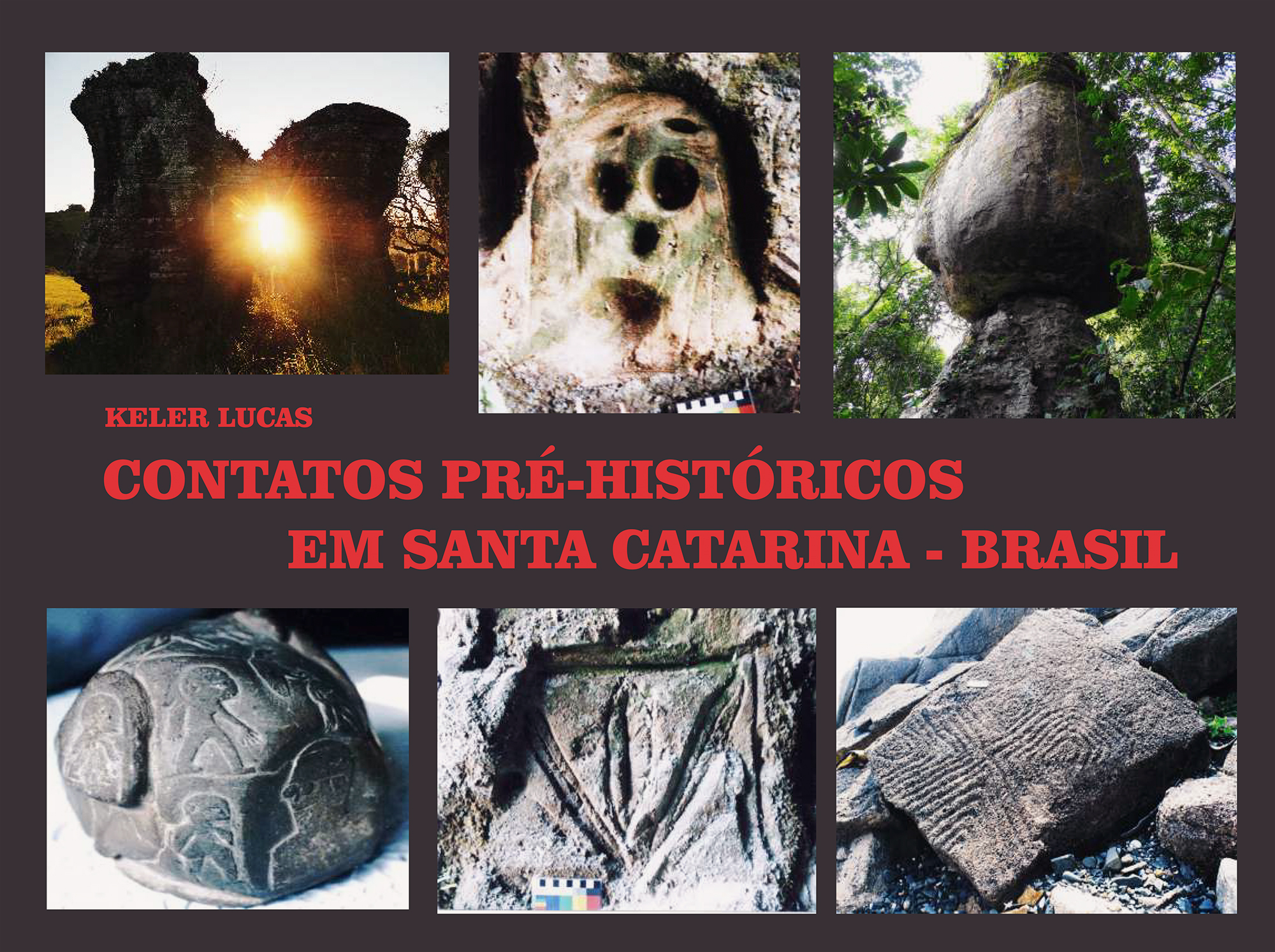
CONTATOS PRÉ-HISTÓRICOS EM SANTA CATARINA
PREHISTORIC CONTACTS IN SANTA CATARINA
Keler Lucas
In my more than 30 years of researching rock art, always identifying and cataloging true cultural treasures in the form of engravings, I am appalled by the complete lack of interest from the municipal, state, and federal executive powers in this important heritage of humanity. While in other countries rock art sites are used as tourist attractions, generating material and intellectual prosperity, here they are abandoned, wasting all their potential.

One example is Campeche Island, which, to be declared a World Heritage Site, needed to be listed as a protected area and have a project for the administration of the future park, with reception, protection and care for the engravings, sustainability, structures such as decks and staircases to access the sites, informative signs, etc. We managed to have the island listed because of its quantity of rock engravings, with 14 sites and 118 markings, 58 of which have multiple engravings. In 2001, it was declared a National Historical and Ecological Heritage site, and on that same occasion, we delivered to the managers the Project for the Administration and Protection of the Rock Art Sites of the Future Archaeological Park and Open-Air Museum of Campeche Island, which was simply shelved. After 16 years of its listing, the responsible technicians did nothing important for the original project to give the island one of the long-awaited titles of world heritage. We lost the opportunity to petition UNESCO, the UN agency responsible for granting such a coveted title, due to the inertia of the experts, who did nothing and did not let others do anything. Nor did they take care of the factors that are affecting and causing the engravings to disappear, such as fungi and lichens, water runoff, cracks on the surface of the supporting rocks, etc.
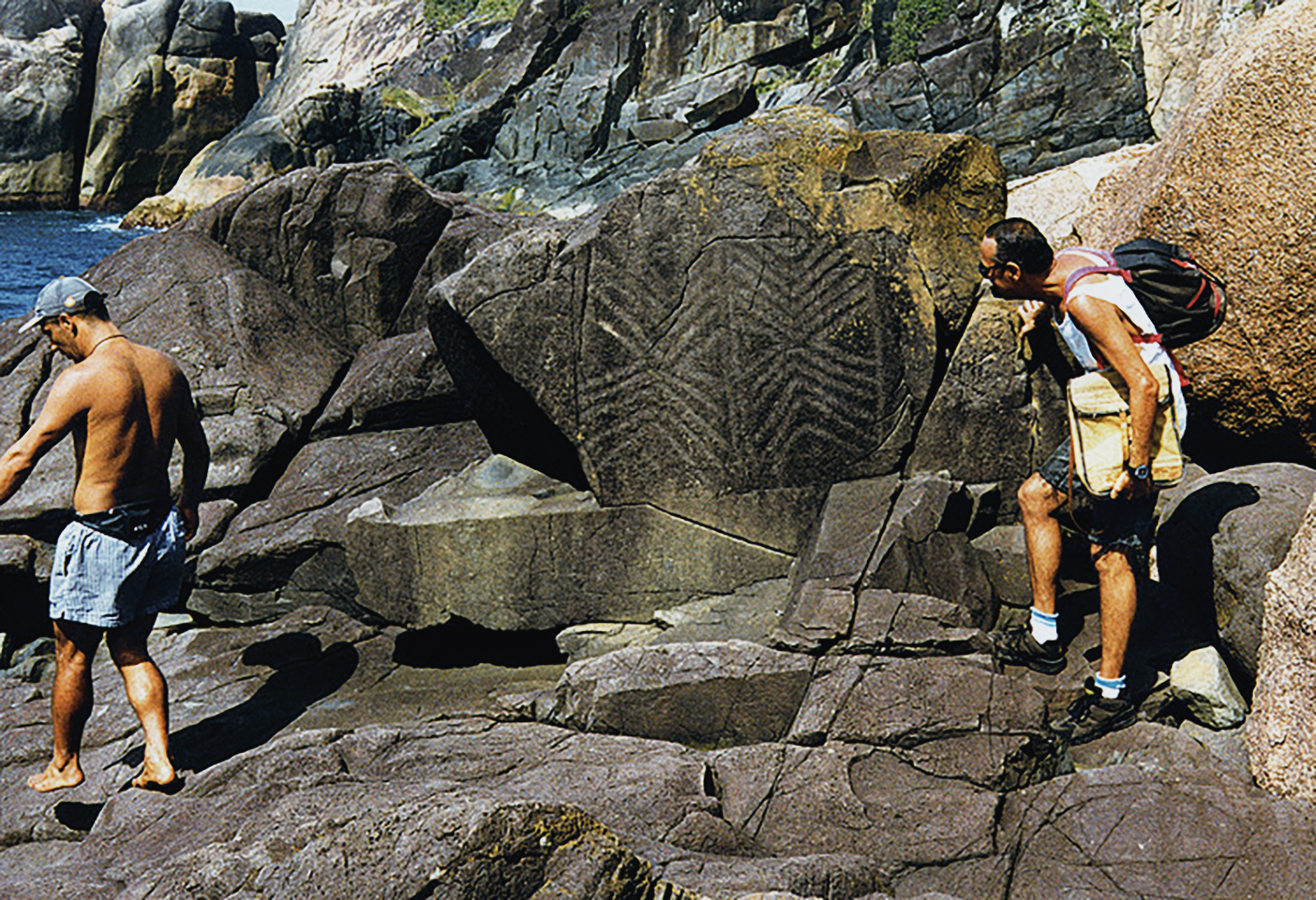
Brazilian research archaeologist Keler Lucas examines rock art masks from Campeche Island Santa Catarina Brazil Archaeology
Bradshaw Foundation
Most rock art sites, with only two exceptions, which are distributed along the coast and inland of the state, are unprotected, threatened by human action and natural causes.

Ilha do Arvoredo, Florianópolis, now located within a federal reserve, is under the protection of the Brazilian Navy and the care of a federal agency that administers it.

One of the technical managers of the park administration, when questioned about the protection of the rock art panel on the island, replied that the panel is now preserved, that no one needed to worry, because people can only go to the island with permission. Apparently, the person never saw the panel, as it is disappearing due to natural causes, covered with fungi, moss and lichens, with water runoff, cracks and other factors. This unfortunately applies to all rock art panels in the state.

The two exceptions are a few protected engravings on Santinho Beach, Florianópolis, where they created an open-air museum, and on João Cunha Island, Porto Belo, which receives many tourists in the high season. They are protected from men but not from the natural causes described above. At least, they are places where they realized the potential of rock art as a tourist attraction and deduced its importance because they are messengers of an ancient culture.

The famous
The famous "Inscription," as the rock art panel on Coral Island, Palhoça, is known. Solar and telluric radiations, emanating from the center of the earth, meet in this location, as indicated by the sacred symbols of the religion/science recorded in the stone.
BKeler Lucas
Thinking about the factors of neglect towards rock art, I saw that perhaps it was because they did not understand its meaning, being considered abstract, as the official books teach, something unimportant, outside the general context. I also saw that its definition, as being paintings or engravings made on stones by hunters and gatherers of antiquity, is very simplistic, contributing to the disinterest of society. Official archaeology only makes measurements and counts, such as the number of triangles, rectangles, circles, etc., avoiding any kind of interpretation. It doesn't talk about sacred places, it doesn't accept the existence of rock monuments, something common to all ancient peoples. With this way of acting, based on ancient doctrines, the neglect will continue for a long time.

'Prehistoric Contacts in Santa Catarina - Brazil' demonstrates a rich cultural heritage with more than 100 photographs, where the author attempts to explain the sacred symbols, cave monuments, astronomical observatories, and solstitial and equinoctial alignments also common in other cultures. The rock art was created by a people who inhabited this region for almost 9,000 years.

Keler Lucas is a member of the Bradshaw Foundation Advisory Board and of the Bolivian Rock Art Research Society (SIARB). He is the author of 'Rock Art on the Island of Campeche'.

→  Subscribe free to the Bradshaw Foundation YouTube Channel

→ Brazil Rock Art Archive
→ The Lajedo de Soledade
→ The Rock Art of Pedra Grande
→ the Rock Art of Serrote do Letreiro
→ The Ingá Rock
→ The Peruaçu National Park
→ The Poty River Canyon Petroglyphs
→ Rock Art of Serra da Capivara
→ Rock Art of Pedra Furada
→ The Rock Art of Santa Catarina
→ South America Rock Art Archive

→ Bradshaw Foundation
→ Rock Art Network
Follow the Bradshaw Foundation on social media for news & updates
Follow the Bradshaw Foundation
on social media for news & updates
Follow the Bradshaw Foundation on social media for news & updates
Follow the Bradshaw Foundation
on social media for news & updates

THE BRADSHAW FOUNDATION is a charity registered in England and Wales (1209897). Registered address 5 Albany Courtyard, London, W1J 0HF.

© Bradshaw Foundation
 
 
Bradshaw Foundation Donate Friends
Support our work & become a
Friend of the Foundation


Bradshaw Foundation YouTube
Bradshaw Foundation Rock Art Network Getty Conservation Institute
Bradshaw Foundation iShop Shop Store