

Asir Province, officially the Aseer Province, is located in southwestern Saudi Arabia, is a highland region renowned for its cool climate, verdant mountains, and unique "gingerbread" architecture. Its capital, Abha, sits at 2,270 metres above sea level.
The origins of the name "Asir" is a subject of debate among historians. One theory, in the work The Meadows of Gold by Al-Masudi, proposes that the region was originally known as the Land of Azd. Other theories propose that the name "Asir" derives from the Arabic term 'Usrah' (in Arabic 'Hardship'). This hypothesis derives from the challenging and rugged terrain of the Asir Province. Another theory for the etymology is proposed in the book "Fi bilad ʿAseer" by Fuad Hamza. The title translates to "In the land of Asir," in the book he links the name to the historical prominence of Banu Asir. As the tribe gained power and influence, its name came to encompass the surrounding territories and tribes. This association was reinforced by the close ties between the Asir tribe and many of the ruling emirs in the region, including those from the Al Yazid, Al Muthami, and Al A'ad families.
In December 2019 Project Manager Dustin Kirk, of Simcoe Geoscience & TMC Geopysics Ltd. of Canada, carried out a Geophysics Survey in the 'Asir Province of Saudi Arabia for the mining company Ma’aden.
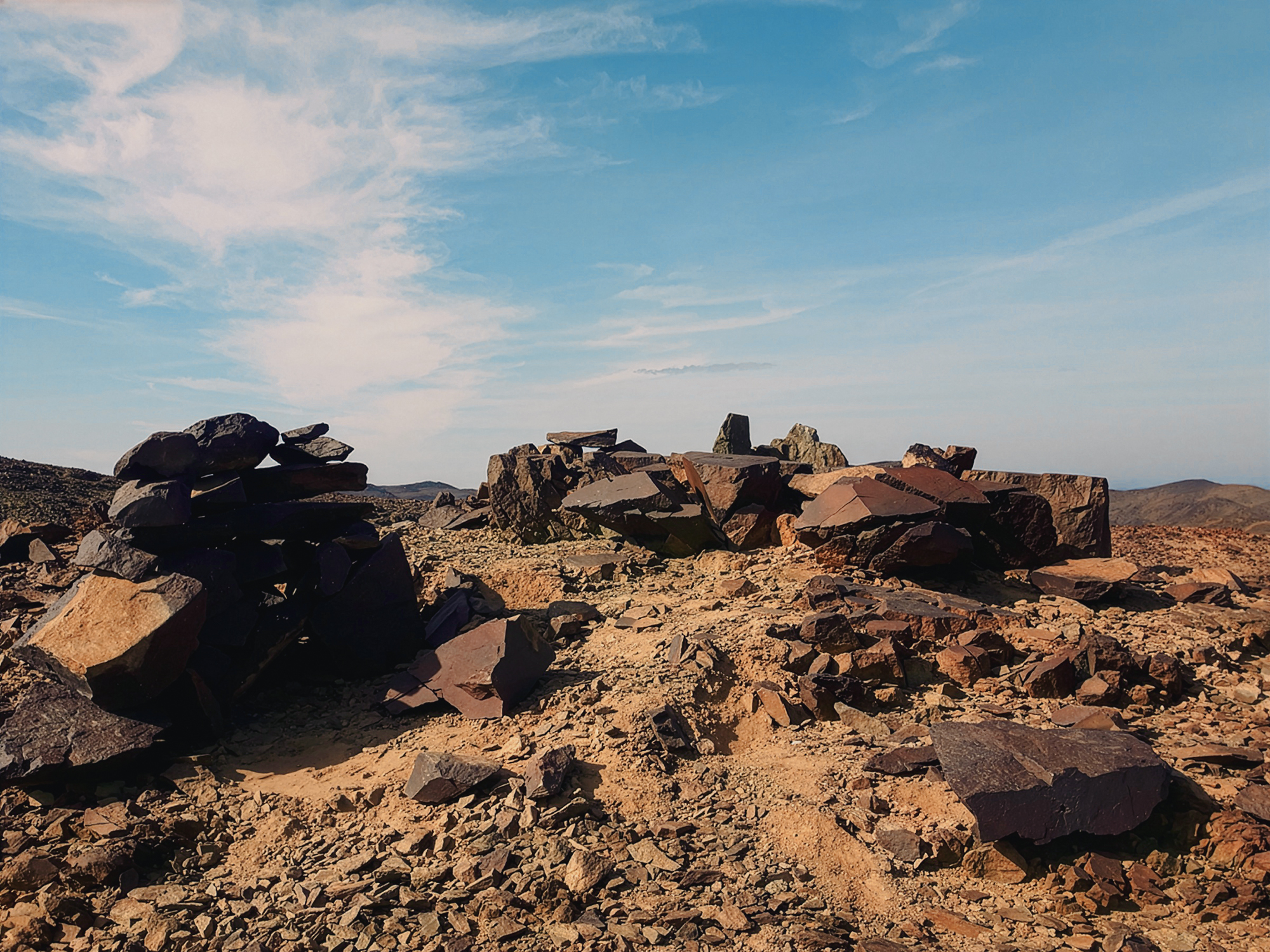
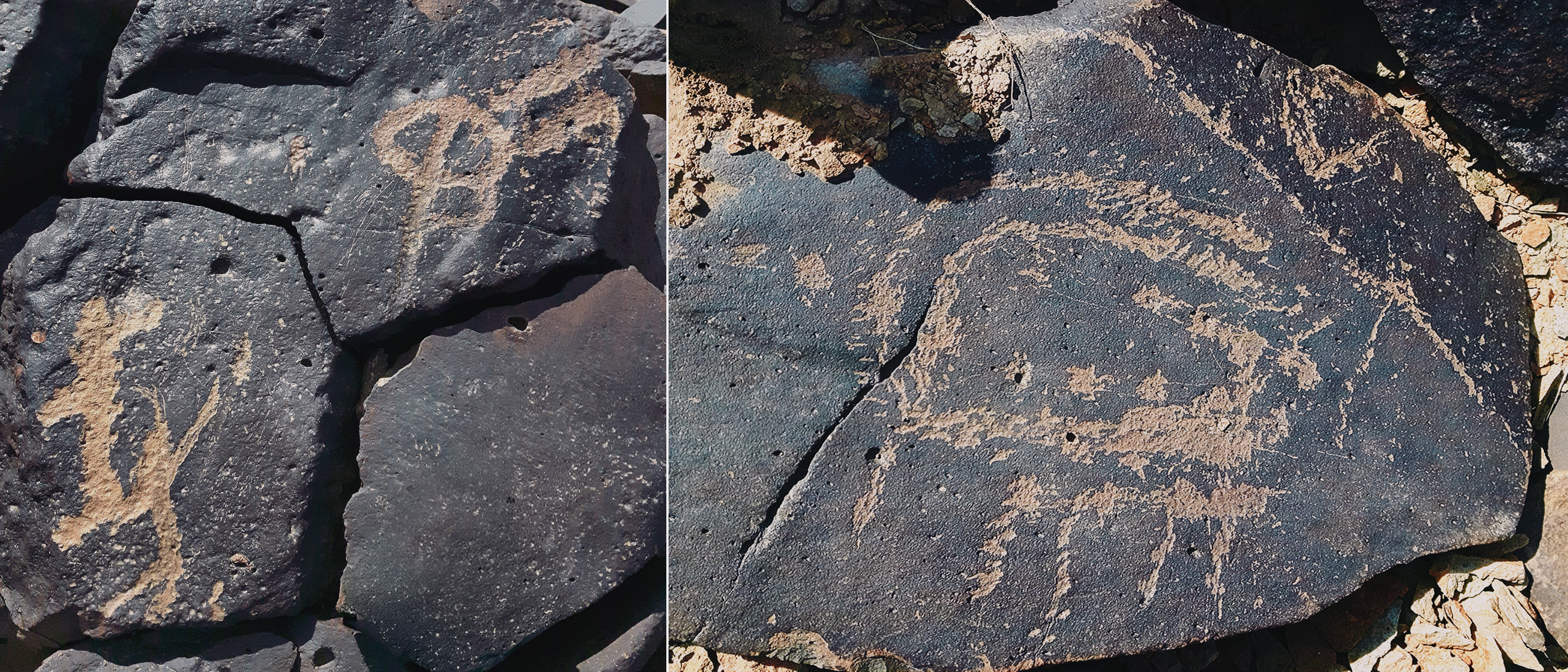
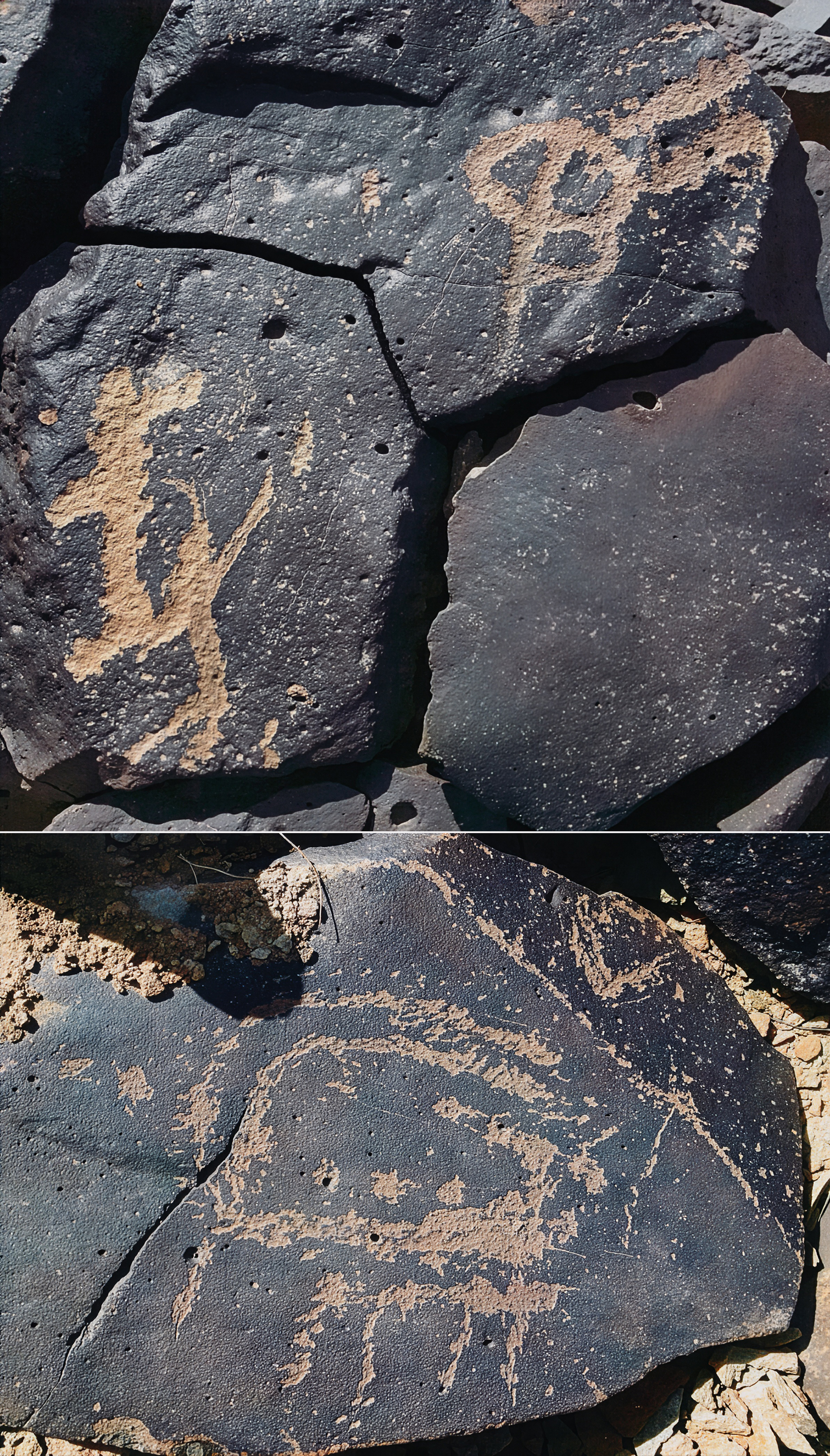
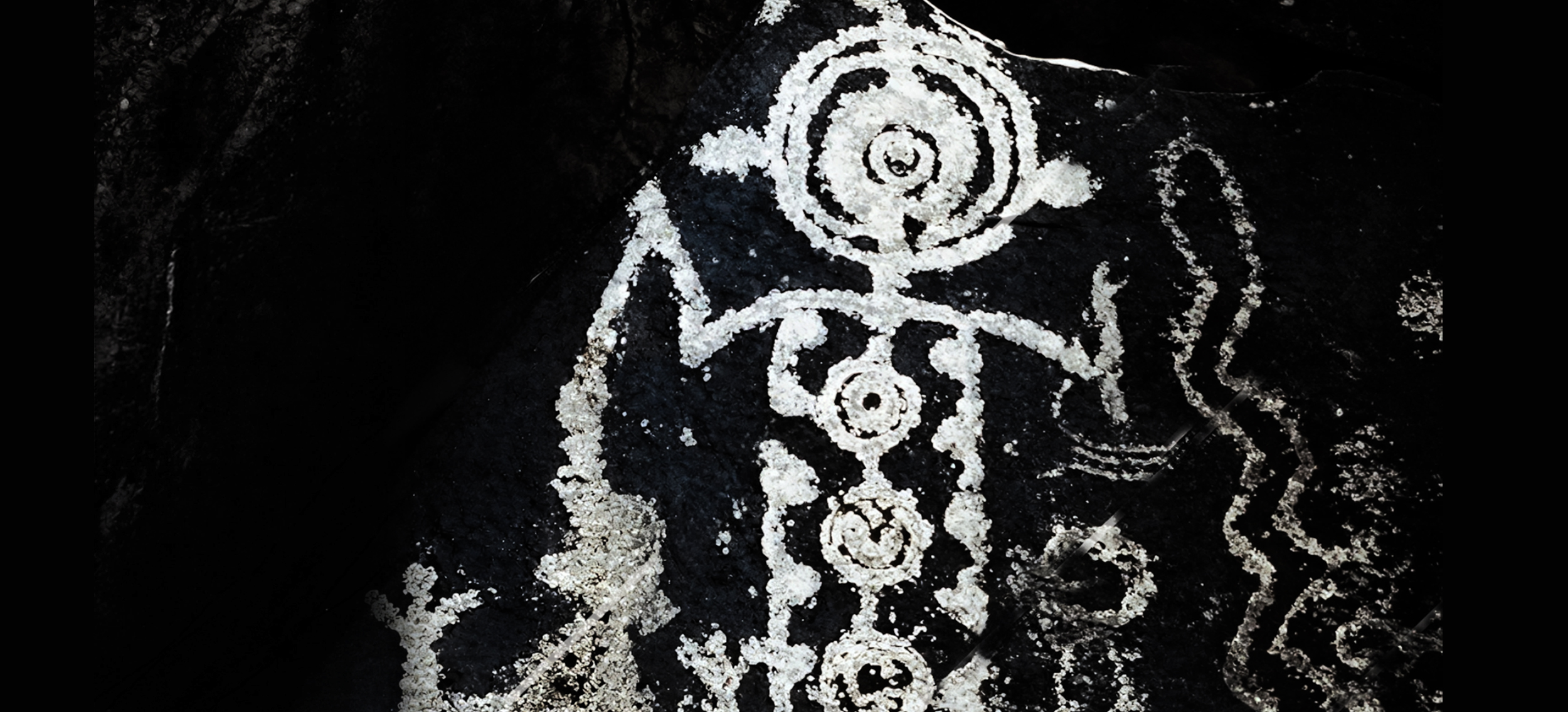
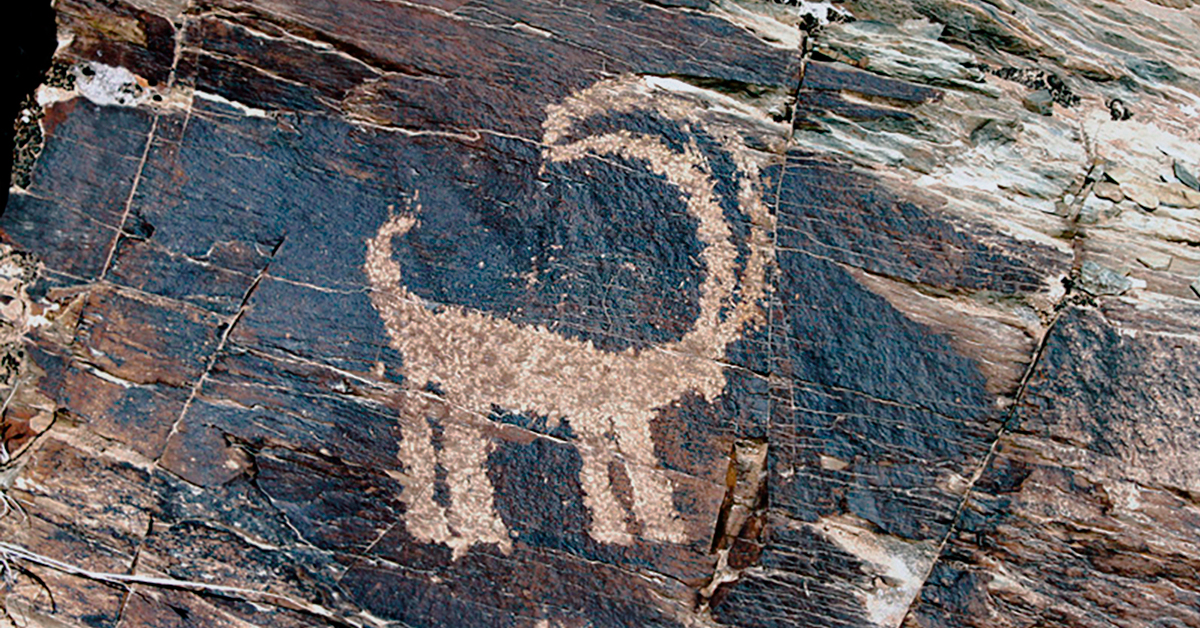
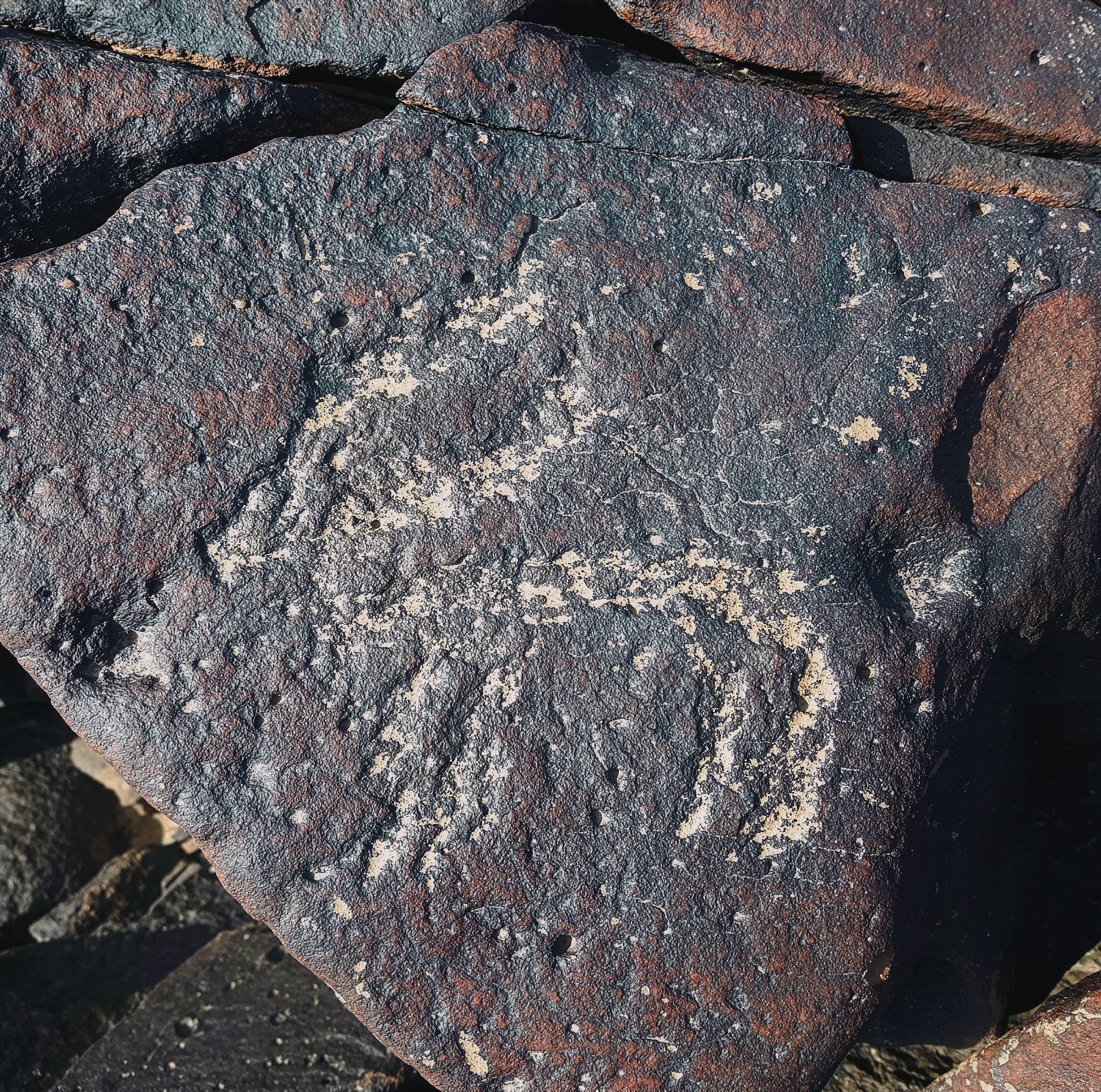
During the survey he came across numerous petroglyphs of various sizes and of considerable age based on the natural varnish on the carvings themselves. Kirk's team did not have a guide whilst working in the area around Gaabah therefore was no information about the provenance of the petroglyphs or interpretation of the motifs, but the images reveal human and animal figures as well as symbols.
To the south lies the Najran Province where the Bir Hima (or Ḥimā Cultural Area) is located. Here research has been carried out, and the carvings have been attributed to the Palaeolithic and Neolithic, dating from 7000 to 1000 BC. Bir Hima is a UNESCO World Heritage site featuring thousands of petroglyphs and inscriptions. Located on an ancient caravan route, it contains diverse rock art depicting animals, hunting, and battles, along with ancient wells, reflecting a greener ancient climate.
Bir Hima is one of the world's largest rock art complexes and designattion as a UNESCO World Heritage site came in 2021, when it was added to the UNESCO World Heritage List. The site serves as a vital historical record of the cultural, environmental, and social evolution of the Arabian Peninsula.