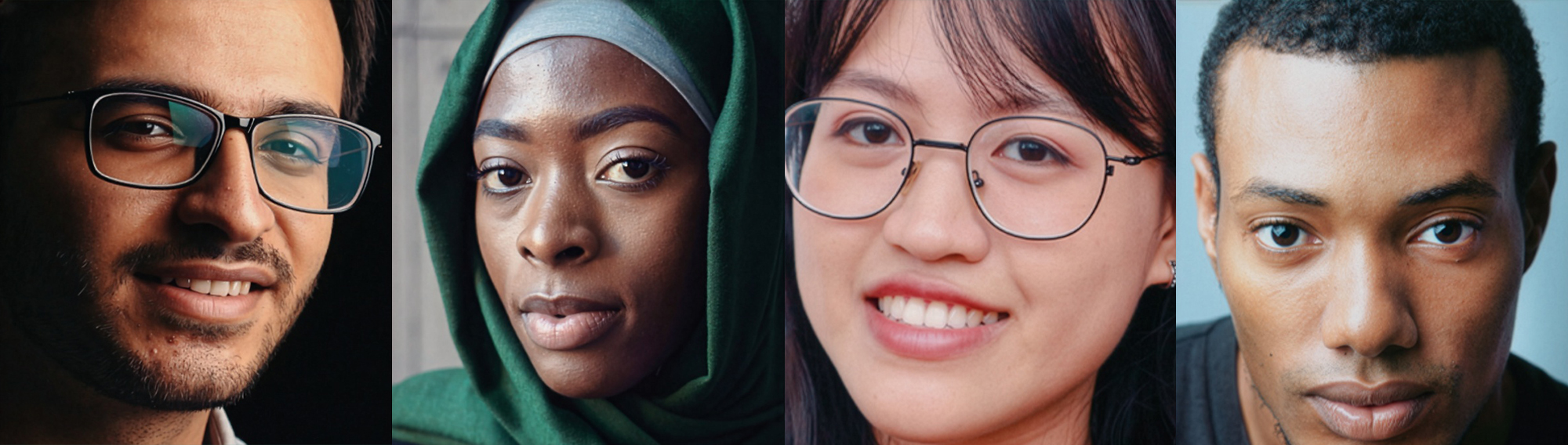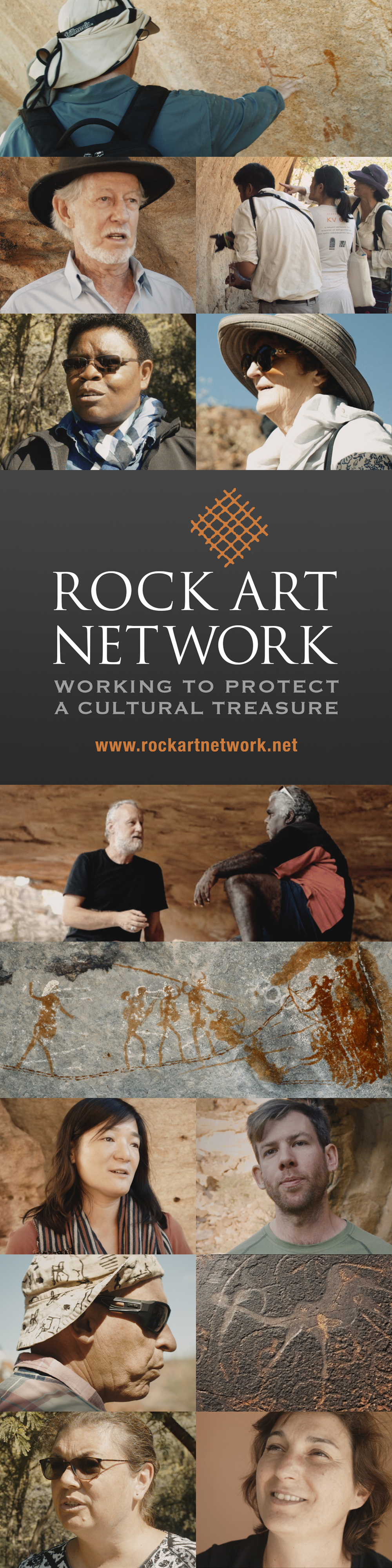
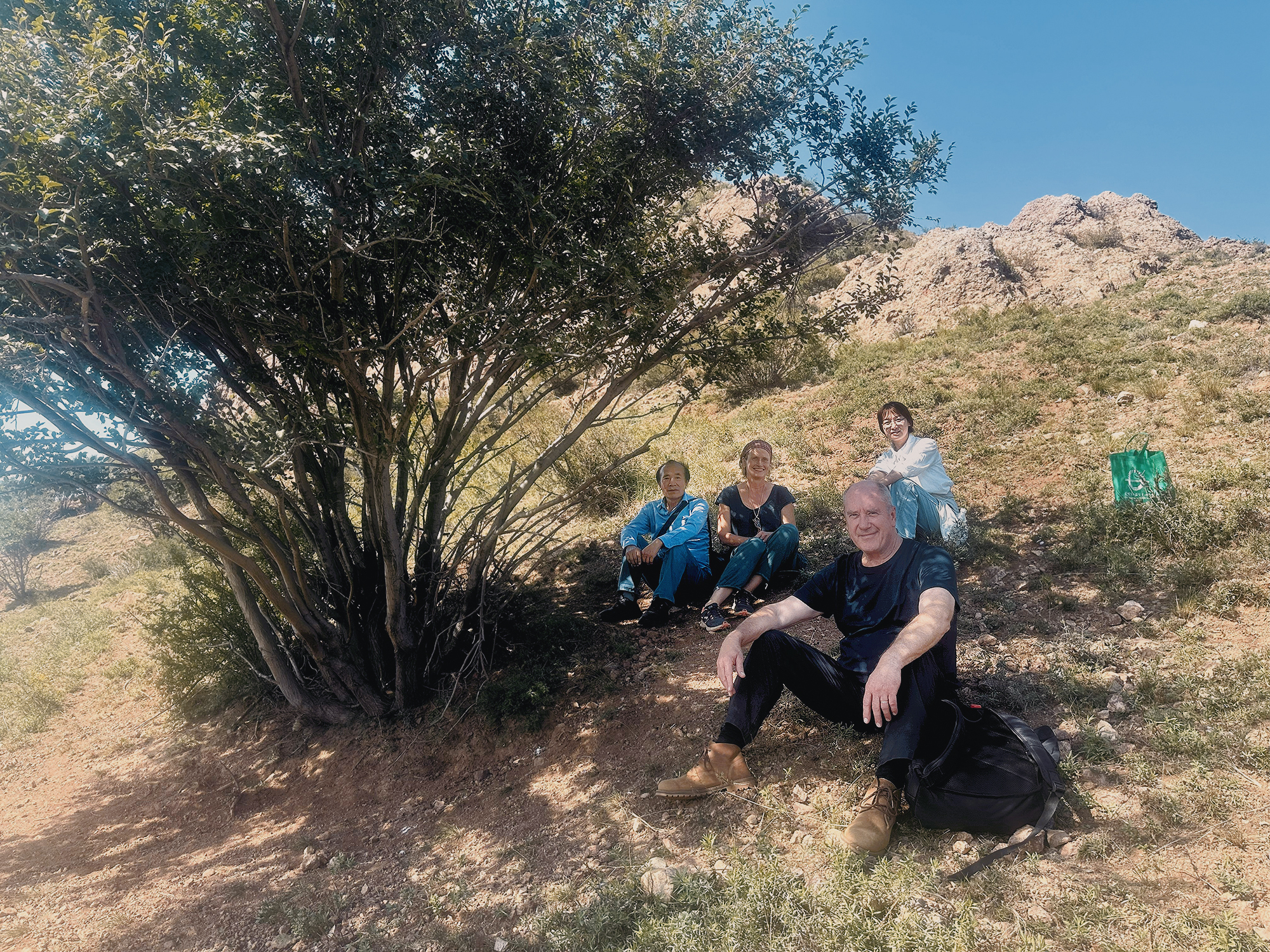
- Professor Wu Jiacai
- Dr Xing Xuanyu
- Li Feng
- Dao Rina
- Lucy Birkbeck
- Peter Robinson
- Tim Streck
- Deng Sen
Bradshaw Foundation Field Trip No. 170926
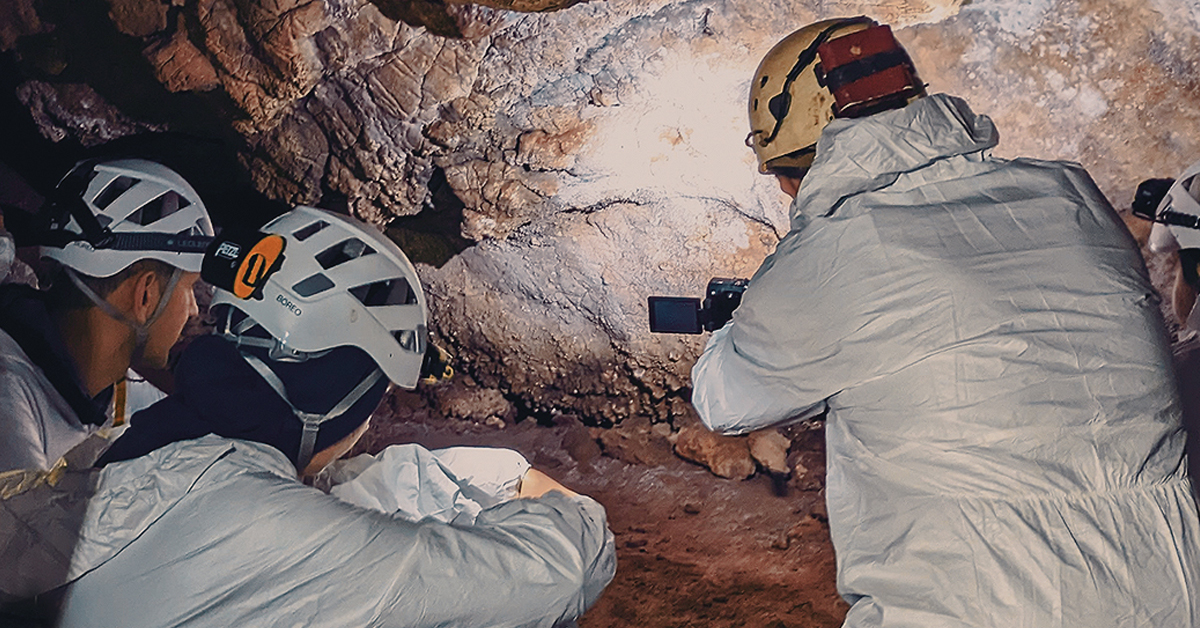
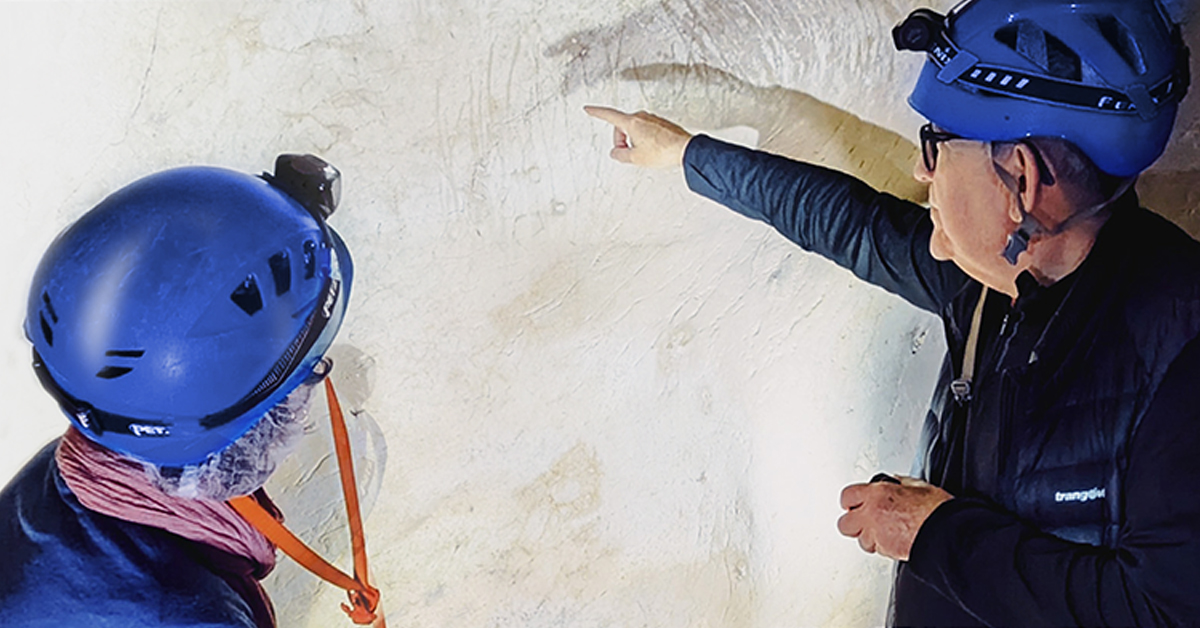
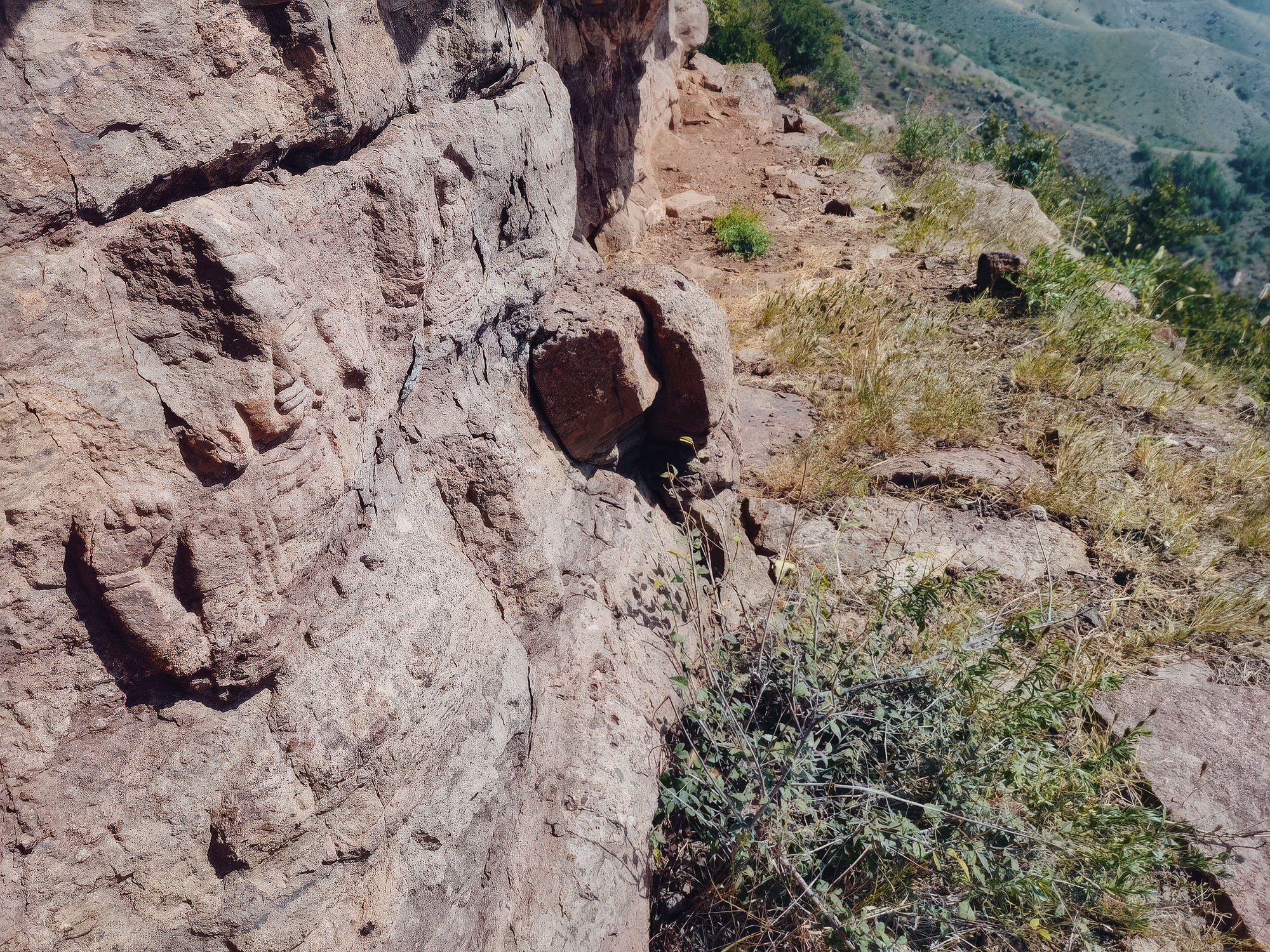
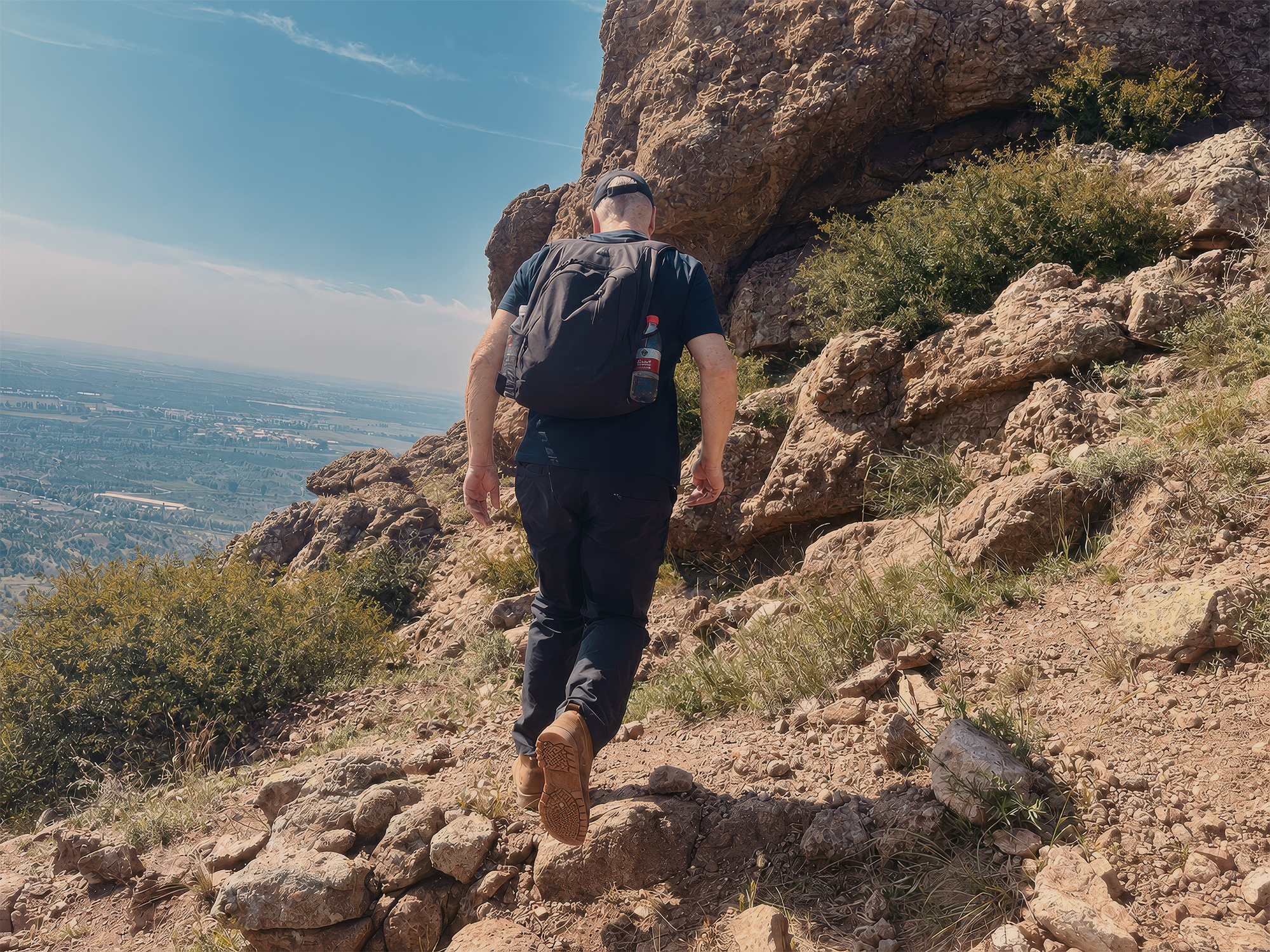
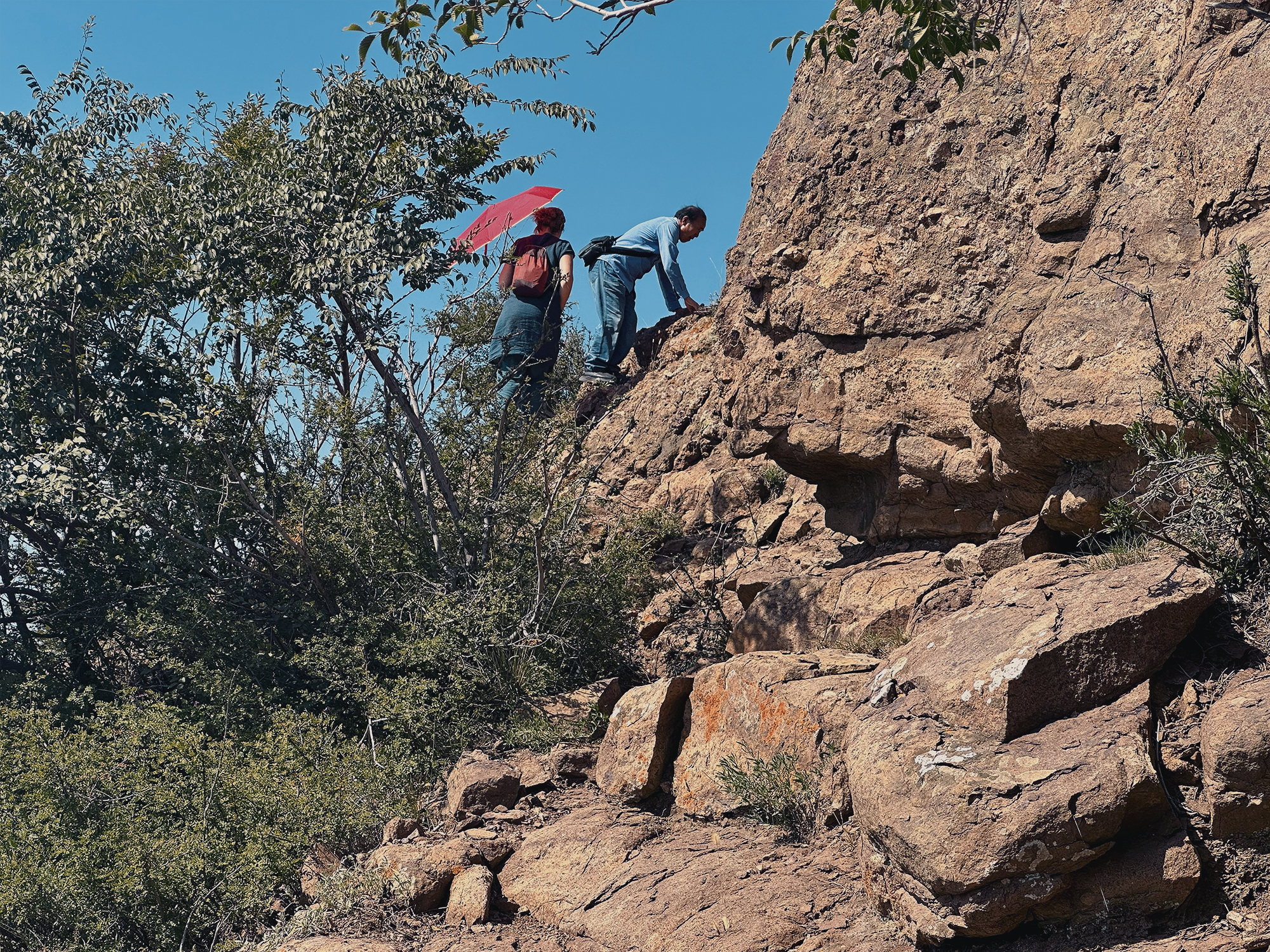
Field research, led by Professor Wu Jiacai of the Rock Art Research Institute, Inner Mongolia Honder College of Arts & Sciences Institute, conducted on 17th September 2026 at the Bingzhouhai Petroglyph Site on the Daqingshan Mountains, middle section of the Yinshan Range, Inner Mongolia, China.
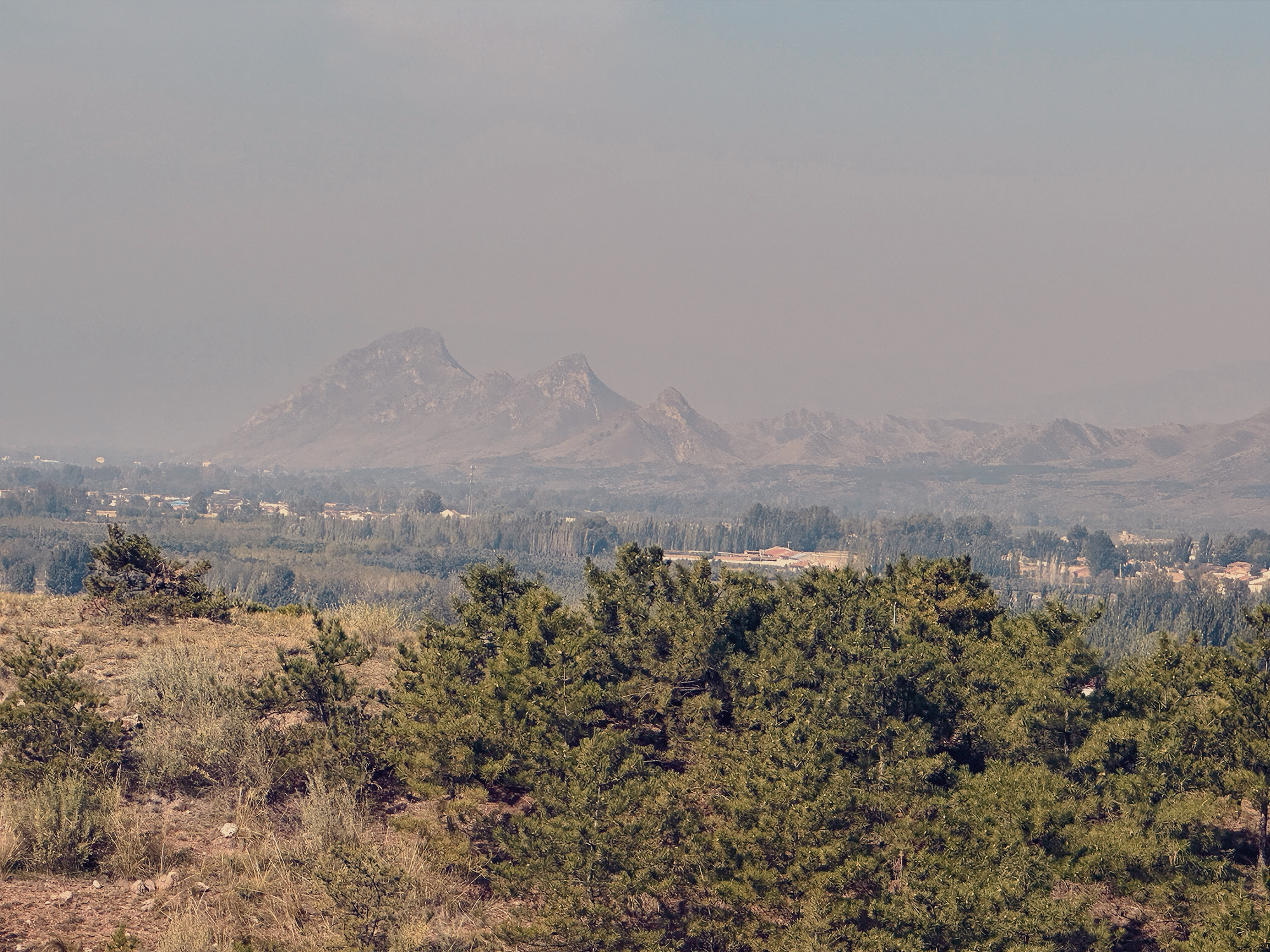
Bingzhouhai is one of the Yinshan petroglyph concentrations in the Daqingshan (Great Blue Mountains) zone — an area containing thousands of Bronze–Iron Age petroglyphs depicting chariots, warriors, deer‑stone style stags, pastoral life, hunting, and ritual symbols. The Daqingshan sector is one of the most important rock‑art regions in northern China, forming part of the 1000‑km Yinshan arch.
The Daqingshan Mountains form the central–eastern section of the Yinshan Range, north of Hohhot and Baotou. This region contains perhaps 20 rock art concentrations and over 1,500 documented petroglyphs on Permian granite and schist. The Yinshan system overall forms what is known as the 'thousand‑mile gallery' of rock art.
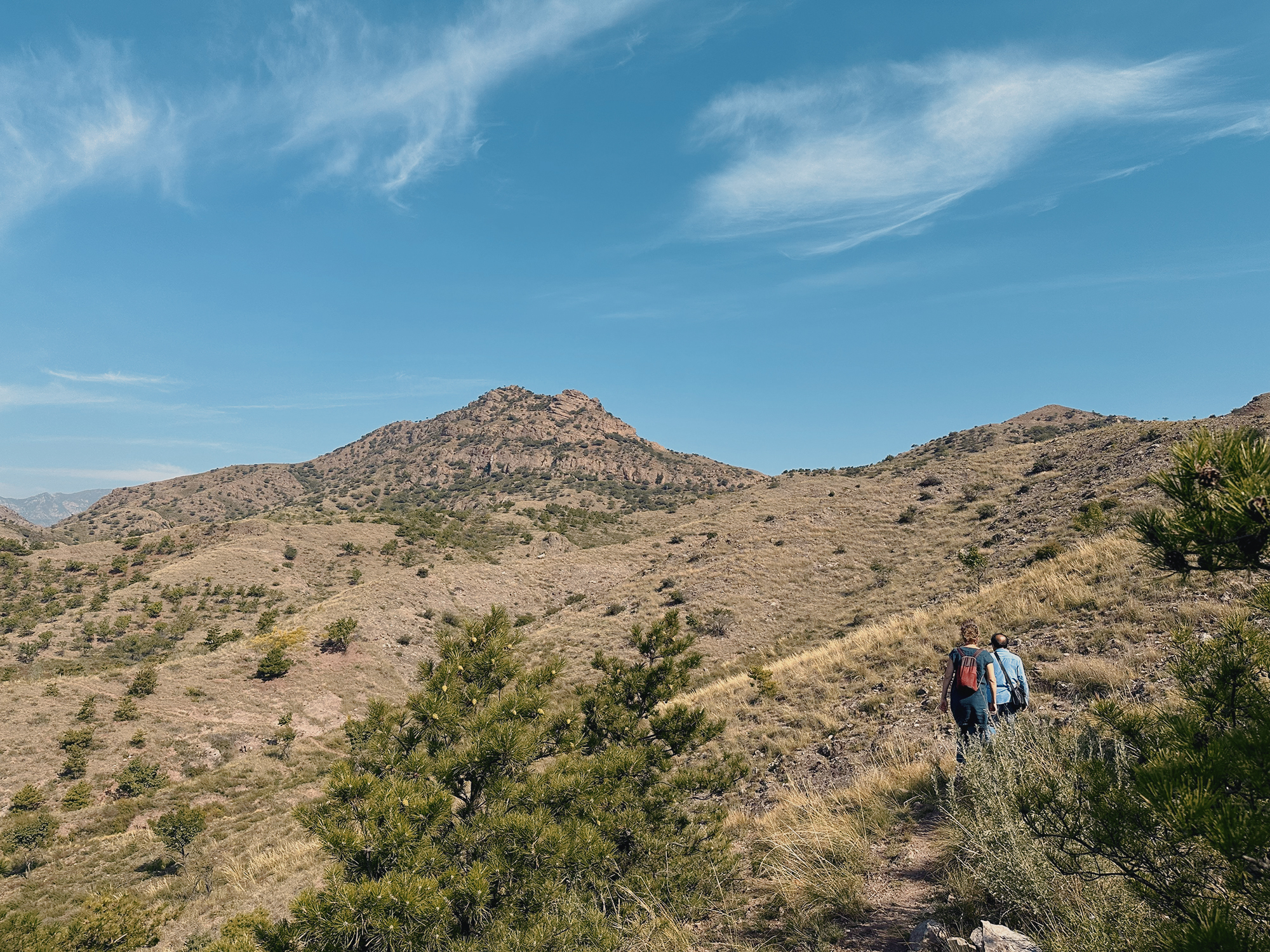
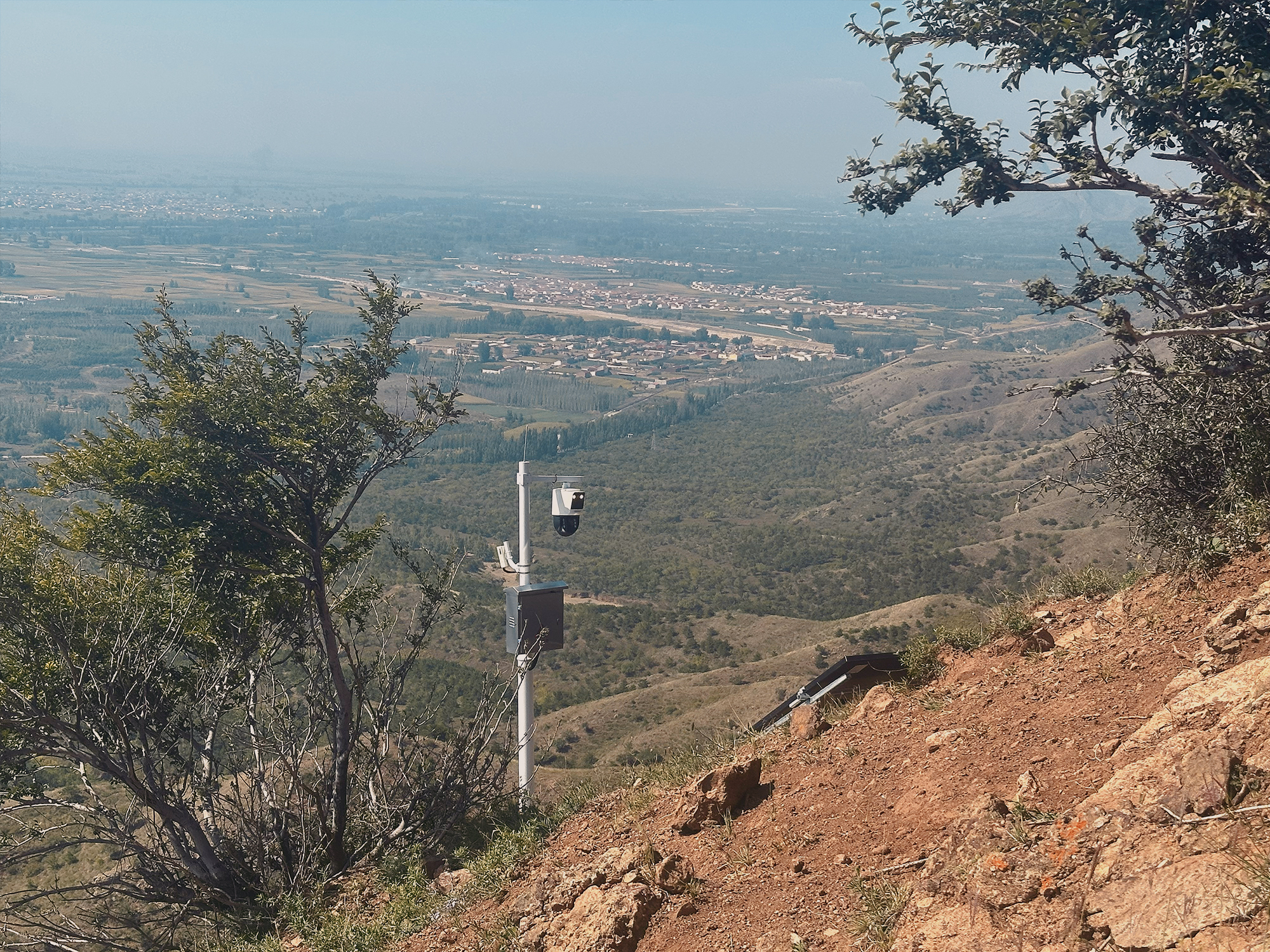
The Bingzhouhai Petroglyphs are located 5 kilometres northwest of Taoheqi Village, Bingzhouhai Township, Tumed Left Banner, Hohhot in Inner Mongolia. The mountain stretches east to west, with an altitude ranging from 1,281 metres to 1,321 metres. Two rivers flank the mountain; the Qianggai River to the west and the Wusutu River to the east. Rolling, overlapping mountains extend endlessly to the north, and Mount Jinluandian, standing 2,200 metres above sea level, lies to the northwest.
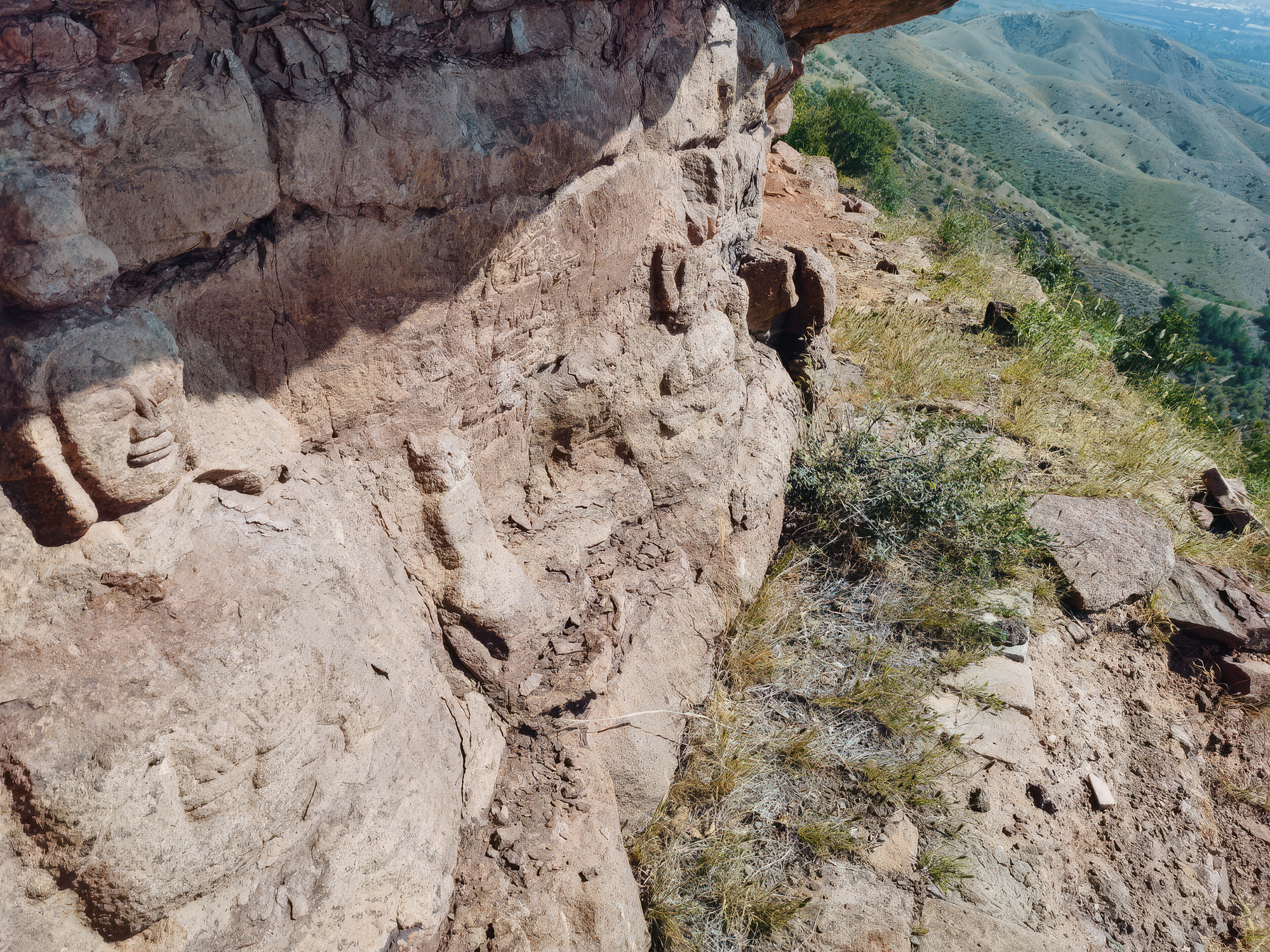
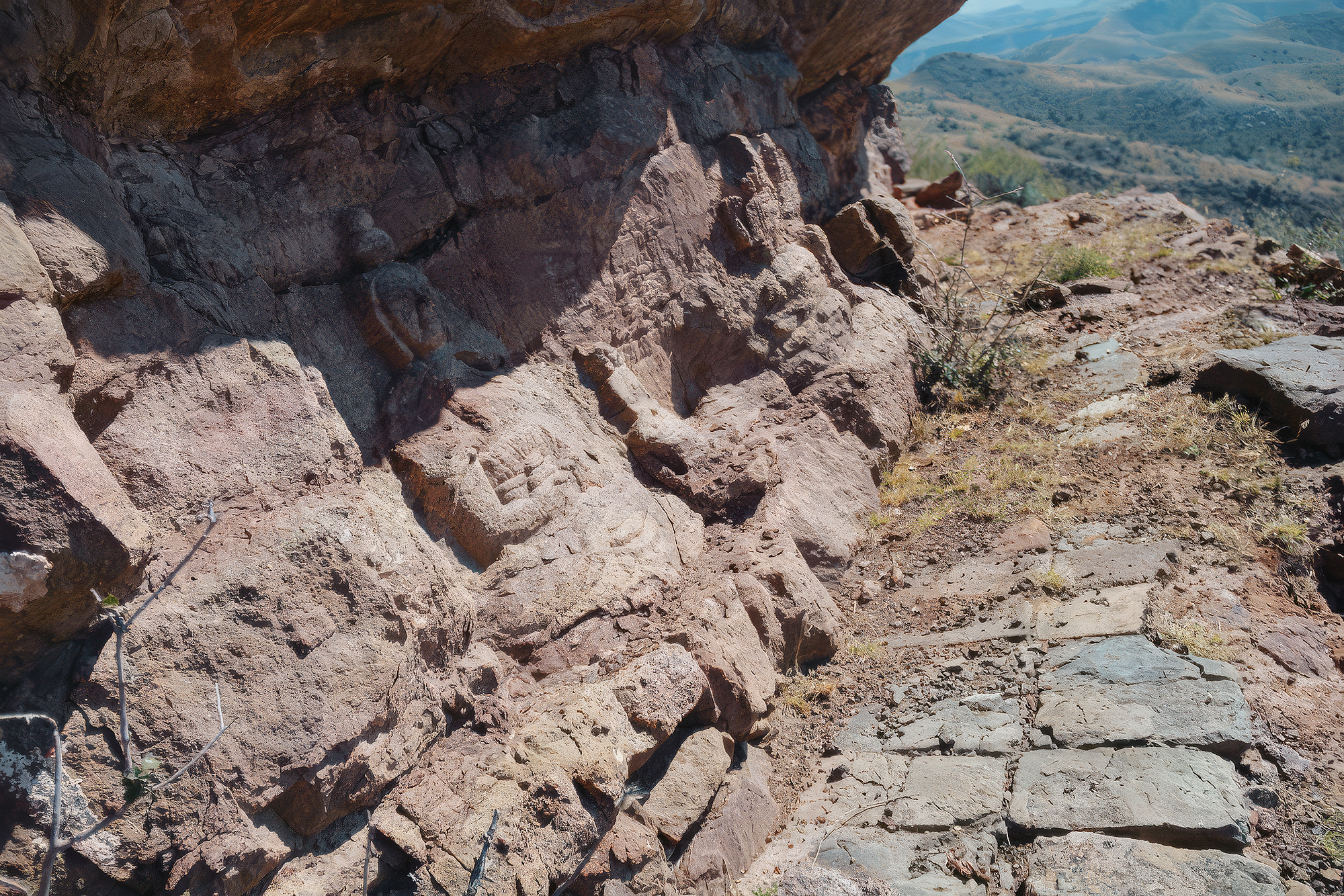
The Bingzhouhai Petroglyphs scatter across the stone surfaces and around rock caves on the southern slope of White Pagoda Mountain, stretching 1,000 metres from the pagoda foundation on the west to Cave No. 7. This ancient site centres on petroglyphs and integrates relic pagoda foundations, Buddhist statues, written symbols and residential grottoes as a whole.
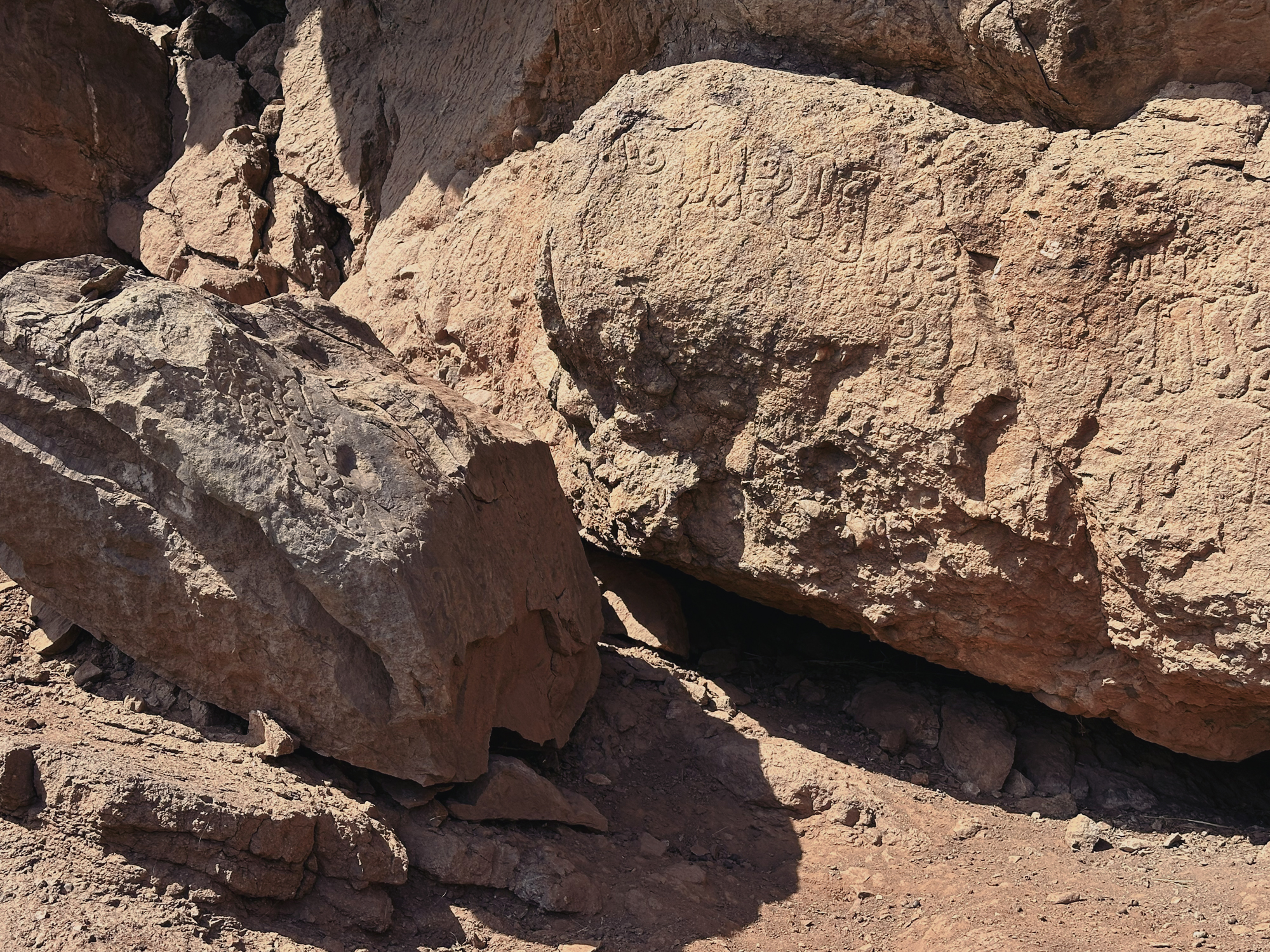
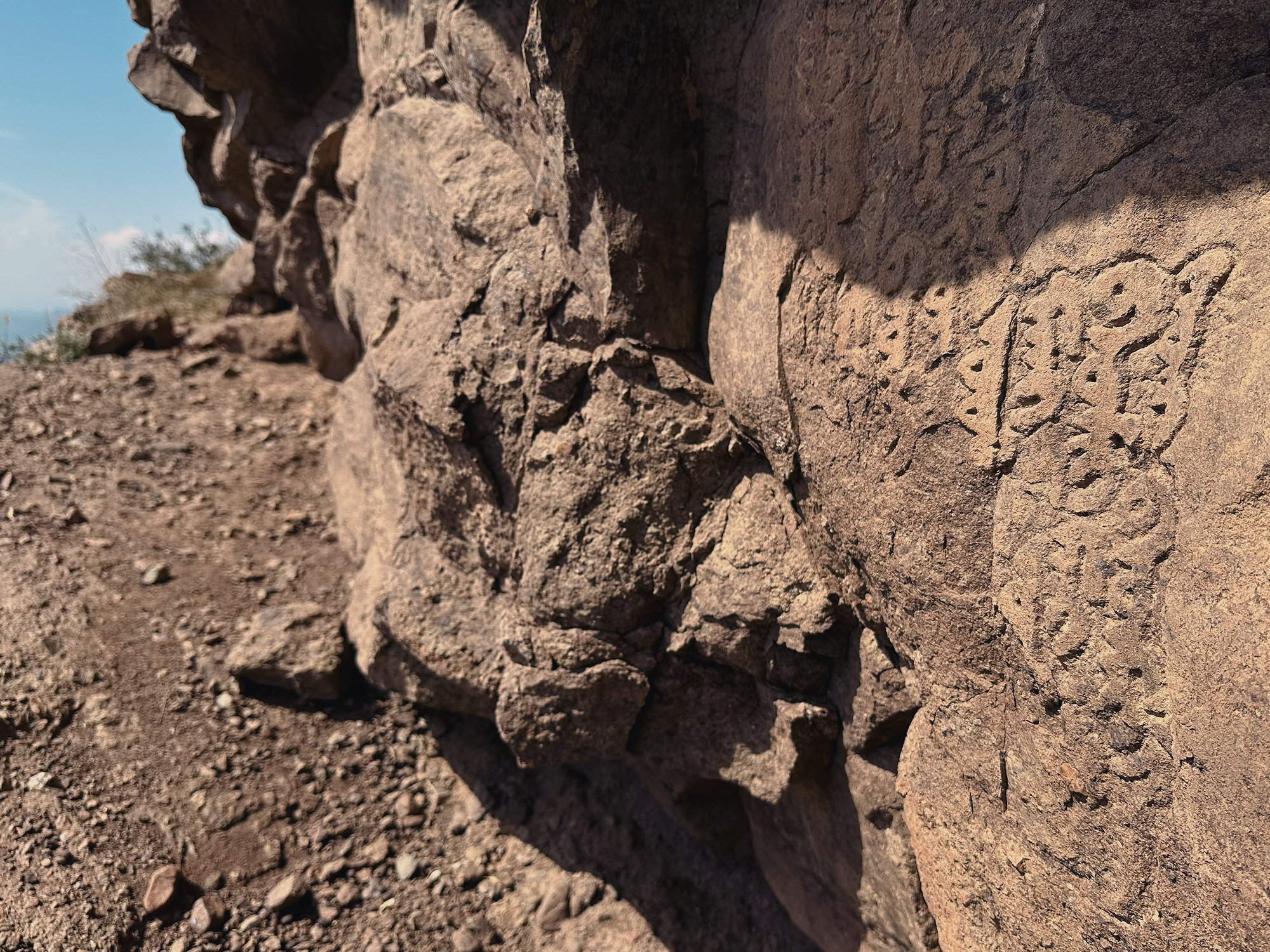
About 1,000 metres above the ground within the petroglyph complex lie two cliff caves carved with inscriptions. To the east stands a long corridor of cliff carvings designated No. 1, with another set of cliff inscriptions marked No. 2 above it. A total of 3,075 lines of carved texts cover the mountain face, including 7 lines of Phags-pa script [a Brahmic script based on Tibetan that was used for writing Mongolian, Chinese and other languages during the Mongolian Yuan dynasty 1271-1368], 7 lines of Sanskrit, 3,022 lines of Uyghur-Mongolian script and 33 lines of Tibetan script.
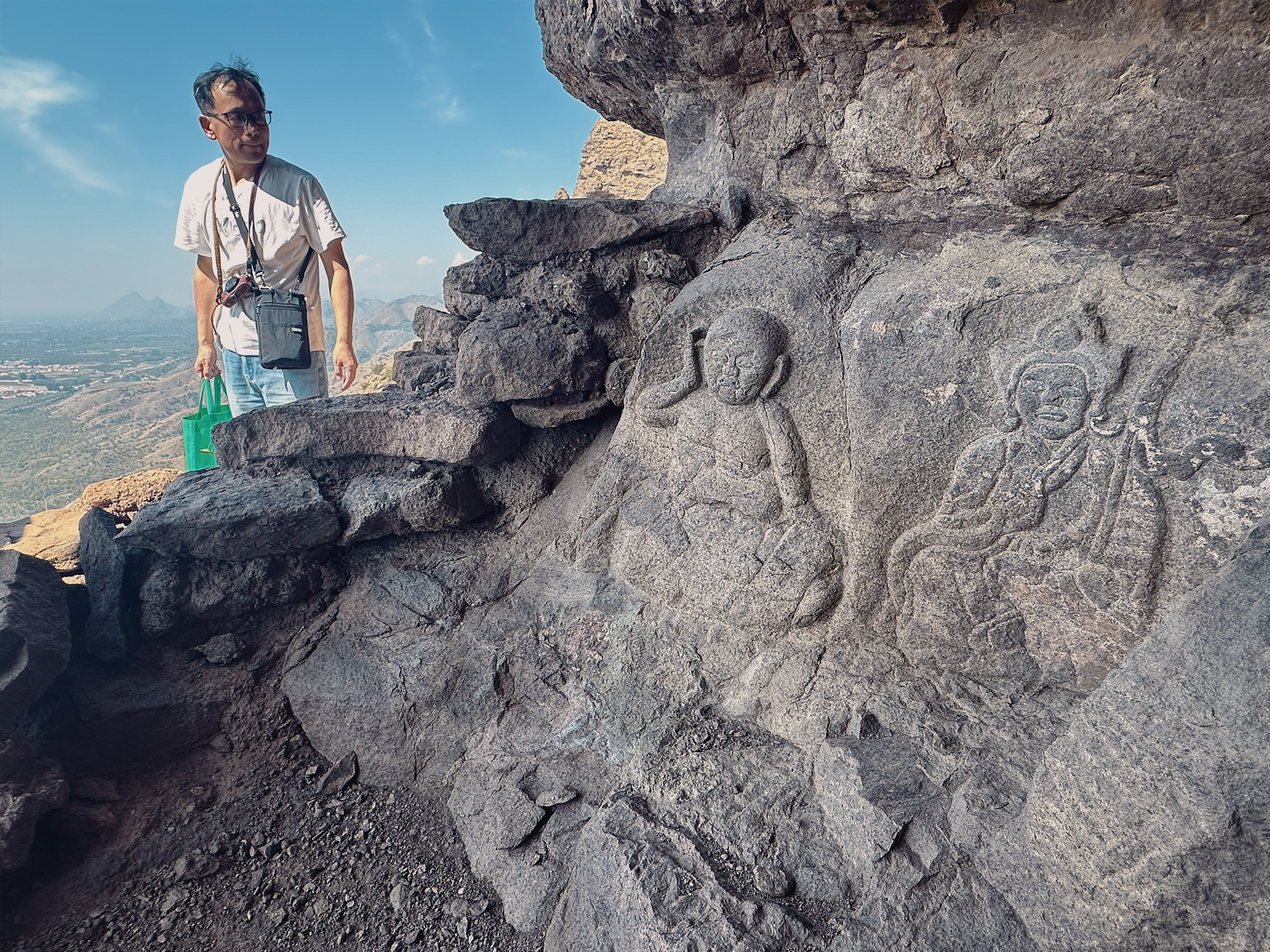
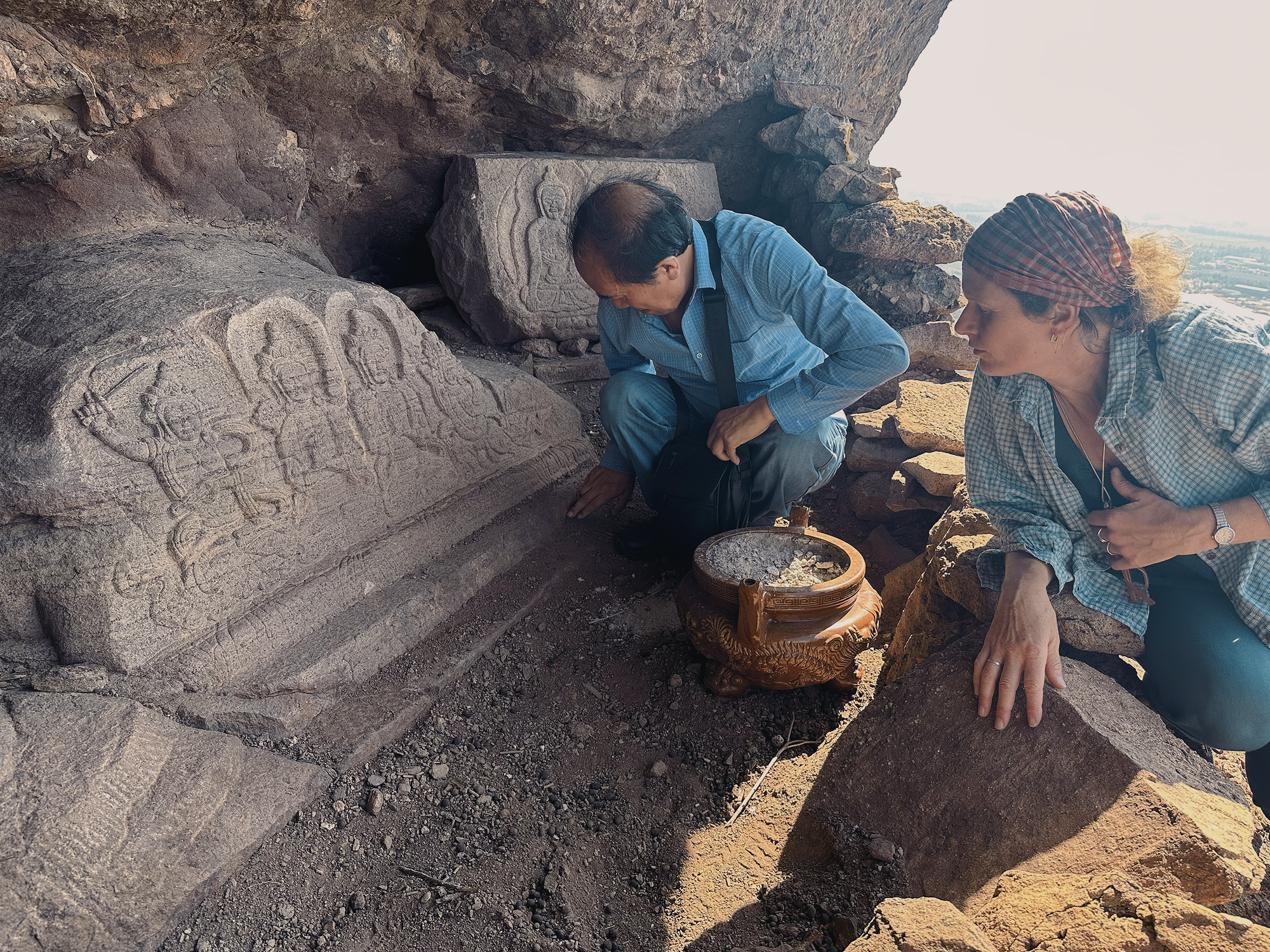
Twenty metres above the lower-tier rock caves sits the middle tier, featuring three sets of grottoes separated by 0.5-metre-wide rock partitions. Running east-west and interconnected, the three grottoes span over 10 metres in total length, stand 2 to 2.3 metres tall, and extend 1.5 to 2.5 metres deep. Cave No. 1 houses nine Buddhist statues, Cave No. 2 three statues, and Cave No. 3 twelve statues. Eaves extend over the grottoes, where beam holes and traces of white lime plaster coating remain clearly visible.
Five metres higher up is Cave No. 4, 1.5 metres tall and 1.5 metres deep, with a single Buddha statue carved into the central rock wall. Thirty to forty metres above the group of Buddha statues are three more grottoes numbered 5, 6 and 7, containing eleven Buddhist statues in total. The mountain holds thirty-six carved Buddha statues in all.
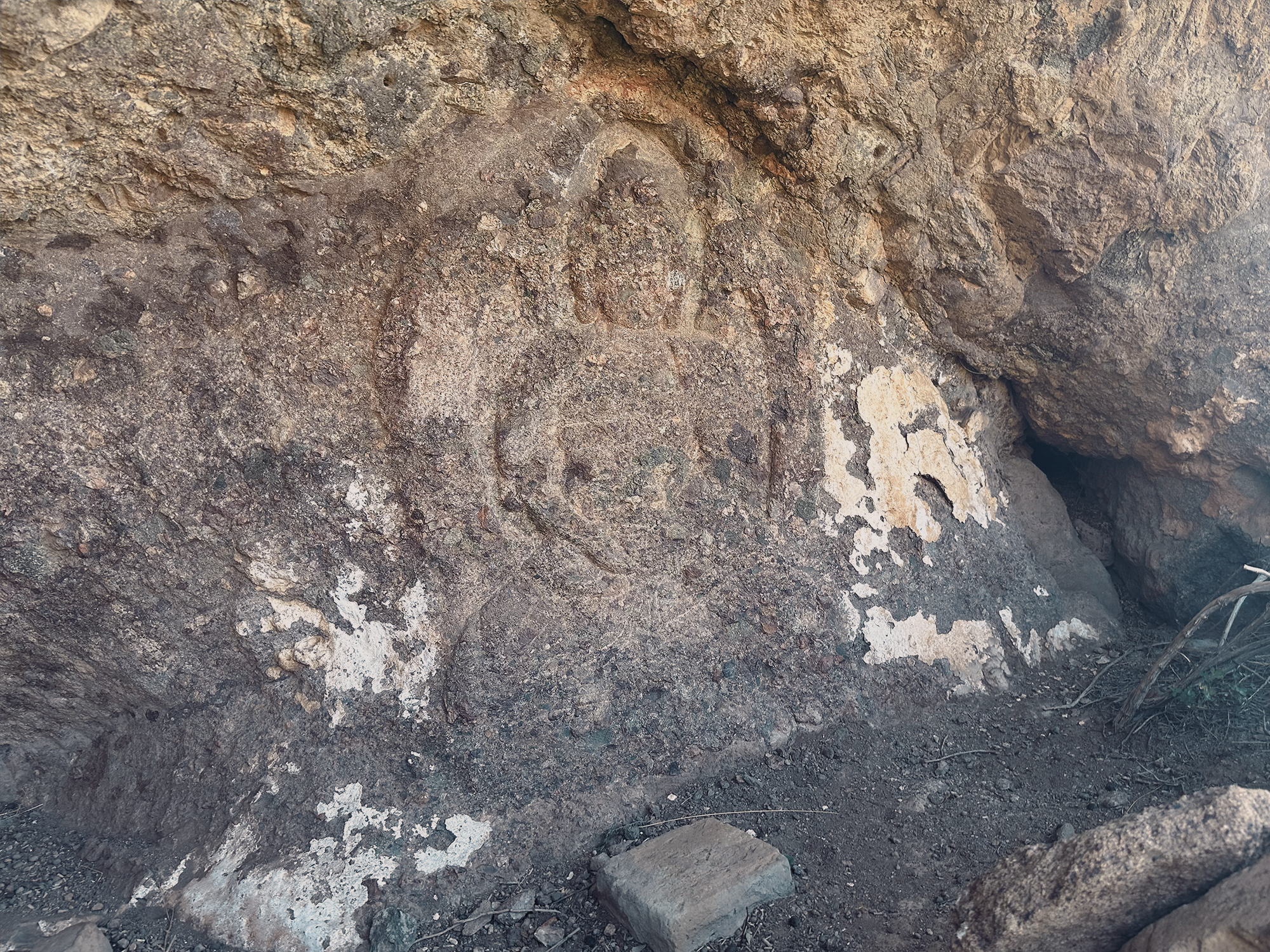
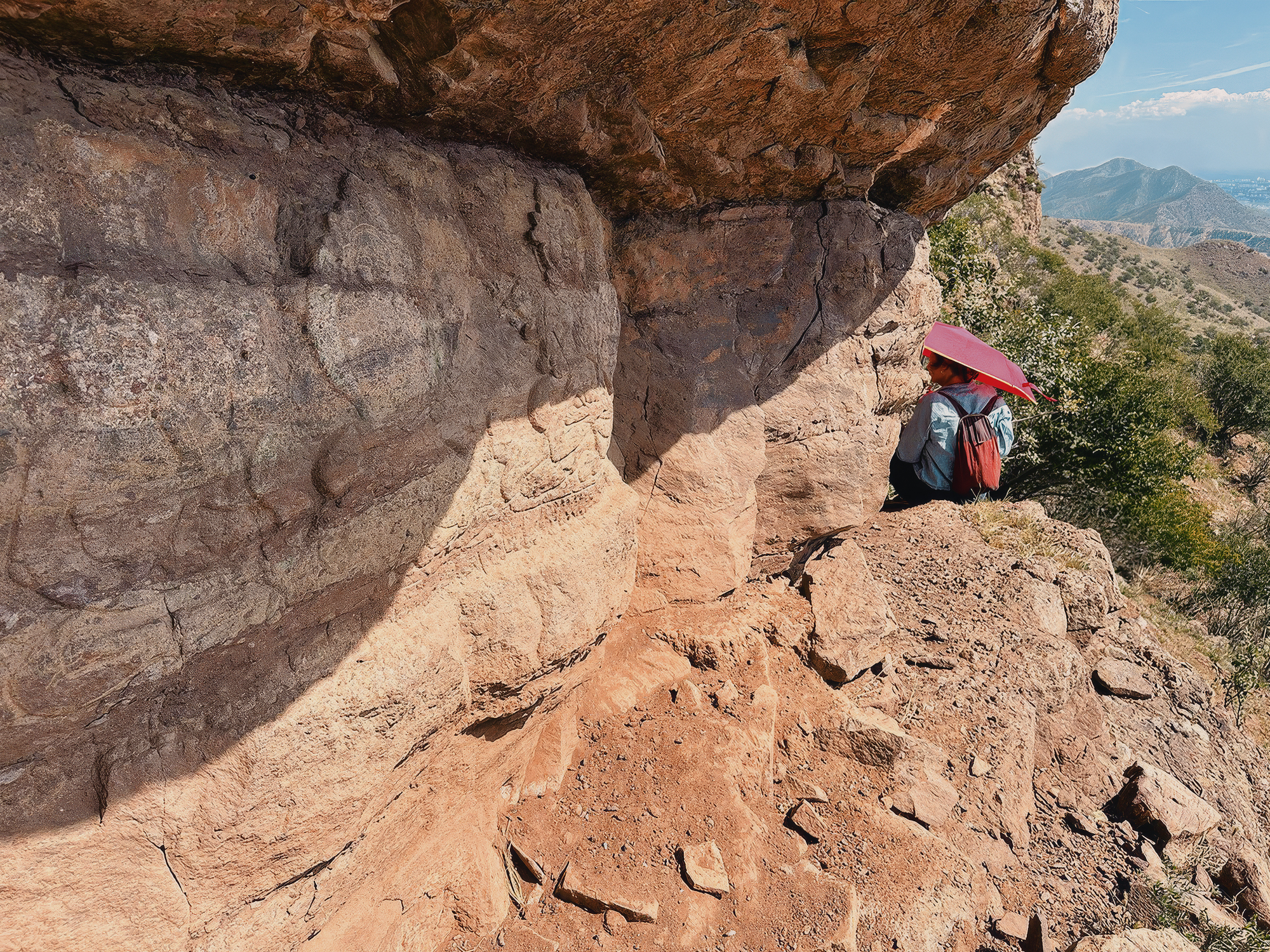
Above the grottoes sits another natural rock cave, 3 metres high and 8 metres deep. In the cave's centre is a natural stone platform 1.5 metres wide, fitted with a manually chiselled circular niche pedestal and a fragmentary stone carving of an animal. A human-made stone wall blocks the cave entrance, mixed with ancient bricks dating back to the Liao, Jin and Yuan dynasties. The western pagoda foundation preserves relics including cloud-patterned bricks from the Northern Wei Dynasty.
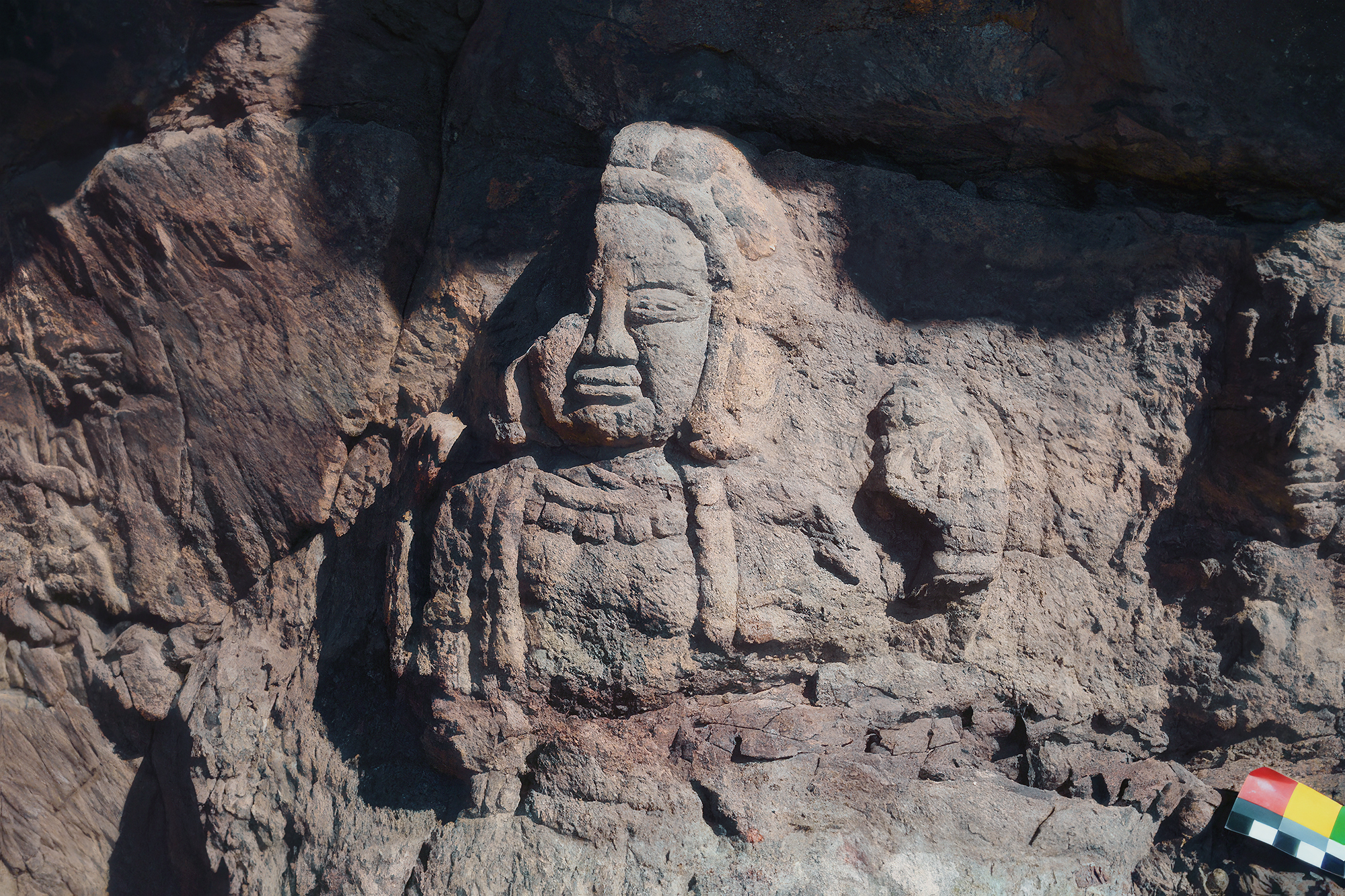
- Photograph/Drawing: Wu Jiacai
- Coordinates: Undisclosed
- Altitude: 1,318 metres above sea level
- Orientation: Facing south
- Dimensions: Total height 48 cm, body width 31 cm, base width 40 cm, head thickness 5.7 cm
- Crafting Technique: Rock carving
- Rock Type: Sandstone
- Location: Central part of Cave No.1
- Period: Northern Wei Dynasty (386-534 AD)
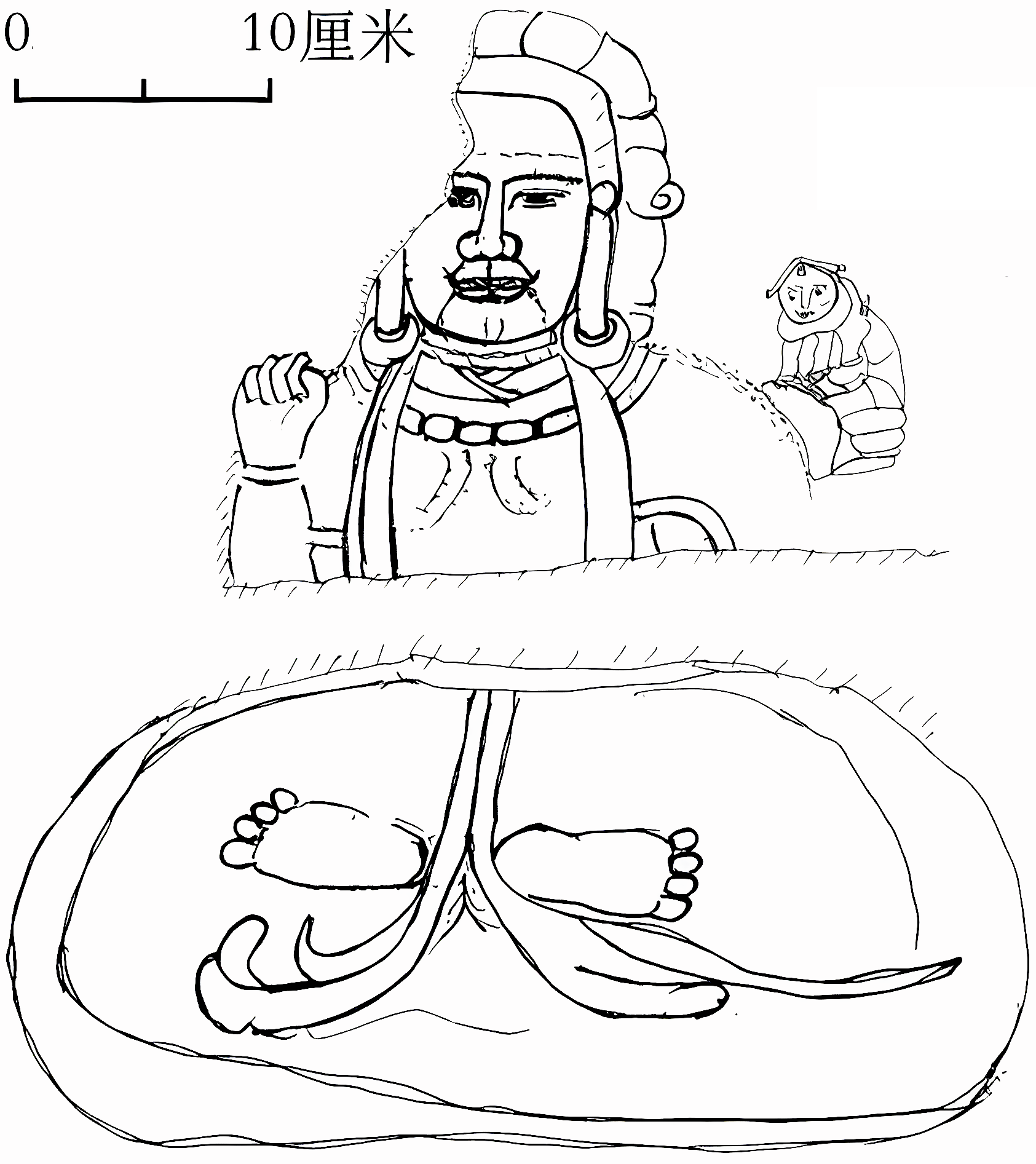
Over these 12 years, Tuoba Gui first built Buddhist temples and commissioned early Buddha statues in Shengle. The damage to the upper right cheek of this Buddha statue was inflicted in the second lunar month of 446 AD during Emperor Taiwu's nationwide persecution of Buddhism. The imperial edict ordered all Buddhist scriptures to be burned, all Buddha statues smashed, and all monasteries demolished.
- Photograph/Drawing: Wu Jiacai
- Coordinates: Undisclosed
- Altitude: 1,318 m above sea level
- Orientation: Facing south
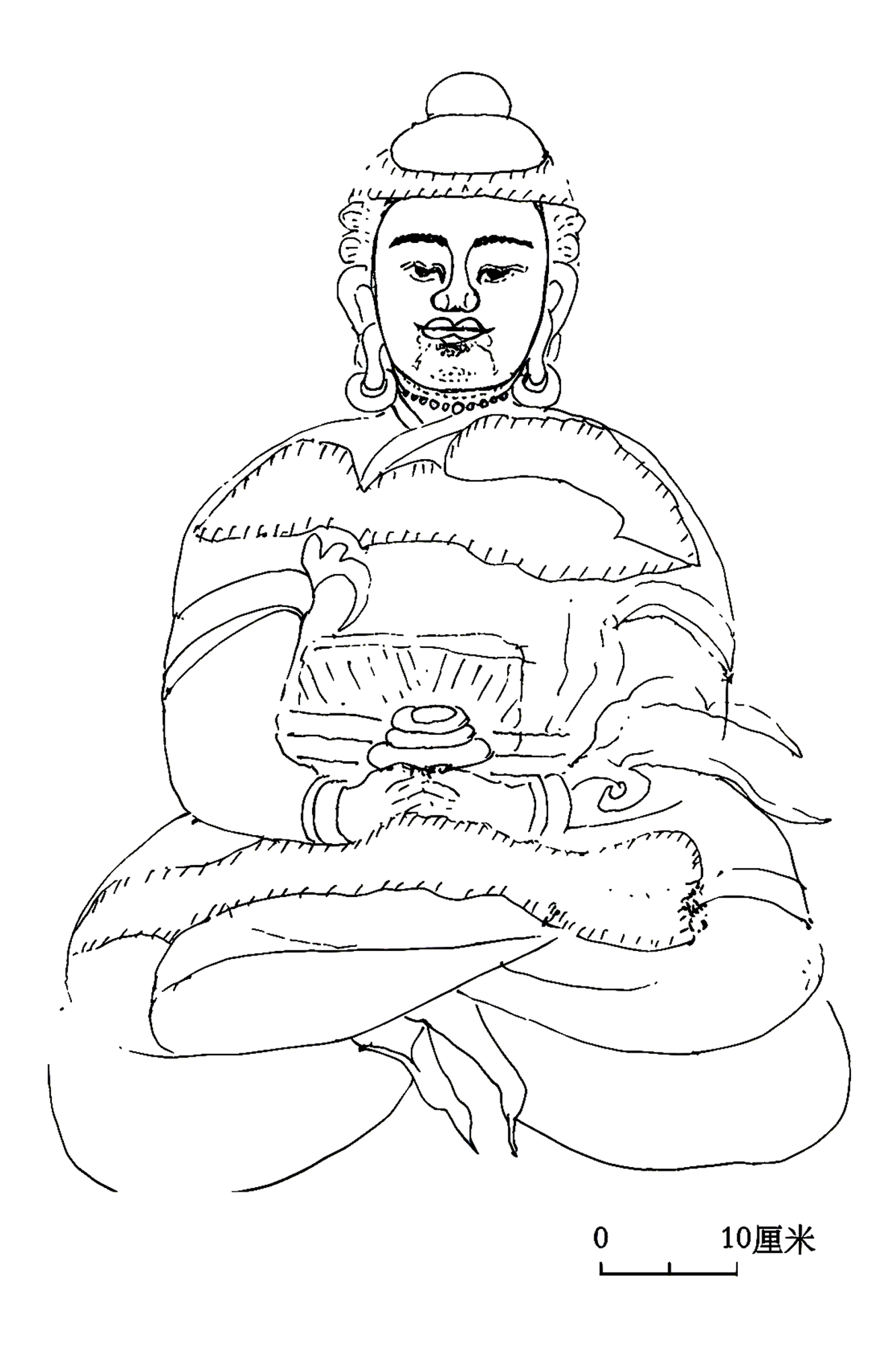
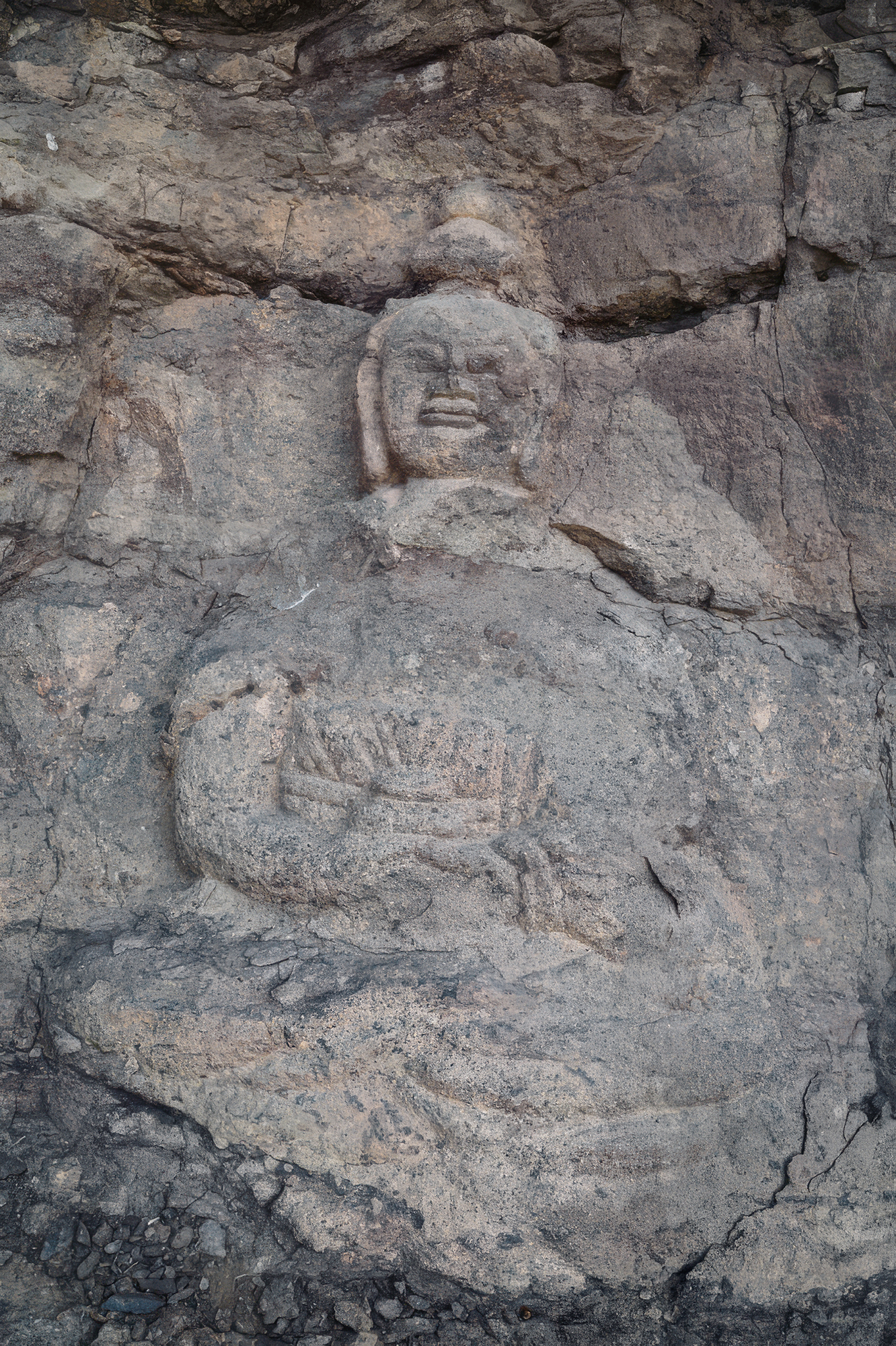
- Dimensions: Overall height 82 cm, head width 16 cm, base width 55 cm, maximum thickness (nose) 7.2 cm
- Crafting Technique: Rock carving
- Rock Type: Sandstone
- Location: Inside Cave No.1; the cave is 2 metres high and 2.3 metres deep
- Period: Liao Dynasty (916-1125 AD)
This statue depicts Sakyamuni with a high ushnisha. He has a plump full face, slender crescent eyes, arched eyebrows, prominent straight broad nostrils and large ears. His lips are closed with a faint smile.
The upper torso and waist are damaged; both hands once held an alms bowl in the meditation mudra. The top of the headdress, upper chest, upper and lower legs, and base are broken, yet the main body remains intact.
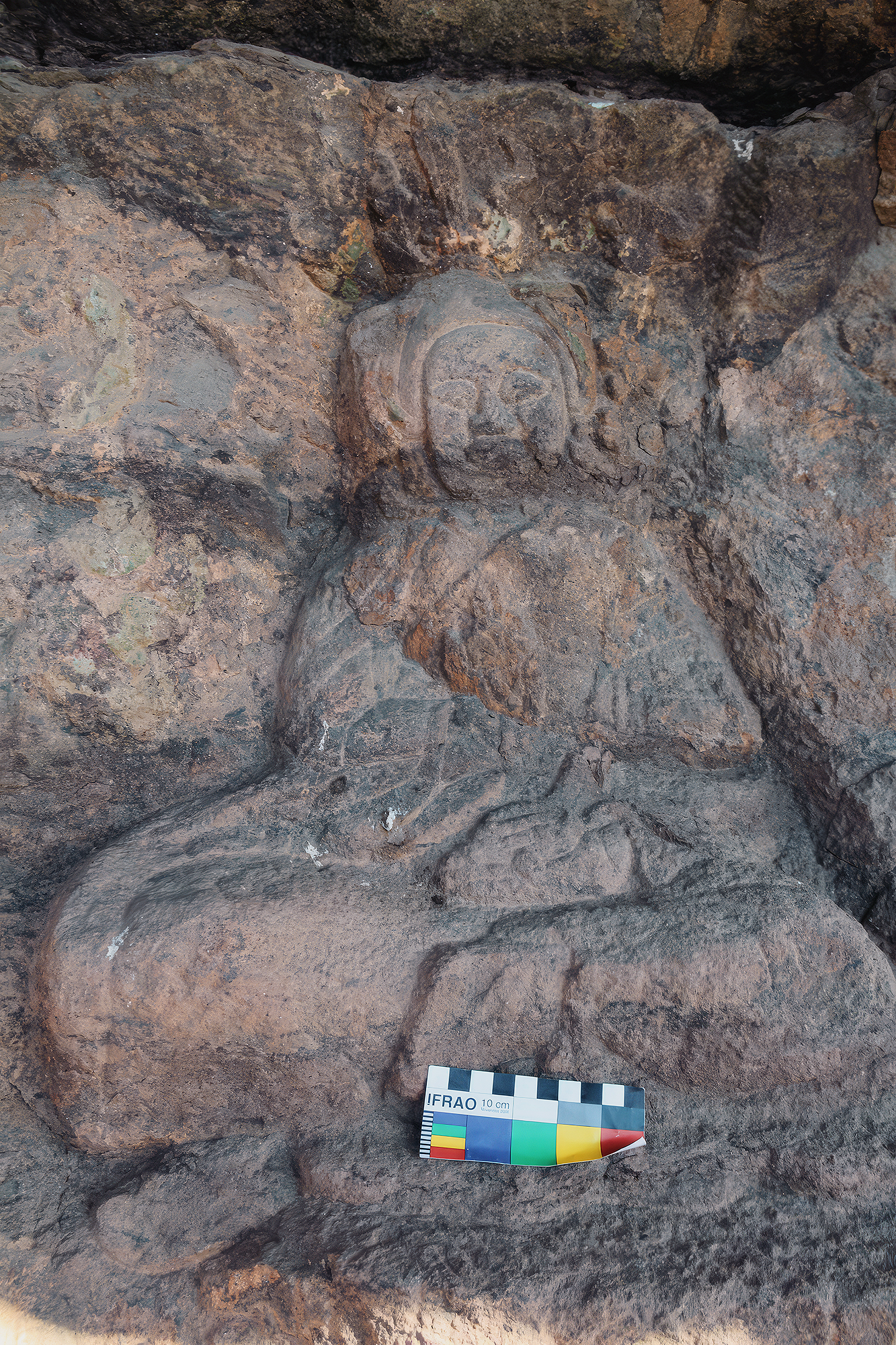
- Photograph/Drawing: Wu Jiacai
- Coordinates: Undisclosed
- Altitude: 1,318 metres above sea level
- Orientation: Facing south
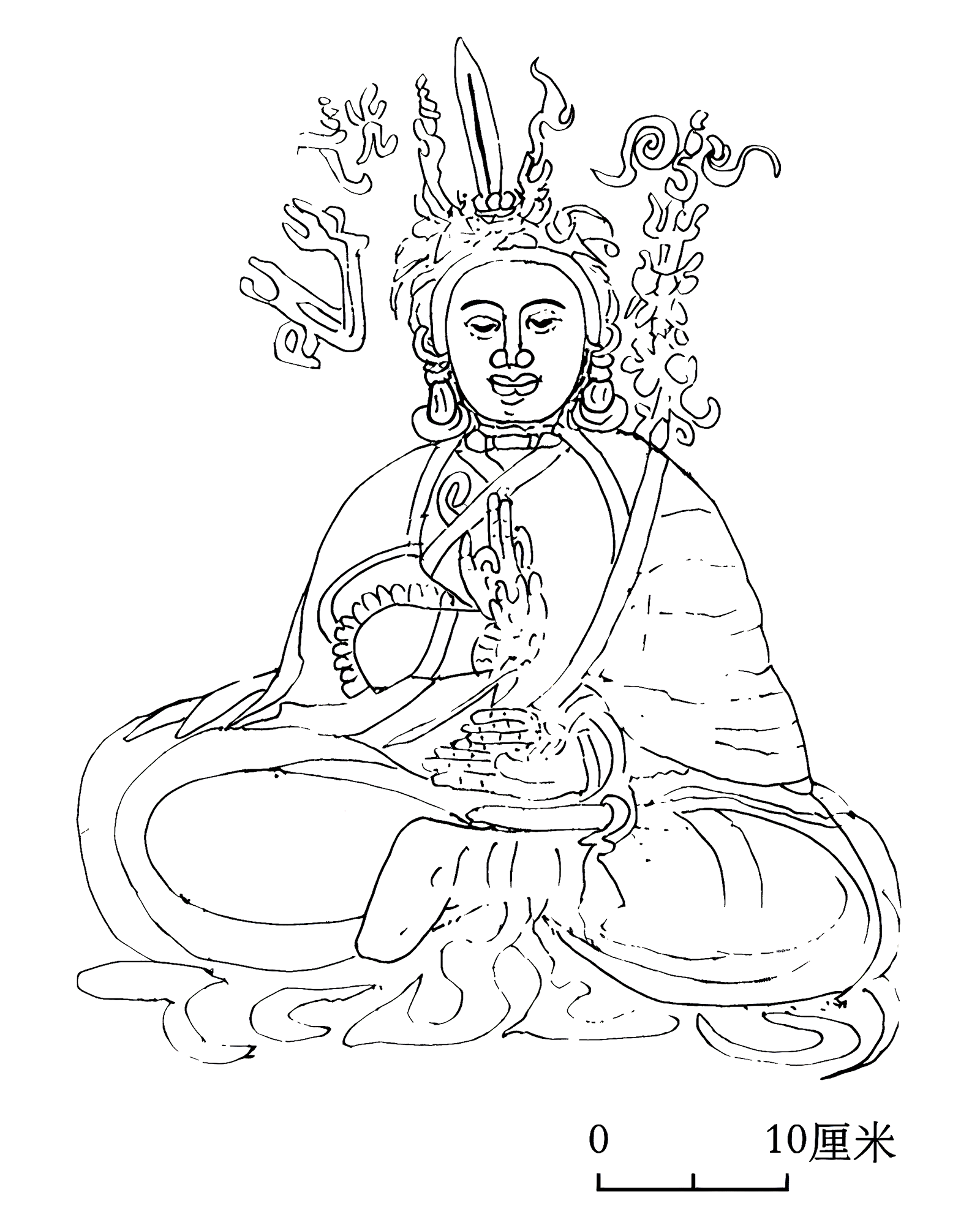
- Dimensions: Total height 54 cm, base width 40 cm, torso width 25 cm, head width 19 cm, thickness 5.3 cm
- Crafting Technique: Rock carving
- Rock Type: Sandstone
- Location: Upper left-middle section of Cave No.3. This Buddha statue is relatively large and occupies a prominent position
- Period: Jin Dynasty (1115-1234 AD)
- Stylistic Features: For the first time among northern rock-carved Buddhist statues, three luminous halos are carved above the head; its attire is elaborate and heavy.
This unique form is unprecedented among all known Buddhist statues discovered so far, and the figure is presumed to be Padmasambhava (Lianhuasheng Dashi) from the 8th century.
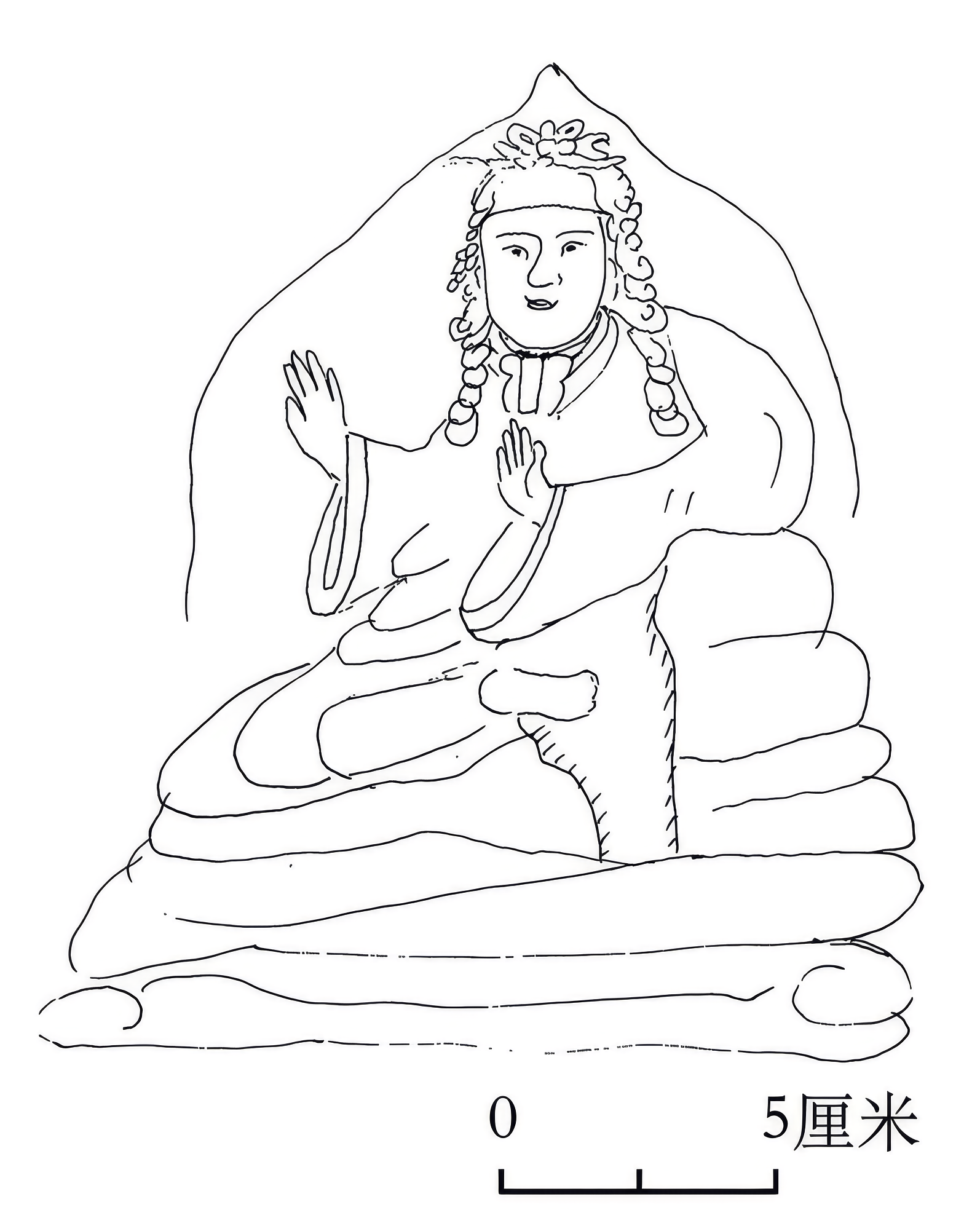
- Photograph/Drawing: Wu Jiacai
- Coordinates: Undisclosed
- Altitude: 1,318 metres above sea level
- Orientation: Facing south
- Dimensions: Total height 18 cm, base width 15 cm, thickness 0.9 cm
- Crafting Technique: Rock carving
- Rock Type: Sandstone
- Location: To the right of Statue No.7 inside Cave No.1
- Period: Yuan Dynasty (1271-1368 AD)
The figure of Buddha Statue No.8 in Grotto 5.1 wears floral ornaments on the head, with both hands spread out gesturing to the left; the middle and lower parts are incomplete.
in Grotto 5.3
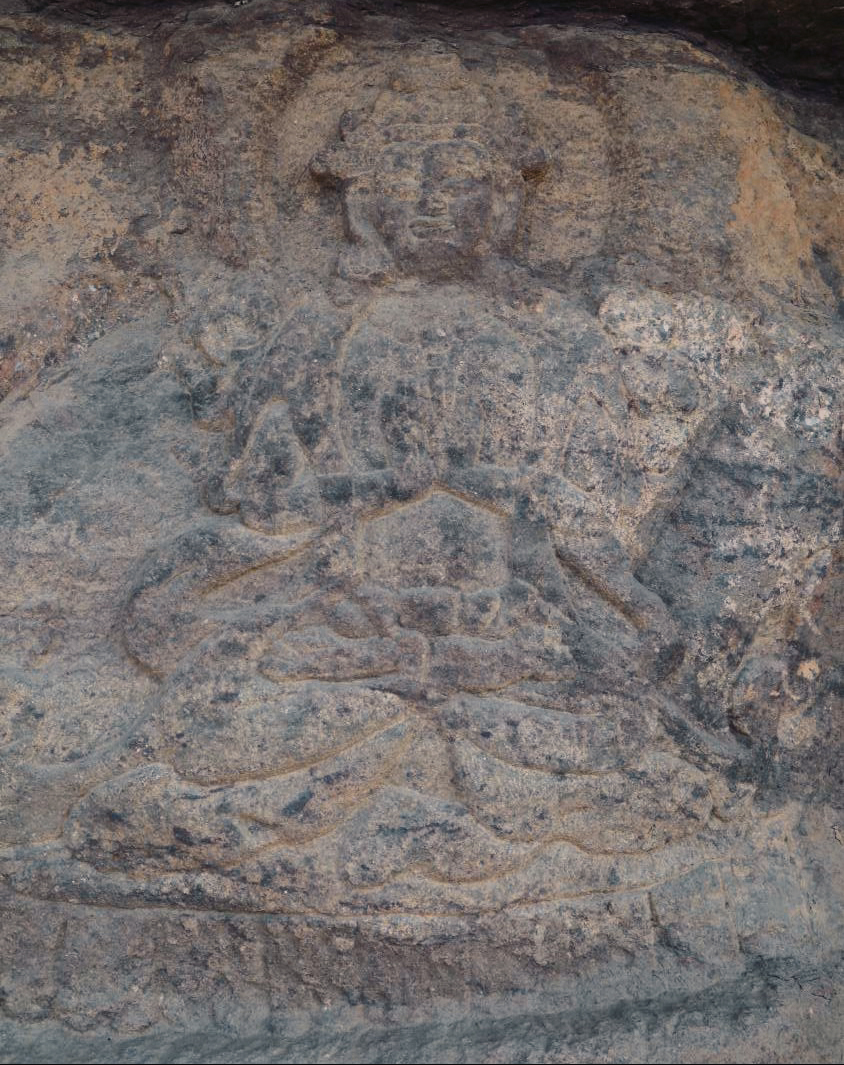
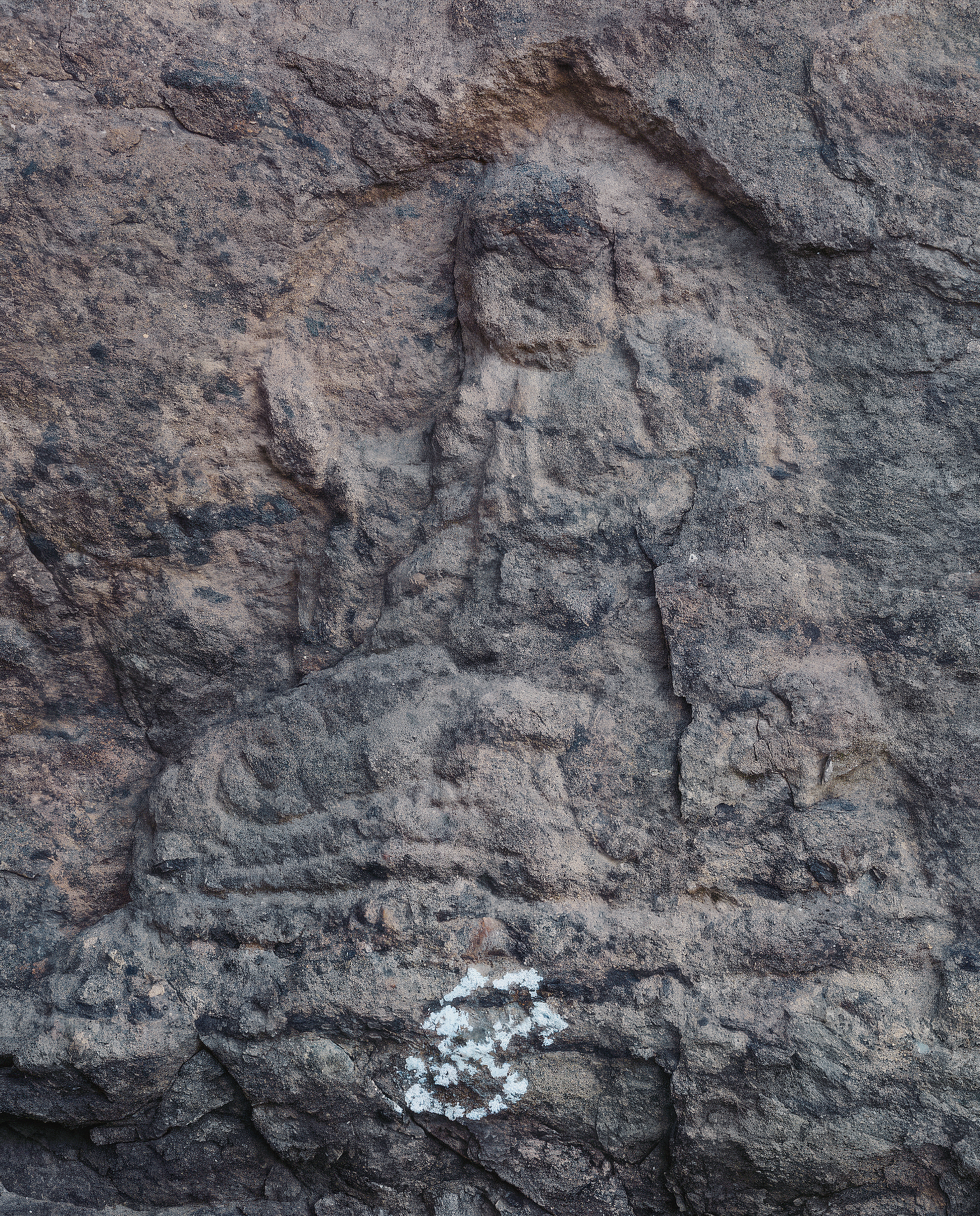
- Photograph/Drawing: Wu Jiacai
- Coordinates: Undisclosed
- Altitude: 1,318 metres above sea level
- Orientation: Facing south
- Dimensions: Total height 60 cm, base width 56 cm, thickness 2.9 cm
- Crafting Technique: Rock engraving
- Rock Type: Sandstone
- Location: To the right of Buddha Statue No.25
- Period: Ming Dynasty (1368-1644 AD)
Maitreya Bodhisattva
No.34, 35, 36 and 37
in Grotto 5.7
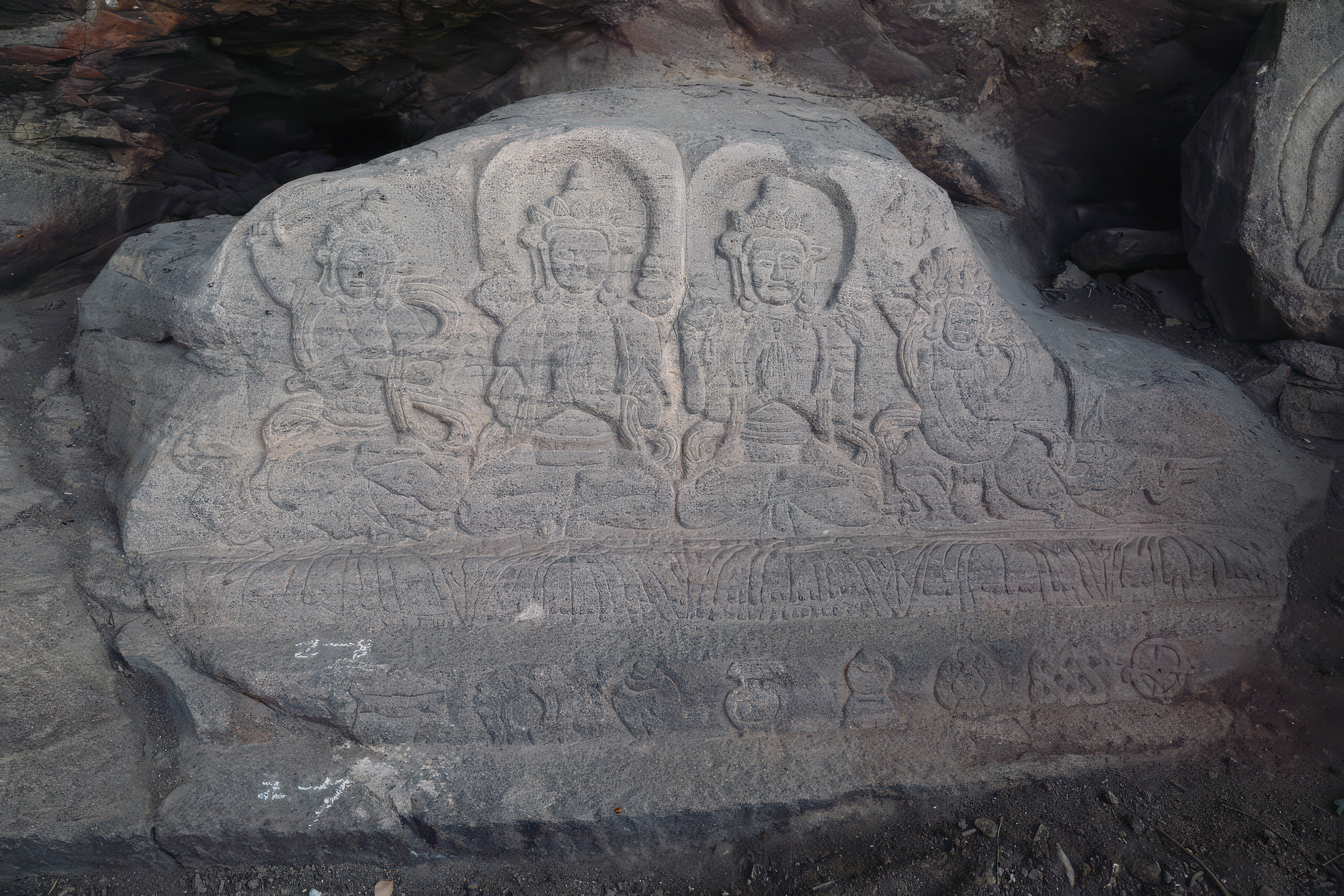
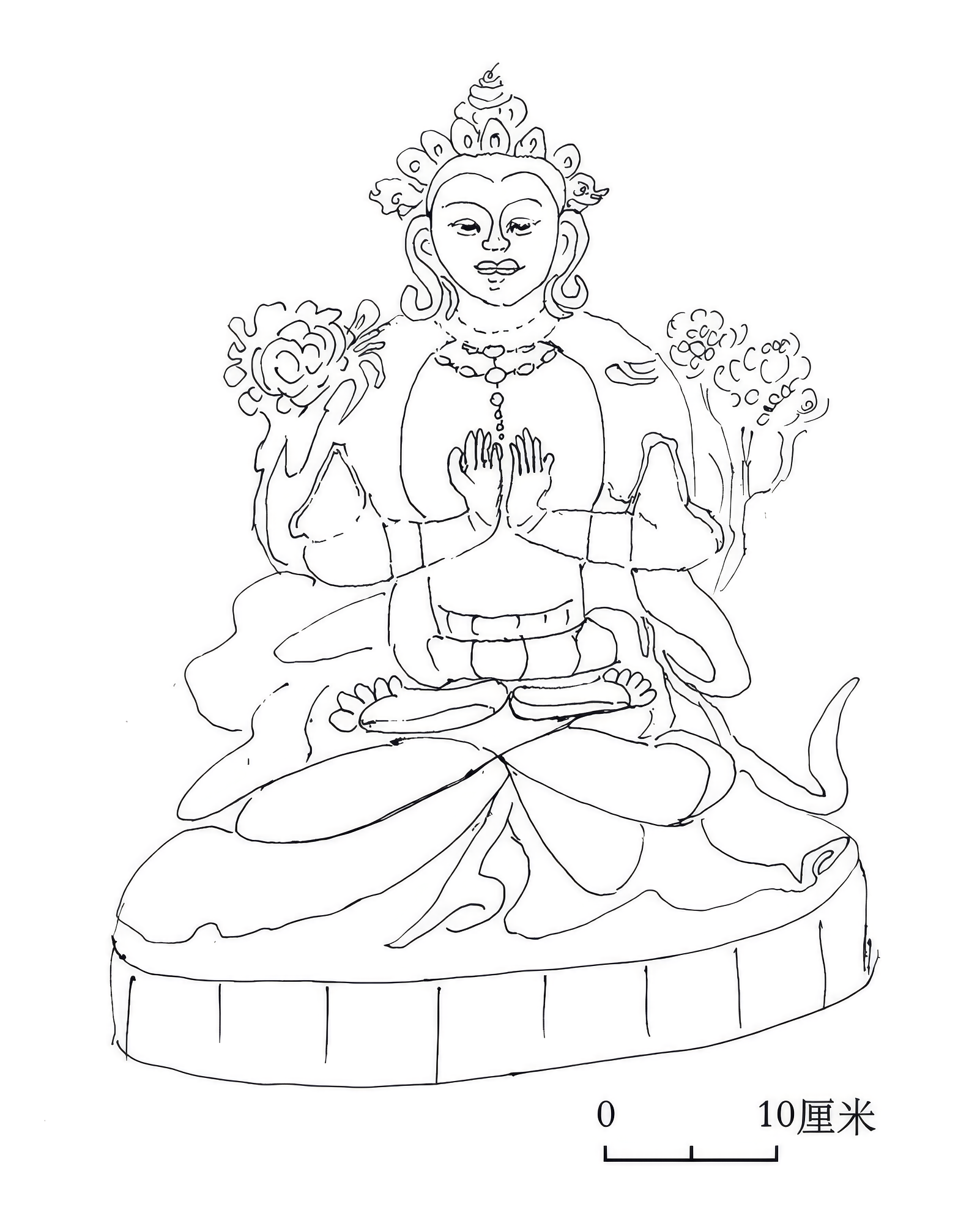
- Photograph/Drawing: Wu Jiacai
- Coordinates: Undisclosed
- Altitude: 1,307 metres above sea level
- Orientation: Facing south
- Dimensions:
Overall height 67 cm, overall width 140 cm. Dimensions from left to right:
1. Height 50 cm, width 33 cm, carving depth 1.2 cm
2. Height 55 cm, width 24 cm, carving depth 1.7 cm
3. Height 36 cm, width 25 cm, carving depth 1.3 cm
4. Height 54 cm, width 46 cm, carving depth 1 cm
- Crafting Technique: Rock carving
- Rock Type: Basalt
- Location: Left side of Cave No.7
- Period: Qing Dynasty (1636-1912 AD)
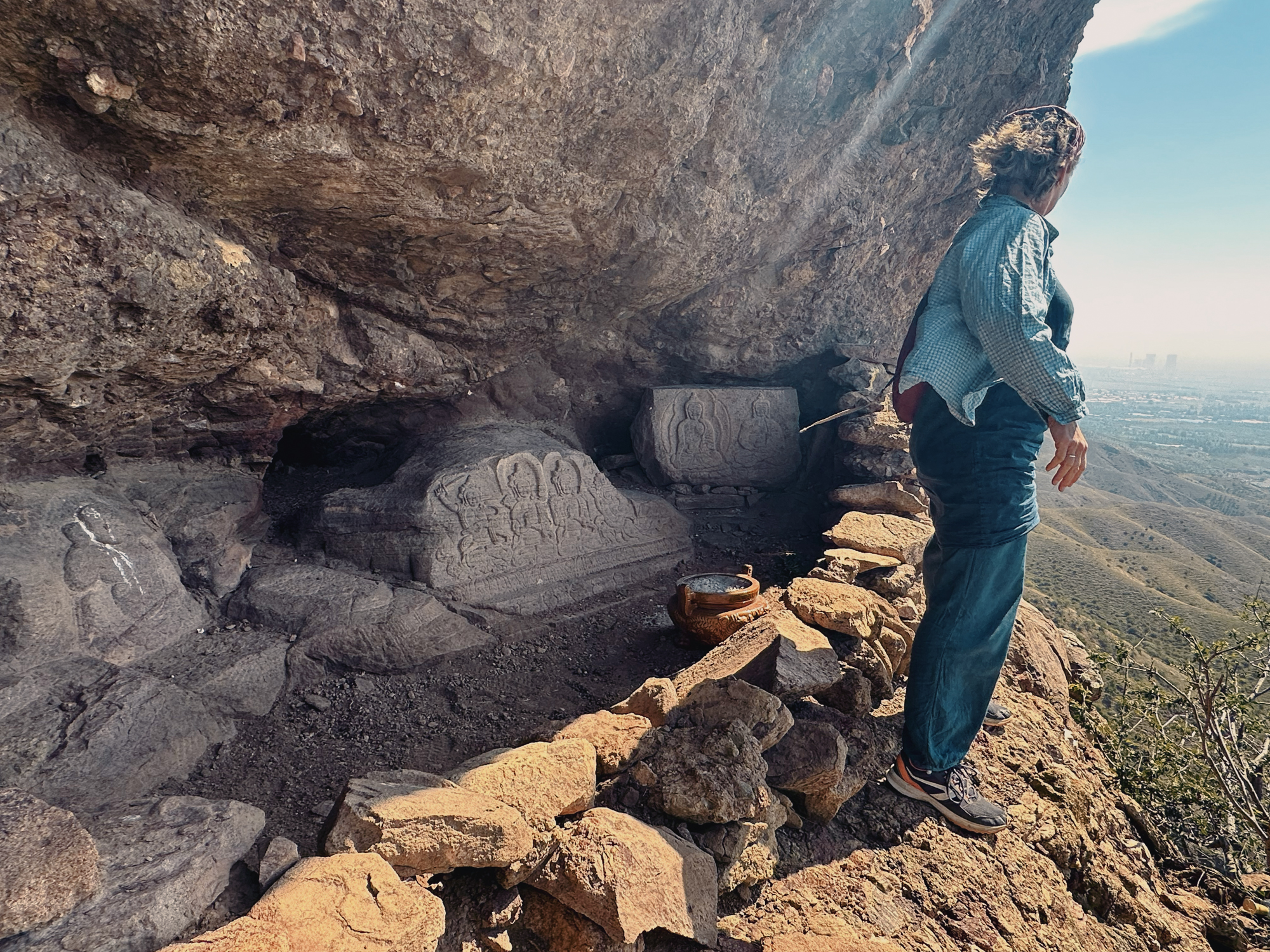
A set of Buddhist statues modelled after works of earlier dynasties.
The leftmost figure is Manjushri Bodhisattva, the embodiment of the wisdom of all Buddhas and the teacher of all Tathagatas. His common iconography features five topknots on the crown, symbolizing the unexcelled and perfect nature of the Five Wisdoms. He holds a Prajñāpāramitā Sutra in his left hand, signifying immaculate prajñā wisdom untainted by worldly dust, and a sword in his right hand that severs all ignorance and afflictions, known as the vajra sword capable of subduing all demons.
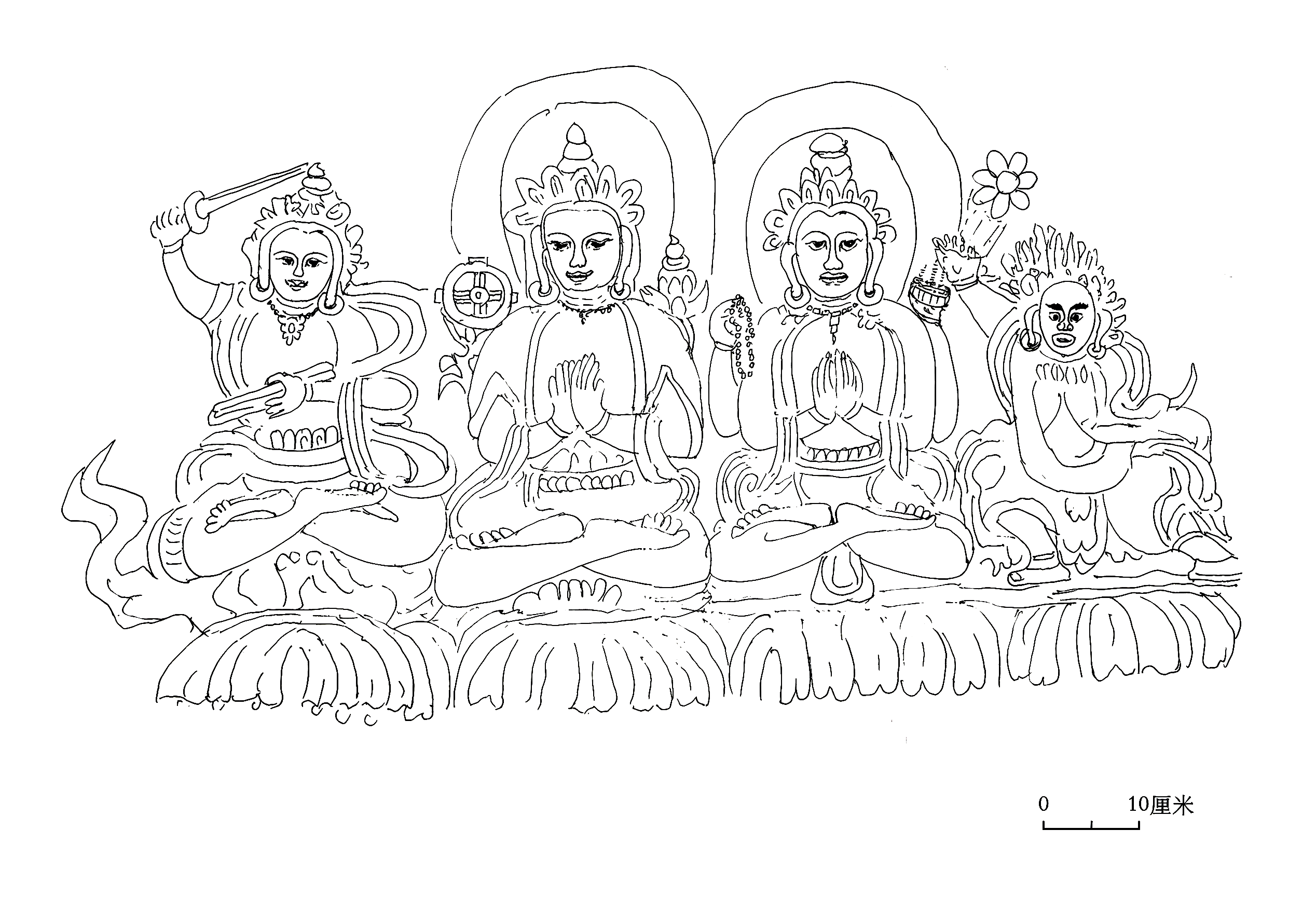
The second statue from the right is a seated Four-Armed Avalokiteśvara. His white body symbolizes pure and unblemished nature. The front two palms are pressed together at the chest; the rear two arms are raised to the shoulders. His rear right hand holds a mala, representing delivering sentient beings from samsara; his rear left hand holds a white lotus, representing the purification of all afflictions.
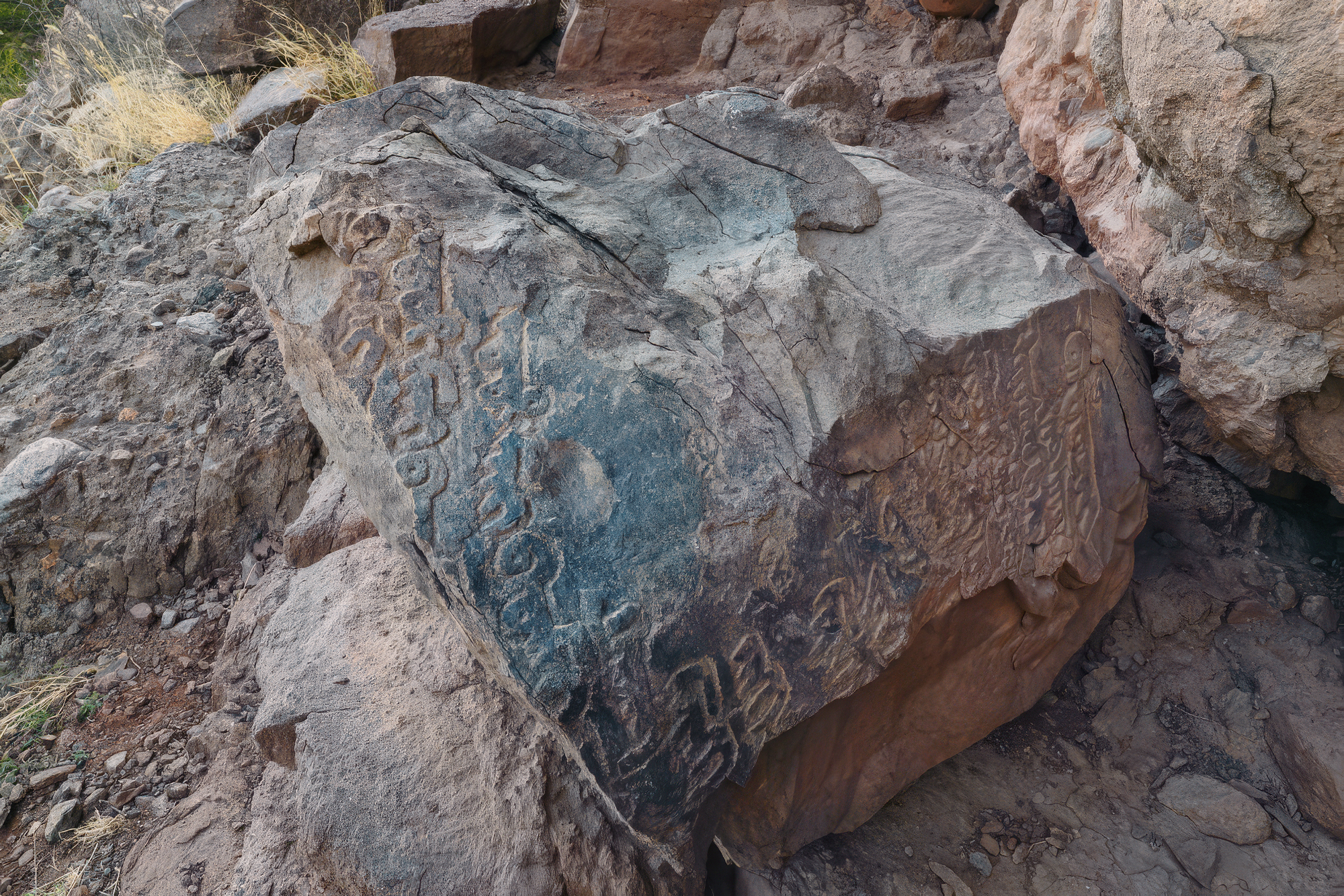
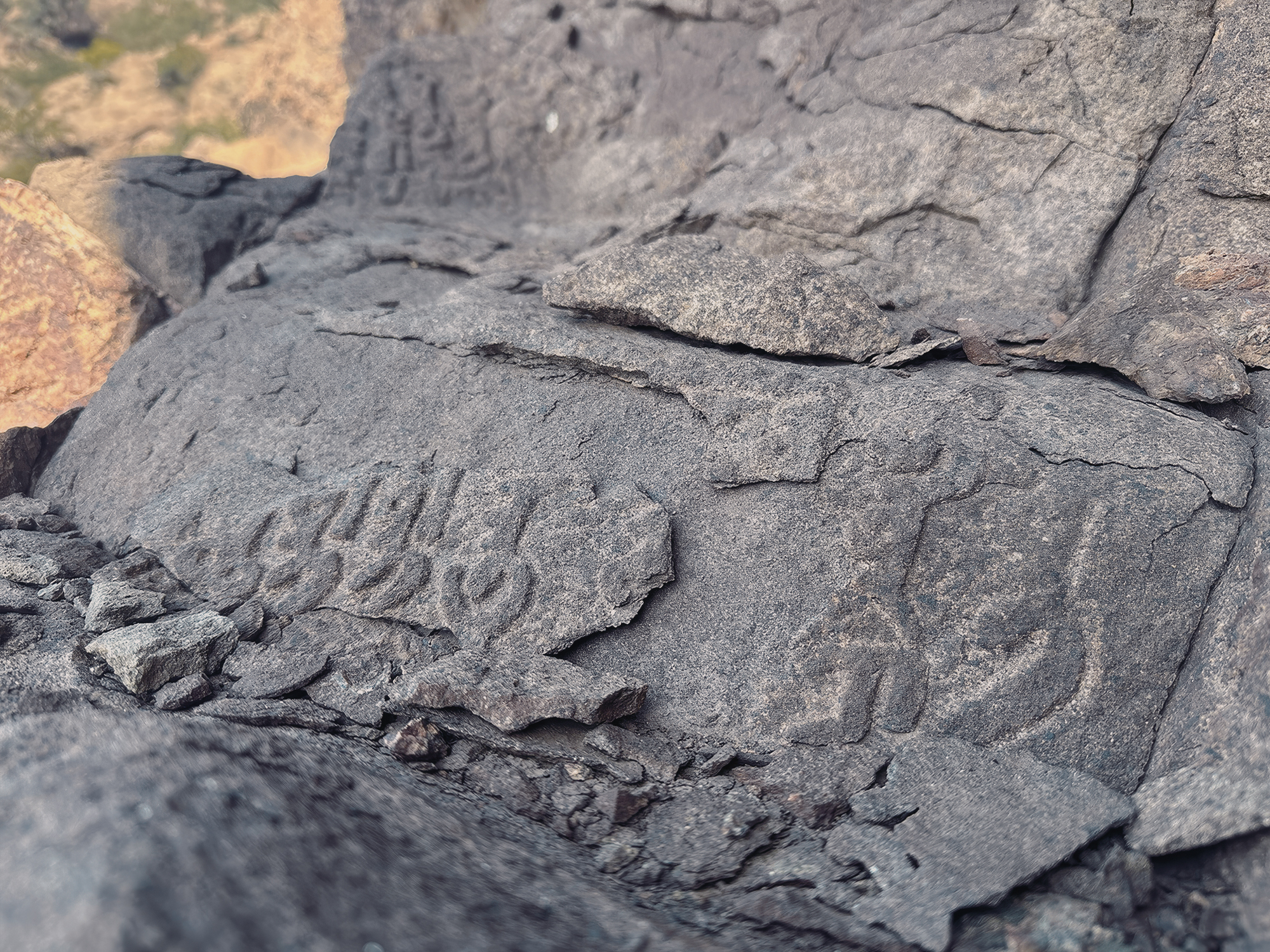
Uyghur-Mongolian inscriptions: four panels of the Six-Syllable Mantra and three panels of dedicatory inscriptions, with a total of 22 legible lines. The inscription at the bottom left prays for health and longevity; the one in the lower middle invokes fortune and prosperity; the bottom-right inscription consists of auspicious blessings.
Rock surface: 70 cm in height, 82 cm in width.
Bradshaw Foundation Field Trip No. 170926: The Bingzhouhai Petroglyphs. This field trip, led by Professor Wu Jiacai of the Rock Art Research Institute of the Inner Mongolia Honder College of Arts & Sciences Institute, was conducted on 17th September 2026. The Bingzhouhai Petroglyph Site is located on the Daqingshan Mountains, middle section of the Yinshan Range, Inner Mongolia, China.
- The Bingzhouhai Petroglyphs Field Trip
Chinese Language Version